 Divisi
Antestia bug
Antestiopsis thunbergii · Insect
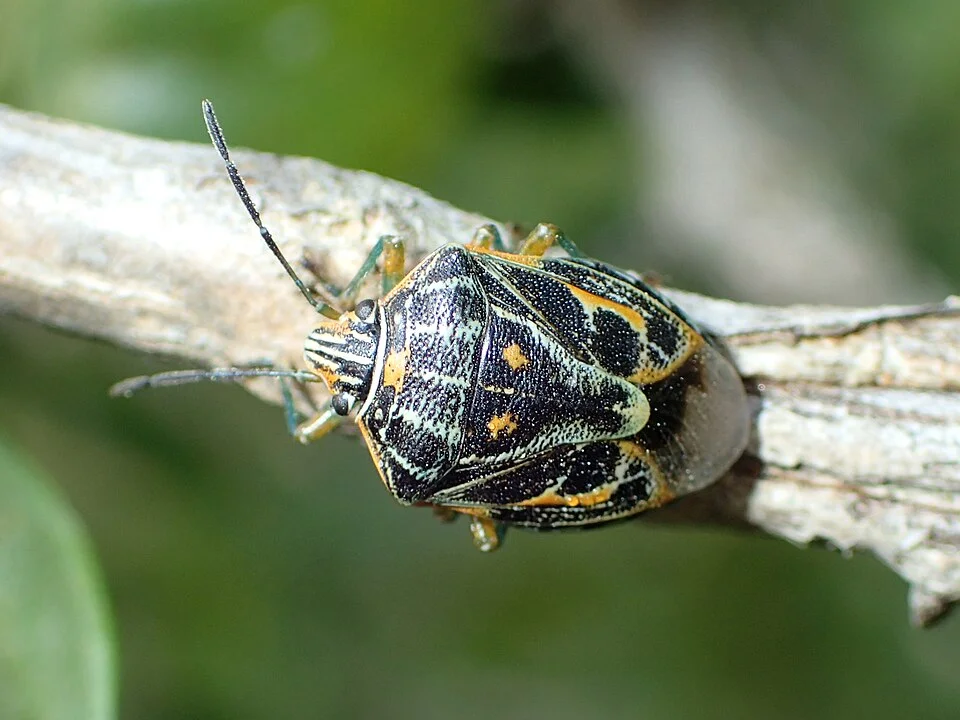
Photo: Kaldari · CC0
The antestia bug (Antestiopsis thunbergii) is a shield-shaped stink bug and one of the most damaging pests of coffee in the warm, humid highlands of sub-Saharan Africa. With needle-like mouthparts it pierces coffee flowers, green berries and growing tips, and the germs (bacteria) it carries into those wounds rot the beans and cause the dreaded potato-taste defect that ruins the flavour of the cup. It shelters deep inside dense, over-shaded, poorly pruned bushes — which is why open, well-pruned coffee is your first line of defence.
Why it matters
Antestia bug can cost you up to nearly half your coffee crop (45%). It dries up flowers before they set, and rots or shrivels the green berries so they drop early or come out as blackened, striped 'zebra' beans. Worse than the lost quantity is the lost price: the germs the bug carries give the coffee a raw-potato taste, and even a few damaged beans can taint a whole batch, so your buyer rejects it or pays far less. The cruel part is that you cannot see the potato taste — it only shows up when the coffee is finally brewed and cupped, long after the bug did its damage — and the bug hides deep in dense, shady bushes where sprays never reach. That is why keeping your canopy open and catching the bug early matters far more than trying to rescue a crop that is already ruined.
When to act
Treat when scouting finds about 2 or more bugs per coffee tree, the level linked to bean damage and potato-taste defect.
This guidance is general, compiled from published agronomic references including FAO and CABI. Thresholds and timing shift with your crop, your variety and the season.
In much of the region a spray is simply called mushonga — medicine. But a chemical group you cannot name is one you cannot rotate, and a product you did not write down has no pre-harvest interval you can observe. Mushonga, and other farming words →
The full antestia bug field guide
Identify it
The damage shows first
Watch for coffee flowers that dry up and drop without setting berries, green berries that blacken, rot and fall early, and beans that come out shrivelled or marked with dark 'zebra' stripes. Shoot tips may die back and throw out a bushy fan of weak little shoots. The final give-away appears at the mill or in the cup — a raw-potato smell and taste.
The bug itself
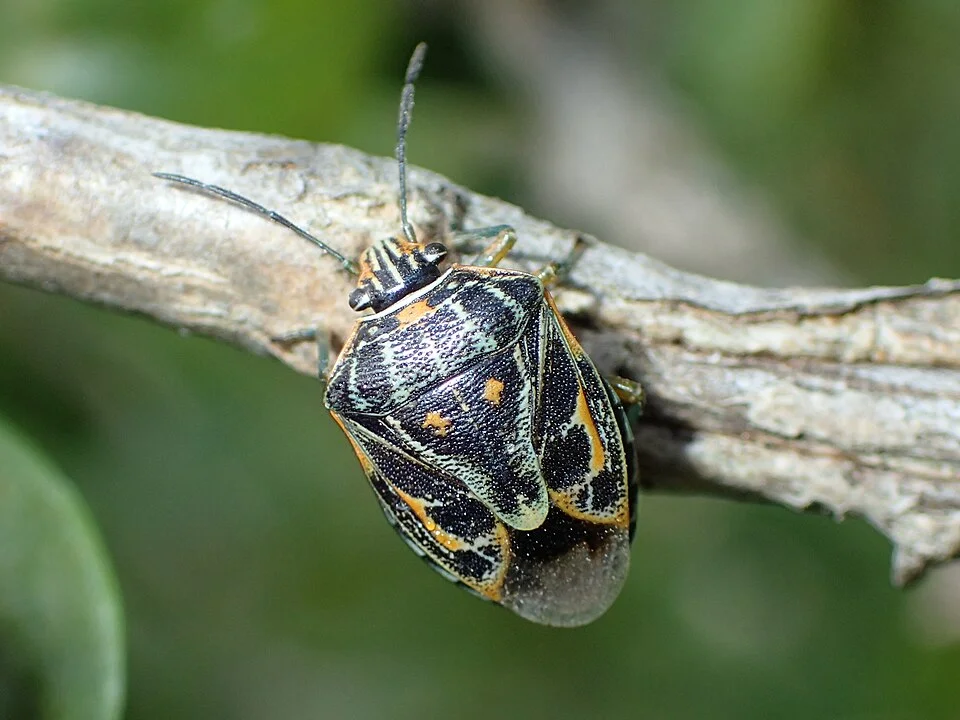
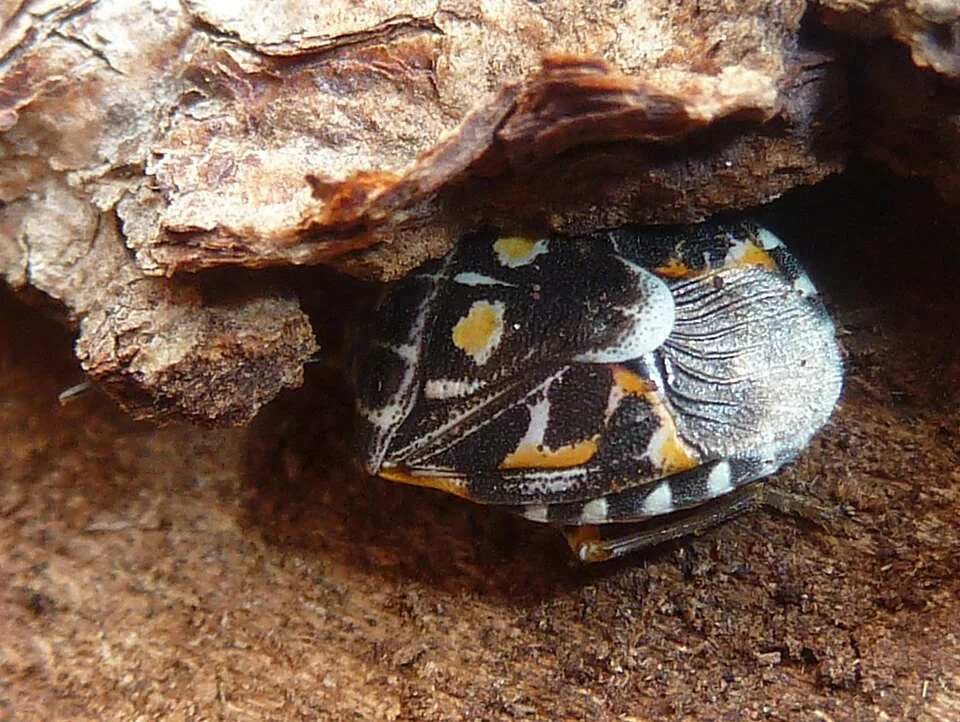
is a shield-shaped stink bug about the size of a coffee bean (6–8 mm) — dark brown-to-black but boldly marked with a bright cross of white-cream and orange lines and spots across its back, often with a blue-green metallic shine. Squash one and it gives off a foul stink. The young ones (nymphs — the wingless juveniles before they grow wings) are rounder but just as colourful, and the eggs sit in small clusters on the underside of the leaves.
Where and when to find it
in the heat of the day it hides deep inside the shady, humid middle of the bush, so search in the cool of early morning. Don't confuse it with the plain brown or green shield bugs that also rest on coffee — antestia is the one wearing the bright white-and-orange cross on its back.
Scout for it
When to look
start scouting from flowering and right through the green-berry stage — the mid-to-late-season window — because that is exactly when the bug attacks the flowers and developing berries you are trying to protect. Check every 1–2 weeks through this window, and step it up in warm, humid weather (18–28°C) after rain, when the bug is most active.
Where to walk
cover a large "W" across the block so you check all four corners and the middle, not just the row beside the path. Make about 10 stops along the way, and give extra attention to the bushiest, most heavily shaded trees, which is where antestia loves to hide.
How to check each tree
hold an old cloth, a tray or an open feed-sack under a branch, then beat or shake the branch sharply and count the bugs that drop onto it. Do a couple of branches per tree. Working in the cool of early morning shakes down more of them, because the bugs are sluggish and sheltering inside the canopy.
The number that means ACT
if you find 2 or more antestia bugs on a single tree, that is your signal to treat — this is the level tied to bean damage and the potato-taste defect. Below that, keep scouting and lean on prevention rather than spraying.
Control it
Prevent it — open up the bush (your strongest tool)
The bug thrives in dense, humid shade, so prune and de-sucker — cut out the water-shoots and crowding stems — to open the canopy and let light and air through. Keep any shade trees thinned to a moderate level, and hard-prune or grub out the overgrown, neglected bushes that harbour the bug. A well-pruned, airy coffee bush simply loses the humid refuge antestia needs.
Clean as you go
Strip off and destroy the blackened, rotting and dropped berries instead of leaving them lying under the trees — that removes both the ruined beans and the bugs feeding on them.
Protect your free helpers (act early, spray late)
Tiny parasitic wasps — egg parasitoids, wasps that lay their own eggs inside the bug's eggs and kill them before they hatch — plus other predators quietly keep antestia down for free. Blanket spraying wipes them out, so do not spray unless you have reached the threshold: every needless spray sets you back by killing the very insects that were working for you.
Last resort — if you cross the threshold, spray a pyrethroid
A pyrethroid is a fast contact insecticide (it kills the bug on touch, so you must actually hit it). Use it only when you find 2 or more bugs per tree, and aim into the shaded inside of the bush where the bugs shelter. Safety: cover your skin, eyes, nose and mouth; spray in the cool of morning or evening with the wind at your back; keep it off food, drinking water, children and bees (pyrethroids kill bees and your helpful wasps too); and respect the pre-harvest interval — the set number of days you must wait between spraying and picking so no poison is left on the beans (check the label). Wash yourself and your equipment afterwards.
If it keeps spreading — and when it's too late
If you must spray more than once, rotate to a different chemical group each time so the bug does not build resistance (stop being killed by one poison). If the bugs keep coming back after spraying, the real cause is almost always a canopy that is still too dense or overgrown neighbouring trees re-infesting yours — fix it with harder pruning, ideally pruned together with your neighbours at the same time. And when it is genuinely too late — berries already rotted or the potato taste already set in — you cannot rescue those beans; sort out and discard the damaged berries at harvest so a handful of tainted beans does not drag down the price of your whole batch, then prune hard to reset the bushes for next season.
Catch antestia bug before it costs you the harvest
This guide is the general answer. Divisi works out yours — the week to scout your own field for antestia bug, and what to do the day you find it.


Crops it affects
Plan the crops it attacks


All planting calendars, country by country
Get Insights by email
A short digest of new Divisi articles. No email on quiet weeks.
Frequently asked questions
How do I identify antestia bug?
The damage shows first. Watch for coffee flowers that dry up and drop without setting berries, green berries that blacken, rot and fall early, and beans that come out shrivelled or marked with dark 'zebra' stripes. Shoot tips may die back and throw out a bushy fan of weak little shoots. The final give-away appears at the mill or in the cup — a raw-potato smell and taste.
When should I take action against antestia bug?
Treat when scouting finds about 2 or more bugs per coffee tree, the level linked to bean damage and potato-taste defect.
How do I control antestia bug?
Prevent it — open up the bush (your strongest tool). The bug thrives in dense, humid shade, so prune and de-sucker — cut out the water-shoots and crowding stems — to open the canopy and let light and air through. Keep any shade trees thinned to a moderate level, and hard-prune or grub out the overgrown, neglected bushes that harbour the bug. A well-pruned, airy coffee bush simply loses the humid refuge antestia needs.
Which crops are attacked by antestia bug?
Among the crops covered here: Arabica coffee, Robusta coffee.