 Divisi
Bagrada bug
Bagrada hilaris · Insect
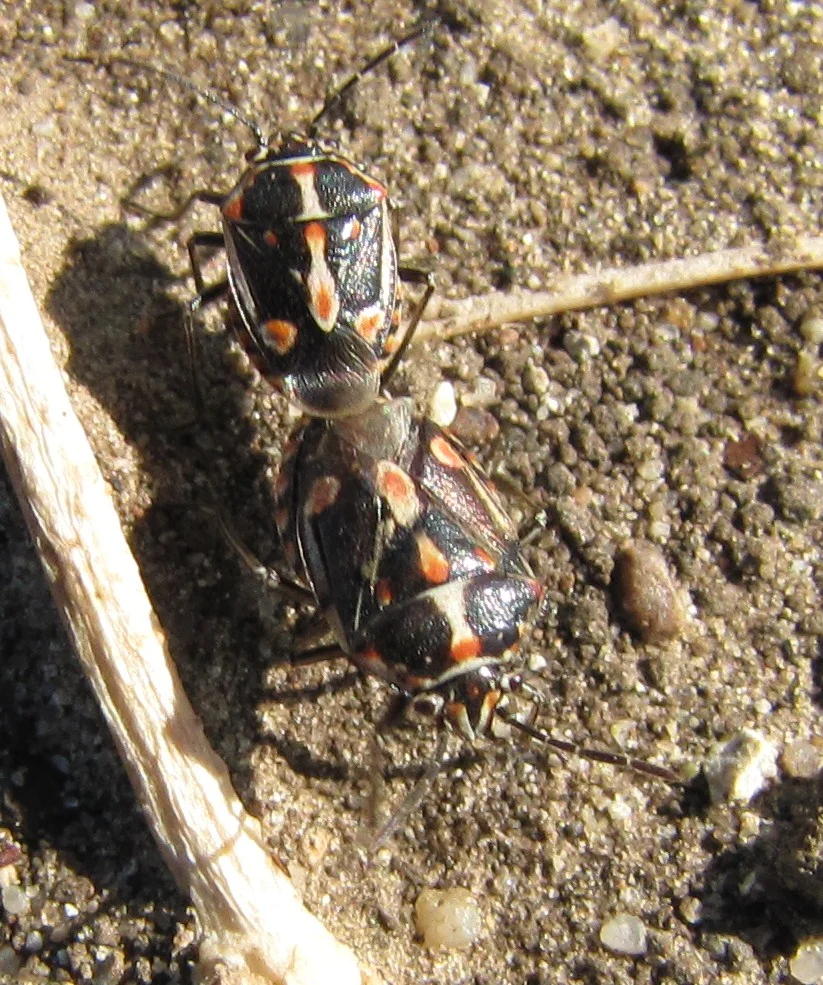
Photo: Davefoc · CC BY-SA 3.0
Bagrada bug (also called the painted bug) is a small black-and-orange shield bug — a kind of stink bug — that sucks the sap out of cabbage, kale, rape, mustard, radish, cauliflower and other members of the brassica (cabbage) family. Adults and their red, wingless young cluster on seedlings and young plants in hot, dry weather, and the females lay their eggs hidden in the soil at the base of the plants, so numbers build fast and keep coming back. Its sap-sucking leaves pale, star-shaped scorch marks and can kill the growing tip of a young plant outright.
Raquel Baranow · CC BY-SA 4.0 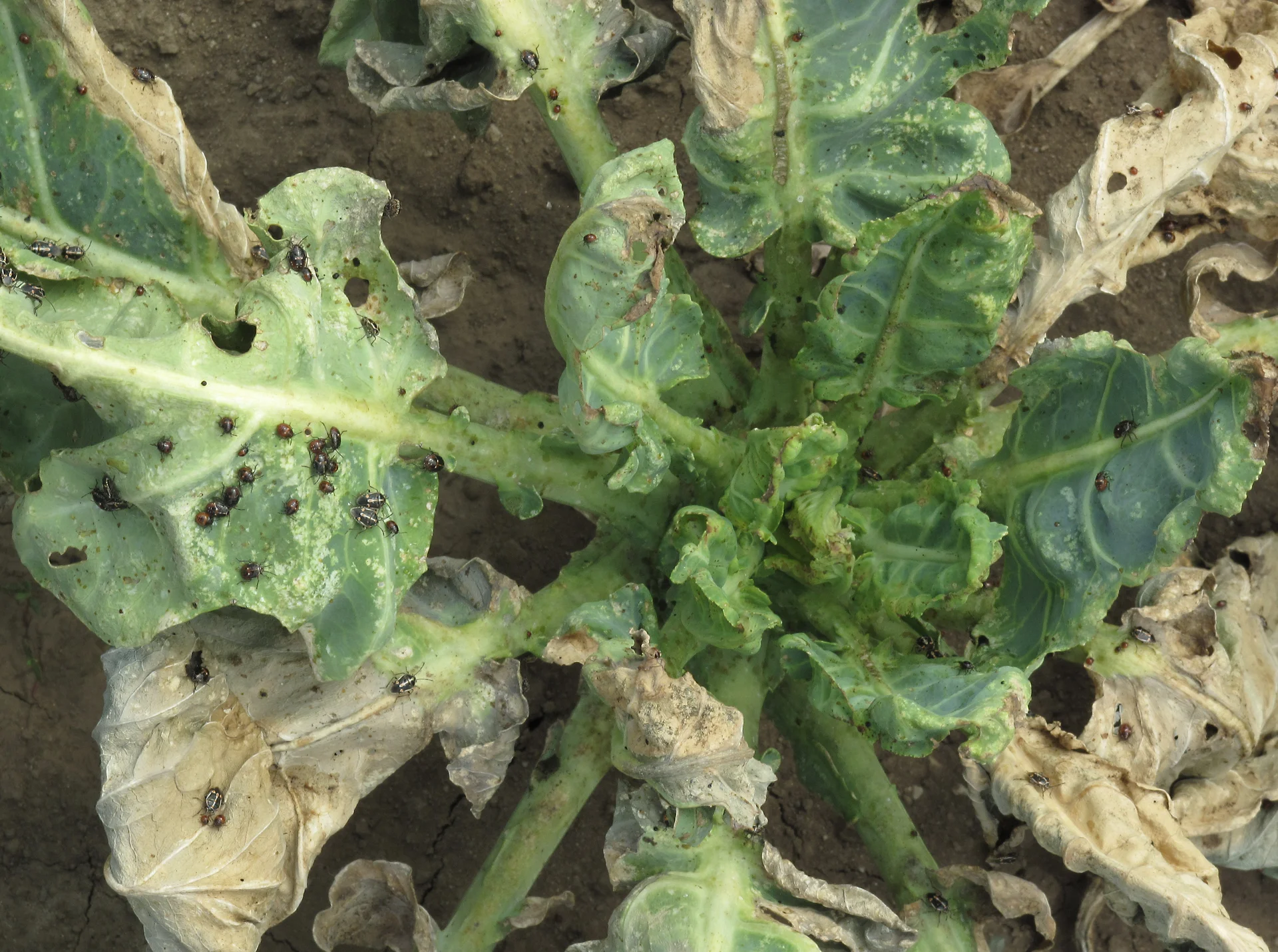
Downtowngal · Public domain
Why it matters
Bagrada bug is a seedling-killer of cabbage, kale, rape and other greens. A bad attack can take up to 60% of your crop — more than half — because a single bug can kill the growing tip of a young plant so it never forms a proper head, leaving you with blind or many-headed cabbages you can't sell. The bugs shelter at the plant base and the females hide their eggs in the soil, so they keep coming back, and in hot, dry weather their numbers explode and can wipe out a whole seedbed in days. Once the growing tip is dead the plant cannot recover — so your only real defence is catching them early, while the plants are small.
When to act
Any bugs found on seedlings, or fresh starburst lesions on 1 in 10 young plants.
This guidance is general, compiled from published agronomic references including FAO and CABI. Thresholds and timing shift with your crop, your variety and the season.
In much of the region a spray is simply called mushonga — medicine. But a chemical group you cannot name is one you cannot rotate, and a product you did not write down has no pre-harvest interval you can observe. Mushonga, and other farming words →
The full Bagrada bug field guide
Identify it
The first sign — star-spots:
look for pale, whitish or yellowish star-shaped scorch marks stippled across the leaves of young plants, where the bugs have sucked out the sap. Heavily fed patches look wilted and scorched, as if burnt by the sun.
The damage that costs you the crop
on seedlings the bug kills the growing tip (the heart of the plant), so it makes no head at all ("blind"), or throws out several small useless heads instead of one. In hot weather a whole seedbed can be stunted or destroyed within days.
The bug itself
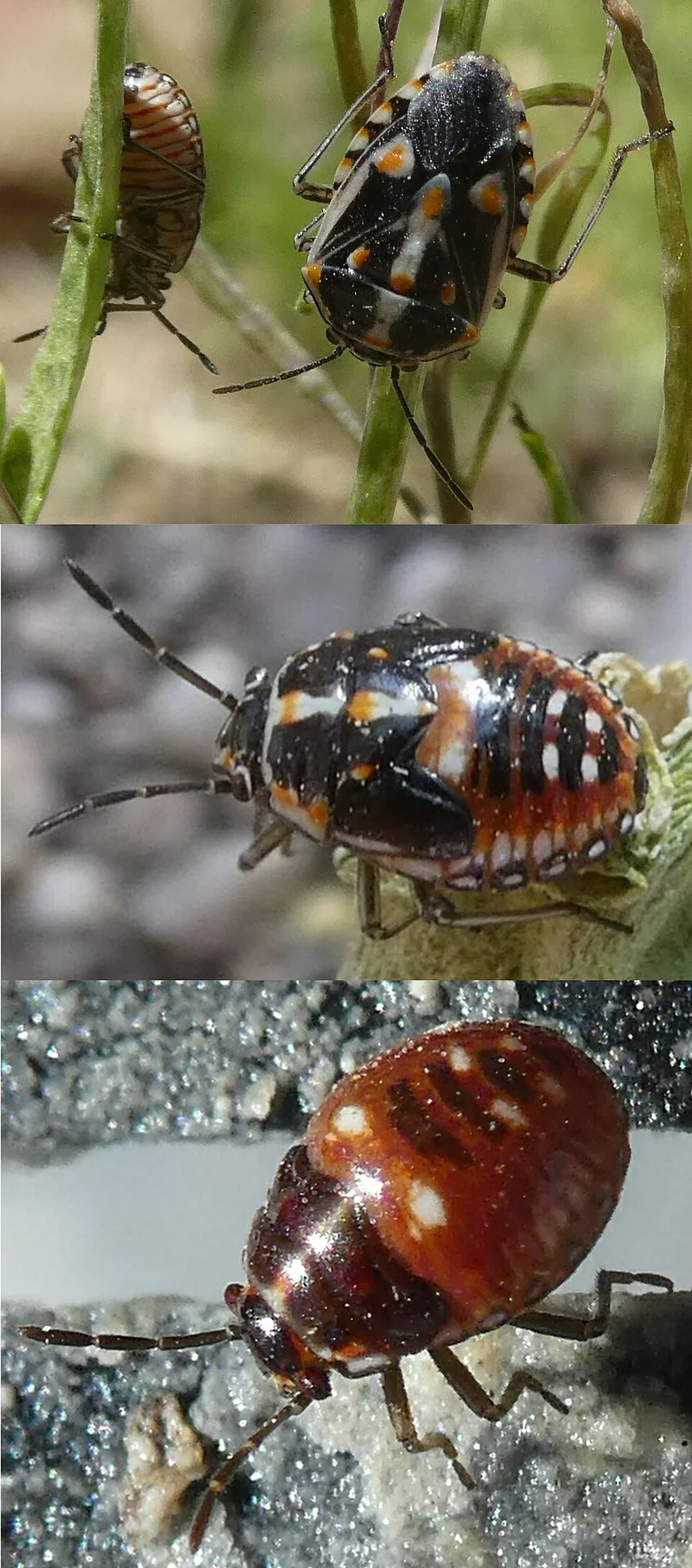
a small shield-shaped stink bug about the size of a grain of rice (5–7 mm), shiny black with bright orange and white spots and stripes — which is why it is called the painted bug. You often see them in pairs, joined tail-to-tail, out on the plants in the heat of the day, and crushing one gives off a bad stink.
The young ones (nymphs)
smaller, wingless and bright red-orange, often in clusters on the seedlings or down at the plant base. They look like tiny round red beads and do just as much damage as the adults.
Don't confuse it
with the ladybird, which is a friend that eats aphids and is round and dome-shaped — bagrada is flatter, shield-shaped, and swarms seedlings leaving star-spots. Aphids are tiny and soft and leave sticky, curled leaves (not star-spots), while flea beetles chew small round holes rather than pale star marks.
Scout for it
When to look
watch most closely from the seedbed stage through the first 3–4 weeks after transplanting — the young, tender stage when a single bug can kill the growing tip. Step up your scouting during hot, dry spells, when the bug breeds fastest.
Look in the heat of the day
, when the bugs come out to feed and mate in the open on the plants. Walk a big "W" across the field so you cover the middle and all four corners, not just the edge nearest the path.
Make about 10 stops, and at each stop check 10 plants. Look at the heart (growing tip), the undersides of the leaves, and the stem base and soil right around each plant.
Early morning and evening the bugs hide
— search under soil clods, in cracks in the soil, and under any mulch or trash at the plant base. That is also where the females lay their eggs in the soil, out of sight.
Act now if you find even ONE bug on your seedlings
, or fresh star-spots on 1 in every 10 young plants. The trigger is deliberately this low — seedlings are killed so easily that you cannot wait for the numbers to build.
Control it
Prevent it first (your strongest tool)
before planting, pull and destroy volunteer brassicas and cruciferous weeds — wild mustard, wild radish, rape regrowth — that feed the bug, and clear old crop residues and soil clods where it shelters and lays eggs. Don't plant right next to a just-harvested cabbage field, and rotate your brassicas onto fresh ground away from last season's.
Shield the nursery
cover seedbeds and young transplants with fine insect netting through the tender weeks so the bugs simply can't reach them. Set out strong, vigorous seedlings that grow away fast, and where you can, avoid transplanting in the peak of the hot, dry season, when the bug is at its worst.
Knock the numbers down by hand
in the cool of early morning, when the bugs are slow, pick them off or tap them into a tin of soapy water, and check the plant base and under clods for the red young. On a small seedbed, done daily, this alone can save the crop.
Spray neem early
a neem-based (botanical) spray partly controls the young bugs if you start early and repeat every few days — it is gentle and breaks down fast, so one spray is never enough. Aim it at the undersides of the leaves and the plant base, where the bugs shelter.
Chemical — last resort only:
if bugs are still on the seedlings past threshold, spot-spray just the affected bed or young plants with a pyrethroid, directing it at the plant base and soil where they hide. Cover your skin, eyes, nose and mouth; spray in the cool of the day with the wind at your back; keep it away from food, water, children and bees; wash well afterwards; and respect the pre-harvest interval — the number of days you must wait between spraying and eating or selling the crop. Rotate to a different chemical group each time so the bug does not build resistance (stop being killed by the spray).
If it keeps spreading
widen your clean-up to the weeds and volunteers around the field, make sure you are hitting the plant base early, while the bugs are still small, and switch to a different chemical group next time. If a seedbed is already ruined — plants blind or many-headed — those seedlings will never form proper heads, so don't waste labour transplanting them: pull and destroy them, clean up the bed, and re-sow into a fresh, netted bed away from the infested ground, ideally after the hot-dry peak has passed.
Catch Bagrada bug before it costs you the harvest
This guide is the general answer. Divisi works out yours — the week to scout your own field for Bagrada bug, and what to do the day you find it.


Crops it affects
Plan the crops it attacks


All planting calendars, country by country
Get Insights by email
A short digest of new Divisi articles. No email on quiet weeks.
Frequently asked questions
How do I identify Bagrada bug?
The first sign — star-spots:. look for pale, whitish or yellowish star-shaped scorch marks stippled across the leaves of young plants, where the bugs have sucked out the sap. Heavily fed patches look wilted and scorched, as if burnt by the sun.
When should I take action against Bagrada bug?
Any bugs found on seedlings, or fresh starburst lesions on 1 in 10 young plants.
How do I control Bagrada bug?
Prevent it first (your strongest tool). before planting, pull and destroy volunteer brassicas and cruciferous weeds — wild mustard, wild radish, rape regrowth — that feed the bug, and clear old crop residues and soil clods where it shelters and lays eggs. Don't plant right next to a just-harvested cabbage field, and rotate your brassicas onto fresh ground away from last season's.
Which crops are attacked by Bagrada bug?
Among the crops covered here: Cabbage, Spider plant.