 Divisi
Cabbage webworm
Hellula undalis · Insect
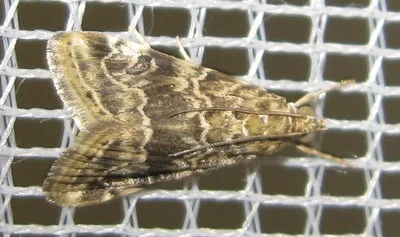
Photo: Tonton Bernardo · CC BY-SA 3.0
Cabbage webworm (Hellula undalis) is the caterpillar of a small moth that attacks young brassicas — cabbage, kale, rape, cauliflower and radish. Instead of eating leaves from the outside, it bores straight into the growing point (the tender central bud) of a seedling and spins a mat of silk webbing over where it feeds. By killing that central bud it stops the plant from ever forming a head, or forces it to throw out several small useless heads. It hits hardest on nursery seedlings and freshly transplanted crops in hot, dry weather.
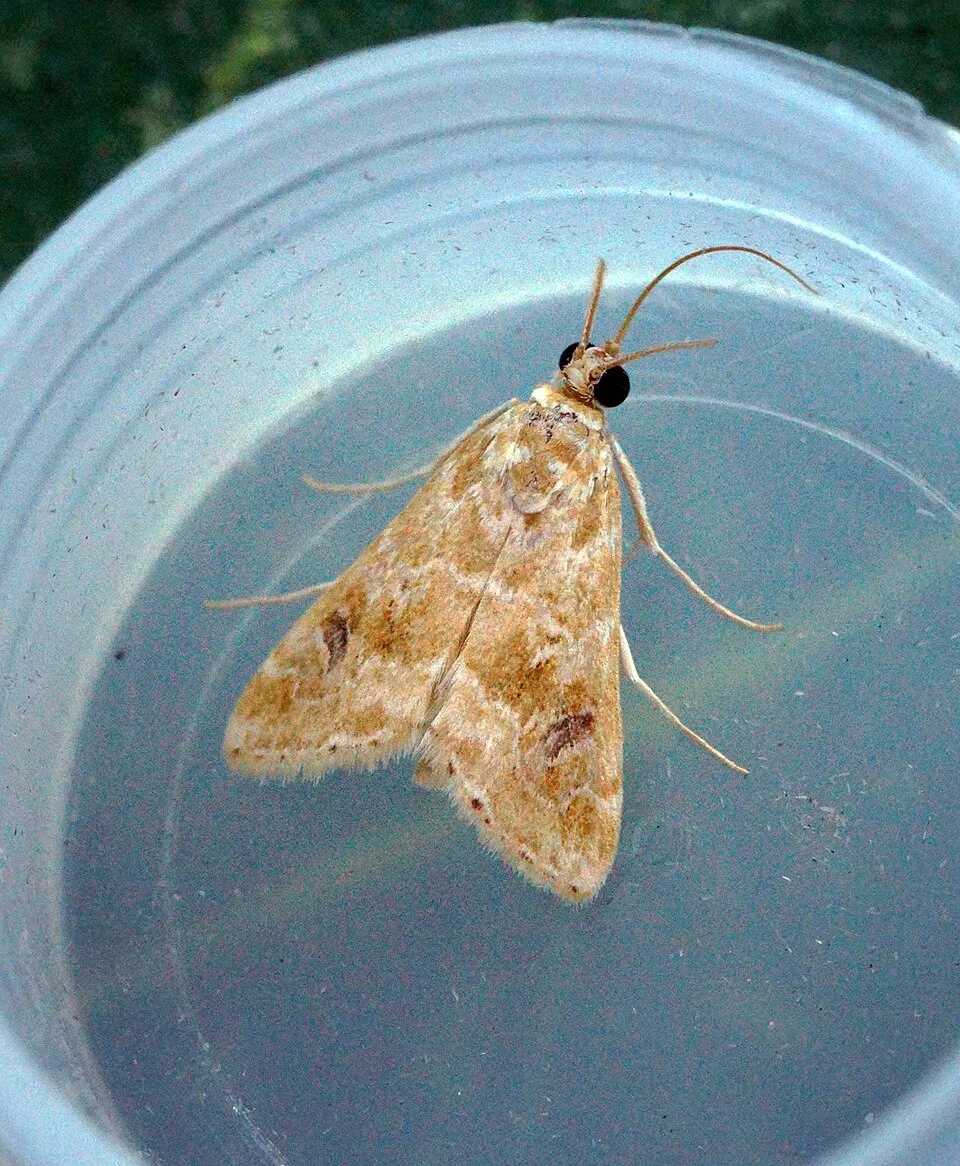
Ben Sale from UK · CC BY 2.0 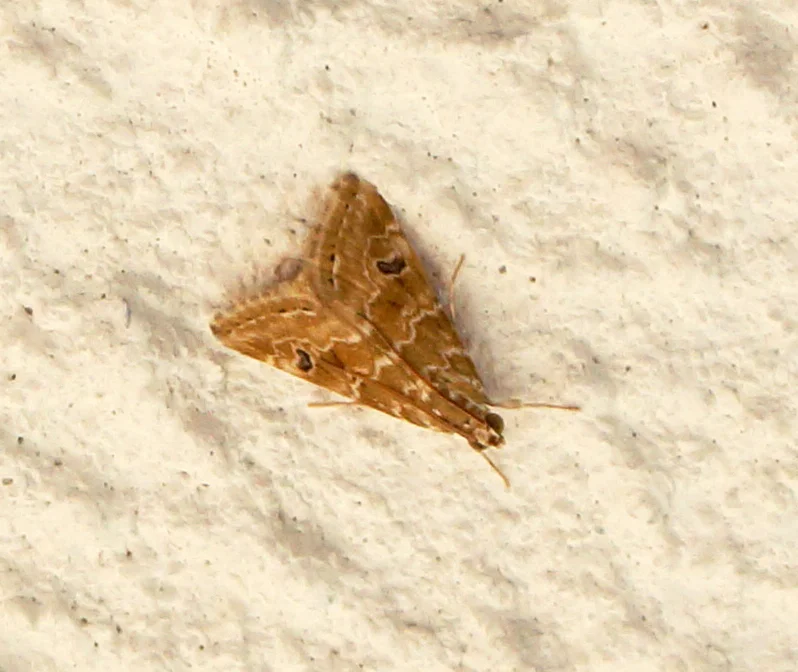
Ben Sale from UK · CC BY 2.0
Why it matters
Cabbage webworm goes for the one part of a young brassica the plant cannot replace — the central growing bud. Kill that and the plant will never make a proper head, so a bad attack in the nursery or just after transplanting can wipe out up to half your crop (50%). Because the caterpillar feeds hidden inside the heart under a shield of silk webbing, sprays struggle to reach it once it has bored in — so the damage is often done before you even notice. The only reliable fix is to catch it early, on the young seedling, before it tunnels deep.
When to act
webbing or larvae at the growing point of young seedlings or transplants
This guidance is general, compiled from published agronomic references including FAO and CABI. Thresholds and timing shift with your crop, your variety and the season.
In much of the region a spray is simply called mushonga — medicine. But a chemical group you cannot name is one you cannot rotate, and a product you did not write down has no pre-harvest interval you can observe. Mushonga, and other farming words →
The full Cabbage webworm field guide
Identify it
The damage first
look at the centre of the seedling, not the outer leaves. The tell-tale sign is a patch of fine silk webbing over the growing point, matted together with grains of green-brown droppings (frass) — like a tiny dirty spider's web sitting in the heart of the plant.
A dead or twisted heart
where the caterpillar has bored in, the central bud goes brown and dies, or the plant grows stunted and crooked. A plant that has lost its bud often sprouts several small side-heads instead of one (a 'blind' or multi-headed plant) — that plant will never make a sellable head.
The caterpillar itself
open the webbing gently and you'll find a small caterpillar only about 1–1.5 cm long (shorter than your thumbnail is wide) — creamy to grey with five faint brownish or purplish stripes running down its back and a dark head. It hides deep in the tunnel, so you may only see its droppings and web at first.
Don't confuse it
with the diamondback moth caterpillar (small, bright green, wriggles and drops on a silk thread when touched, and chews small windows in the outer leaves — not the heart) or with cutworms (fat, grey, hide in the soil and cut seedlings off at the base). Cabbage webworm is the one that webs and tunnels into the growing point.
Scout for it
When to look
watch most closely while plants are at their young seedling and freshly-transplanted stage — this is exactly when the growing point is tender and when this pest does its worst. Pressure is highest in hot, dry weather (around 22–32°C), so step up checks during a dry spell.
Scout the nursery hardest
This pest often starts in the seedbed and rides into the field on infected transplants. Check nursery beds closely every few days, and inspect every batch of seedlings before you transplant — never move webbed or dead-hearted seedlings into the field.
How to walk the field
walk a large "W" shape so you cover the four corners and the middle, not just the edge by the path. Stop at about 10 spots and look closely at the heart / growing point of 10 young plants at each stop.
What to check
at each plant, look right into the centre bud for silk webbing, fresh green-brown frass, a browning dead heart, and the small striped caterpillar inside.
Your action number
the threshold is simple — as soon as you find webbing or larvae at the growing point of your young seedlings or transplants, act now. Even a few affected seedlings at this tender stage is enough to treat, because each caterpillar can destroy the bud of the plant it is in. Don't wait for a big count.
Control it
Prevent it
-
start clean and grow fast:
raise strong, healthy seedlings and get them to transplant quickly so they spend less time at the vulnerable tender stage. Cover nursery beds with fine netting to stop the moths laying eggs on your seedlings — this is your single best defence.
-
cut the food supply:
after harvest, pull out and destroy old brassica stalks, roots and volunteer plants, and keep down brassica weeds, so there is no steady supply of tender growing points to breed on. Where you can, time planting away from the peak hot, dry season when moth pressure is highest, and don't plant new brassicas right next to an old brassica field. Avoid broad poisons so natural enemies survive to help you.
Act early — biological spray (Bt):
at the first sign of webbing, spray Bt (Bacillus thuringiensis — a natural caterpillar bacteria, harmless to people, bees and helpful insects), aiming it straight into the growing point of the young plants while the caterpillars are still small and feeding near the surface, before they tunnel deep. Bt only works on caterpillars that eat it, so cover the heart well and spray in the cool of the day so it lasts longer.
Last resort — chemical insecticide:
if webbing is spreading fast and Bt is not holding it, use a recommended insecticide, directing the spray into the heart of the seedlings at threshold, before the larvae bore deep (once they are sealed inside the silk and stem, no spray reaches them). Safety: cover your skin, eyes, nose and mouth, spray in the cool with the wind at your back, keep it away from food, water, children and bees, respect the pre-harvest interval (the wait between spraying and harvest printed on the label — brassica leaves are eaten, so this matters), and wash yourself and your clothes after. Rotate to a different chemical group each time so the pest doesn't build up resistance (stop being killed by it).
If it keeps spreading
re-check that you are hitting the growing point and spraying early — most failures are from spraying too late, after the caterpillar has sealed itself in. Rogue out and destroy the worst dead-hearted plants so they don't shelter caterpillars. Where a nursery or a patch is already badly webbed and blind, cut your losses on those seedlings — pull and burn them rather than transplanting them — and start a fresh, netted nursery on clean ground away from old brassicas.
Catch Cabbage webworm before it costs you the harvest
This guide is the general answer. Divisi works out yours — the week to scout your own field for Cabbage webworm, and what to do the day you find it.


Crops it affects
Plan the crops it attacks


All planting calendars, country by country
Get Insights by email
A short digest of new Divisi articles. No email on quiet weeks.
Frequently asked questions
How do I identify Cabbage webworm?
The damage first. look at the centre of the seedling, not the outer leaves. The tell-tale sign is a patch of fine silk webbing over the growing point, matted together with grains of green-brown droppings (frass) — like a tiny dirty spider's web sitting in the heart of the plant.
When should I take action against Cabbage webworm?
webbing or larvae at the growing point of young seedlings or transplants
How do I control Cabbage webworm?
Prevent it — start clean and grow fast:. raise strong, healthy seedlings and get them to transplant quickly so they spend less time at the vulnerable tender stage. Cover nursery beds with fine netting to stop the moths laying eggs on your seedlings — this is your single best defence.
Which crops are attacked by Cabbage webworm?
Among the crops covered here: Cabbage, Rape / covo / kale.