 Divisi
Capsids (mirid bugs)
Sahlbergella singularis · Insect
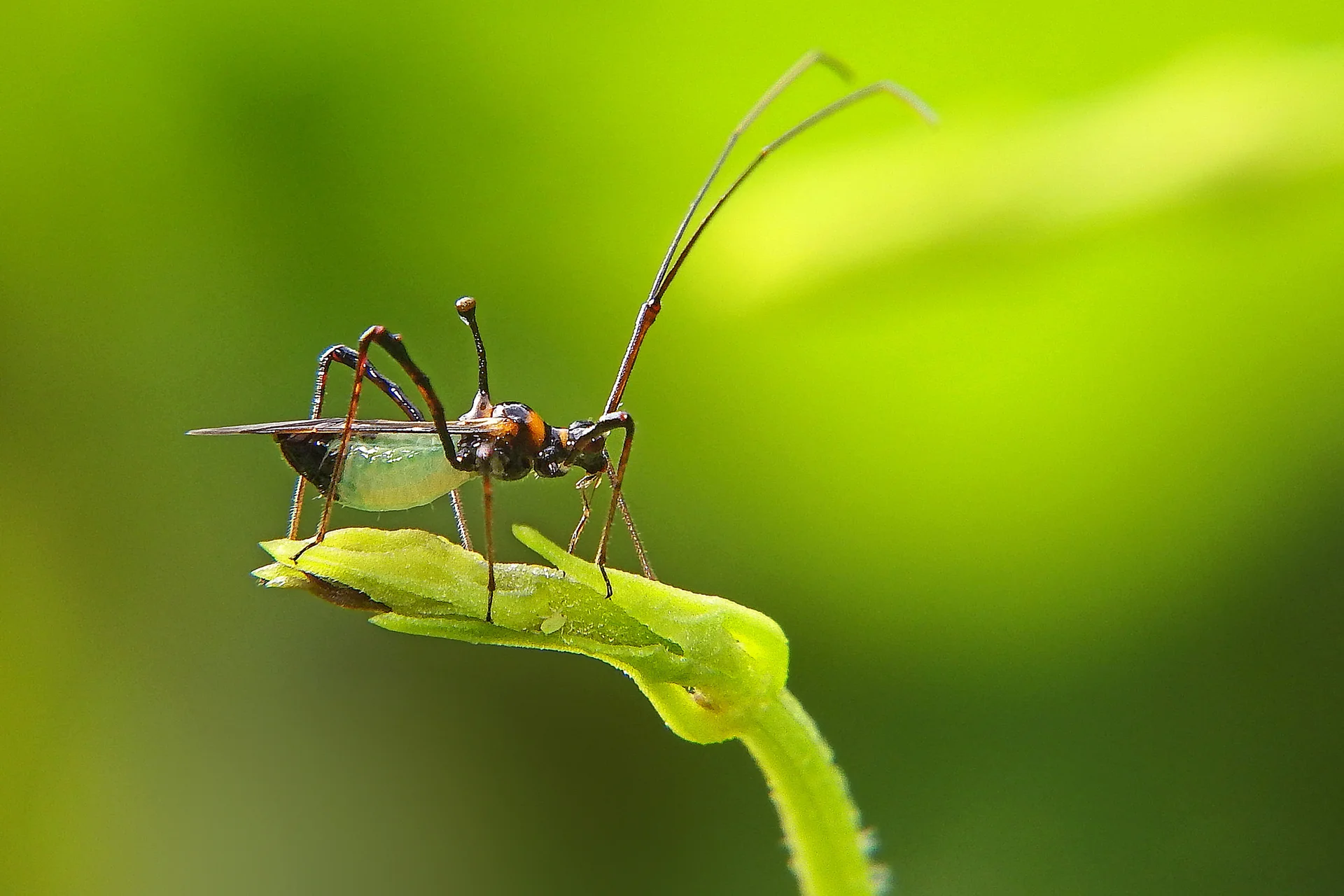
Photo: Rison Thumboor · CC BY-SA 4.0
Capsids (also called mirid bugs) are small, shy sap-sucking bugs — the cocoa capsid, Sahlbergella singularis, is the main one — that stab their needle-like mouths into cocoa shoots, flowering cushions and pods (and into the soft shoots and young nuts of cashew). Each feeding puncture kills a small patch of tissue and opens a wound that dieback fungi move into, so a handful of bugs can kill shoots and scar pods far out of proportion to their numbers. Their damage is patchy — it gathers in warm, sunny gaps in the canopy and forms expanding 'capsid pockets' that widen season after season.
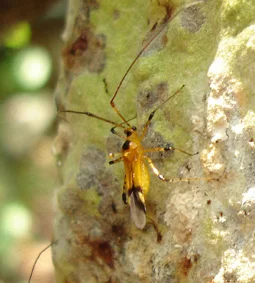
Roy Bateman · CC BY-SA 3.0 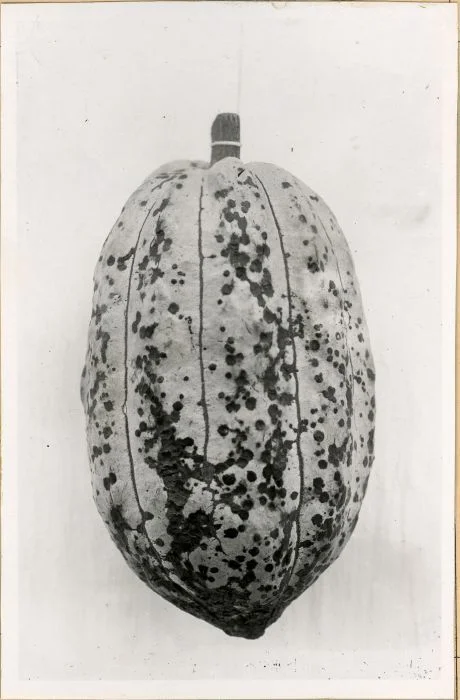
Tropenmuseum (unknown photographer) · CC BY-SA 3.0
Why it matters
Capsids are small, but a few of them do damage far beyond their size — each feeding stab kills a patch of shoot or scars a pod, and the wound lets in dieback fungi that finish off the branch. Left alone they can take up to 40% of your cocoa — close to half your crop — and the hardest part is how the damage spreads: the dead, bare shoots open sunny gaps in the canopy, and those gaps are exactly what capsids love, so a small 'pocket' of damage widens season after season. Once a pocket is well established it is slow and costly to close again, so the money is in catching it while it is still small.
When to act
fresh lesions on pods or shoots, or bugs found during canopy inspection
This guidance is general, compiled from published agronomic references including FAO and CABI. Thresholds and timing shift with your crop, your variety and the season.
In much of the region a spray is simply called mushonga — medicine. But a chemical group you cannot name is one you cannot rotate, and a product you did not write down has no pre-harvest interval you can observe. Mushonga, and other farming words →
The full Capsids (mirid bugs) field guide
Identify it
The damage you see first
small, dark, sunken spots on green shoots and young pods, each like a little water-soaked scab with a slightly raised, corky rim. On a shoot these spots turn black and girdle it (choke a ring right around the stem), so the tip above wilts, browns and dies from the top down. This dying-back of shoots is called dieback.
On the pods
feeding leaves rows or rings of black, sunken specks that harden into rough, corky scars and twist or stunt the pod as it grows. Small young pods (cherelles — the finger-sized baby pods) that are heavily fed on turn black and shrivel.
The bigger picture
dead brown shoots stick up bare above the canopy like antlers (farmers call this 'staghead'), the tree throws up a rush of straight upright suckers (chupons — the water-shoots from the trunk and main branches), and a whole patch of trees looks thin and gappy. These damaged patches are the capsid pockets — that is where the bugs are concentrated.
The bug itself
a small, fast bug about 8–10 mm long — the size of a grain of rice or a small ant, reddish-brown to dark brown, with long thin feelers (antennae) and long legs. It is shy: it feeds on the shaded underside of shoots and pods in the cool of early morning or late afternoon, and when you disturb it it runs sideways to the far side of the branch or drops to the ground. The young ones (nymphs) are smaller, orange-brown and have no wings yet.
Don't confuse it
capsid pod spots are small, separate, sunken specks that stay put — unlike black pod disease, which is a spreading wet black rot that swallows and destroys the whole pod, often with a white mouldy bloom. And capsid dieback starts from these feeding spots on green shoots — not the all-over leaf drop of a drought or the even browning of a sun-scorched top.
Scout for it
When to look
check whenever the tree is pushing soft new flush (young reddish shoots), and right through the months when pods are on the tree, from tiny cherelles to maturing pods — those soft shoots and pods are what capsids feed on. Warm, humid spells after the canopy has opened up are the danger times. Look in the cool of early morning or late afternoon, when the bugs are out feeding rather than hidden.
Where to walk
don't just check the trees beside the path. Walk a large 'W' across the block so you cover all the corners and the middle, and give extra attention to sunny gaps in the canopy and any patch that already looks thin or has dead shoots — capsids gather in these pockets.
What to check, on about 20–30 trees
look over the young shoots, the flowering cushions (the knobbly spots on the trunk and branches where pods grow) and the pods, on the shaded underside where the bugs hide. Search for the fresh, dark, water-soaked feeding spots and for the fast-moving bugs themselves. Gently shaking a branch over a light cloth can knock hidden bugs down where you can spot them.
When to act — lead with the count:
capsids are so damaging that you do not wait for big numbers. Even 1 fresh lesion or 1 live bug on a single tree means that pocket is active — if you find fresh damage or live bugs on any of the trees you check, treat that pocket now. (Old, grey, healed-over scars with no fresh dark spots are last season's damage — don't spray for those.)
Control it
Prevent it — keep the canopy closed:
capsids need sunny gaps, so deny them the gaps. Keep an even, closed shade canopy by managing your shade trees, and prune out dead and dying wood so light doesn't pour in. Cut away the upright chupons (water-shoots) and any mistletoe, and keep the trees strong with good feeding and mulch so they shrug off feeding damage. A well-shaded, healthy plantation is your single best defence, and it is the method that works best short of spraying.
Work the pockets first
because the damage clusters, find the pockets early and deal with them before they widen — prune out the dieback, and where a pocket has opened a hole in the canopy, close it by training in side branches or replanting so light stops flooding in. Shutting pockets early is what stops the slow spread across the whole farm.
Protect the bugs' natural enemies
black weaver ants (the ants that build leaf nests up in the canopy) and other small predators hunt capsids for free. Encourage them — link their nests tree to tree with sticks and don't destroy them — and avoid blanket spraying that wipes them out. On their own they only knock numbers down part-way, so lean on them alongside a closed canopy, not as your only tool.
Insecticide, as a targeted last resort
when scouting shows an active pocket, spot-treat just that pocket with a recommended insecticide — never blanket-spray the whole farm. Aim the spray at the shoots, cushions and pods where the bugs feed. Spray in the cool, still hours of early morning or late evening with the wind behind you; cover your skin, eyes, nose and mouth; keep the spray off food, off water sources, and away from children and helpful insects like the weaver ants and pollinators; and wash yourself and your clothes afterwards. Respect the pre-harvest interval — the number of days the product label says you must wait between spraying and picking pods — so no chemical reaches the beans. To stop capsids getting used to a product (resistance), rotate to an insecticide from a different chemical group each time rather than using the same one over and over.
If it keeps spreading
re-check the treated pockets after a couple of weeks and re-treat any that are still active, always rotating the product. If pockets keep widening despite closing the canopy and spot-spraying, ask your extension officer or cocoa buyer about coordinated, area-wide timing — capsids fly in from neighbours' farms, so whole-community timing beats one farm acting alone. And where a pocket of old trees is already staghead and barely bearing, cut your losses: stump or replant those trees and re-establish the shade, rather than pouring inputs into a block that will not recover.
Catch Capsids (mirid bugs) before it costs you the harvest
This guide is the general answer. Divisi works out yours — the week to scout your own field for Capsids (mirid bugs), and what to do the day you find it.


Crops it affects
Plan the crops it attacks


All planting calendars, country by country
Get Insights by email
A short digest of new Divisi articles. No email on quiet weeks.
Frequently asked questions
How do I identify Capsids (mirid bugs)?
The damage you see first. small, dark, sunken spots on green shoots and young pods, each like a little water-soaked scab with a slightly raised, corky rim. On a shoot these spots turn black and girdle it (choke a ring right around the stem), so the tip above wilts, browns and dies from the top down. This dying-back of shoots is called dieback.
When should I take action against Capsids (mirid bugs)?
fresh lesions on pods or shoots, or bugs found during canopy inspection
How do I control Capsids (mirid bugs)?
Prevent it — keep the canopy closed:. capsids need sunny gaps, so deny them the gaps. Keep an even, closed shade canopy by managing your shade trees, and prune out dead and dying wood so light doesn't pour in. Cut away the upright chupons (water-shoots) and any mistletoe, and keep the trees strong with good feeding and mulch so they shrug off feeding damage. A well-shaded, healthy plantation is your single best defence, and it is the method that works best short of spraying.
Which crops are attacked by Capsids (mirid bugs)?
Among the crops covered here: Cashew, Cocoa.