 Divisi
Citrus mites
· Mite
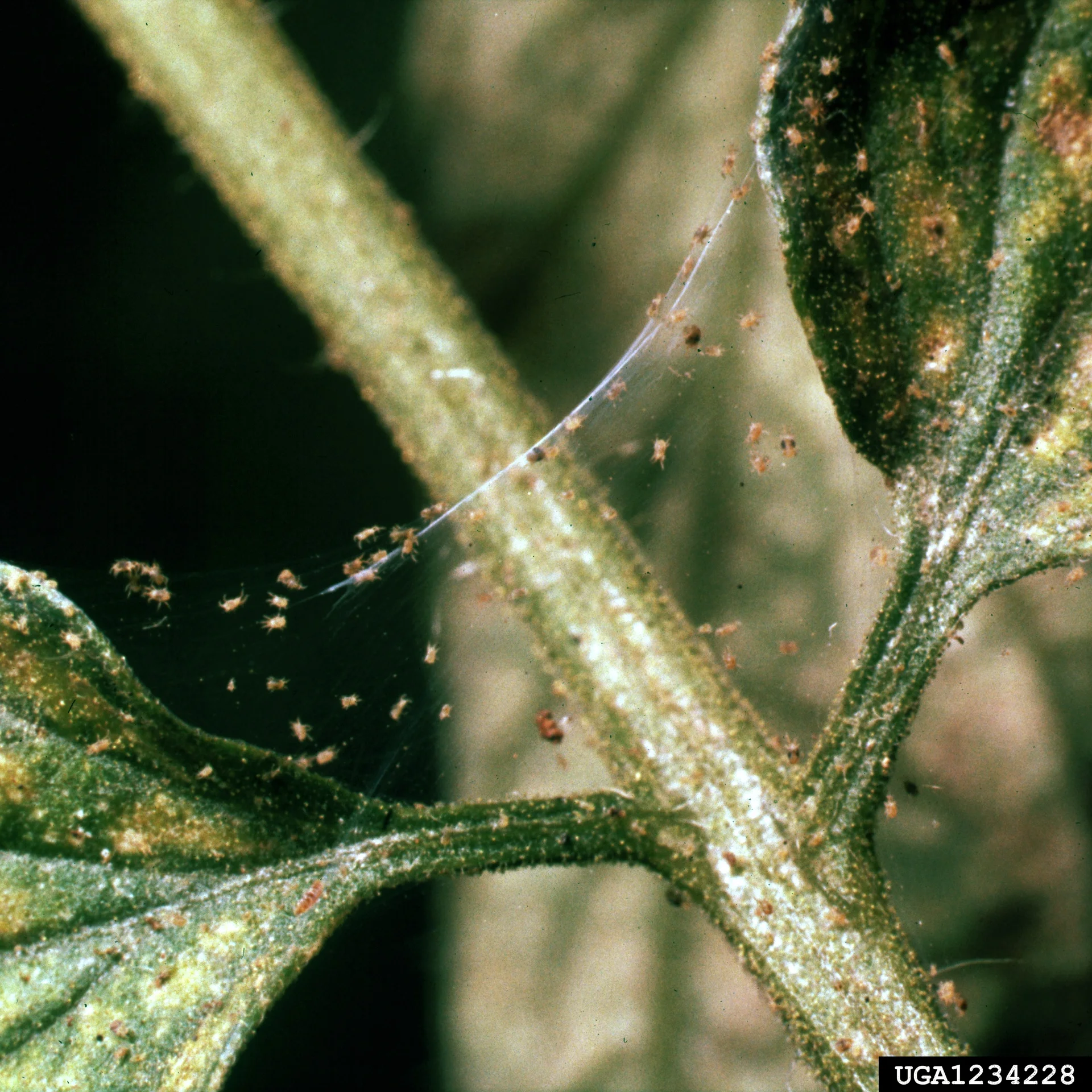
Photo: Clemson University - USDA Cooperative Extension Slide Series, Bugwood.org · CC BY 3.0 US
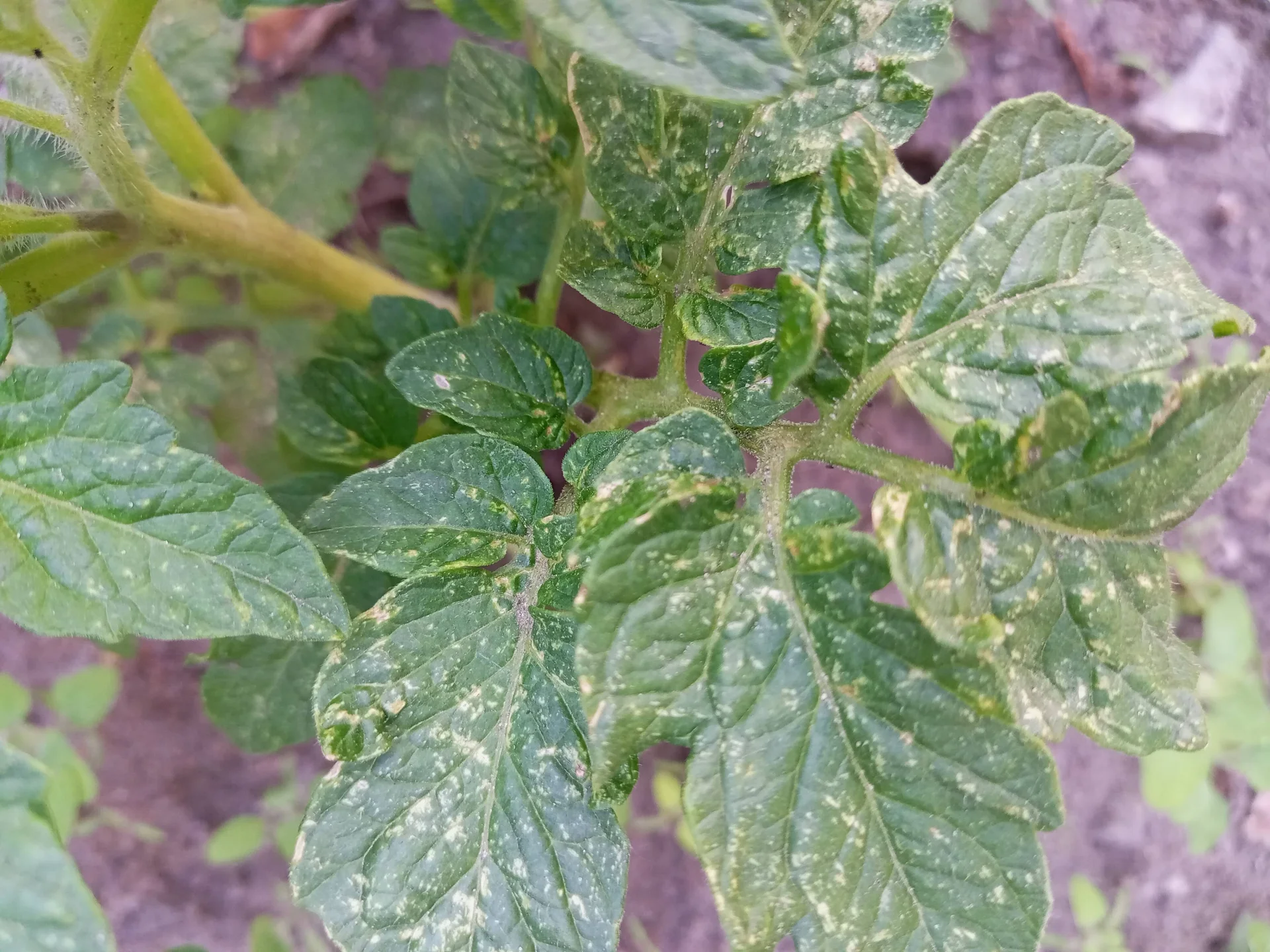
Citrus mites are a group of near-invisible mites that attack citrus trees — orange, lemon and lime. The citrus rust mite grazes the skin of the leaves and fruit, leaving a bronze or silvery 'russet' that spoils the fruit's look; spider mites suck the juice out of the leaves, leaving them speckled, dull and dropping. Both explode in numbers in hot, dry, dusty weather, and an attack turns much worse when broad poisons wipe out the tiny predator bugs that normally hold them in check.
Natalka Ukraine (baby-bear.org) · CC BY 4.0 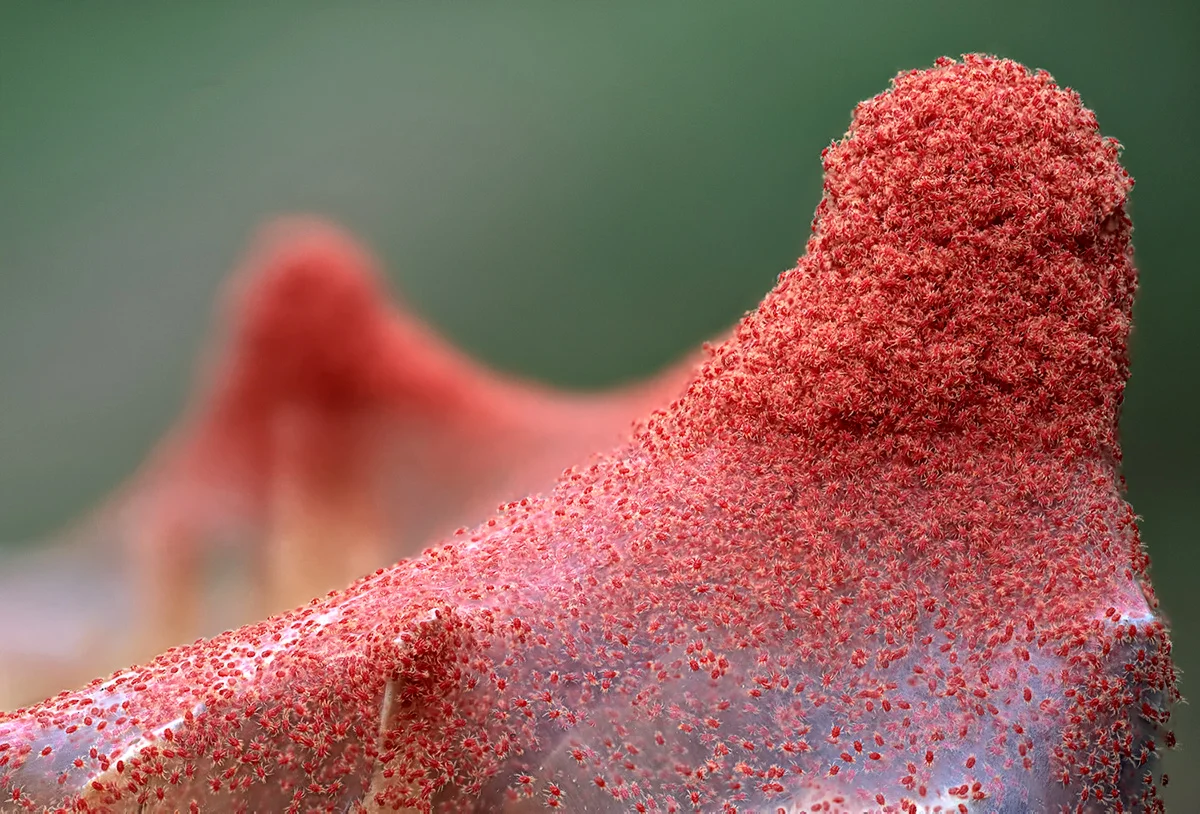
Aleksey Gnilenkov from Moscow, Russia · CC BY 2.0
Why it matters
A bad mite attack can cost you up to a third of your crop's value. On the fruit the rust mite leaves a permanent bronze scar — the fruit is still perfectly good to eat, but buyers pay far less for scarred fruit, so your grade-1 oranges become cheap juice fruit. Spider mites strip and drop the leaves, weakening the tree for seasons to come. Mites are hard to beat once they take hold because they are too small to see without a lens, they double their numbers in days in hot weather, and the wrong spray kills the good bugs and makes the outbreak worse.
When to act
Rust mite: bronzing or silvering starting on fruit and leaves. Spider mite: stippling on leaves; treat when a hand-lens count shows rising colonies on several trees.
This guidance is general, compiled from published agronomic references including FAO and CABI. Thresholds and timing shift with your crop, your variety and the season.
In much of the region a spray is simply called mushonga — medicine. But a chemical group you cannot name is one you cannot rotate, and a product you did not write down has no pre-harvest interval you can observe. Mushonga, and other farming words →
The full Citrus mites field guide
Identify it
The first thing you'll see (rust mite)
a bronze, rust-brown or silvery sheen spreading smoothly over the skin of the fruit and the leaves — as if the fruit has been lightly dusted or 'sun-tanned' all over. The fruit is not rotten and is still good to eat, but the colour is spoiled and buyers pay less for it.
On the leaves (spider mite)
fine pale speckles or 'stippling' — as if someone sprinkled pale pepper or dust across the leaf — turning it dull and bronze. Look for fine silky webbing on the undersides of leaves and where a leaf touches a fruit, then yellowing and early leaf and fruit drop when it gets bad.
The mites themselves are almost too small to see
— you need a cheap hand lens (a 10-times magnifier). Rust mites look like a faint pale-yellow 'dust' or fog creeping on the green fruit. Spider mites are moving specks the size of fine sand — brick-red, or pale-green with two dark spots — mostly on the underside of leaves, in among their webbing. Tip: tap a leaf over a sheet of white paper and watch for tiny specks that crawl.
Don't confuse it with
wind-scar or sunburn (rough, corky patches only where branches rubbed, or damage only on the sun-facing side — rust-mite bronzing is smooth and even, all over the fruit); or a plain nutrient shortage (leaves go an even yellow with no tiny specks and no webbing, and the paper-tap test shows nothing crawling).
Scout for it
When
start checking from the time the little fruits have set and are growing, and keep it up right through to harvest — the whole fruit-growing and ripening season. Look once a week, and step up to twice a week during any hot, dry, dusty, rainless spell — that is exactly the weather mites love. Carry your hand lens every time.
How
walk a big 'W' across the orchard so you cover all four corners and the middle — and check the dusty edge rows and roadside trees first, because mites build up there first. Make about 10 stops. At each tree, eye 5 fruit and turn over about 10 leaves, checking the undersides with your lens for mites, stippling and webbing.
Rust-mite trigger — act at the very first sign:
the moment you see bronzing or silvering starting on the fruit of even 1 in 10 trees, treat those trees now. On the fruit the scar is permanent and spreads fast, so waiting straight away costs you the crop's grade.
Spider-mite trigger
if you find live mites with fresh stippling or webbing on about 2–3 of every 10 trees, and the numbers are higher than your last check, act now. Old speckling with no live mites under the lens is a past attack — don't spray for that.
Control it
Prevent — keep trees strong and kill the dust:
water the trees well so they are not drought-stressed (thirsty, stressed trees flare up with mites), and knock down the dust that shelters them — wet the orchard roads, keep a grass strip or mulch along the edges, slow down vehicles, and in dry spells hose plain water over the leaves to wash dust and mites off.
Protect the good bugs — this is the big one:
the worst mistake is spraying a broad-spectrum insecticide (a poison that kills many kinds of insect) on a fixed calendar. It wipes out the tiny predator mites and ladybirds that normally keep mites down, and the mites then flare back far worse. Scout and spray only when you actually find them, never by the calendar.
Act early — let the natural enemies work:
predator mites, lacewings and ladybird beetles eat pest mites and usually hold them below damage level when you don't poison them, so conserve them. A hard jet of plain water onto the leaf undersides knocks spider mites and their dust straight off — cheap, safe, and it buys you time.
Last resort — spray, and spray smart:
only at threshold, spot-treat the affected trees with a horticultural mineral oil (a light spray oil that smothers the mites) or a selective acaricide (a mite-killer chosen to spare the predators — 'acaricide' just means a spray that kills mites). Wet the leaf undersides and the whole fruit thoroughly, or you miss them. Safety: cover your skin, eyes, nose and mouth; spray in the cool of morning or evening with the wind behind your back; keep it off food, water, children, animals and bees; do not spray oil in the heat of the day or on a thirsty tree (it will scorch the leaves and fruit); wait out the pre-harvest interval — the number of days you must leave between spraying and picking the fruit — before you pick; and wash yourself and your clothes afterwards. Resistance: mites get used to a spray very fast, so rotate to a different chemical group each time and never use the same mite-killer twice in a row.
If it keeps spreading — or it's too late:
if mites carry on after a spray, don't just repeat the same product — switch to a different chemical group, check your coverage (undersides and fruit), and make sure dust and water-stress aren't still feeding them. If the fruit is already bronzed all over, accept that this season's fruit is downgraded — the russet will not wash off or heal — so pick and sell it as juice or lower-grade fruit, and put your effort into saving the leaves and the tree: stop the broad poisons so the predators come back, and fix the watering and dust now so next season starts with low numbers.
Catch Citrus mites before it costs you the harvest
This guide is the general answer. Divisi works out yours — the week to scout your own field for Citrus mites, and what to do the day you find it.


Crops it affects
Plan the crops it attacks
-
 When to plant Lemon in Chesumei
 -
 When to plant Lime in Webuye West
 -
 When to plant Sweet orange in Buikwe
All planting calendars, country by country
Get Insights by email
A short digest of new Divisi articles. No email on quiet weeks.
Frequently asked questions
How do I identify Citrus mites?
The first thing you'll see (rust mite). a bronze, rust-brown or silvery sheen spreading smoothly over the skin of the fruit and the leaves — as if the fruit has been lightly dusted or 'sun-tanned' all over. The fruit is not rotten and is still good to eat, but the colour is spoiled and buyers pay less for it.
When should I take action against Citrus mites?
Rust mite: bronzing or silvering starting on fruit and leaves. Spider mite: stippling on leaves; treat when a hand-lens count shows rising colonies on several trees.
How do I control Citrus mites?
Prevent — keep trees strong and kill the dust:. water the trees well so they are not drought-stressed (thirsty, stressed trees flare up with mites), and knock down the dust that shelters them — wet the orchard roads, keep a grass strip or mulch along the edges, slow down vehicles, and in dry spells hose plain water over the leaves to wash dust and mites off.
Which crops are attacked by Citrus mites?
Among the crops covered here: Lemon, Lime, Sweet orange.