 Divisi
Coffee berry borer
Hypothenemus hampei · Insect
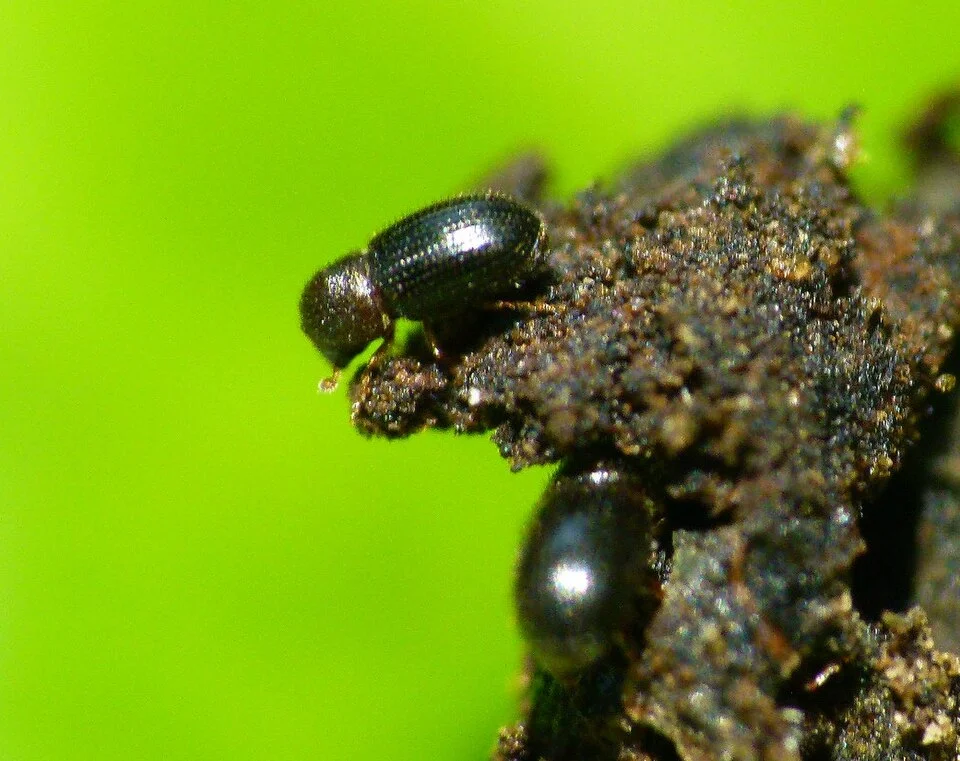
Photo: L. Shyamal · CC BY-SA 3.0
The coffee berry borer (Hypothenemus hampei) is a tiny black beetle — the single most serious insect pest of coffee in the world. The female drills a small round hole into the crown (navel) end of a developing berry — the tip away from the stalk — and tunnels into the bean inside, where she lays her eggs. Her pale grubs and several generations then feed and breed hidden inside the very seed you sell. Because it destroys the part you harvest and survives from one season to the next in berries left on the tree and on the ground, it is beaten far more by clean, complete picking than by any spray.
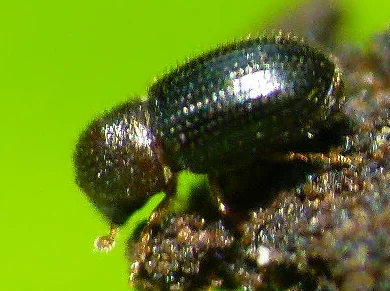
L. Shyamal · CC BY-SA 3.0 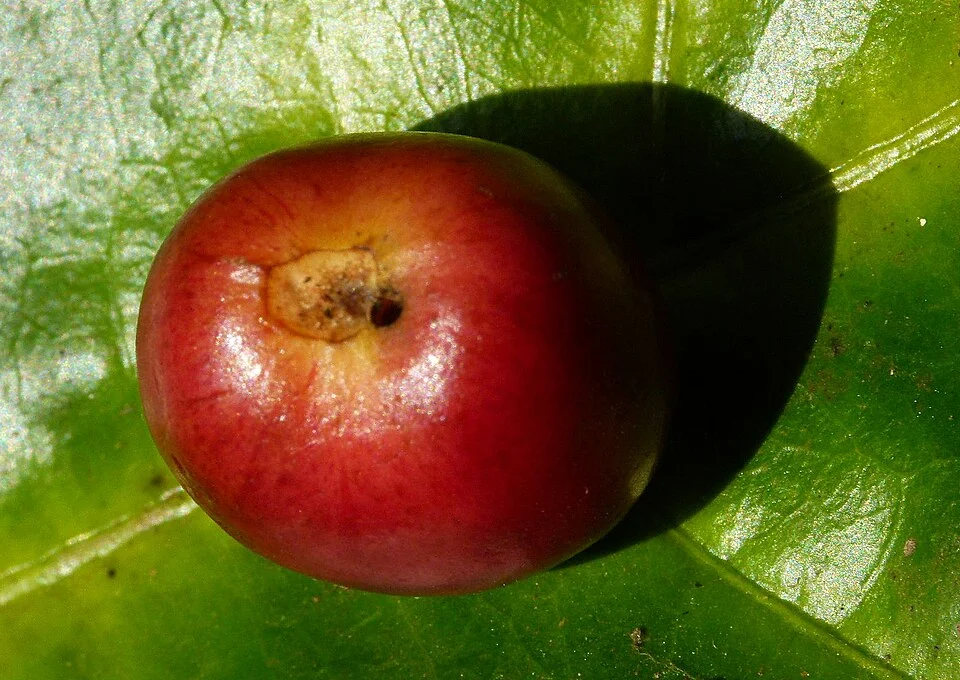
L. Shyamal · CC BY-SA 3.0
Why it matters
Coffee berry borer is the most damaging insect of coffee, and a bad attack can cost you up to 40% of your crop — almost half. Worse, it eats the bean itself, the part you sell: bored beans come out holed, mouldy and light, so you lose both weight and grade (price). Once the female tunnels inside the bean, no spray can reach her — several generations breed hidden in a single berry, and the beetle survives in leftover berries on the tree and ground to attack again next season. That is why this fight is won by prevention and a ruthless, clean harvest, not by the sprayer.
When to act
About 5 percent of berries showing fresh entry holes at the blossom (crown) end.
This guidance is general, compiled from published agronomic references including FAO and CABI. Thresholds and timing shift with your crop, your variety and the season.
In much of the region a spray is simply called mushonga — medicine. But a chemical group you cannot name is one you cannot rotate, and a product you did not write down has no pre-harvest interval you can observe. Mushonga, and other farming words →
The full coffee berry borer field guide
Identify it
The first sign — a tiny round hole at the "wrong" end of the berry
Look at the crown (navel) end, the tip away from the stalk: the borer leaves a small, clean, round pin-prick hole there, often ringed with fine pale powder (frass — the sawdust-like borings and droppings she pushes out as she digs). On the tree, badly attacked berries ripen unevenly and drop early, and the beans inside end up holed, mouldy and light, so they are downgraded when you sell.
The beetle and what is inside
Split a holed berry open and you will find tunnels bored through the bean, tiny white legless grubs, and small black beetles — often a whole family together. The beetle herself is tiny: about 1.5–2 mm, smaller than a sesame seed, like a full-stop of black ink — hard, shiny, and black to dark brown. On an unopened berry you usually see only her black rear end plugging the hole, head buried inside. Only the females fly and bore; the even-smaller males never leave the berry.
Tell it apart from look-alikes
Every coffee berry has a natural dark, flat, star-shaped navel at the crown — that is not damage; a real bore hole is a fresh round puncture with powder, going deep. Coffee berry disease looks different: it makes dark, sunken, spreading rotten patches on the skin, with no clean hole and no powder. The antestia bug is a large shield-shaped bug that sucks the berry and leaves it misshapen and rotten — again, no neat bore hole. Remember: a powdery round hole at the crown = borer.
Scout for it
When to look
start once the small green berries have formed and begun to fill and harden, and keep checking every week right through ripening to red cherry. This mid- to late-season stretch — from filling berries to ripe cherry — is exactly when the female bores in. Be extra watchful in low, warm, damp, shady spots and near any old, unpicked bushes: the borer breeds fastest at 20–30 °C and at lower, warmer altitudes.
How to walk the plot
do not just check the row by the path. Walk a big "W" across the field so you sample all four corners and the middle — about 10 bushes. At each bush, pick 20–30 berries at random, from high and low and from inside and outside the canopy, favouring the riper, harder berries the borer prefers.
What to check on each berry
turn the crown (navel) end to the light and look for the fresh round hole and pale powder. Cut a few holed berries open to confirm the beetle or white grubs inside — that proves it is the borer and not disease. Also lift and check any dry leftover berries from last season on the tree and ground: they are the nest the new attack crawls out of.
The number that means "act now"
count the bored berries. About 1 fresh hole in every 20 berries — that is 5 in 100, or 5% — is your action threshold. Reach it and you must move: tighten your clean-picking and bring in the controls below. Stay under it and just keep scouting weekly.
An optional early warning
hang a few home-made alcohol-baited bottle traps (a bottle of spirit-scented water with a drop of soap) around the plot. A rising catch of flying females warns you a new wave is starting — the moment to tighten your picking. Traps only warn you; the 5% bored-berry count above stays your real trigger to act. Keep the spirit bait away from children and animals — it is poison.
Control it
Prevent it first — pick clean and pick often (your strongest weapon)
The borer survives between seasons inside berries left behind, so never let ripe or over-ripe cherries linger on the tree — pick ripe berries frequently and completely all through harvest. This simple, timely picking on its own is the single most effective thing you can do — worth far more than any spray.
Do a "sanitation harvest" at the end
After the main pick, go back and strip every last berry off the tree — including the dry, shrivelled "mummies" — and gather every fallen berry off the ground. These leftovers are the nursery for next season's attack. Destroy what you gather: dunk it in hot or boiling water, bury it deep, or spread it in a thin layer in full hot sun, so the beetles inside die and cannot crawl back to your trees. Keep the whole plot tidy and free of stray berries.
Act early with a natural fungus, and protect friendly insects
Where holes are appearing, spray Beauveria bassiana — a natural fungus that grows on the borer and kills her — onto the berries, aimed at the females while they are still on the outside hunting for a place to bore in (it cannot reach those already sealed inside the bean). It is safe for you and for bees. At the same time, protect the borer's natural enemies — tiny parasitic wasps (harmless wasps whose young feed on the borer inside the berry) — by not blanket-spraying harsh poisons that kill them too.
Spray a chemical only as a last resort — and get the timing right
Only if you are still over the 5% threshold after cleaning up should you reach for an approved insecticide (one cleared for coffee — check the label). It is a contact spray — it kills the female only where it lands on her, on the outside of the berry — so it works only if you hit her before she bores in, at the start of a female flush; once she is inside the bean, no spray reaches her. Safety: cover your skin, eyes, nose and mouth (long sleeves, gloves, a cloth over the face); spray in the cool of early morning or evening with the wind behind your back; keep it off food, drinking water, children, animals and especially bees; and wash yourself and your clothes afterwards. Respect the pre-harvest interval — the number of days the label says you must wait between spraying and picking — so no poison is on the cherries you sell or drink. And rotate to a different chemical group each time, or the borer builds resistance (it stops dying to a chemical used too often).
If it keeps spreading — or it is already too late
If holes keep climbing despite clean picking, the fungus and good sanitation, you have almost certainly missed a source of berries — re-check field edges, old unpicked bushes and fallen fruit, and ask neighbours to sanitise too, because females fly in from any dirty plot nearby. When berries are already heavily holed and dropping, accept that this season's bored beans cannot be saved — the beetle is sealed inside where no spray reaches her. Cut your losses the smart way: strip and gather everything now — spoiled berries and drops included — and destroy the lot. A ruthless clean harvest this season is exactly what starves the borer and protects next season's crop.
Catch coffee berry borer before it costs you the harvest
This guide is the general answer. Divisi works out yours — the week to scout your own field for coffee berry borer, and what to do the day you find it.


Crops it affects
Plan the crops it attacks


All planting calendars, country by country
Get Insights by email
A short digest of new Divisi articles. No email on quiet weeks.
Frequently asked questions
How do I identify coffee berry borer?
The first sign — a tiny round hole at the "wrong" end of the berry. Look at the crown (navel) end, the tip away from the stalk: the borer leaves a small, clean, round pin-prick hole there, often ringed with fine pale powder (frass — the sawdust-like borings and droppings she pushes out as she digs). On the tree, badly attacked berries ripen unevenly and drop early, and the beans inside end up holed, mouldy and light, so they are downgraded when you sell.
When should I take action against coffee berry borer?
About 5 percent of berries showing fresh entry holes at the blossom (crown) end.
How do I control coffee berry borer?
Prevent it first — pick clean and pick often (your strongest weapon). The borer survives between seasons inside berries left behind, so never let ripe or over-ripe cherries linger on the tree — pick ripe berries frequently and completely all through harvest. This simple, timely picking on its own is the single most effective thing you can do — worth far more than any spray.
Which crops are attacked by coffee berry borer?
Among the crops covered here: Arabica coffee, Robusta coffee.