 Divisi
Cowpea aphid
Aphis craccivora · Insect
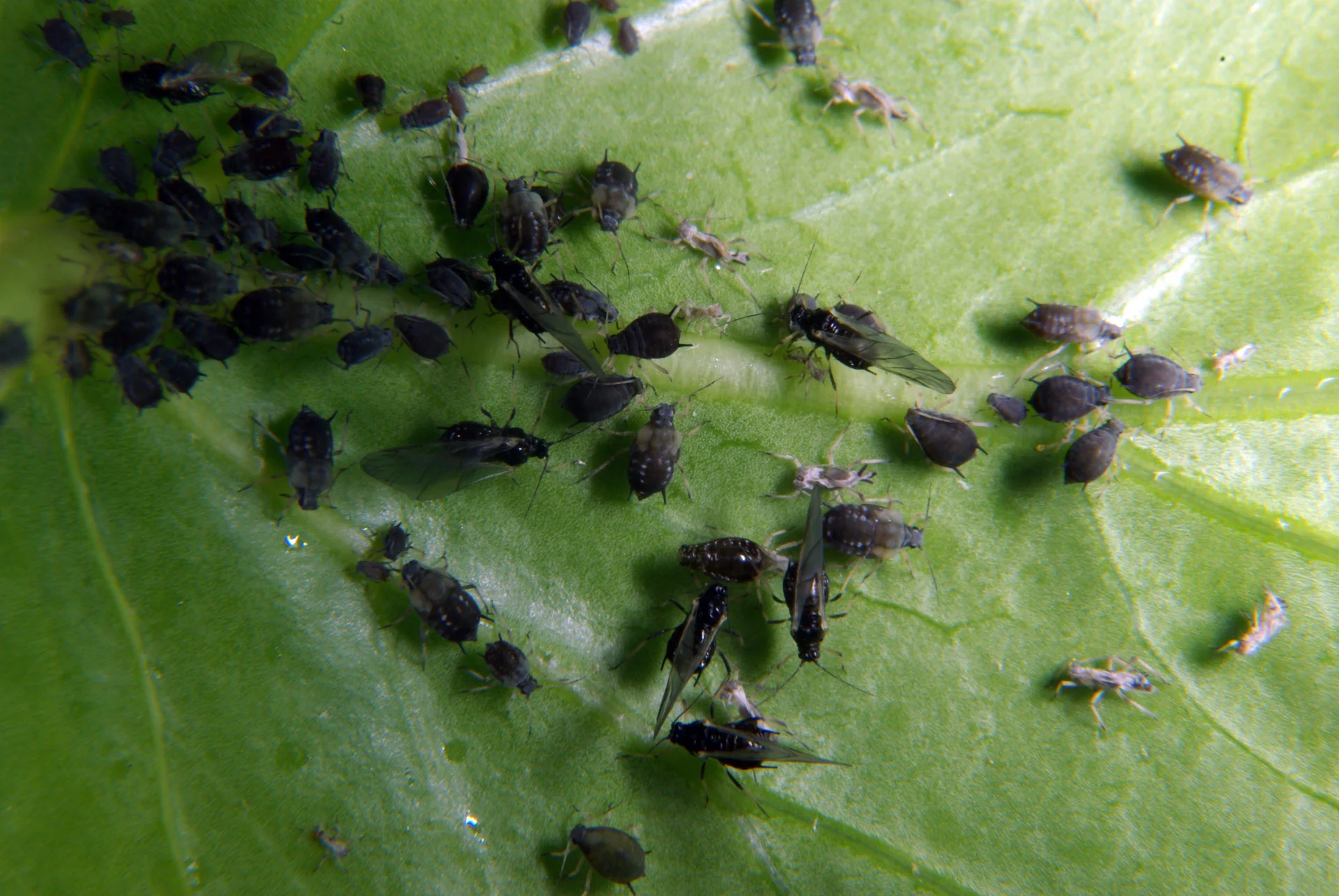
Photo: David Perez · CC BY 3.0
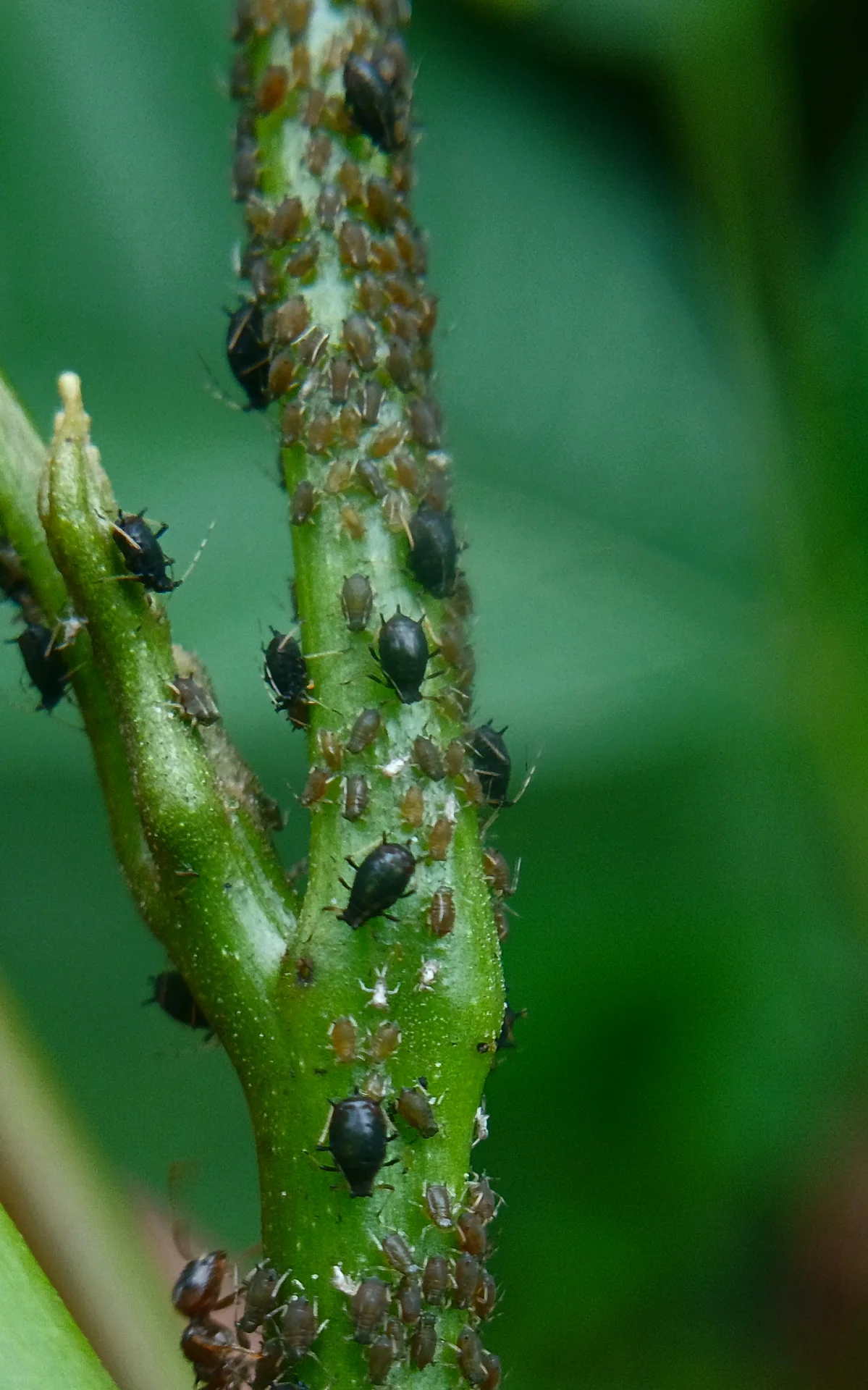
Cowpea aphid (Aphis craccivora) is a small, shiny jet-black aphid — each one no bigger than a pinhead — that packs into dense colonies on the growing tips, soft young stems and flower stalks of cowpea, groundnut and beans. It multiplies explosively in warm, dry weather, sucking the sap and coating plants in sticky honeydew, and — most dangerously — it carries cowpea mosaic and other legume viruses from plant to plant, so even a few aphids can matter. Ants tend and guard the colonies for their honeydew, chasing off the very insects that would otherwise eat the aphids.
Nativeplants garden · CC BY-SA 4.0 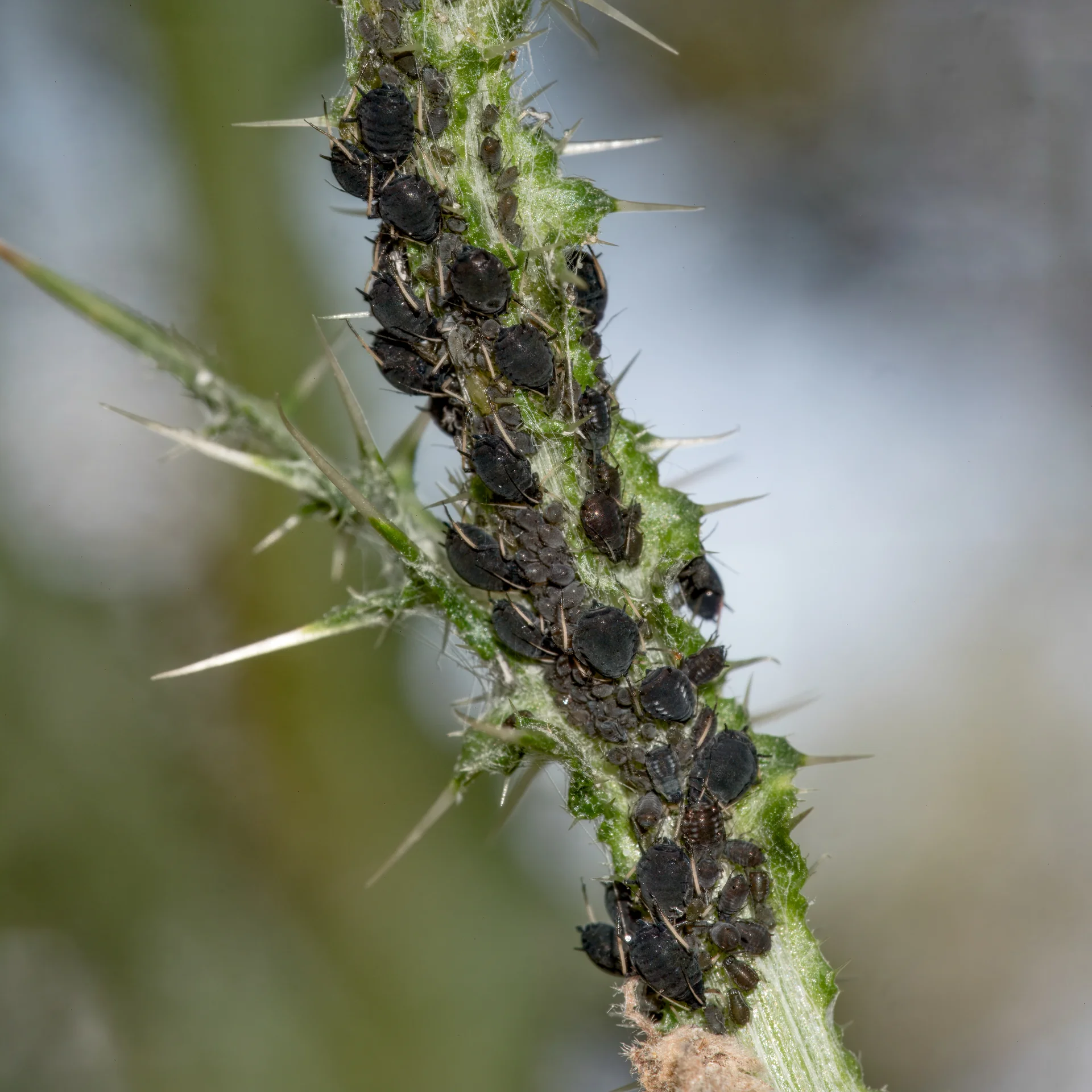
Luis Fernández García · CC BY-SA 4.0
Why it matters
Cowpea aphid can cost you up to a third of your crop — 35% — and it hurts you two ways at once. It sucks sap from your seedlings, stems and flower stalks so plants stay small, twisted, and drop their flowers and young pods; worse, it carries cowpea mosaic virus from plant to plant the way a mosquito carries malaria, and once a plant is infected no spray can cure it. Because the aphids breed extremely fast in warm, dry weather and ants protect them from the insects that would eat them, a few colonies you miss on the first seedlings can flood the whole field within days. That is why catching them early, on the very first seedlings, matters more than anything else you do.
When to act
Dense shiny black aphid colonies on the growing points/stems of seedlings, or aphids present when cowpea mosaic risk is high.
This guidance is general, compiled from published agronomic references including FAO and CABI. Thresholds and timing shift with your crop, your variety and the season.
In much of the region a spray is simply called mushonga — medicine. But a chemical group you cannot name is one you cannot rotate, and a product you did not write down has no pre-harvest interval you can observe. Mushonga, and other farming words →
The full Cowpea aphid field guide
Identify it
The damage you see first
the growing tips and flower stalks look stunted, twisted and curled and the young leaves pucker; under a heavy attack the plant sheds its flowers and young pods. Everything feels sticky — that shine is honeydew, the sugary liquid the aphids leave behind — and a black sooty mould (a harmless mould that grows on the sticky honeydew) often spreads over the leaves on top of it.
The aphid itself
on the newest growth look for dense clusters of tiny, shiny jet-black aphids, each no bigger than a pinhead — smaller than a grain of rice — packed tight on the growing tips, soft stems and flower stalks. The young ones are grey and dusty, the grown ones glossy black, and a few carry wings. Unlike whitefly they sit still and don't scatter when you lean in close.
The ant giveaway
if you spot ants running busily up and down the stems, stop and search hard for aphids. The ants farm and guard the colonies to feed on the honeydew, so a line of ants is often the first thing you notice from a distance, before you can even see the aphids themselves.
The virus sign
on some plants you will see mosaic — a patchy light-and-dark-green mottling of the leaves, with puckering, distortion and stunted growth. That is the virus the aphids carry from plant to plant; no spray can fix it, and those plants must be pulled out.
Don't confuse it with
whitefly (pure white, and they fly up in a little cloud when you disturb them), thrips (slender and pale, leaving silvery streaks and speckling rather than black clusters), or ordinary dust and soot. Cowpea aphid is shiny black, in dense colonies on the newest growth, with ants and stickiness around it.
Scout for it
When to look
start the day your seedlings emerge and check twice a week right through the seedling and vegetative stages, then again at flowering and early podding. The seedling stage is the danger time — that is when colonies explode fastest and when the virus does the most harm — so never skip it.
How to walk the field
walk a big "W" shape so you cross all four corners and the middle of the field, not just the row beside the path — the first patches nearly always start on the far side, where you don't normally look.
What to check, and how many
make about 10 stops along the W and look closely at 10 plants at each stop. Turn over the young leaves and check the growing tips, soft stems and flower stalks for shiny black clusters, stickiness, sooty mould and ant trails.
The number that means act
if 2 or more plants in every 10 (about 20%) carry a dense black colony on the growing tip → act now. Lead with that count — you don't need to count individual aphids, only how many plants out of ten are colonised.
The virus exception — a far lower trigger:
if cowpea mosaic has struck your fields before, or you can already see mottled plants, do not wait for dense colonies. Because just a few aphids can spread incurable virus, treat the very first aphids you find on the seedlings.
Control it
Prevent
-
grow a resistant variety:
where you can get the seed, plant an aphid-tolerant or resistant cowpea variety. This is your cheapest and longest-lasting defence — it costs nothing extra once the seed is in the ground, and it slows the virus down as well.
-
sow early and sow right:
plant early in the season and at the spacing recommended for your variety, so the crop powers through the tender seedling stage before aphid numbers build up. Keep plants out of moisture stress — thirsty, crowded plants are weaker and far easier for aphids to overrun.
-
keep the field clean:
clear away volunteer legumes and weeds that shelter aphids and virus between crops, and the moment you spot a plant showing mosaic, pull it out and carry it right away (this is called roguing), so aphids can't pick the virus off it and carry it on to healthy plants.
Act early
-
protect your free helpers:
ladybirds and their alligator-shaped young, lacewings, hoverfly maggots and tiny parasitic wasps (which leave swollen, bronze mummy aphids behind) eat aphids by the hundred. Do not reach for broad, kill-everything poisons — wiping out these helpers is the fastest way to make an aphid outbreak far worse.
-
beat the ants, crush the first colonies:
the ants tending the aphids chase your helper insects away to protect their honeydew, so knock the ants off the plants or block their trails at the stem base first. Then pinch off and crush the few growing tips that carry the first dense colonies, before they seed the rest of the field.
Last resort — spray only above threshold:
only if 2 in 10 seedlings carry dense colonies (or virus risk is high and aphids are present) reach for an insecticide — ideally a selective aphicide, one that targets aphids while sparing bees and your helper insects. A systemic product (one taken up into the plant's sap, so the sap-sucking aphids are poisoned from inside) reaches aphids hidden in the curled tips far better than a contact spray (which only kills what it directly wets).
Spray safely
cover your skin, eyes, nose and mouth; spray in the cool of early morning or evening with the wind at your back so it blows away from you. Cowpea flowers draw in bees, so spray in the evening once the bees have left and never wet open flowers in the heat of the day. Keep the spray off food, drinking water, children and animals; wash yourself and your clothes straight afterwards; and respect the pre-harvest interval — the number of days the label tells you to wait between spraying and picking or selling the pods, so no poison is left on them.
If it keeps spreading — or it's too late:
check again 3–5 days after spraying; if colonies are back, switch to a different chemical group rather than re-dosing the same one, so the aphids never get used to a single poison (that build-up is called resistance) — and make sure you are still protecting the helpers and controlling the ants, because spray on its own rarely holds aphids for long. When plants are already stunted and widely showing mosaic virus, no spray will bring them back: pull out the worst virus plants, protect the healthy ones, and plan to sow early with a resistant variety in a clean field next season.
Catch Cowpea aphid before it costs you the harvest
This guide is the general answer. Divisi works out yours — the week to scout your own field for Cowpea aphid, and what to do the day you find it.


Crops it affects
Plan the crops it attacks


All planting calendars, country by country
Get Insights by email
A short digest of new Divisi articles. No email on quiet weeks.
Frequently asked questions
How do I identify Cowpea aphid?
The damage you see first. the growing tips and flower stalks look stunted, twisted and curled and the young leaves pucker; under a heavy attack the plant sheds its flowers and young pods. Everything feels sticky — that shine is honeydew, the sugary liquid the aphids leave behind — and a black sooty mould (a harmless mould that grows on the sticky honeydew) often spreads over the leaves on top of it.
When should I take action against Cowpea aphid?
Dense shiny black aphid colonies on the growing points/stems of seedlings, or aphids present when cowpea mosaic risk is high.
How do I control Cowpea aphid?
Prevent — grow a resistant variety:. where you can get the seed, plant an aphid-tolerant or resistant cowpea variety. This is your cheapest and longest-lasting defence — it costs nothing extra once the seed is in the ground, and it slows the virus down as well.
Which crops are attacked by Cowpea aphid?
Among the crops covered here: Cowpea, Groundnut.