 Divisi
Diamondback moth
Plutella xylostella · Insect
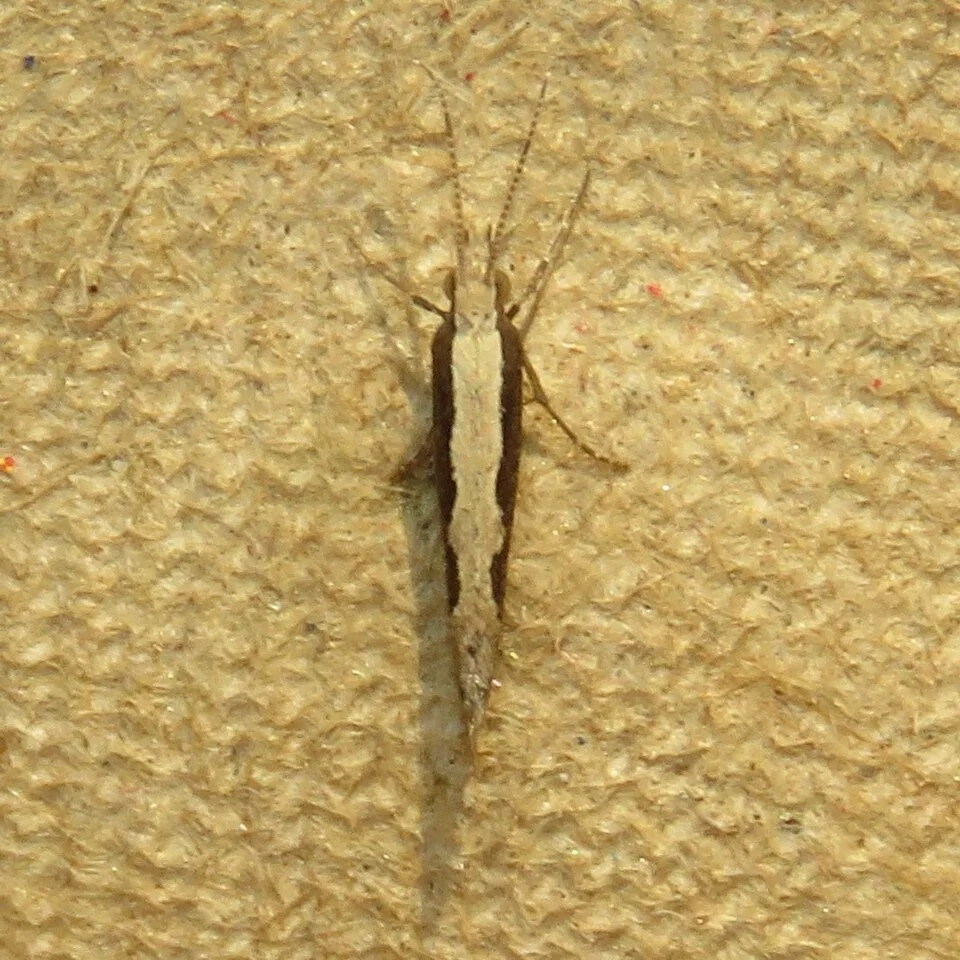
Photo: Dan MacNeal · CC BY 4.0
The diamondback moth (Plutella xylostella) is the number-one pest of the cabbage family — cabbage, kale, rape, broccoli and cauliflower. Its small, pale-green caterpillars scrape the underside of the leaves and bore into the growing point and the forming head, spoiling the very part you sell. It breeds fast, stacking generation on generation through a warm, dry season, and is famous the world over for shrugging off sprays that once killed it — so beating it means catching it early, protecting the natural helpers in your field, and never trusting one chemical alone.
Markus Krieger · CC BY 4.0 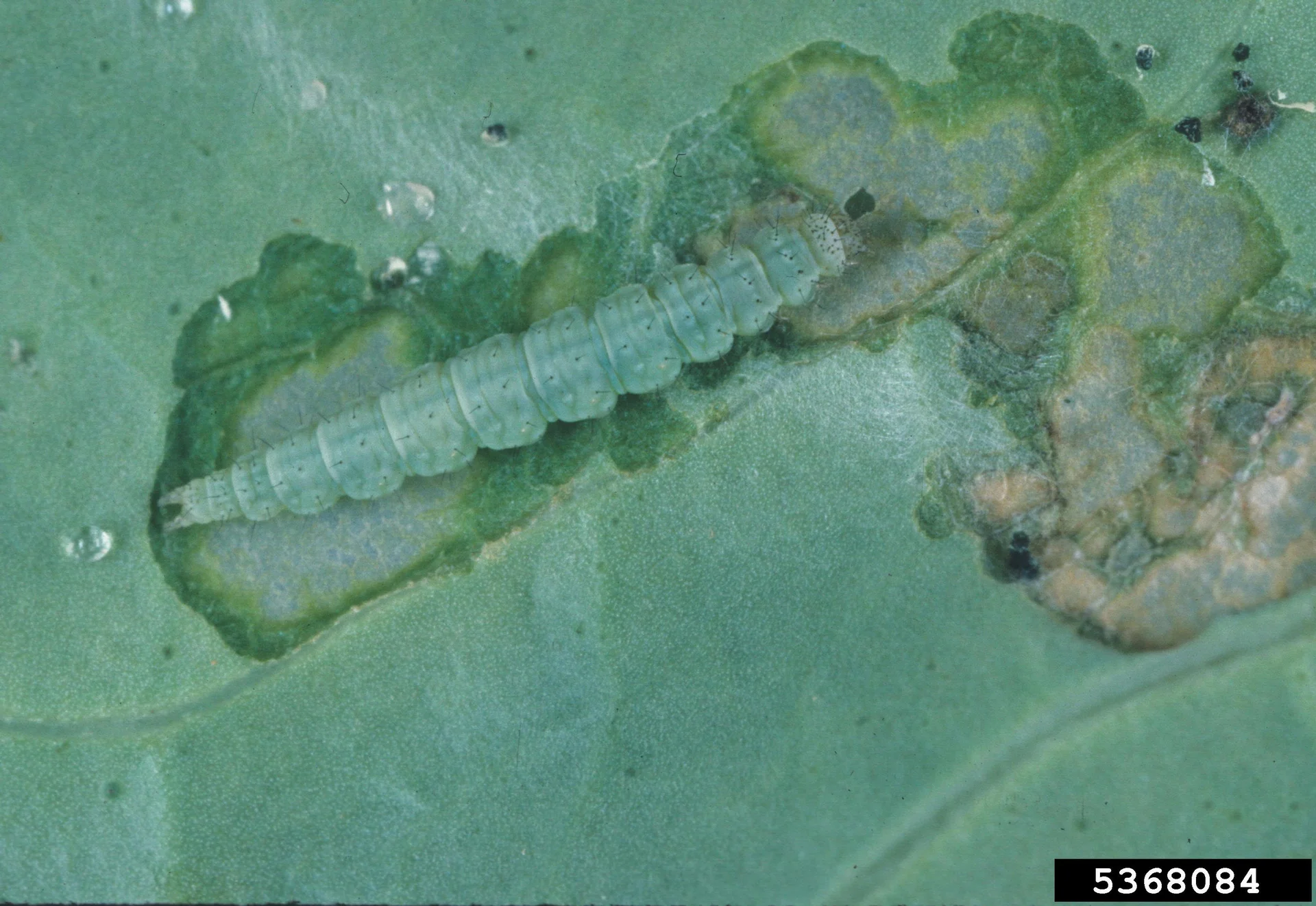
Merle Shepard, Gerald R. Carner & P.A.C. Ooi, Insects and their Natural Enemies Associated with Vegetables and Soybean in Southeast Asia, Bugwood.org · CC BY 3.0 us
Why it matters
Left unchecked, the diamondback moth can strip up to half (50%) of your cabbage or kale crop. Because the caterpillars chew straight into the growing point and the forming head, they ruin the exact part you take to market — not just a few outer leaves you could trim off. It breeds fast in warm, dry weather, throwing one generation after another at your field, so a handful of caterpillars becomes a swarm within a couple of weeks. Worst of all, it is the most spray-resistant pest of the cabbage family in the world: keep hitting it with the same chemical and it simply stops dying — which is why you must catch it early and lean on prevention and natural helpers, not just a spray bottle.
When to act
Treat when 1 or more larvae per plant on seedlings, or 10 to 20 percent of plants infested at heading.
This guidance is general, compiled from published agronomic references including FAO and CABI. Thresholds and timing shift with your crop, your variety and the season.
In much of the region a spray is simply called mushonga — medicine. But a chemical group you cannot name is one you cannot rotate, and a product you did not write down has no pre-harvest interval you can observe. Mushonga, and other farming words →
The full diamondback moth field guide
Identify it
The first sign — 'windows' on the leaves:
turn a leaf over and look at the underside. You'll see pale, papery patches where the caterpillar has scraped away the green flesh but left the thin top skin, like tiny see-through windows. As these dry they tear into small ragged shot-holes, so the leaf looks peppered with little holes.
The damage that costs you money
the caterpillars love the soft heart of the plant — the growing point and the forming cabbage head, cauliflower curd or broccoli. Feeding there stunts young plants and leaves dirty holes and droppings deep inside the head you meant to sell, so buyers turn it away.
The caterpillar itself
small and pale green, no longer than a grain of rice (about 1 cm), thin and pointed at both ends like a tiny green cigar, with a few fine hairs. Look for it on the leaf underside and tucked into the growing point — not out in the open.
The give-away test
touch or shake a leaf and the caterpillar wriggles backwards hard and drops off on a fine silk thread, dangling in the air like a spider on a line. Nothing else on your cabbages does this — it is the surest single way to know you have diamondback moth.
The cocoon and the moth
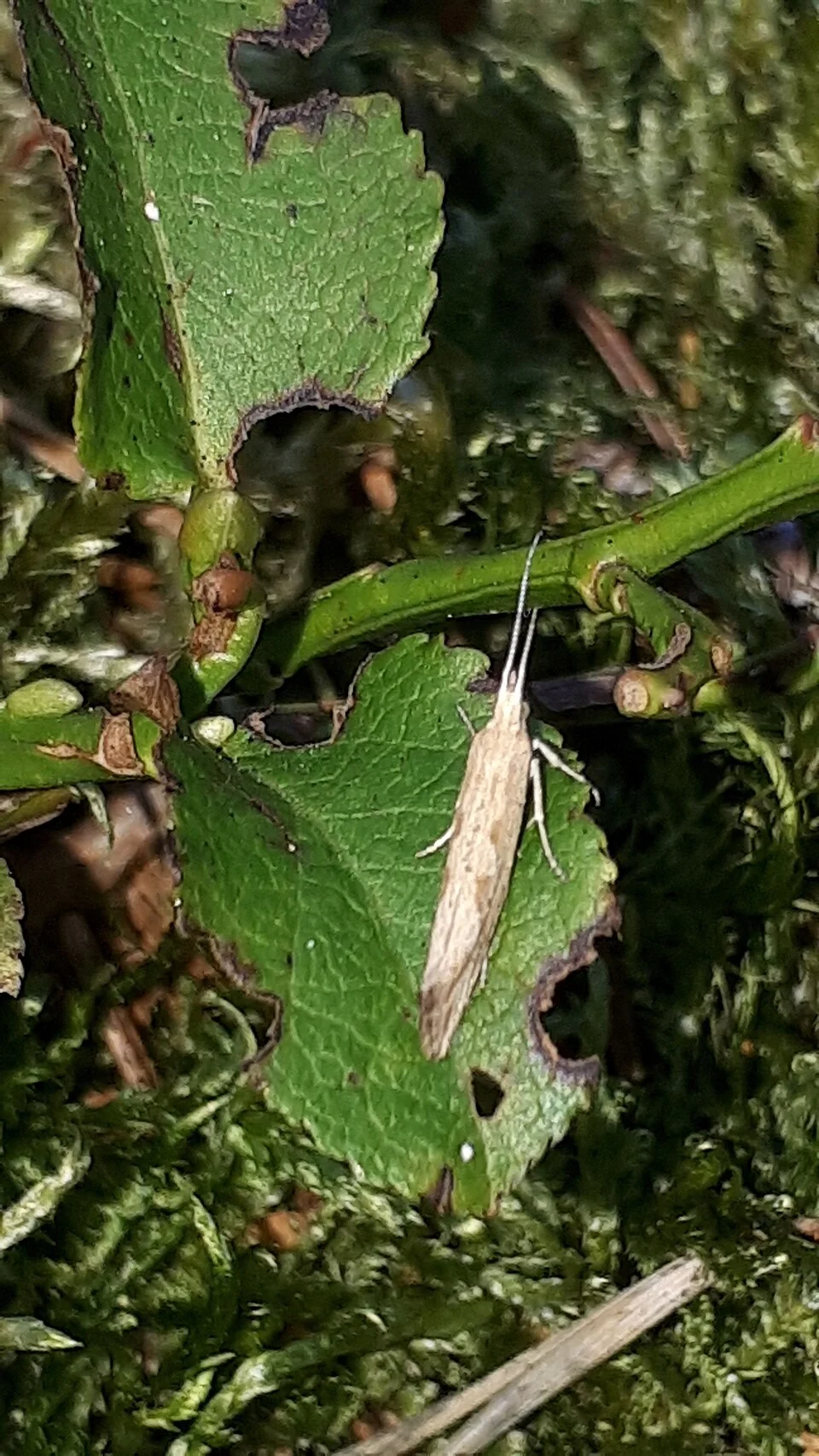
later you'll find delicate, lacy silk cocoons stuck to the leaf underside. The adult is a small greyish-brown moth the size of a rice grain; when it folds its wings, three pale marks meet along its back to make a row of light diamond shapes — the mark it is named for. The moths flutter up at dusk when you brush past the plants.
Don't confuse it
with the fat, sluggish velvety-green caterpillar of the cabbage white butterfly (much bigger, chews large holes in from the leaf edge, and never drops on a thread), or with the looper that arches its back into a hump as it crawls. Diamondback caterpillars are small, quick to wriggle, drop on a silk thread, and make windows on the underside — not big holes bitten in from the edge.
Scout for it
When to look
start scouting once your plants have settled in and are pushing out new leaves (the leaf-building stage), and stay sharp all the way through heading, when the cabbage heads, cauliflower curds or broccoli are forming — these two stages are when the moth hits hardest. Warm, dry spells are the danger times, because the moth breeds fastest then, so check more often after a run of hot, dry days.
Walk a big 'W' across the field
so you cover all four corners and the middle, not just the row nearest the path. Make about 10 stops along the way, checking a few plants at each stop.
At each stop, turn the leaves over and open up the heart
The caterpillars hide on the underside of the leaves and deep in the growing point, so check the youngest leaves and the heart of the plant — look for pale windows, small green caterpillars, and lacy cocoons.
On young plants, act the moment you find even 1 caterpillar on a plant
A small plant cannot spare its growing point, so a single caterpillar there is already one too many — treat straight away.
At heading, act once about 1 to 2 plants in every 10 carry caterpillars
(that is 10 to 20 in every 100 plants). Below that level your natural helpers can usually hold the line — keep watching closely, but hold off spraying.
Hang a pheromone trap
— a small scent bait that mimics the female moth and lures in the males — to warn you when a fresh flight of moths has arrived. A sudden jump in the nightly catch is your signal to scout harder, because eggs and young caterpillars will follow.
Control it
Prevent — break the breeding cycle:
don't grow cabbage-family crops on the same land season after season. Rotate to a non-brassica such as maize or beans, and the moment you finish harvesting, pull out and burn or bury the old stalks and leftover leaves — the moth keeps breeding on them and walks straight into your next crop.
Don't plant in overlapping batches
A field with old and young cabbages side by side feeds the moth all year round. Plant a block all at once, and where you can, grow a non-host crop between the rows so the moths find it harder to home in on your plants.
Cover your seedbed and nursery with a fine net
Keeping the moths off the young plants — the stage they attack hardest — is one of the cheapest and safest wins you have; a fine mesh over the nursery quickly pays for itself.
Water over the top in the evening
This moth loves warm, dry weather, and a heavy overhead watering knocks the young caterpillars off the leaves and drowns them, and washes eggs away too — it is free, and it hurts the moth, not your helpers.
Protect the natural helpers
Tiny parasitic wasps (such as Diadegma and Cotesia) lay their eggs inside diamondback caterpillars and kill them for you, for free. Harsh, broad sprays — ones that kill every insect — wipe these helpers out and make your moth problem worse, which is exactly why the pest explodes after heavy spraying. Spray as little and as narrowly as you can.
Act early with a Bt spray — your single best tool
Bt (Bacillus thuringiensis, a natural soil germ sold as a powder or liquid) is eaten by the caterpillars and kills them from the inside, while leaving you, your bees and the parasitic wasps completely unharmed. Spray it onto the leaf undersides and into the growing point where the caterpillars actually feed, and hit them while they are small — big caterpillars are far harder to kill. Spray in the cool of the day with the wind behind you, and wash afterwards.
Chemical spray — only as a last resort
If numbers keep climbing past the threshold even after Bt, use a selective insecticide — one aimed at caterpillars, not every insect. Be warned: on this pest a chemical is often weaker than Bt, because the diamondback moth has already learned to survive many chemicals worldwide — so it buys you little and costs your natural helpers a lot.
If you do spray a chemical, do it safely and rotate groups
cover your skin, eyes, nose and mouth; spray in the cool of morning or evening with the wind at your back; keep the spray well away from food, drinking water, children and bees; and wash yourself and your clothes straight afterwards. Wait the full pre-harvest interval — the number of days printed on the label between spraying and safely eating or selling the crop — before you pick. And never spray the same chemical twice in a row: switch to a different chemical group each time (ask your agro-dealer which group a product belongs to), or the moth will quickly become immune to it.
If it keeps spreading
fall back on the safe layers — a Bt spray every few days on the small caterpillars, tighter netting, and pulling out the worst-hit plants so they don't seed the rest of the field. If a plant's head is already bored through and fouled, it will not recover — cut your losses, pull it, feed it to livestock or bury it, and put your effort into the healthy plants. After harvest, clear away every brassica scrap and rest the land from the cabbage family for a season to starve the moth out.
Catch diamondback moth before it costs you the harvest
This guide is the general answer. Divisi works out yours — the week to scout your own field for diamondback moth, and what to do the day you find it.


Crops it affects
Plan the crops it attacks


All planting calendars, country by country
Get Insights by email
A short digest of new Divisi articles. No email on quiet weeks.
Frequently asked questions
How do I identify diamondback moth?
The first sign — 'windows' on the leaves:. turn a leaf over and look at the underside. You'll see pale, papery patches where the caterpillar has scraped away the green flesh but left the thin top skin, like tiny see-through windows. As these dry they tear into small ragged shot-holes, so the leaf looks peppered with little holes.
When should I take action against diamondback moth?
Treat when 1 or more larvae per plant on seedlings, or 10 to 20 percent of plants infested at heading.
How do I control diamondback moth?
Prevent — break the breeding cycle:. don't grow cabbage-family crops on the same land season after season. Rotate to a non-brassica such as maize or beans, and the moment you finish harvesting, pull out and burn or bury the old stalks and leftover leaves — the moth keeps breeding on them and walks straight into your next crop.
Which crops are attacked by diamondback moth?
Among the crops covered here: Cabbage, Rape / covo / kale.