 Divisi
Eldana stalk borer
Eldana saccharina · Insect
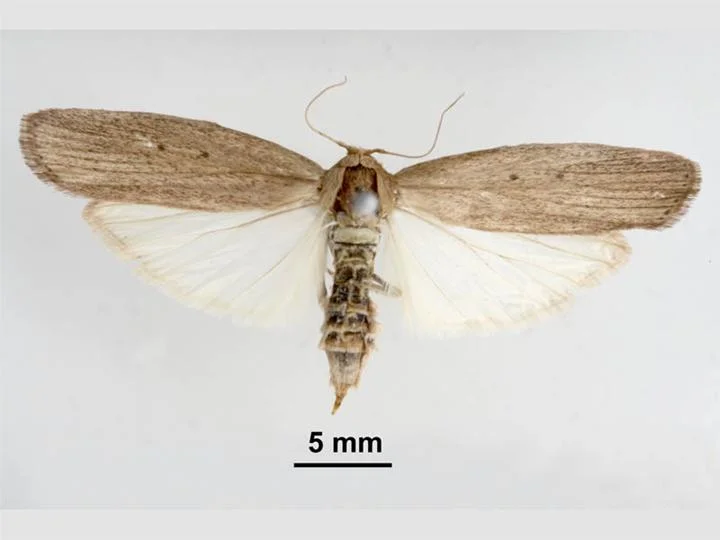
Photo: Ken Walker, Museum Victoria · CC BY 3.0 au
Eldana stalk borer (Eldana saccharina) is an African moth whose caterpillars do their damage hidden inside the stalk of sugarcane, maize and sorghum. The night-flying moths lay their eggs on dry, dead leaf material and around the base of the plant; the caterpillars that hatch bore into the stalk and tunnel through the sections between the joints, hollowing them out, letting red-rot fungus in behind them and — in sugarcane — quietly draining away the sugar. Above all it is a pest of the older, maturing, stressed crop: the longer the cane or maize stands in the field, the more the borer builds up.
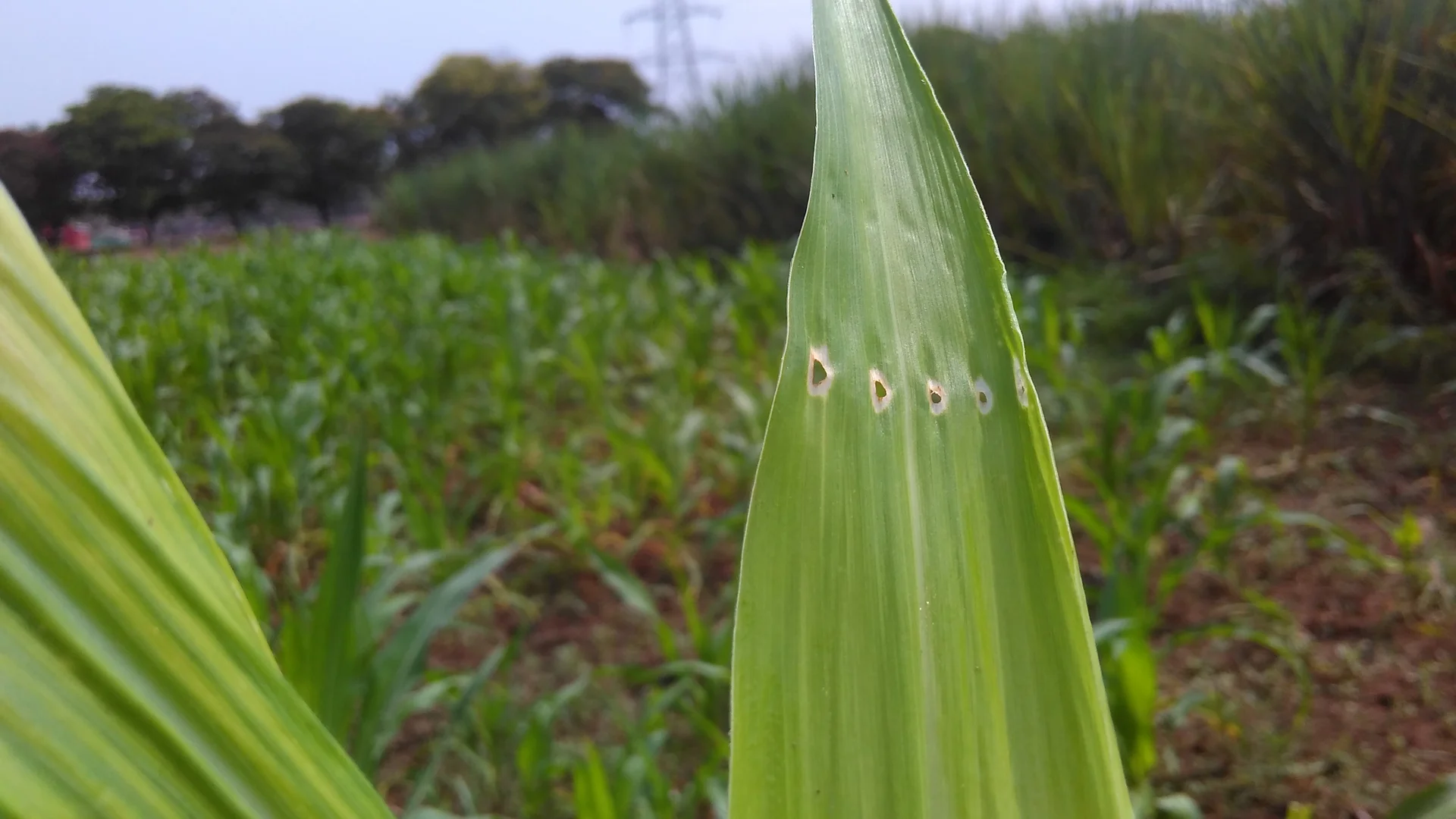
சிகி பாரதி · CC BY-SA 4.0 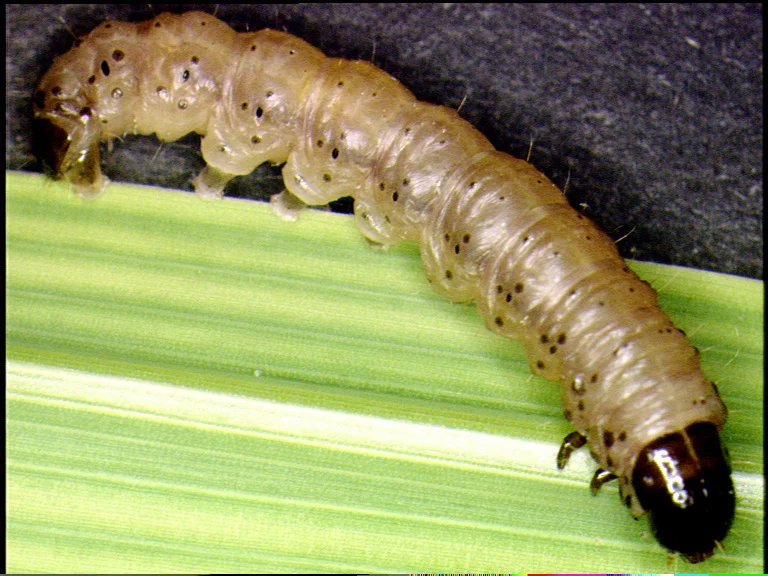
Paul-andre Calatayud · CC BY-SA 3.0
Why it matters
Eldana does its work out of sight — by the time you notice it, the caterpillars are already deep inside the stalk, where no spray can reach them. A heavy attack can cost you up to 40% of your harvest: hollowed-out stalks with far less sugar, weak canes that snap and fall over, and red rot creeping in behind the borer. Once it has settled inside a mature crop there is no rescue spray that will save it — your real weapons are to harvest before the numbers build up, grow tougher varieties, and clear away the old trash that carries the borer into next season.
When to act
In sugarcane, harvest before borer numbers and internode damage build; scout mature cane and older maize for entry holes and frass.
This guidance is general, compiled from published agronomic references including FAO and CABI. Thresholds and timing shift with your crop, your variety and the season.
In much of the region a spray is simply called mushonga — medicine. But a chemical group you cannot name is one you cannot rotate, and a product you did not write down has no pre-harvest interval you can observe. Mushonga, and other farming words →
The full Eldana stalk borer field guide
Identify it
You see the damage long before you see the insect
— the borer lives hidden inside the stalk. Look on the outside of the stalk for small round entry and exit holes, and around the joints and behind the leaf sheaths look for little piles of reddish-brown, sawdust-like droppings (this is called frass — the borer's waste). That rusty-coloured frass is the surest sign.
Split a stalk open lengthwise
and you find the real story: long tunnels running through the sections between the joints (these sections are called internodes), often with red streaks and staining inside — that is 'red rot', a fungus that moves in behind the borer. Badly bored stalks turn weak and snap or lean over (this is called lodging), and in younger maize or sorghum the central shoot can die into a dried-out 'dead-heart' that pulls out easily by hand.
The caterpillar itself
is a dull, dirty off-white to greyish grub with no bright stripes, growing up to about 3 cm long (a little shorter than a matchstick), with a hard, shiny dark red-brown head. You will only find it by opening the stalk or by peeling back the dead leaf sheaths near the base — unlike many caterpillars, it never sits out in the open.
Telling it apart from look-alikes
fall armyworm feeds up in the whorl (the funnel of new leaves) of young plants and leaves wet droppings there — eldana works low down, inside the stalk of the older, taller crop. The common maize stalk borer bores in early, from the whorl of young plants; eldana comes later, prefers the base and lower stalk, starts out from dead, dry leaf litter, and leaves that tell-tale reddish frass and red-rot staining.
Scout for it
When to look
eldana builds up in the older, maturing crop, so begin scouting from mid-season onward and keep checking as the cane or maize ages and ripens. The longer it stands — and the more stressed it is by drought or hunger — the higher the risk. Don't waste time on young seedlings; this borer arrives late in the season.
Walk a big letter 'W' across the field
so you cover all four corners and the middle, not just the edge nearest the path. Make about 10 stops, well spread out, and check several stalks at each stop.
Because the borer hides inside, you have to open the stalk
At each stop, first scan the outside for entry holes and rusty frass around the joints and behind the leaf sheaths near the base. Then cut or split a few stalks lengthwise with your knife or panga and look inside for live borers, tunnels, bored-out joints and red-rot staining.
How many
split about 10 stalks in all and count how many hold borers, tunnels or fresh reddish frass inside. Even 1 or 2 bored stalks in every 10 — and more each time you check as the crop nears maturity — is your signal that the borer is building up. Don't wait for it to get worse: this is the cue to plan an early harvest, not to reach for a spray.
Control it
Prevent it
-
harvest on time (your single strongest tool):
eldana feeds and multiplies in over-mature, standing cane and old maize, so never leave the crop in the field past ripeness. Cutting it as soon as it is ready starves the borer of the old stalks it needs and stops the damage and red rot spreading. Where you can get them, also plant tougher, borer-tolerant varieties with harder rinds.
-
keep the field clean and unstressed:
the moths lay their eggs on dry, dead leaves and trash, and the borers carry over in old stubble from one season to the next. After harvest, clear away and destroy the trash, dead leaf sheaths and crop residue (burn it, bury it, or feed it to livestock), keep field edges and any regrown stubble (ratoon) hosts clean, and keep the crop watered and well-fed — a strong, unstressed crop is far less attractive and far less damaged. Don't leave old and young cane standing side by side, or the borer walks straight from one into the other.
Act early — let the natural enemies do the killing:
eldana's main enemies are tiny parasitic wasps that lay their own eggs on the caterpillars deep inside the stalk, reaching where you never could. Protect these helpers by avoiding broad, kill-everything poisons, and where organised wasp-release programmes run in your area, take part. When you catch damage early, cut out and destroy dead-hearts and the worst-bored stalks to take the borers out before they spread.
Why there is no rescue spray — and how to stay safe if you spray anyway:
once the caterpillars are tunnelling deep inside the stalk, no insecticide can reach them — spraying wastes your money, kills the very wasps that were helping you, and pushes the pest toward resistance (surviving the chemicals that used to kill it). If you ever do spray the field for another pest, keep it off flowering cane, water, children and bees; cover your skin, eyes and nose; spray in the cool of the day with the wind at your back; switch to a different chemical group each time; and wash well afterwards — but know it will not rescue a crop already bored from the inside.
If the damage keeps climbing → bring the harvest forward
and cut the field as soon as the crop is ready; a slightly early harvest saves far more than cane left standing to be hollowed out. When a stand is already heavily bored, rotting and falling over, it will not recover — salvage what you can now, then destroy every bit of trash and stubble and break the cycle (rotate away from host crops for a season, replant a tougher variety) so you don't carry the borer straight into next year.
Catch Eldana stalk borer before it costs you the harvest
This guide is the general answer. Divisi works out yours — the week to scout your own field for Eldana stalk borer, and what to do the day you find it.


Crops it affects
Plan the crops it attacks
-
 When to plant Maize in Mougalaba
 -
 When to plant Sorghum in Maracha
 -
 When to plant Sugarcane in Douigni
All planting calendars, country by country
Get Insights by email
A short digest of new Divisi articles. No email on quiet weeks.
Frequently asked questions
How do I identify Eldana stalk borer?
You see the damage long before you see the insect. — the borer lives hidden inside the stalk. Look on the outside of the stalk for small round entry and exit holes, and around the joints and behind the leaf sheaths look for little piles of reddish-brown, sawdust-like droppings (this is called frass — the borer's waste). That rusty-coloured frass is the surest sign.
When should I take action against Eldana stalk borer?
In sugarcane, harvest before borer numbers and internode damage build; scout mature cane and older maize for entry holes and frass.
How do I control Eldana stalk borer?
Prevent it — harvest on time (your single strongest tool):. eldana feeds and multiplies in over-mature, standing cane and old maize, so never leave the crop in the field past ripeness. Cutting it as soon as it is ready starves the borer of the old stalks it needs and stops the damage and red rot spreading. Where you can get them, also plant tougher, borer-tolerant varieties with harder rinds.
Which crops are attacked by Eldana stalk borer?
Among the crops covered here: Maize, Sorghum, Sugarcane.