 Divisi
Larger grain borer
Prostephanus truncatus · Storage
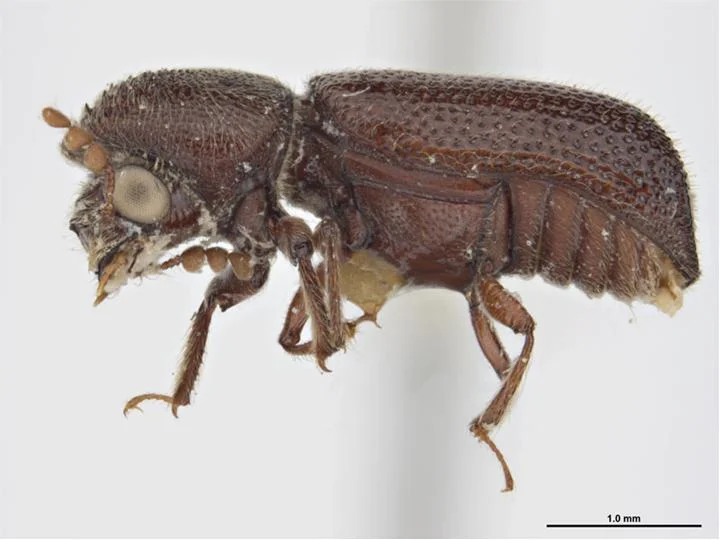
Photo: Sarah McCaffrey, Museum Victoria · CC BY 3.0 au
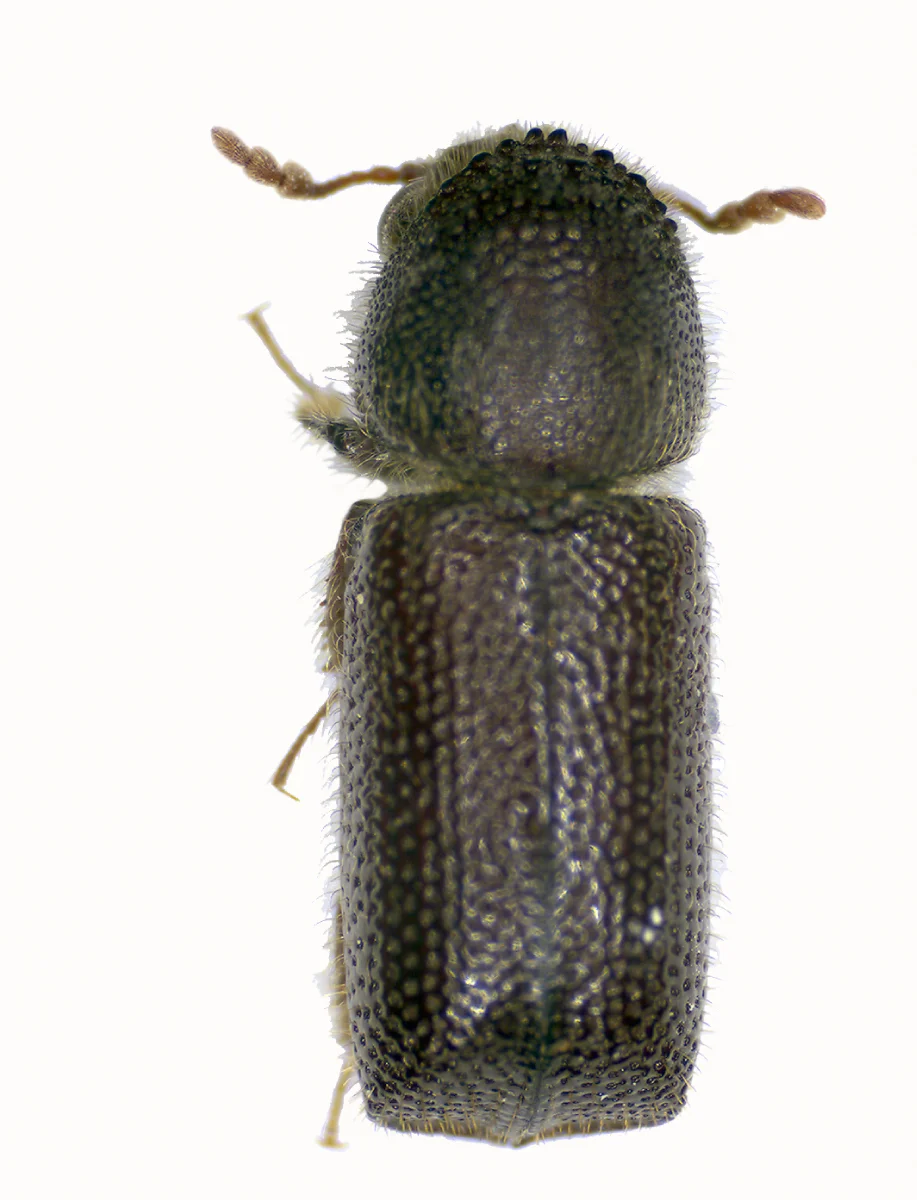
The larger grain borer (Prostephanus truncatus) is a small, dark, cylindrical beetle — barely the length of a grain of rice — that attacks stored maize and dried cassava. Adults bore neat round tunnels straight into the kernels and into whole cobs and lay their eggs inside; the grubs and adults then feed within, grinding good grain into powder. Because it bores far more than it eats, it leaves tell-tale mounds of floury dust and can turn a full store into shells and flour within a matter of weeks. Accidentally brought into Africa, it is now one of the continent's most destructive storage pests.
division, CSIRO · CC BY 3.0 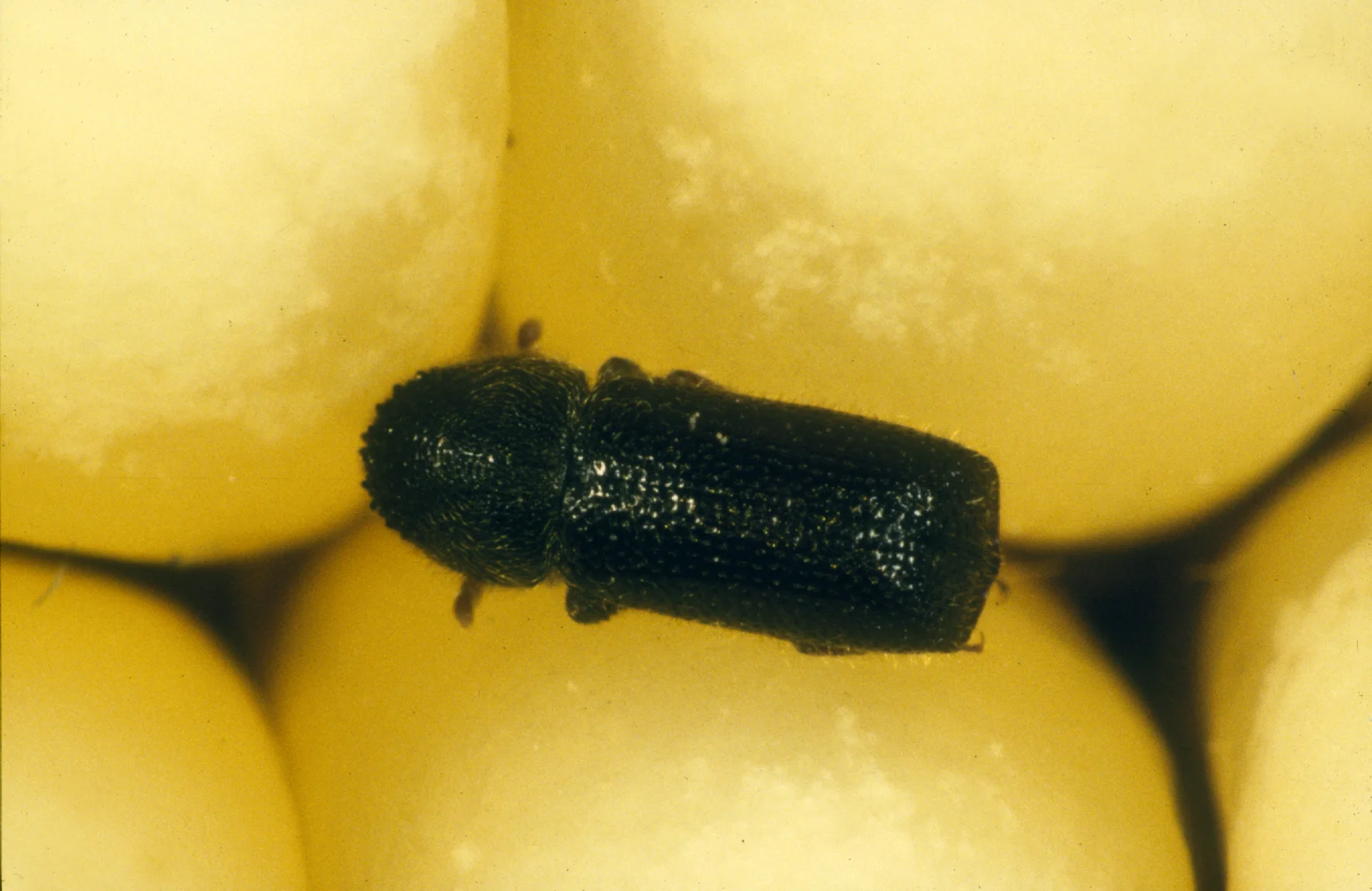
CSIRO · CC BY 3.0
Why it matters
The larger grain borer attacks your maize and dried cassava after harvest — the food you have already worked a whole season to grow, that you are counting on to feed your family or to sell. Left alone in a warm store it can destroy up to 40% of your grain in just a few months, grinding good kernels into worthless flour and empty shells. It hides and breeds deep inside the grain and the cobs, so by the time the dust is piling up the damage is already done. And because the beetles fly in from old grain and nearby stores and settle in fast, the battle is won by keeping them out and catching the very first beetle — not by fighting them after they multiply.
When to act
any live borers or fresh boring dust seen in the store within the first weeks of storage
This guidance is general, compiled from published agronomic references including FAO and CABI. Thresholds and timing shift with your crop, your variety and the season.
In much of the region a spray is simply called mushonga — medicine. But a chemical group you cannot name is one you cannot rotate, and a product you did not write down has no pre-harvest interval you can observe. Mushonga, and other farming words →
The full larger grain borer field guide
Identify it
The dust is the first thing you notice
Look for mounds of fine, floury, cream-white grain powder — this is frass (the powder and droppings the beetle leaves behind) — under and among the cobs and grain, and caught in the folds of the bags. The larger grain borer bores far more than it eats, so it makes far more powder than any other store pest. That heavy floury dust is its clearest signature.
The damage to the grain
neat, round holes bored straight into the kernels, kernels hollowed out and crumbling, and whole cobs eaten down to bare shells and dust. On dried cassava chips and roots you will see the same round tunnels and the same floury powder.
The beetle itself
a small, hard, dark brown-to-black beetle shaped like a tiny cylinder or pencil-stub, shorter than a grain of rice (about 3–4 mm long). Its head is tucked under a hood, so you cannot see it from above, and its tail end looks cut off flat. Look for them crawling on the grain and on the bags and boring into the cobs — they are most active when the store is warm.
Do not confuse it with the maize weevil
The weevil has a long, pointed snout, like a tiny elephant's nose, and leaves far less dust. The larger grain borer has no snout (its head hides under the hood), looks like a straight dark cylinder, and leaves those big piles of floury powder — that mountain of dust is the giveaway that it is the borer, not a weevil.
Scout for it
Check from the very day you put the grain in store, and keep checking through the first few weeks
— this is when a new attack takes hold, and it is the easiest time to catch it. After that, look again every month for the whole storage season, and more often in hot weather (around 25–32 °C), when the beetles breed fastest.
Do not just glance at the top of the nearest bag. Take a scoop of grain from about 10 different points — the front, back and corners, the top and the bottom of the store, and from several different bags — because the beetles start in hidden pockets before they spread.
Pour each scoop onto a cloth or through a fine sieve and look for three things: floury dust, round-holed and hollow kernels, and live beetles crawling. Also check the store floor, the bottoms of the bags, and inside a few cobs, where the dust settles first.
Lead with the count — even ONE live borer, or a single fresh patch of floury dust, means act now
You do not wait for a big number. With this pest the first beetle you see is already boring and breeding, so treat that very first sign as your signal to act, especially in the first weeks of storage.
Control it
Prevent it — start with a clean, empty store
Before you fill it, remove and burn every bit of last season's grain, cobs and dust; old, infested grain is exactly where the new beetles fly in from. Scrub out the cracks in the walls and floor, and keep this year's harvest well away from any old grain.
Dry hard, shell off the cob, and seal airtight — this is your strongest, cheapest defence
Dry the grain until a kernel cracks rather than dents when you bite it, shell it off the cob (the borer loves whole cobs), and store it in completely airtight (hermetic) bags, or a sealed metal silo or drum. Sealing starves any trapped beetles of air and smothers them.
Act on the very first sign
If you catch beetles early, spread the grain thinly in the hot sun on a mat or tarp for a day to drive them out and kill them, sieve out all the dust and the bored grain, then re-bag the clean grain airtight. A natural helper — the predatory beetle Teretrius nigrescens, which hunts the borer's eggs and grubs — has been released across much of Africa and keeps wild numbers down; protect it by keeping poisons off, and clean up together with your neighbours, because one clean store beside a dirty one is soon re-invaded.
Only if you must store the grain a long time and cannot seal it airtight, use a grain protectant dust as a LAST RESORT
Mix an approved storage dust — these come in two main chemical groups, organophosphate and pyrethroid, both made for stored grain and not the same as a field spray — evenly through the shelled grain at the exact rate printed on the label before bagging: too little fails, too much leaves poison in your food. Mix in the open air with your nose, mouth, eyes and skin covered; keep children, animals, food, water and bees well away; and wash your hands and change your clothes afterwards. Do not eat or sell the grain until the waiting days on the label have passed (this is the pre-consumption interval — the days you must wait before the grain is safe to eat), and clearly mark the treated bags. Each season switch to the other chemical group so the beetles never build up resistance — the point where the dust stops killing them.
If beetles keep appearing
after you have dusted and sealed, empty the store completely, sieve out every bit of dust and powdered grain, feed the worst bored grain to your animals, re-treat and re-seal the rest, then scrub and treat the empty store — and check your neighbours' stores too, because the borer flies back in from nearby grain and even from wooden structures. If the grain is already mostly dust and shells, cut your losses: pick out whatever whole grain is left, use or sell the damaged grain quickly for food or animal feed before it is all lost, and start next season with a clean store, hard-dried shelled grain, and airtight storage from day one.
Catch larger grain borer before it costs you the harvest
This guide is the general answer. Divisi works out yours — the week to scout your own field for larger grain borer, and what to do the day you find it.


Crops it affects
Plan the crops it attacks


All planting calendars, country by country
Get Insights by email
A short digest of new Divisi articles. No email on quiet weeks.
Frequently asked questions
How do I identify larger grain borer?
The dust is the first thing you notice. Look for mounds of fine, floury, cream-white grain powder — this is frass (the powder and droppings the beetle leaves behind) — under and among the cobs and grain, and caught in the folds of the bags. The larger grain borer bores far more than it eats, so it makes far more powder than any other store pest. That heavy floury dust is its clearest signature.
When should I take action against larger grain borer?
any live borers or fresh boring dust seen in the store within the first weeks of storage
How do I control larger grain borer?
Prevent it — start with a clean, empty store. Before you fill it, remove and burn every bit of last season's grain, cobs and dust; old, infested grain is exactly where the new beetles fly in from. Scrub out the cracks in the walls and floor, and keep this year's harvest well away from any old grain.
Which crops are attacked by larger grain borer?
Among the crops covered here: Cassava, Maize.