 Divisi
Red palm weevil
Rhynchophorus ferrugineus · Insect
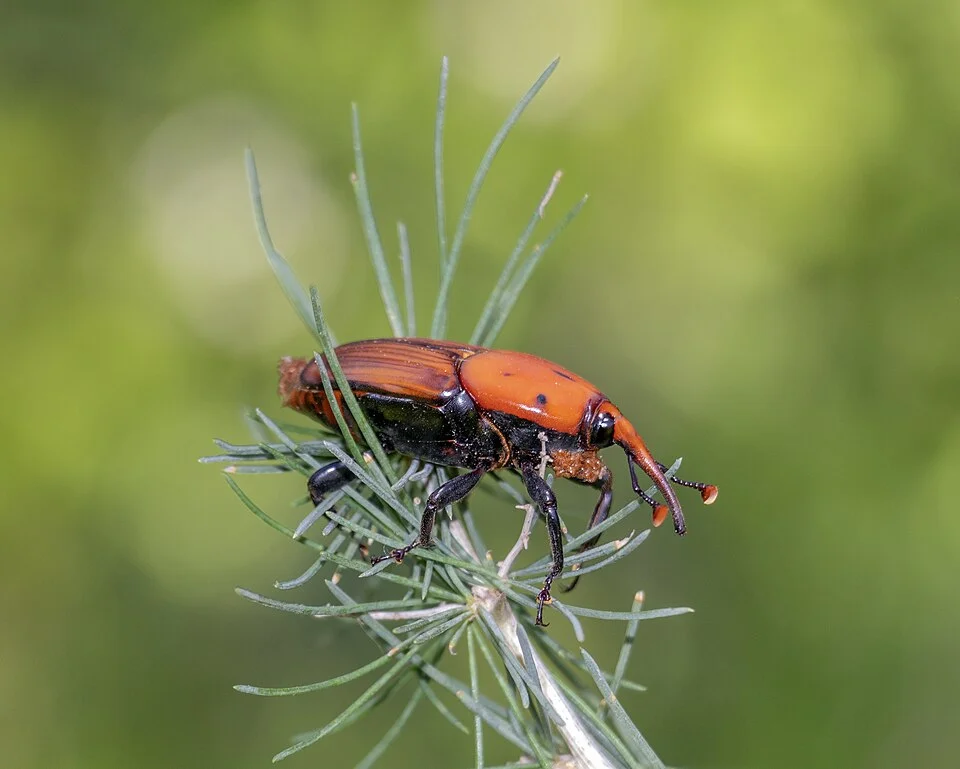
Photo: Smailtn · CC BY-SA 4.0
The red palm weevil (Rhynchophorus ferrugineus) is a large, rusty-red beetle with a long, curved snout, about as long as your thumb — the deadliest pest of coconut, date and oil palms. Its fat, legless, creamy-white grubs bore into the soft heart inside the trunk and crown and hollow the palm out from the inside. The damage stays hidden until the crown wilts and topples — and by then the palm is usually beyond saving.
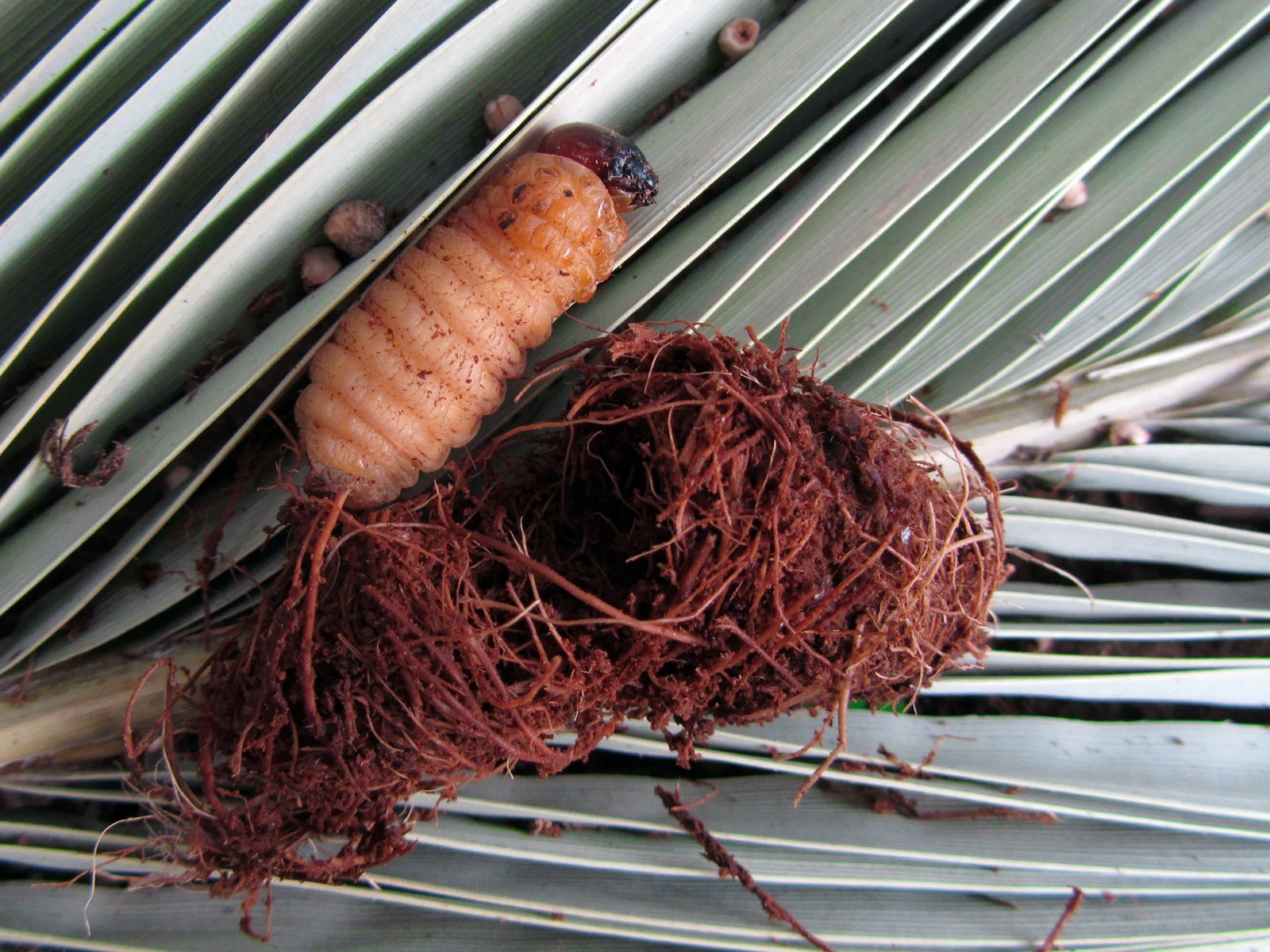
Katja Schulz · CC BY 2.0 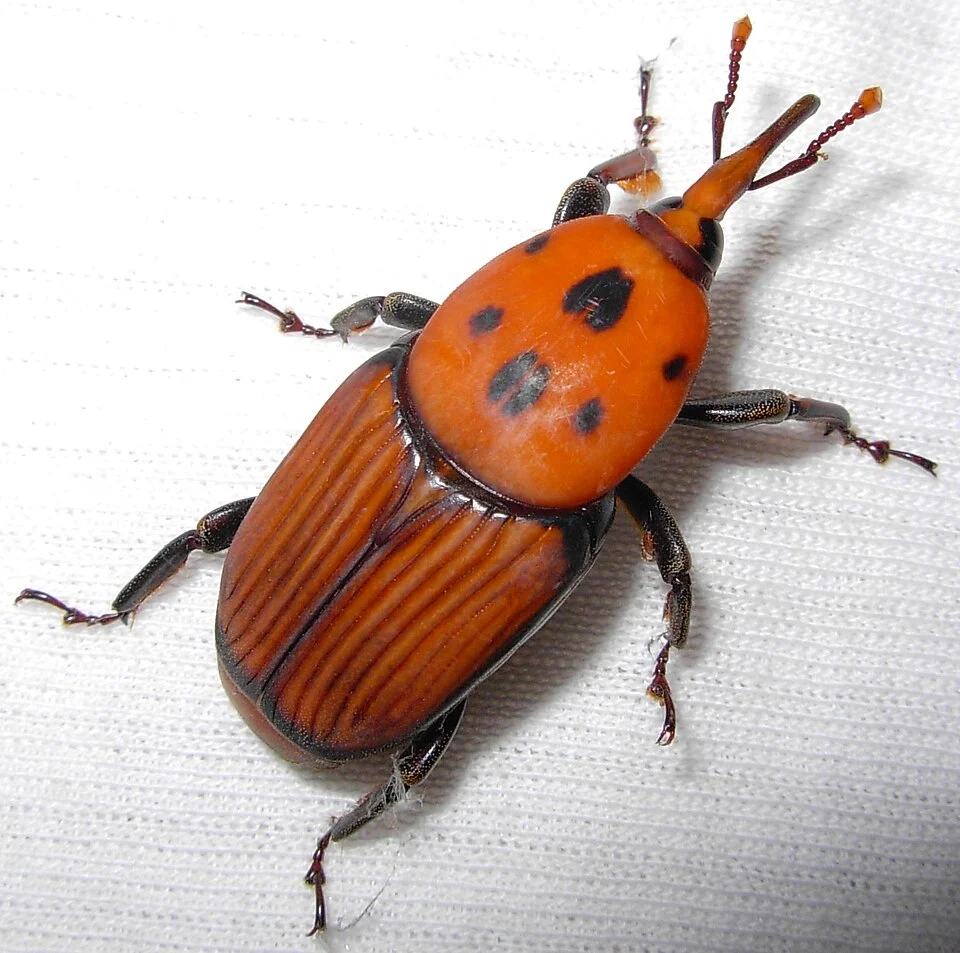
Noblevmy at Malayalam Wikipedia · CC BY 3.0
Why it matters
Red palm weevil is a palm-killer. Once the grubs are eating the soft heart inside the stem, they can take the whole tree — a total, 100% loss — because a dead crown never grows back. The worst part is that they work hidden deep inside the palm, so by the time you see the crown wilting the damage is usually already done, and any spray on the outside can never reach the grubs buried in the trunk. That is why catching it early — before the palm is hollowed out — is the only way to win, and why a single infested palm left standing can breed enough weevils to take your whole grove.
When to act
Any weevil caught in pheromone traps in the area, or the first sign of crown wilt or oozing on a palm
This guidance is general, compiled from published agronomic references including FAO and CABI. Thresholds and timing shift with your crop, your variety and the season.
In much of the region a spray is simply called mushonga — medicine. But a chemical group you cannot name is one you cannot rotate, and a product you did not write down has no pre-harvest interval you can observe. Mushonga, and other farming words →
The full red palm weevil field guide
Identify it
The first sign is in the crown, not the old leaves
The youngest, central fronds — the 'spear' standing at the very top — start to wilt, yellow and droop while the older outer fronds still look green. On the trunk and leaf-bases you'll find holes oozing a rusty-brown, sticky fluid, wads of chewed, wet fibre (this is called frass) that looks like brown sawdust, and often a sour, fermenting smell. Put your ear against the trunk on a quiet day and you may even hear the grubs chewing inside.
The weevil itself
a big rusty-red to reddish-brown beetle about as long as your thumb (3–4 cm), with a long, curved snout and usually a few dark spots on the shield behind its head. You will rarely see the adults — they hide, and fly mostly at dusk. The real damage is done by its grubs: fat, legless, creamy-white maggots with a hard brown head, each about as fat as your thumb, buried deep in the soft heart of the palm where you cannot see them.
Don't confuse it with the rhinoceros beetle
— a shiny black beetle with a horn that bores in from the top and leaves neat V-shaped cuts in the newly opening fronds; its damage is clean and dry, not oozing and smelly. And plain yellowing of the lower, older fronds with no holes, no frass and no smell is usually drought or hunger (a nutrient shortage), not the weevil. Red palm weevil always attacks the central crown and leaves those oozing, fibre-packed holes.
Scout for it
When to look
keep watch all through the palm's life — from young, developing palms right up to old, fruiting ones — and step up your checks in warm weather (around 20–35 °C) and in the weeks after any pruning, storm damage or transplanting, because fresh wounds are exactly what draw the weevils in.
How to walk it
don't only check the palms next to the path. Walk a large 'W' across the whole grove so you pass every corner and the middle, and stop at every single palm — a grove is small enough to check tree by tree, and missing one hidden infestation is how you lose the lot.
At each palm, check three places
the central spear and crown for wilting or a leaning, lop-sided top; the trunk and leaf-bases for oozing holes, wet brown frass and that fermenting smell; and the ground around the base for empty, fibre-covered cocoons — a sign that weevils have already bred there and flown off.
The number that means 'act now' is ONE
There is no safe level with this pest. A single weevil caught in a pheromone trap — a baited bucket that uses the weevils' own gathering-scent, plus a lump of palm, to lure and drown the adults so you can count them — anywhere in your area, or the very first palm showing crown wilt or an oozing hole, means act immediately. Waiting for a second sign usually means waiting until a palm is already dying.
Control it
Prevent it — keep your palms un-wounded
Weevils are drawn to fresh cuts and their smell, so avoid wounding the trunk and crown, prune as little as you can, and when you must cut, seal the wound (with tar, mud or a wound paint) and do it in the cool, dry season when weevils are least active. Never leave cut palm trunks, stumps or heaps of old fronds lying around — they are perfect breeding sites, so clear and burn them.
Trap the adults, area-wide
Hang pheromone traps (the baited buckets that lure and drown adult weevils) through the grove — and, best of all, do it together with your neighbours. The weevils fly in from next door, so mass-trapping works far better when the whole area does it at once. Empty and re-bait the traps regularly, and treat every catch as an early warning to go and inspect the palms nearby.
Act early on a caught palm — treat it biologically
The moment a palm shows its first oozing hole or wilting spear, treat it with entomopathogenic nematodes — microscopic worms that hunt down and kill the grubs inside the palm, and are harmless to you, to the palm and to animals. Flush the nematode mix into the crown and straight into the oozing holes so it reaches the grubs, and keep it moist and out of the hot sun so the tiny worms stay alive.
Chemical — a last resort, and it must go INSIDE the palm
Because the grubs are hidden deep in the stem, an outside spray is useless: you need a systemic insecticide — one that travels in the palm's own sap to reach the grubs inside, unlike a contact spray that only kills what it directly touches — injected or drenched into the crown of an infested palm, following your local plant-health or quarantine rules. Cover your skin, eyes, nose and mouth, work in the cool of the day with the wind at your back, and keep it away from children, animals, water, bees and the nuts or fruit. Respect the pre-harvest interval (the set number of days you must wait after treating before the harvest is safe to eat), wash yourself well afterwards, and rotate to a different chemical group each time so the weevils don't build up resistance.
If it keeps spreading, or a palm is too far gone → cut your losses
A hollowed palm with a collapsing crown cannot be saved and has become a weevil factory — cut it down and burn or bury the whole trunk and crown at once to kill the grubs still inside, and never move the infested wood to another area (that is exactly how the weevil travels to new groves). Because it spreads across a whole district, report it to your local agricultural or plant-health officer — this is a quarantine pest, and beating it takes the whole area acting together, not one farm alone.
Catch red palm weevil before it costs you the harvest
This guide is the general answer. Divisi works out yours — the week to scout your own field for red palm weevil, and what to do the day you find it.


Crops it affects
Plan the crops it attacks


All planting calendars, country by country
Get Insights by email
A short digest of new Divisi articles. No email on quiet weeks.
Frequently asked questions
How do I identify red palm weevil?
The first sign is in the crown, not the old leaves. The youngest, central fronds — the 'spear' standing at the very top — start to wilt, yellow and droop while the older outer fronds still look green. On the trunk and leaf-bases you'll find holes oozing a rusty-brown, sticky fluid, wads of chewed, wet fibre (this is called frass) that looks like brown sawdust, and often a sour, fermenting smell. Put your ear against the trunk on a quiet day and you may even hear the grubs chewing inside.
When should I take action against red palm weevil?
Any weevil caught in pheromone traps in the area, or the first sign of crown wilt or oozing on a palm
How do I control red palm weevil?
Prevent it — keep your palms un-wounded. Weevils are drawn to fresh cuts and their smell, so avoid wounding the trunk and crown, prune as little as you can, and when you must cut, seal the wound (with tar, mud or a wound paint) and do it in the cool, dry season when weevils are least active. Never leave cut palm trunks, stumps or heaps of old fronds lying around — they are perfect breeding sites, so clear and burn them.
Which crops are attacked by red palm weevil?
Among the crops covered here: Coconut, Oil palm.