 Divisi
Rhizome scale
Aspidiella hartii · Insect
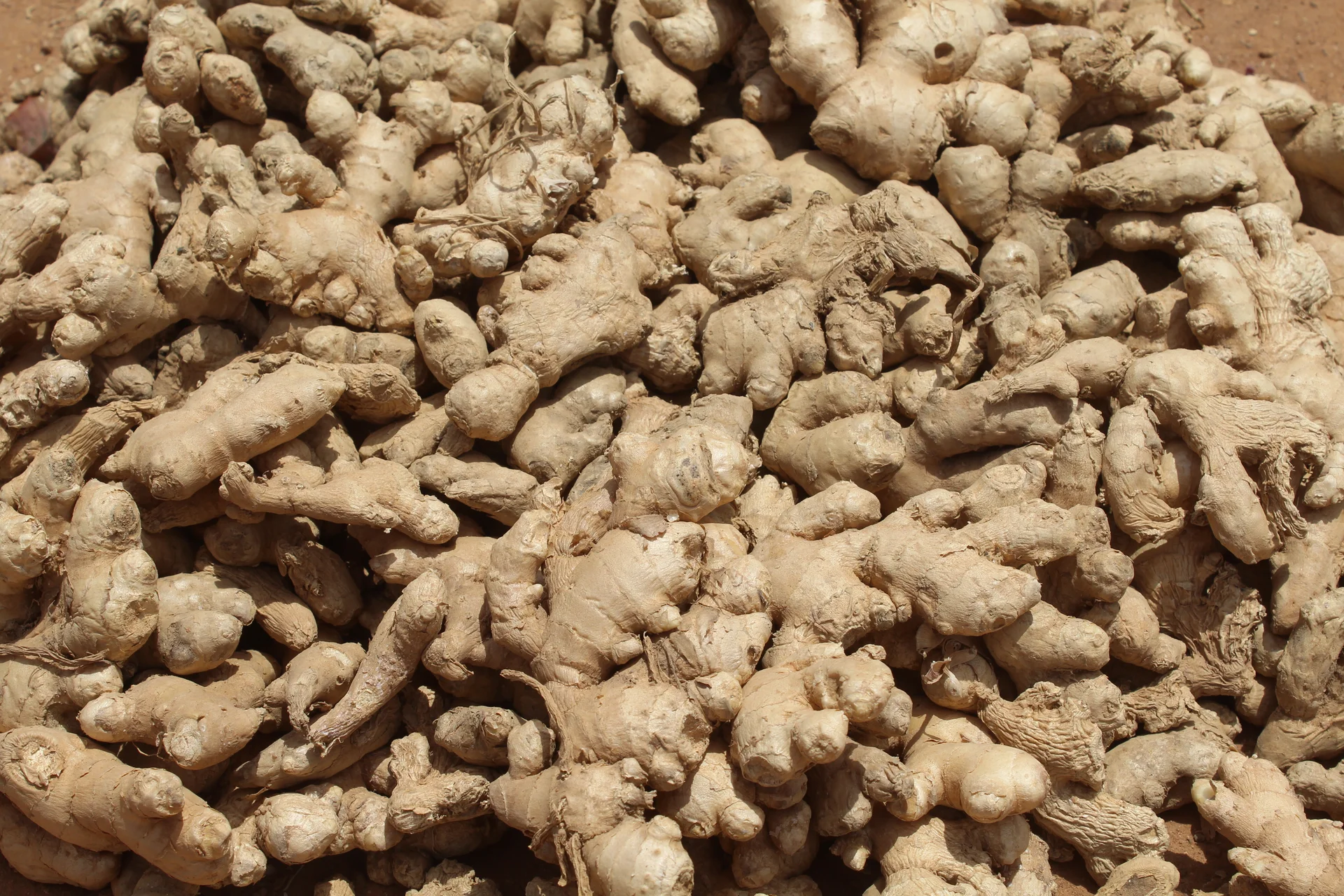
Photo: Friday musa · CC BY-SA 4.0
Rhizome scale (Aspidiella hartii) is a hard-bodied armoured scale insect that infests the rhizomes of ginger and turmeric — the fat underground stems you dig up to eat and sell. Hidden under a circular grey cap about the size of a pinhead, it sucks sap from the rhizome, and colonies build up thickly around the buds until the rhizome shrivels and dries. It attacks both in the field near the soil surface and, above all, in dry storage, where numbers explode. Because it rides silently on infested seed rhizomes and multiplies in store, it carries over from one season to the next on the very stock you keep for planting.
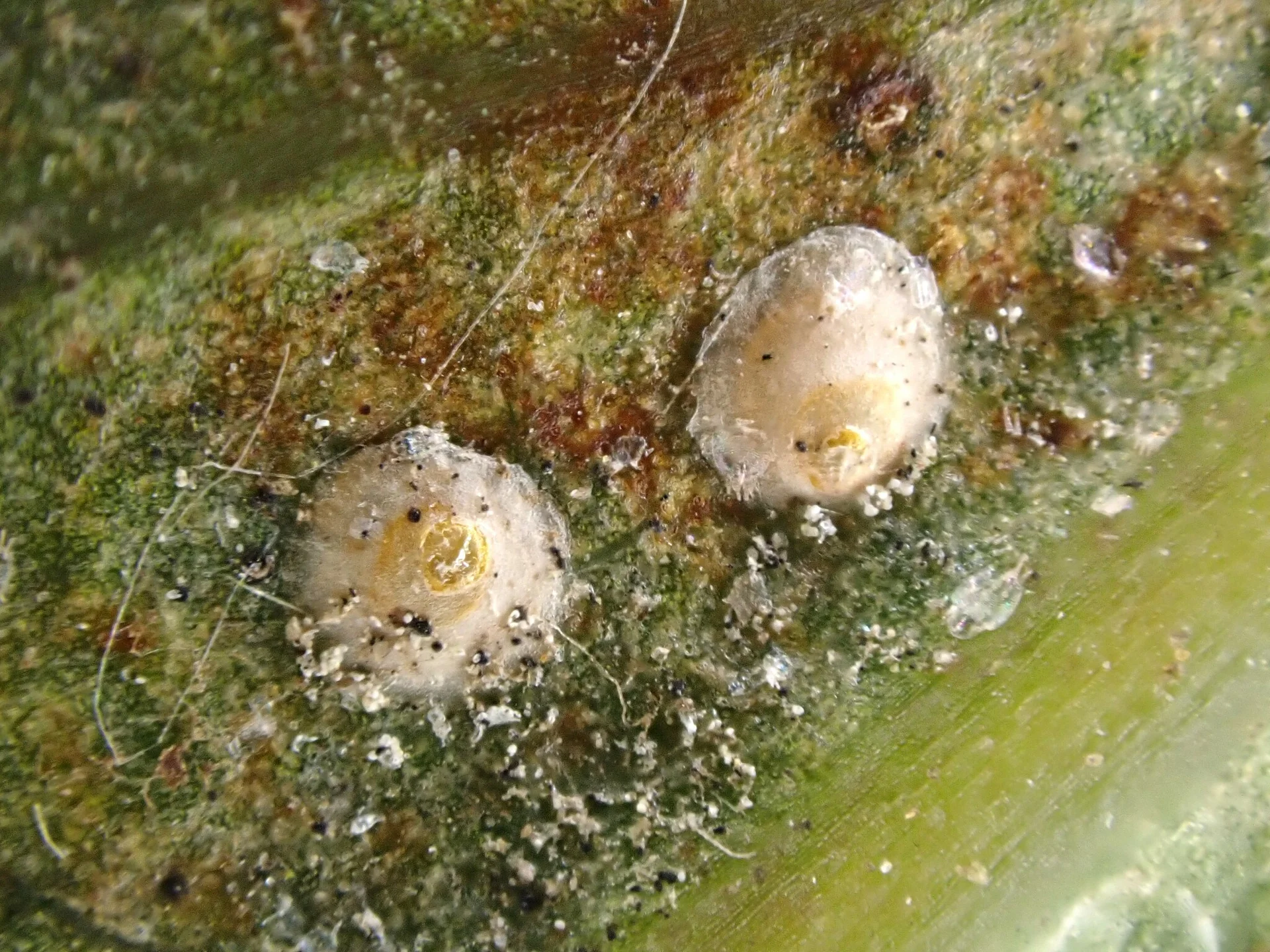
Grey Smith · CC BY 4.0 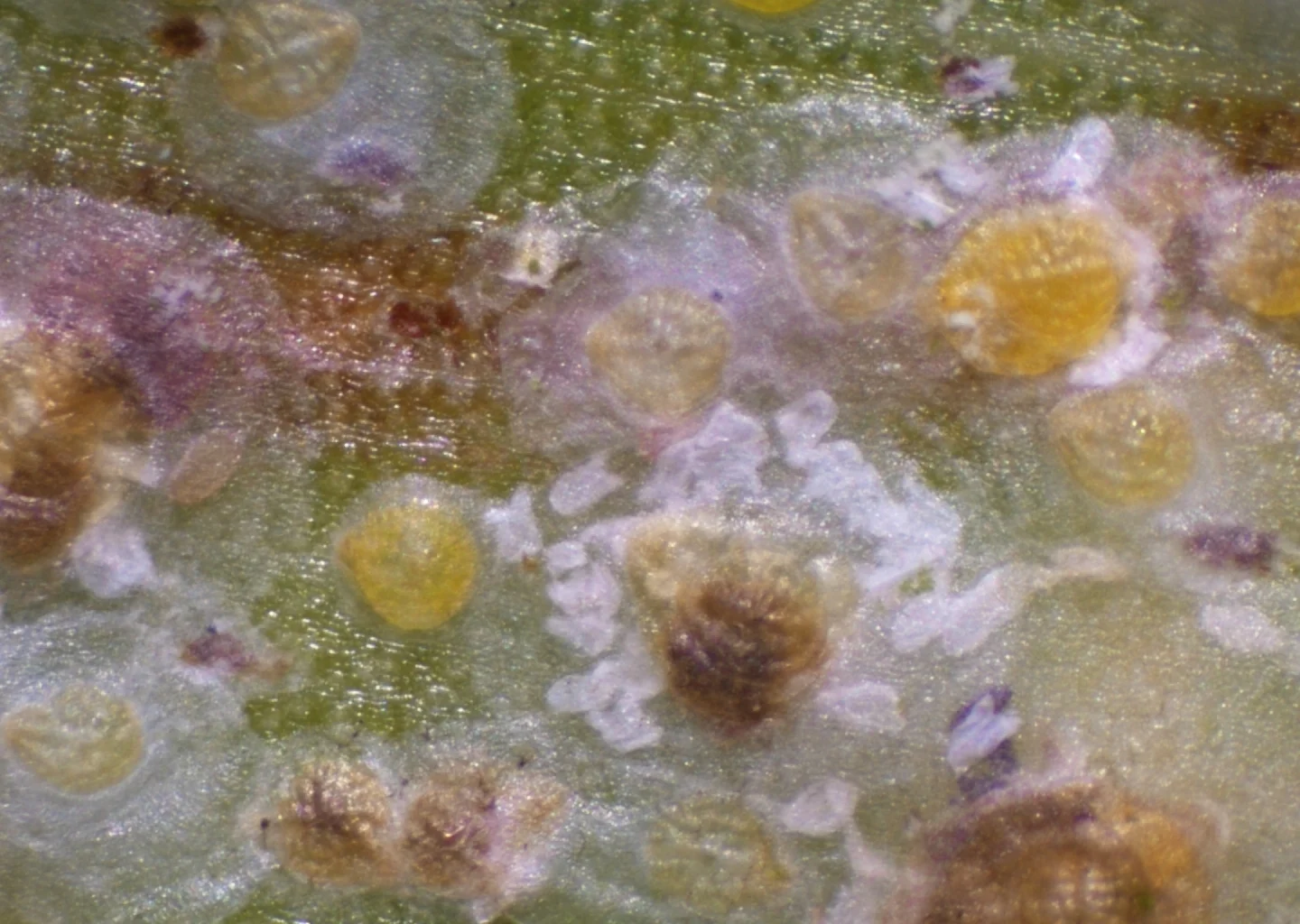
Mike Bowie · CC BY 4.0
Why it matters
Rhizome scale attacks the very part you grow the crop for — the ginger or turmeric rhizome itself (the fat underground stem you dig up to eat and sell). The tiny insects hide under a hard grey cap and suck the sap until the rhizome shrivels, dries and loses weight, so a heavy attack can cost you up to 40% — nearly half — of your crop's weight and value. Worst of all, it rides unseen on your seed rhizomes and multiplies in dry storage, so once it is in your planting stock it comes back season after season and is very hard to shake off. The armour cap also shields the insect from sprays, which is why starting with clean seed matters more than any chemical.
When to act
circular greyish scales visible on rhizomes at harvest or in storage
This guidance is general, compiled from published agronomic references including FAO and CABI. Thresholds and timing shift with your crop, your variety and the season.
In much of the region a spray is simply called mushonga — medicine. But a chemical group you cannot name is one you cannot rotate, and a product you did not write down has no pre-harvest interval you can observe. Mushonga, and other farming words →
The full Rhizome scale field guide
Identify it
The damage first
when you lift ginger or turmeric, look hard at the rhizome — the fat underground "hand" you dig up to eat and sell. An attacked rhizome is crusted with tiny circular grey scales, thickest around the buds and eyes (the growing points). Badly hit rhizomes turn light, wrinkled and shrivelled, feel dry and papery in the hand, lose weight, and seed rhizomes kept in the store fail to sprout.
The insect itself
each scale is a hard, flat, circular cap, grey to grey-brown, about the size of a pinhead (1–2 mm across) — smaller than a match-head. It does not move, even when you touch it. Flick one off with a fingernail and you find a soft yellowish body underneath and a pale mark where it sat. They sit stuck fast, packed close together in the skin grooves and around the buds.
Don't confuse it
with plain soil or dirt (that rubs off when the rhizome is wet — scales stay stuck fast and are perfectly round discs you must flick off); with mealybugs (white, soft, fluffy and powdery, and they crawl — scale is hard, flat, grey and fixed in place); or with the natural corky scars on old rhizome skin (flat rough patches, not raised discs you can lift with a nail).
Scout for it
When to look
start once the rhizomes are bulking up underground — from mid-season through to late season — and check hardest at harvest, then every month the crop sits in storage, because dry storage is when scale numbers explode.
In the field — walk a big "W":
cross the plot in a large "W" shape so you cover all four corners and the middle, not just the edge by the path. At about 10 stops, gently scratch the soil away from the base of one clump to bare the top of the rhizome, and look closely around the buds and eyes for circular grey scales.
At harvest and in the store
don't just spot-check. Look over the rhizomes as you lift and sort them, and in store pull a handful from the top, middle and bottom of several bags or heaps and inspect them in good light — a few flat grey scales are easy to miss in the shade.
The threshold — act on even a little:
if you find those circular grey scales on even 1 rhizome out of the 10 you check — or on any rhizomes at all at harvest or in store — treat the whole lot as infested and act now. Unlike leaf pests there is no "safe" small number: a few scales quietly become a thick crust in dry storage.
Control it
Prevent it — start clean (your most important step):
the scale travels on seed rhizomes, so plant only clean, plump, scale-free rhizomes and reject any with grey crusts around the buds. Clean seed does more to protect you than any spray, because the armour cap makes the insect hard to kill once it is already there.
Break the cycle
when you find crusted rhizomes at harvest or sorting, pull them out and destroy them — burn or bury them deep, never toss them on the field edge or keep them for seed. And rather than planting ginger or turmeric straight back on the same land, give it a season under a different crop (anything but ginger or turmeric) to starve out any scale left behind in the ground.
Store clean and cool
clear old rhizomes and crop trash out of the store before you bring the new crop in, keep seed in cool, well-managed conditions rather than long dry storage where scales multiply, and inspect the store every month. Dry storage is the scale's best friend — don't give it one.
Act early — clean by hand:
if a rhizome you want to keep is only lightly crusted, rub or brush the scales off (they are fixed in place, they won't run away) and set that rhizome apart from your clean stock; throw out anything heavily shrivelled. Cleaning and sorting by hand is the step to try before reaching for any chemical.
Chemical, as a last resort — the insecticide dip:
when scales are present and hand-cleaning is not enough, dip the seed rhizomes in an approved insecticide solution — a "dip" means soaking them for the time given on the label, not spraying — before you put them in store and again before planting. Use only a recommended product at the exact label rate. Safety: wear gloves and cover your skin, eyes, nose and mouth; mix and dip in a shaded, airy spot away from food, drinking water, children, animals and bees; keep the used dip away from ponds, streams and wells; dry the rhizomes where people and animals can't reach them; and wash your hands, tools and clothes afterwards. Keep dipped seed clearly set apart so no one eats or sells it, and if you ever treat rhizomes meant for eating, respect the pre-harvest interval — the number of waiting days printed on the label between treating and eating or selling.
Guard against resistance
if you dip season after season, rotate to a different chemical group (a different active ingredient — the name is on the label) each time, so the scale does not slowly stop responding to the same one. That build-up of survivors a chemical no longer kills is called resistance.
If it keeps spreading — cut your losses:
if scale still creeps through your store despite dipping, don't try to rescue badly-crusted, shrivelled rhizomes — sort them out and destroy them to save the rest, and start next season with clean, certified seed from a trusted source. When a whole seed lot is heavily encrusted, destroy it rather than plant it — planting infested seed just carries the scale, and up to 40% of your crop's weight and value, straight into the next season.
Catch Rhizome scale before it costs you the harvest
This guide is the general answer. Divisi works out yours — the week to scout your own field for Rhizome scale, and what to do the day you find it.


Crops it affects
Plan the crops it attacks


All planting calendars, country by country
Get Insights by email
A short digest of new Divisi articles. No email on quiet weeks.
Frequently asked questions
How do I identify Rhizome scale?
The damage first. when you lift ginger or turmeric, look hard at the rhizome — the fat underground "hand" you dig up to eat and sell. An attacked rhizome is crusted with tiny circular grey scales, thickest around the buds and eyes (the growing points). Badly hit rhizomes turn light, wrinkled and shrivelled, feel dry and papery in the hand, lose weight, and seed rhizomes kept in the store fail to sprout.
When should I take action against Rhizome scale?
circular greyish scales visible on rhizomes at harvest or in storage
How do I control Rhizome scale?
Prevent it — start clean (your most important step):. the scale travels on seed rhizomes, so plant only clean, plump, scale-free rhizomes and reject any with grey crusts around the buds. Clean seed does more to protect you than any spray, because the armour cap makes the insect hard to kill once it is already there.
Which crops are attacked by Rhizome scale?
Among the crops covered here: Ginger, Turmeric.