 Divisi
Armillaria root rot
Armillaria spp. · Fungal
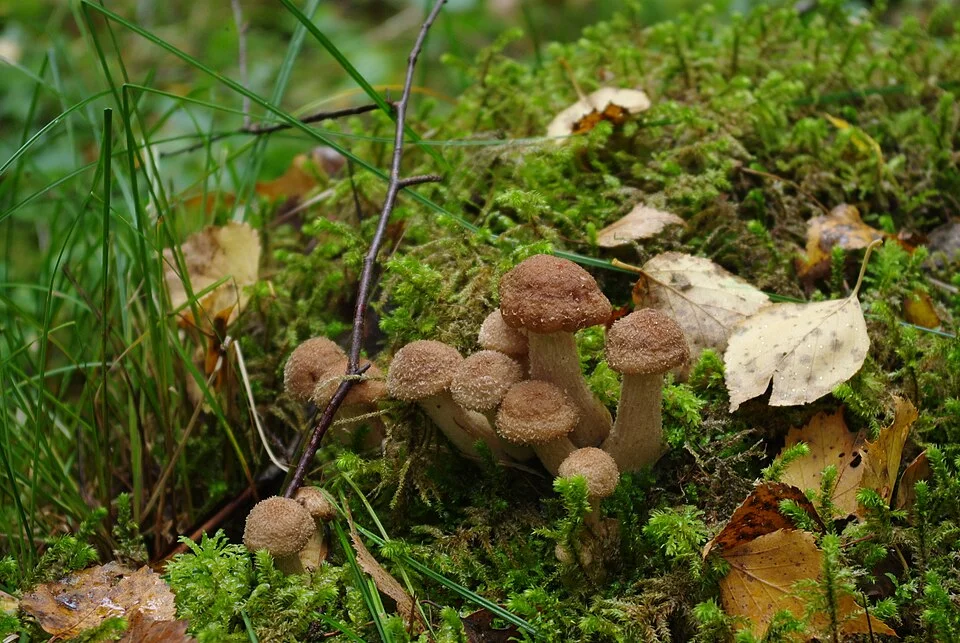
Photo: Antrodia · CC BY-SA 3.0
Armillaria root rot (also called honey fungus) is a soil fungus that lives for years in buried stumps, dead roots and woody debris. It travels from dead wood to living plants along black, bootlace-like strands, then grows in a white sheet under the bark at the base of the trunk and rings the root collar — cutting off the plant's food and water until it dies. It kills perennial tree crops such as coffee, tea, banana, avocado, citrus and mango in slowly expanding patches.
Craig L. Schmitt, Michael L. Tatum (US Forest Service) · Public domain 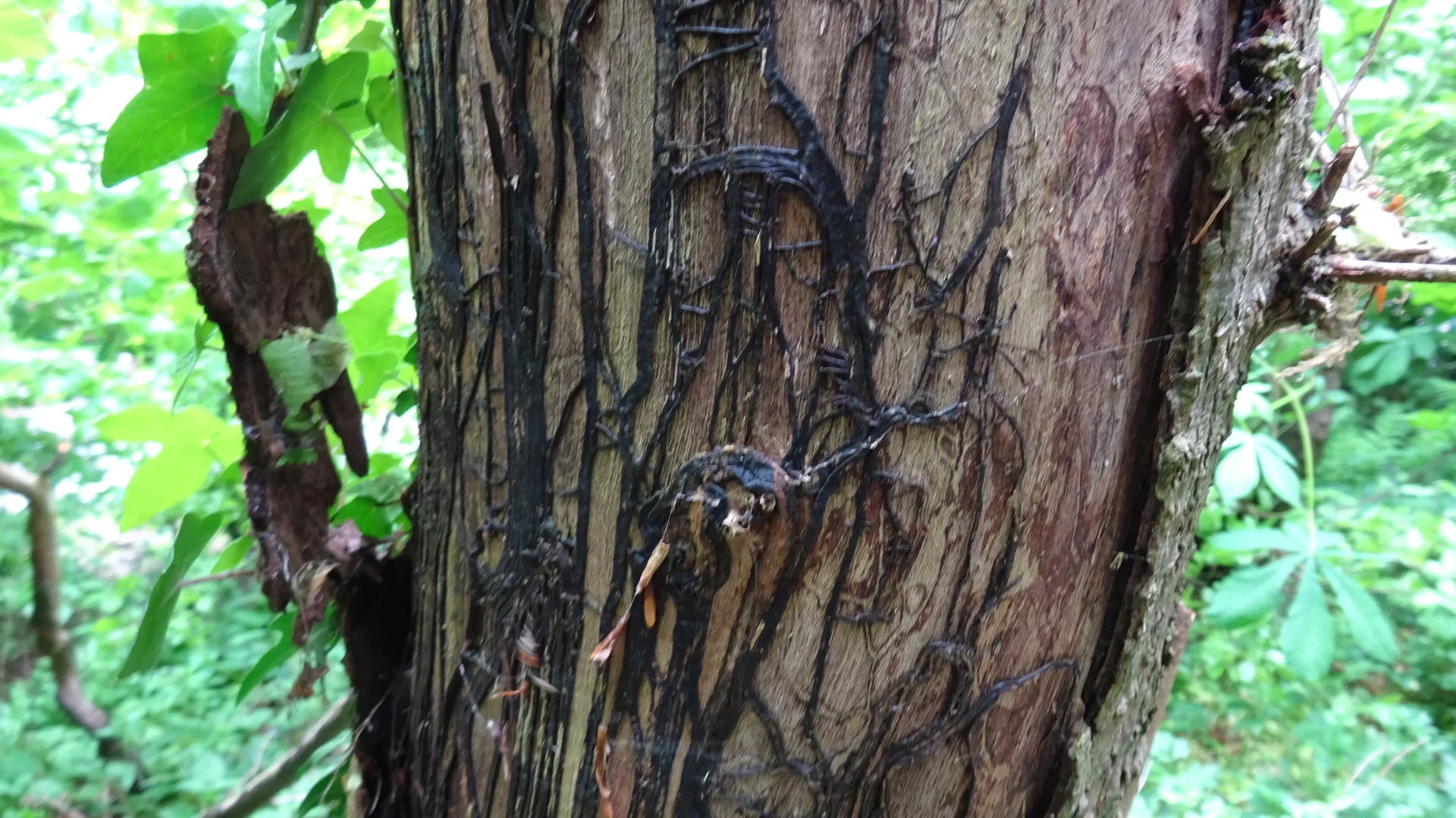
Rosser1954 · CC BY-SA 4.0
Why it matters
Armillaria root rot is a killer, not just a spoiler. Once it rings the base of a tree it cuts off all the food and water going up and down, so you lose the whole tree — up to 100%, not just one season's fruit. Worse, it spreads underground from tree to tree along black, root-like strands, so one sick tree quietly infects its neighbours down the row. And it is very hard to stop once it takes hold, because the fungus hides deep in the roots and dead wood where no spray can reach it — the only cure is to dig the infected tree out and burn it. Catching the very first declining tree early is what saves the rest of your orchard.
When to act
Investigate as soon as isolated trees wilt or decline; act on the first confirmed tree to stop spread to neighbours.
This guidance is general, compiled from published agronomic references including FAO and CABI. Thresholds and timing shift with your crop, your variety and the season.
In much of the region a spray is simply called mushonga — medicine. But a chemical group you cannot name is one you cannot rotate, and a product you did not write down has no pre-harvest interval you can observe. Mushonga, and other farming words →
The full Armillaria root rot field guide
Identify it
First sign — one tree looks sick while its neighbours stay healthy
Its leaves turn pale and yellow, the canopy thins out, new growth is stunted and small, and branches begin dying back from the tips. Some trees fade slowly over a season or two; others suddenly wilt and collapse in a dry spell with the dull, dead leaves still hanging on. Because the fungus travels root-to-root, the dying trees form a patch or gap that creeps down the row — that spreading patch is the biggest giveaway.
The sure sign — a white fan under the bark
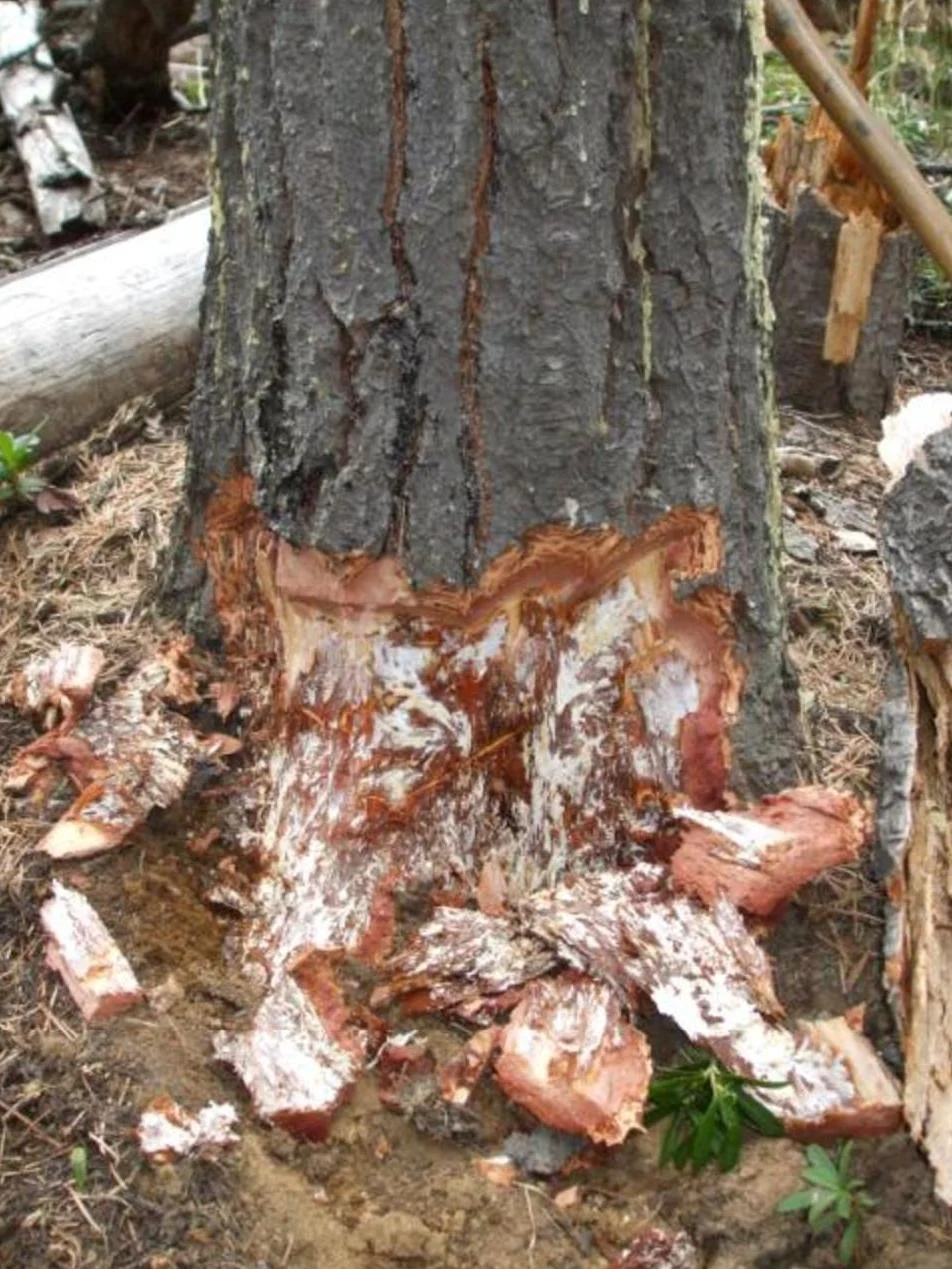
Scrape the soil away from the root collar (the base of the trunk where it meets the ground) and peel back a little bark: you will find a flat, creamy-white sheet of fungus (called mycelium) shaped like a fan or a piece of wet leather, and it smells strongly of mushrooms. No other rot gives you this white leathery fan.
Black bootlaces in the soil
Rake the topsoil around the base and over the main roots and look for black or dark-brown strands like shoelaces or string running through the soil and across the roots. These are the fungus's travelling cords (called rhizomorphs — the fungal 'ropes' it uses to reach new roots). Snap one open and it is white inside.
Honey mushrooms after rain
In wet weather, clumps of honey-coloured or tan toadstools — the fungus's fruiting bodies, where it makes its spores — sprout at the base of a dying or dead tree, often with a small ring around each stalk.
Don't confuse it with
drought or waterlogging, which wilts and yellows many trees evenly across a block rather than in a creeping patch, and gives no white fan and no black bootlaces (always dig and check); other collar and root rots, which can ooze dark, wet lesions but lack the white leathery fan, black bootlaces and honey mushrooms together; and termites or borers, which leave tunnels, mud sheeting or sawdust, not a white fungal fan. If you find the white fan under the bark and the black bootlaces, you are sure it is Armillaria.
Scout for it
When: watch your established, bearing trees — this is a disease of the mature orchard, not the nursery
Walk the orchard at least once a month, and more often right after heavy rain and through the wet season, when the fungus is most active in the moist soil and the honey mushrooms come out. Check any block you cleared from bush, forest or an old orchard most often — that ground carries the highest risk.
How: walk a big W-shape (a zig-zag) across the whole orchard
so you pass through every part, not just the edge by the path. Look along the rows for any tree that stands out as sicker than its neighbours — pale, thin, dying back — or a gap where a tree has already died. Give extra attention to trees next to a stump, an old dead tree, or a spot where a tree died before, because that is the direction the disease travels.
What to check on a suspect tree
scrape the soil off the root collar and peel a little bark to look for the white fungal fan and the mushroom smell; rake the topsoil around the base and over the main roots for the black bootlace strands; and after rain look for honey mushrooms clumped at the base.
How many triggers action — just ONE
You do not wait for a percentage of trees. The moment a single tree wilts or declines for no clear reason, dig at its collar that same week, and if you find the white fans or black bootlaces, act on that one tree straight away. Waiting for a second and third tree to show only means the fungus has already reached their roots underground.
Mark it and follow the spread
Tie a ribbon or drive a painted stake at every confirmed tree, and on your next walk check its neighbours on all sides. The disease moves tree-to-tree along touching roots, so the healthy-looking neighbours are exactly where it strikes next.
Control it
Prevent it (your strongest defence) — clear old wood before you plant
Dig out and burn old stumps, big dead roots and buried wood before you establish an orchard. That rotting wood is the fungus's food store; leave it in the ground and you feed the disease for years. This single step does more than anything else you can do.
Don't plant straight into recently cleared bush, forest or old orchard
— that soil is full of infected roots. If you have no other land, clear every scrap of wood first and, better still, rest the land or grow an annual crop on it for a few years so the old roots rot away before you plant trees.
Keep your trees strong and unwounded
The fungus hits stressed, wet, injured trees hardest, so give the orchard good drainage (never let water pond around the trunk base), mulch and feed the trees, and avoid nicking the roots and collar with hoes or machinery — every wound is a doorway for the fungus.
Plant tolerant rootstocks on risky ground
Where the disease has a history, plant a tolerant rootstock (the root part your fruit tree is grafted onto) if one is available for your crop, and avoid the most susceptible species on known-infested land. Ask your extension officer or nursery which rootstock stands up best locally.
Act early on the first confirmed tree — dig it out and burn it
Grub out the whole infected tree, roots and all, and burn it; lift as much of the big roots and collar as you can. Never just cut it off at ground level — the stump and roots left behind keep the fungus alive and spreading to the next tree.
Trench around the infection to stop the spread
Dig a barrier trench about 50–60 cm deep (deeper than most feeder roots) between the sick patch and the healthy trees. This breaks the root-to-root contact and the black bootlace strands the fungus travels along. Keep the trench open.
No spray will cure it — don't waste your money
Because the fungus hides deep in the roots and dead wood, there is no fungicide spray or soil drench that reliably saves an infected tree — digging it out is the only real cure. Burn the wood you remove (don't stack it near living trees), and knock the soil off your tools after working an infected spot so you don't carry bootlace strands to a clean block.
If it keeps spreading, cut your losses
If trees keep dying down the row despite removal, the fungus owns that ground. Stop fighting it one tree at a time: take out the whole affected patch, dig out every piece of root, and rest the land — fallow it (grow nothing, or only a short annual or grass crop) for several years to starve the fungus. When you replant, shift the new trees off the old infected line and use a tolerant rootstock; on badly infested ground, think about switching that block to a non-woody crop rather than losing tree after tree.
Catch Armillaria root rot before it costs you the harvest
This guide is the general answer. Divisi works out yours — the week to scout your own field for Armillaria root rot, and what to do the day you find it.


Crops it affects
Plan the crops it attacks
-
 When to plant Avocado in Cassongue
 -
 When to plant Mango in South Imenti
 -
 When to plant Tea in Kabarole
All planting calendars, country by country
Get Insights by email
A short digest of new Divisi articles. No email on quiet weeks.
Frequently asked questions
How do I identify Armillaria root rot?
First sign — one tree looks sick while its neighbours stay healthy. Its leaves turn pale and yellow, the canopy thins out, new growth is stunted and small, and branches begin dying back from the tips. Some trees fade slowly over a season or two; others suddenly wilt and collapse in a dry spell with the dull, dead leaves still hanging on. Because the fungus travels root-to-root, the dying trees form a patch or gap that creeps down the row — that spreading patch is the biggest giveaway.
When should I take action against Armillaria root rot?
Investigate as soon as isolated trees wilt or decline; act on the first confirmed tree to stop spread to neighbours.
How do I control Armillaria root rot?
Prevent it (your strongest defence) — clear old wood before you plant. Dig out and burn old stumps, big dead roots and buried wood before you establish an orchard. That rotting wood is the fungus's food store; leave it in the ground and you feed the disease for years. This single step does more than anything else you can do.
Which crops are attacked by Armillaria root rot?
Among the crops covered here: Avocado, Mango, Tea.