 Divisi
Early blight
Alternaria solani · Fungal
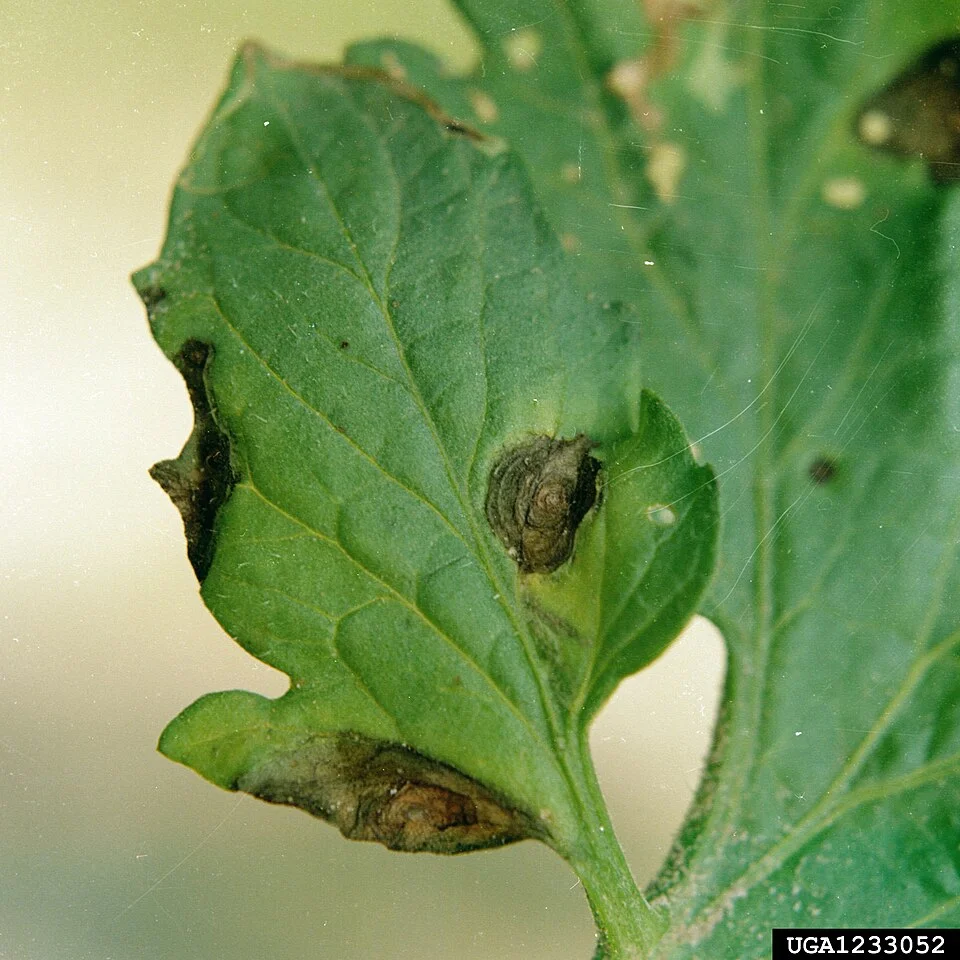
Photo: Clemson University - USDA Cooperative Extension Slide Series · CC BY 3.0 us
Early blight is a fungus (Alternaria solani) of tomato and potato. It survives from season to season on old infected debris, self-sown volunteer plants and dirty seed, and spreads by wind and by rain- and dew-splash onto the leaves. It goes for the oldest, most tired leaves near the ground first, then climbs the plant. Warm weather that swings between wet and dry, with heavy night dew, drives it hardest, and plants that are underfed or carrying a heavy load of fruit are the first to fall.
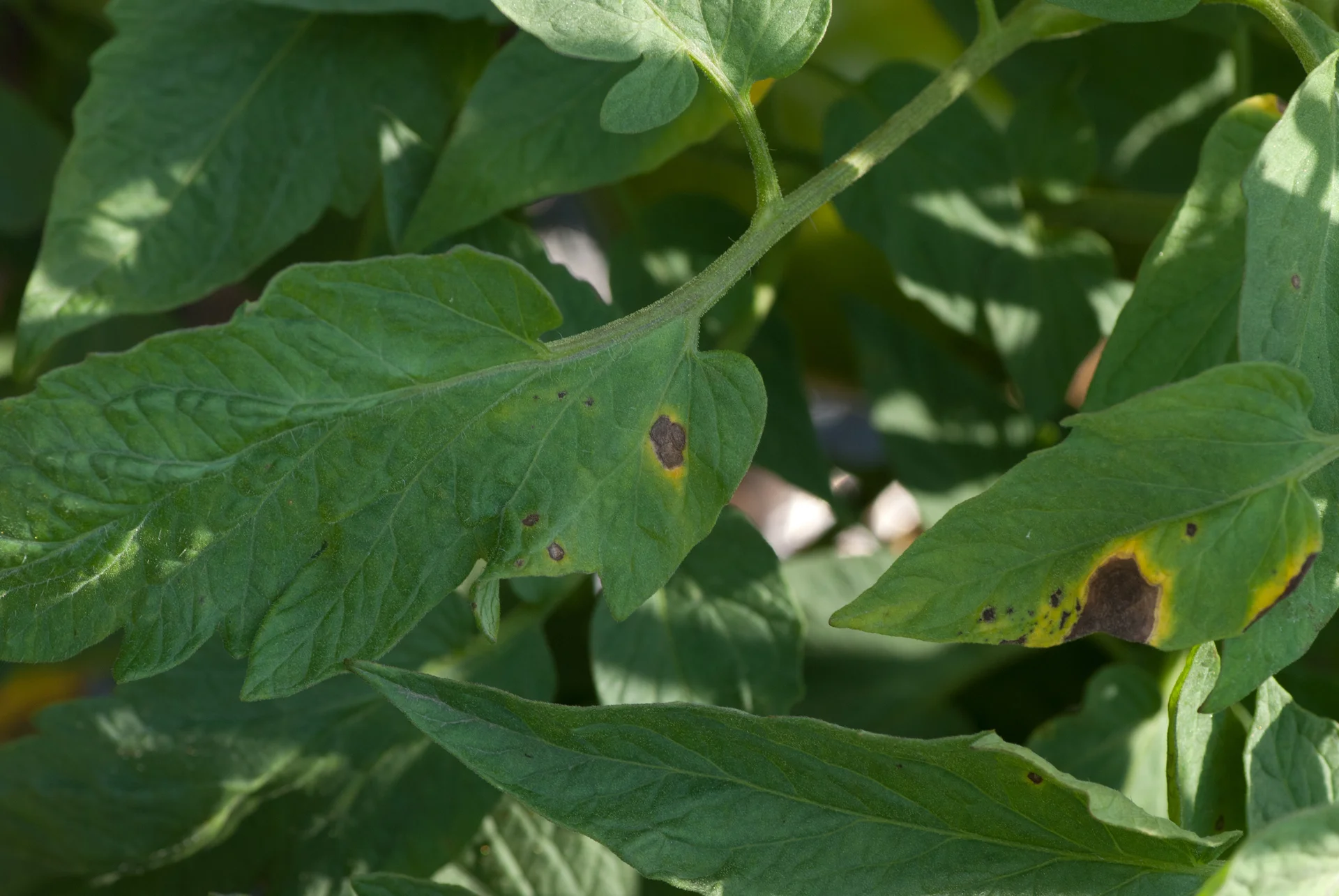
Dwight Sipler · CC BY 2.0 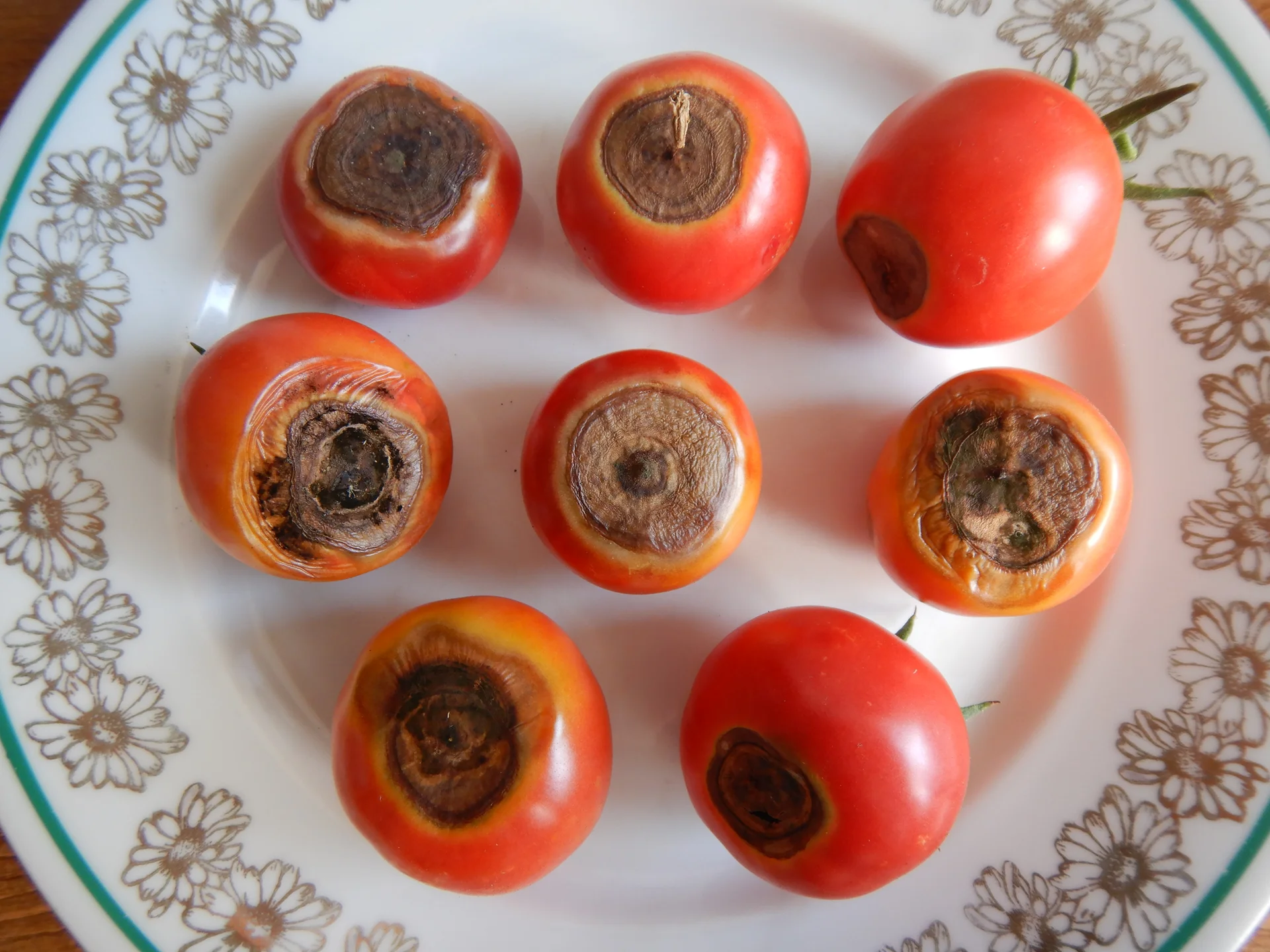
Michal Maňas · CC BY 4.0
Why it matters
Early blight can strip up to half your crop (50%) when it takes hold. It rots the plant from the bottom up, killing the lower leaves so the plant can no longer feed its fruit or tubers, and it also puts dark sunken spots on the tomatoes and potatoes themselves, so even the fruit you save may not sell. Once the spots are climbing the plant it is very hard to push back, because the fungus is already living inside the old leaves and in the soil debris around the plant. Your best win is stopping it early — the first spots, on the lowest leaves — before it ever reaches the fruit.
When to act
Begin protectant sprays at first target-spot lesions on lower leaves, especially once plants start to set fruit and canopies stay wet.
This guidance is general, compiled from published agronomic references including FAO and CABI. Thresholds and timing shift with your crop, your variety and the season.
In much of the region a spray is simply called mushonga — medicine. But a chemical group you cannot name is one you cannot rotate, and a product you did not write down has no pre-harvest interval you can observe. Mushonga, and other farming words →
The full Early blight field guide
Identify it
The first thing you see
small dark brown to black spots on the OLDEST, lowest leaves — the tired leaves nearest the ground. They start about the size of a pinhead and grow to the size of a small coin.
The tell-tale sign
as each spot grows it forms rings inside rings, like a tiny target or a tree stump (bull's-eye), and a yellow halo spreads around it. Badly spotted leaves turn fully yellow, then brown and dry, and drop off — and the browning climbs UP the plant leaf by leaf.
On the stems and fruit
look for dark, sunken, leathery patches, often with the same faint rings — on stems, on the shoulder (stem-end) of tomatoes, and on potato tubers as dark dry sunken sores.
Don't confuse it with late blight
late blight makes large, pale-green, water-soaked, greasy-looking blotches (often with white mould underneath in wet weather) and spreads fast in cool wet weather — it does not make neat target rings. Early blight is dry-looking, ringed, and starts low and old. Simple leaf scorch or hunger yellowing has no dark ringed spots at all.
Scout for it
When to look
early blight attacks from the plant-building stage right through fruiting and into the end of the season (development, mid- and late-season), so start weekly checks once plants are well grown and begin to set fruit — the danger point the plant is most exposed.
Watch the weather
look extra hard after warm days around 24-30 C followed by heavy dew, mist or light rain, and where the leaves stay wet — these wet-then-dry spells are exactly when the fungus jumps.
How to walk
cross the field in a big "W" so you cover all four corners and the middle, not just the row by the path. Make about 10 stops, and at each stop bend down and check the oldest lower leaves of a plant — turn a few over.
What triggers action (the number)
you are looking for the very first target-ring spots on the lower leaves. As soon as you find even 1 spotted leaf — and especially once plants have started setting fruit and the canopy is staying wet — treat it as the moment to start protecting. Do not wait for 10 plants to be covered; early blight only gets harder from here.
Control it
PREVENT first
-
grow a tougher crop and a cleaner field:
plant tomato or potato varieties that carry early-blight tolerance where you can get them, and rotate — do not plant tomato or potato on the same ground two seasons running; give it 2-3 seasons in a non-related crop (maize, beans, cabbage) so the fungus in the old debris starves out.
-
keep leaves dry and plants strong:
stake and space plants so air moves through and leaves dry fast after dew; mulch the soil so rain cannot splash fungus up onto the lowest leaves; water at the base early in the day, never overhead in the evening; and keep plants well fed, because hungry, over-loaded plants are hit first and hardest.
ACT EARLY — sanitation (clearing up):
the moment you see spotted lower leaves, pick them off and carry them out of the field to burn or bury — do not drop them between the rows. At the end of the season remove and destroy all old plants, debris and volunteer (self-sown) plants, because that is where the fungus overwinters to attack next year.
CHEMICAL — last resort, and start it at the FIRST spots:
where pressure is high, use a protectant (contact) fungicide — one that coats and shields the leaf surface (for example chlorothalonil- or mancozeb-type products), rather than only a systemic one (that moves inside the plant). Start at the first lesions and re-cover new growth on the schedule on the label, aiming the spray at the lower, older leaves where it begins.
SAFETY when you spray (every time)
cover your skin, nose, mouth and eyes, spray in the cool of morning or evening with the wind at your back, and keep the spray off food, drinking water, children and bees. Respect the pre-harvest interval — the number of days the label says you must WAIT between spraying and picking fruit — and wash your body and clothes well afterwards.
RESISTANCE — don't let the fungus learn:
rotate between different fungicide groups (do not spray the same product every time), so early blight cannot build up resistance to your one reliable spray.
IF IT KEEPS SPREADING
tighten the spray schedule, strip off and remove the worst lower leaves to slow the climb, and check the fungicide is a protectant coating fresh growth. When most of the canopy is already brown and the fruit is spotting, it is too late to save that crop — cut your losses: harvest whatever sound fruit or tubers you can, clear and destroy every plant and all debris, and rotate to a non-related crop next season so you start clean.
Catch Early blight before it costs you the harvest
This guide is the general answer. Divisi works out yours — the week to scout your own field for Early blight, and what to do the day you find it.


Crops it affects
Plan the crops it attacks
-
 When to plant African nightshade in Gwer East
 -
 When to plant Irish potato in Ayene
 -
 When to plant Tomato in Goma
All planting calendars, country by country
Get Insights by email
A short digest of new Divisi articles. No email on quiet weeks.
Frequently asked questions
How do I identify Early blight?
The first thing you see. small dark brown to black spots on the OLDEST, lowest leaves — the tired leaves nearest the ground. They start about the size of a pinhead and grow to the size of a small coin.
When should I take action against Early blight?
Begin protectant sprays at first target-spot lesions on lower leaves, especially once plants start to set fruit and canopies stay wet.
How do I control Early blight?
PREVENT first — grow a tougher crop and a cleaner field:. plant tomato or potato varieties that carry early-blight tolerance where you can get them, and rotate — do not plant tomato or potato on the same ground two seasons running; give it 2-3 seasons in a non-related crop (maize, beans, cabbage) so the fungus in the old debris starves out.
Which crops are attacked by Early blight?
Among the crops covered here: African nightshade, Irish potato, Tomato.