 Divisi
Ergot
Claviceps africana · Fungal
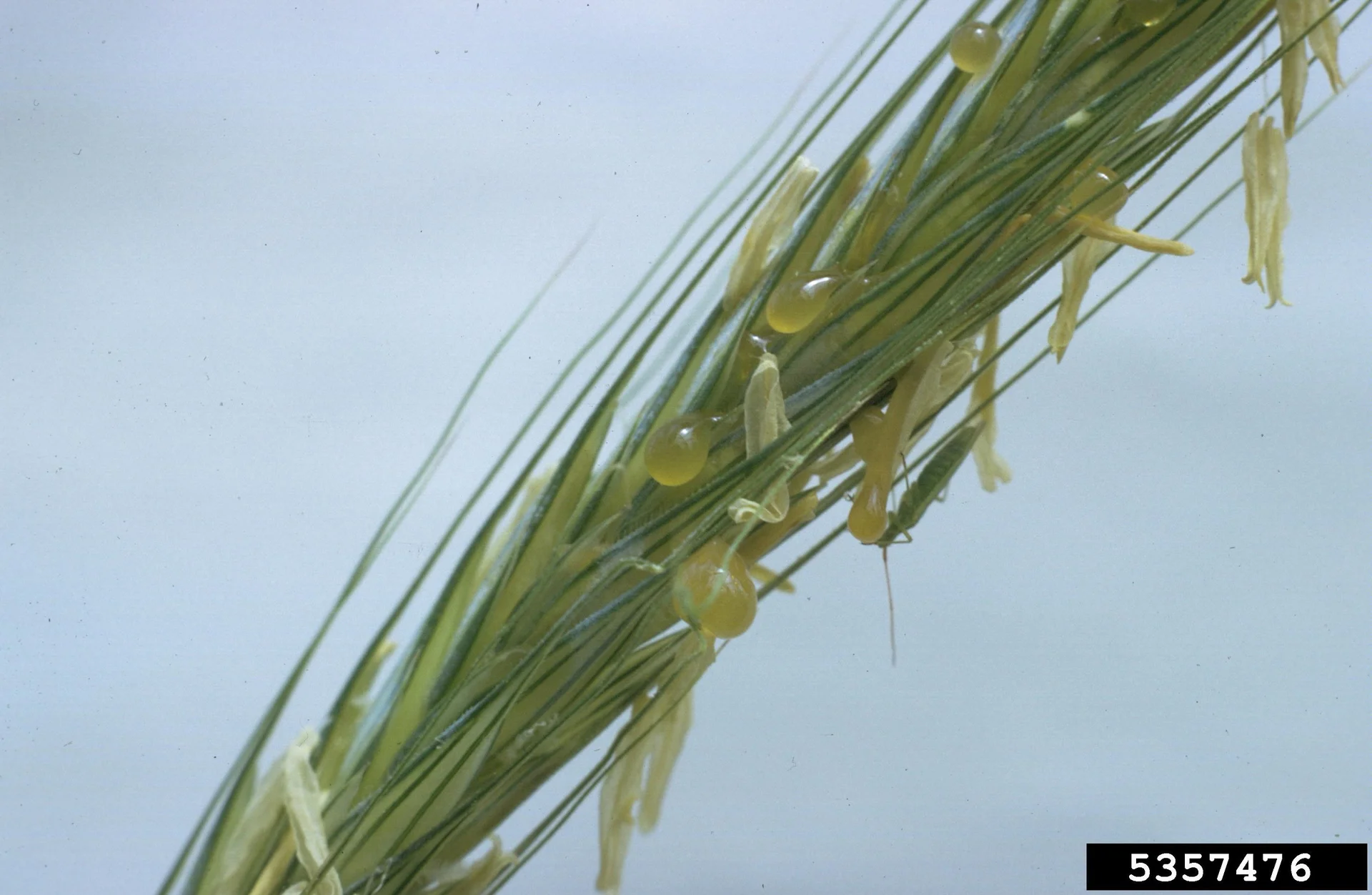
Photo: Howard F. Schwartz, Colorado State University, Bugwood.org · CC BY 3.0
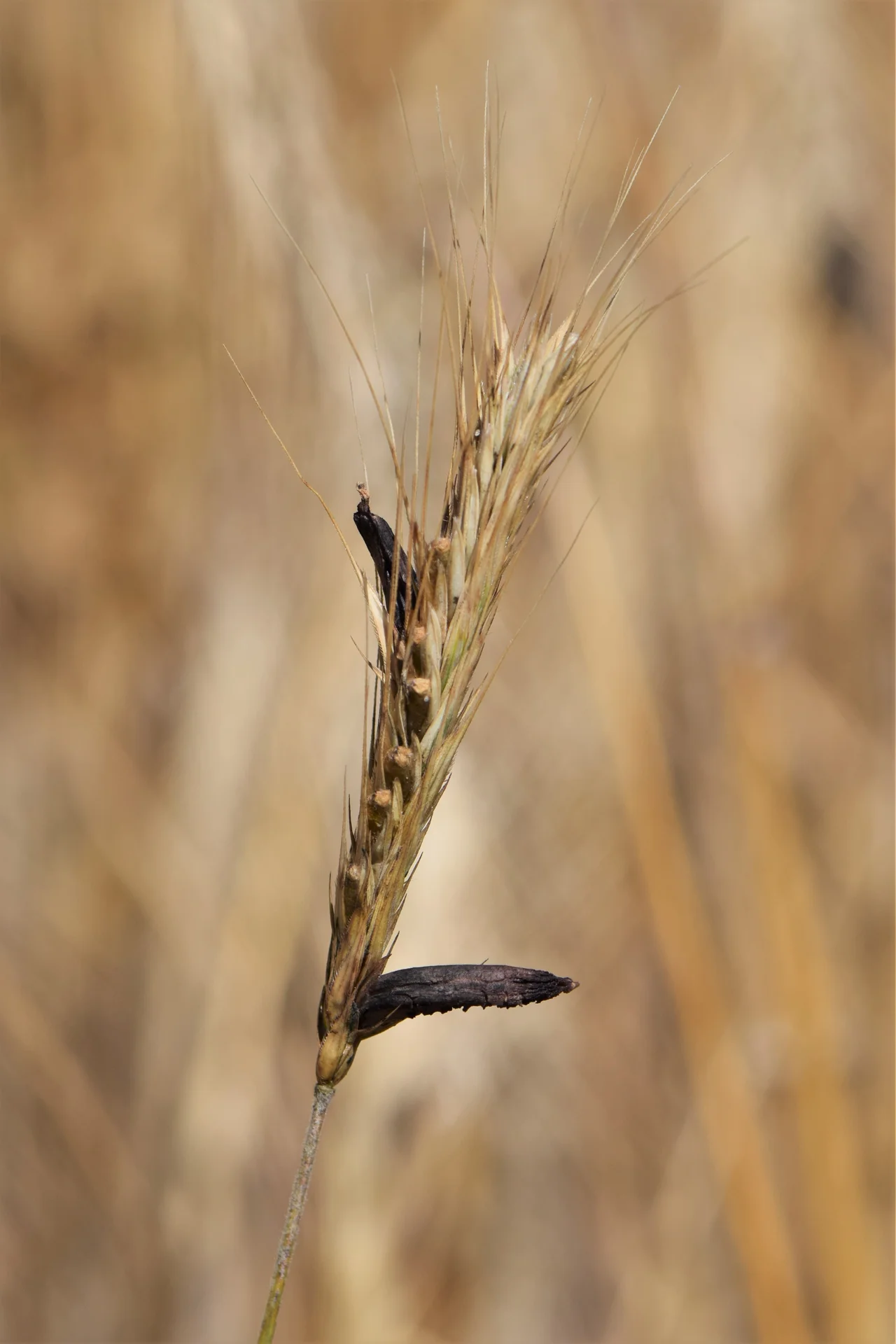
Ergot (Claviceps africana) is a fungus that attacks the flowers of sorghum, pearl millet, finger millet and wheat. It enters an open floret that has not yet been pollinated and grows in place of the grain, first oozing a sticky sugary liquid full of spores, then hardening into a dark, seed-shaped body. Cool, damp weather at flowering — which slows pollination and leaves the flowers open longer — is what lets it in.
Krzysztof Ziarnek, Kenraiz · CC BY-SA 4.0 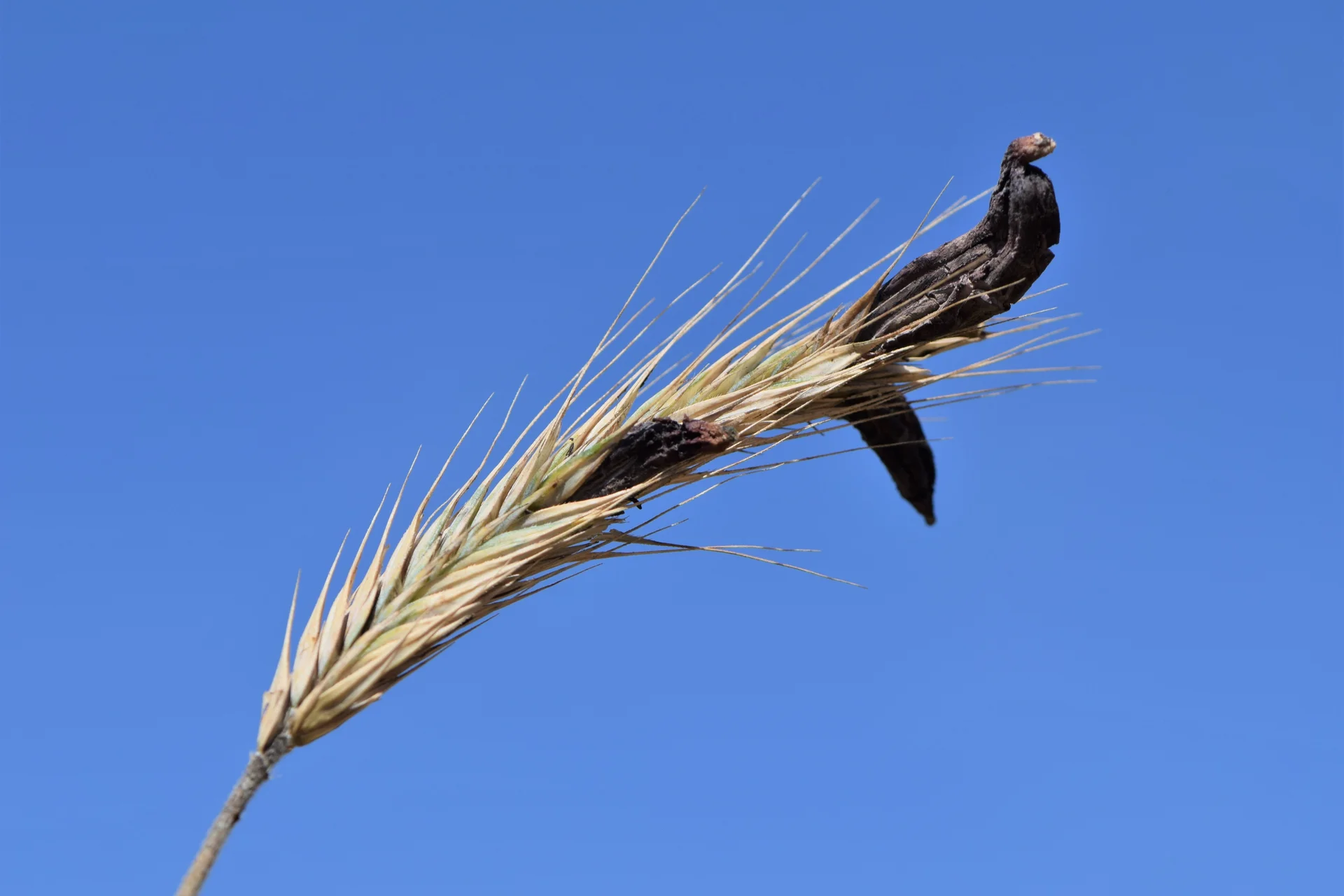
Krzysztof Ziarnek, Kenraiz · CC BY-SA 4.0
Why it matters
Ergot turns your grain into worthless dark lumps: every flower it infects makes no seed at all, and a bad outbreak in cool, wet flowering weather can cost you up to a third of your harvest (30%). It is hard to stop once it starts because it spreads fast from the sticky honeydew — carried plant-to-plant by insects, rain splash and even your own hands and tools — and the hard ergot bodies survive in the soil and in seed to start the trouble again next season. Some of these bodies are also poisonous to people and livestock, so heavily infected grain cannot be safely eaten or sold.
When to act
any creamy honeydew droplets seen oozing from florets at flowering
This guidance is general, compiled from published agronomic references including FAO and CABI. Thresholds and timing shift with your crop, your variety and the season.
In much of the region a spray is simply called mushonga — medicine. But a chemical group you cannot name is one you cannot rotate, and a product you did not write down has no pre-harvest interval you can observe. Mushonga, and other farming words →
The full Ergot field guide
Identify it
The first thing you see
small creamy-white to pale-pink sticky droplets oozing out of the flowers (florets) on the head, like drops of sugary syrup. This sticky liquid is called honeydew. It feels tacky, drips down onto the leaves below, and quickly draws ants, flies and bees.
As it spreads
the honeydew goes dark and dirty-looking as a black sooty mould grows on the sugar, so the head and the leaves under it look grimy and smudged.
Later, the tell-tale sign
in place of normal plump grain you find hard, dark-grey to brown or black bodies poking out of the head — longer and fatter than a healthy seed, shaped a bit like a mouse dropping or a small dark tooth. These are the ergot bodies (sclerotia); the infected flowers around them stay empty and set no grain.
Don't confuse it
with grain smut, which fills the whole seed with a dry, dusty black powder that puffs out when you rub it — ergot is sticky and wet first, then turns into hard solid lumps, and it always starts with the sugary honeydew droplets that smut never has. Sooty mould alone (a black film with no droplets and no hard bodies) is only living on spilt honeydew or insect sugar and is not the disease itself.
Scout for it
When to look
check hardest during flowering (mid-season) — this is the ONLY time the crop can be infected, because the fungus can only get in through an open, unpollinated flower. Watch most closely if flowering falls in a cool, damp or rainy spell (nights around 13-18 C with heavy dew or drizzle), the weather that most invites ergot in.
How often
walk the field every day or two while the heads are in flower — new droplets can appear overnight, and the sooner you catch them the less they spread.
How to walk it
cross the field in a big "W" shape so you cover all four corners and the middle, not just the edge by the path. Make about 10 stops, and at each stop look closely at the flowering heads of a few plants.
What to check
look into the florets on the head for shiny sticky droplets, run a finger near (not on) them to see if they are tacky, and glance at the leaves just below the head for drips of honeydew, sooty mould or clustered insects — these under-leaf signs often show the infection before you spot it up top.
The number that means act now
the threshold is very low — even ONE head with creamy honeydew droplets at flowering means the disease is present and act immediately. Do not wait for a percentage; ergot spreads from a single sticky head, so treat the first droplets you find as the trigger.
Control it
Prevent it first
-
timing (cultural):
plan your planting so that flowering falls in warm, dry weather, not in a cool, wet spell. Warm dry days let the crop pollinate quickly and close its flowers before the fungus can get in — this is your strongest single defence.
-
a uniform, quick-flowering stand (cultural):
sow evenly and at one time so the whole field flowers together over a few days rather than dragging on for weeks. A short, synchronised flowering closes the window ergot needs. Use only clean seed with no dark ergot bodies mixed in, and after harvest plough infected heads and residues deep into the soil so the buried ergot bodies cannot shed spores onto next season's flowers.
-
the right variety (resistant variety):
where you can, grow varieties or hybrids that make plenty of pollen and fertilise fast. Quick, heavy pollination fills the flowers before the fungus can, shortening the time the crop is open to attack.
Act early — remove the first infected heads:
as soon as you spot honeydew on a head, cut it out and carry it right out of the field (bag it, then bury or burn it away from the crop). Do this gently so you don't fling sticky spores about, and wash your hands and tools afterwards, because the honeydew on skin and blades carries the infection to healthy heads.
Chemical — last resort (triazole fungicide):
only worth it on seed crops or high-value stands, because sprays give only partial protection. Use a protectant fungicide of the triazole group ("protectant" means it must coat the flowers before infection — it cannot cure a head that is already oozing). Spray at early flowering, and repeat if cool wet weather drags on. SAFETY: cover your skin, eyes, nose and mouth, spray in the cool of morning or evening with the wind at your back, keep it off food, off water sources, and away from children and bees, wash yourself and your clothes afterwards, and respect the pre-harvest interval (the number of days the label says you must wait between the last spray and harvest). To keep the fungus from getting used to the chemical, rotate to a different fungicide group rather than using triazole every time.
If it keeps spreading
if cool wet weather holds and new honeydew keeps appearing despite your efforts, stop trying to save every head and protect what you can — keep removing the worst heads, keep hands and tools clean between plants, and harvest the clean areas first. When too much of the field is lost, cut your losses: harvest the healthy heads separately, and do NOT eat, sell or feed grain that is mixed with ergot bodies — those hard lumps are poisonous to people and animals. Clean the ergot bodies out of your seed before storing, and next season come back with better timing, a uniform stand and a stronger variety.
Catch Ergot before it costs you the harvest
This guide is the general answer. Divisi works out yours — the week to scout your own field for Ergot, and what to do the day you find it.


Crops it affects
Plan the crops it attacks
-
 When to plant Finger millet in Impfondo
 -
 When to plant Pearl millet in Kono
 -
 When to plant Sorghum in Maracha
 -
 When to plant Wheat in Hammedi
All planting calendars, country by country
Get Insights by email
A short digest of new Divisi articles. No email on quiet weeks.
Frequently asked questions
How do I identify Ergot?
The first thing you see. small creamy-white to pale-pink sticky droplets oozing out of the flowers (florets) on the head, like drops of sugary syrup. This sticky liquid is called honeydew. It feels tacky, drips down onto the leaves below, and quickly draws ants, flies and bees.
When should I take action against Ergot?
any creamy honeydew droplets seen oozing from florets at flowering
How do I control Ergot?
Prevent it first — timing (cultural):. plan your planting so that flowering falls in warm, dry weather, not in a cool, wet spell. Warm dry days let the crop pollinate quickly and close its flowers before the fungus can get in — this is your strongest single defence.
Which crops are attacked by Ergot?
Among the crops covered here: Finger millet, Pearl millet, Sorghum, Wheat.