 Divisi
Fusarium head blight
Fusarium graminearum · Fungal
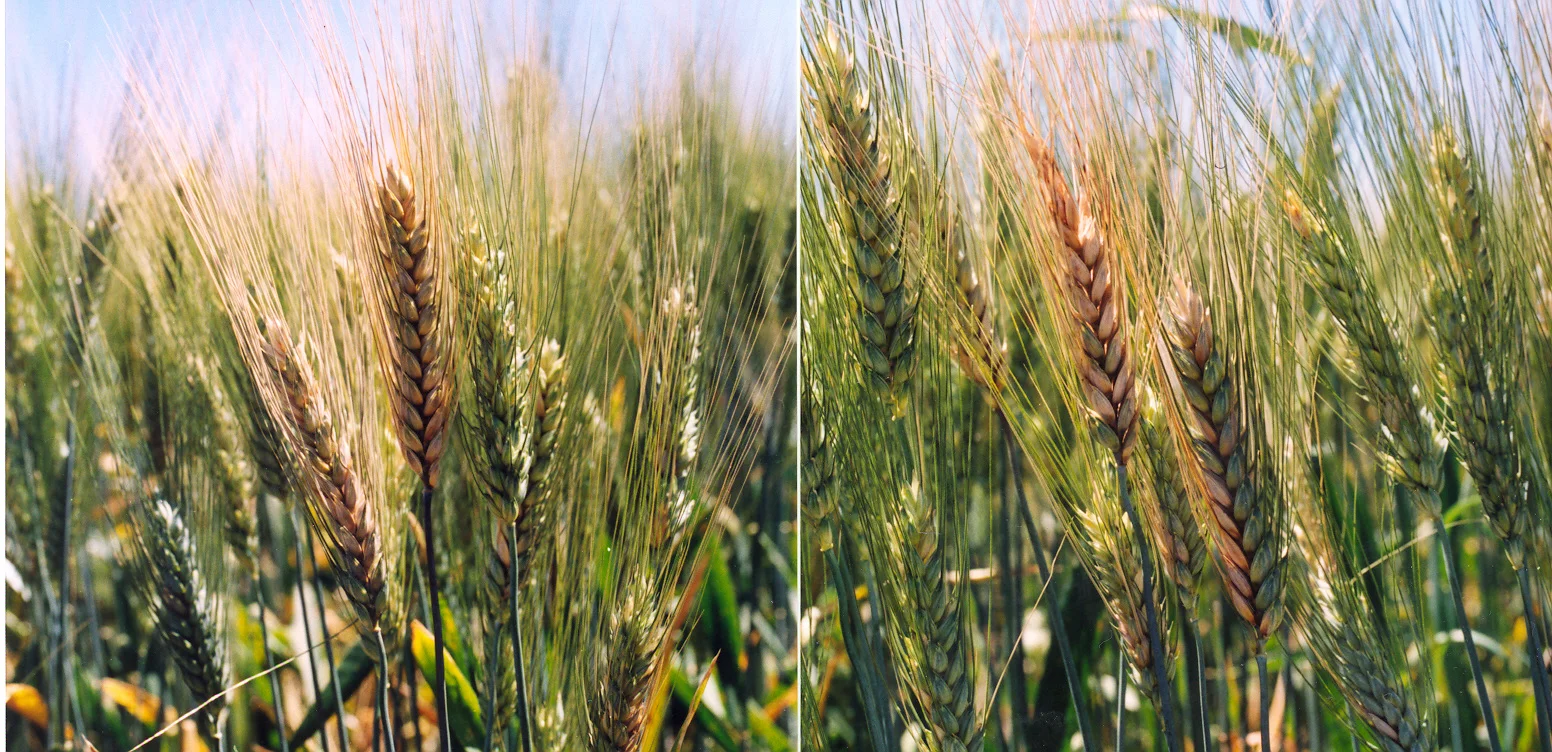
Photo: CSIRO · CC BY 3.0
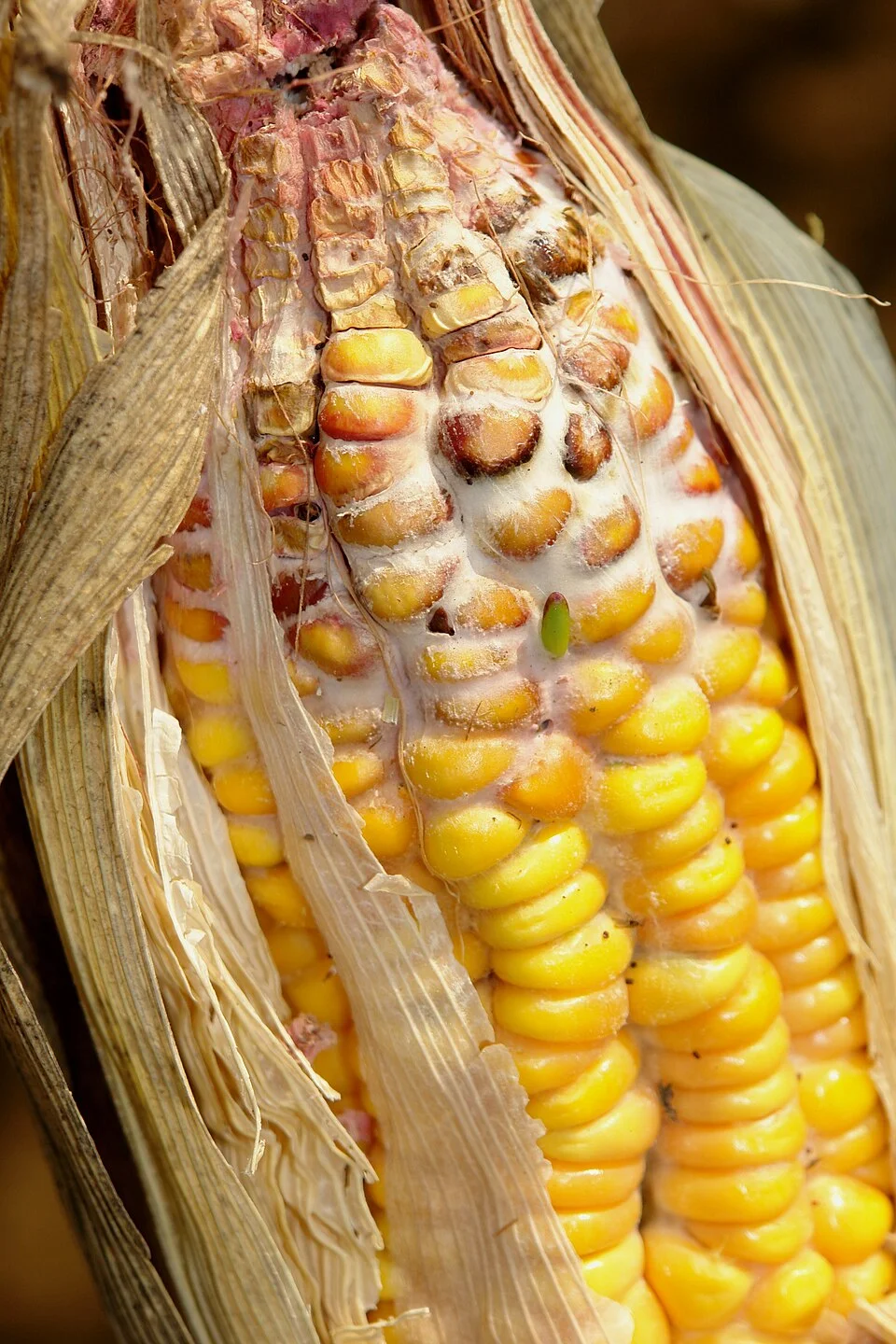
Fusarium head blight (also called head scab) is a fungal disease of the cereal head. The fungus lives on old crop trash — especially maize stalks left on the ground — and its spores blow or splash up onto the wheat, sorghum, maize or finger-millet head just as it is flowering. If the weather is warm and wet at that moment, the fungus enters the open flowers, bleaches the head, shrivels the grain, and leaves behind hidden poisons (mycotoxins) that can make the grain unsafe to eat or sell.
Scot Nelson from Honolulu, USA · CC0 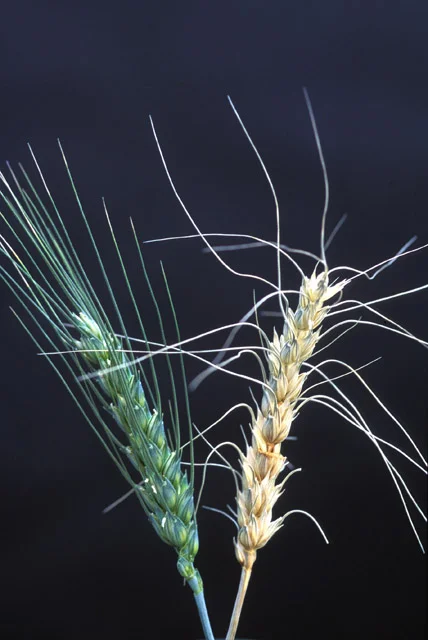
Wikimedia Commons (public domain) · Public domain
Why it matters
Head blight strikes at the worst possible time — when your crop is flowering and setting grain — and a bad attack can take up to 40% of your harvest. Worse, it does not just cut yield: it hides a poison in the grain that can make it unfit to eat, feed to animals, or sell, so you can lose the crop even after you bring it home. And there is no cure once the head is infected — the only real chance to stop it is before and during flowering, in the few days when the weather turns warm and wet. That short window is why this disease is so hard to fix.
When to act
warm, wet or humid weather forecast around flowering (heading) in a susceptible crop
This guidance is general, compiled from published agronomic references including FAO and CABI. Thresholds and timing shift with your crop, your variety and the season.
In much of the region a spray is simply called mushonga — medicine. But a chemical group you cannot name is one you cannot rotate, and a product you did not write down has no pre-harvest interval you can observe. Mushonga, and other farming words →
The full Fusarium head blight field guide
Identify it
The first thing you see
one or two straw-coloured, bleached spikelets on a head while the rest of that head — and the whole plant — is still green. The bleaching starts at a flower and spreads up and down the head, so you often see a head that is half-green, half-dead.
The tell-tale sign
look closely at the base of the bleached spikelets for a faint pink-to-orange salmon-coloured crust of spores, especially after damp weather. That pink-orange colour is the fingerprint of this disease — few other problems paint the head pink.
In the grain
open a bleached head and you find shrivelled, light, chalky-white or pinkish 'tombstone' kernels — thin and dead instead of plump. On a maize cob the same fungus shows as a pink-red mould starting at the tip.
Don't confuse it
with sun-scorch or frost (which bleaches whole heads evenly, with no pink crust and no shrivelled grain), or with normal ripening (which turns the WHOLE plant golden at once, not one head early while the plant is still green). The mix of early-bleached heads on a green plant + pink spore crust is what makes this disease.
Scout for it
Start with the sky, not the field
The danger is set at flowering (heading) — the point when the part-grown crop pushes out its heads and opens their flowers. Watch the weather from the moment heads emerge: warm (20–30 °C) with rain, heavy dew, or muggy humid air during flowering is the trigger. In a susceptible crop, that warm-wet flowering weather is your signal to act now — you do not wait to count sick heads, because by the time you see them it is too late to spray.
Know your extra risk
The danger is far higher if there is old maize or cereal trash lying on the soil in or near the field — that trash is where the spores come from. A field flowering in wet weather next to maize stubble is the highest risk of all.
Walk the field a few days AFTER flowering
to see how bad it got. Walk a big "W" across the field so you check all four corners and the middle, not just the edge by the path. Make about 10 stops, and at each stop look at 10 heads — pull them close and check for bleached spikelets and the pink-orange crust.
Count and record
Note how many heads out of the 10 at each stop are blighted. This does not tell you to spray now (that window has passed) — it tells you how much toxin risk is in this field, whether to harvest it separately and store it very dry, and how much to change your plan (variety, rotation, residue) before next season, which is the real fix for this disease.
Control it
Prevent
-
clean up the trash (your strongest, cheapest tool):
the fungus survives on old maize and cereal stalks on the ground. Plough in, bury, or remove maize and small-grain residue before the next crop flowers, and never plant wheat directly after maize on the same land. Rotating away from cereals to a non-cereal crop (like a legume) starves the fungus of the trash it lives on.
-
choose the head that fights back:
plant a moderately resistant variety where one is available. It will not stop the disease alone, but a tougher variety catches less blight AND carries less poison in the grain — and it stacks with the clean-up above to cut your risk by roughly half.
-
spread your risk with timing:
stagger your planting so that not every field is flowering during the same wet spell. If all your land flowers in one warm, rainy week you can lose the lot; spreading the flowering dates means a bad weather window only catches part of your crop.
Act early — the ONE spray that works, and only at the right hour:
if warm, wet weather threatens right at flowering, apply a triazole fungicide (the recommended chemical group — for example prothioconazole or tebuconazole). A fungicide is a protectant/systemic — meaning it must be on the head to guard the open flowers before the fungus gets in; sprayed after the head is already blighted it does nothing. Time it to early flowering and aim the spray onto the head for good coverage.
Spray safely
cover your skin, eyes, nose and mouth; spray in the cool of the morning or evening with the wind at your back so the mist blows away from you; keep it off food, drinking water, children and bees; respect the pre-harvest interval (the number of days the label says you must wait between spraying and harvest, so no chemical is left on the grain); and wash yourself and your clothes afterwards. To stop the fungus getting used to the chemical (resistance), rotate to a different fungicide group in other seasons rather than using the same one every time.
If it keeps spreading — or it's already too late:
once heads are bleached there is no cure this season, so shift to saving the grain. Harvest the worst fields separately, turn up the combine's wind or winnow hard to blow out the light, shrivelled 'tombstone' kernels (they hold the most poison), and dry the grain fast and store it very dry so the fungus and its toxin cannot grow further in the store. Badly blighted grain should be kept out of food and animal feed. Then fix the root cause before next season — clear the residue, rotate, and choose a resistant variety — because with this disease, next year's prevention is the only real cure.
Catch Fusarium head blight before it costs you the harvest
This guide is the general answer. Divisi works out yours — the week to scout your own field for Fusarium head blight, and what to do the day you find it.


Crops it affects
Plan the crops it attacks
-
 When to plant Finger millet in Impfondo
 -
 When to plant Maize in Mougalaba
 -
 When to plant Sorghum in Maracha
 -
 When to plant Wheat in Hammedi
All planting calendars, country by country
Get Insights by email
A short digest of new Divisi articles. No email on quiet weeks.
Frequently asked questions
How do I identify Fusarium head blight?
The first thing you see. one or two straw-coloured, bleached spikelets on a head while the rest of that head — and the whole plant — is still green. The bleaching starts at a flower and spreads up and down the head, so you often see a head that is half-green, half-dead.
When should I take action against Fusarium head blight?
warm, wet or humid weather forecast around flowering (heading) in a susceptible crop
How do I control Fusarium head blight?
Prevent — clean up the trash (your strongest, cheapest tool):. the fungus survives on old maize and cereal stalks on the ground. Plough in, bury, or remove maize and small-grain residue before the next crop flowers, and never plant wheat directly after maize on the same land. Rotating away from cereals to a non-cereal crop (like a legume) starves the fungus of the trash it lives on.
Which crops are attacked by Fusarium head blight?
Among the crops covered here: Finger millet, Maize, Sorghum, Wheat.