 Divisi
Phyllody
· Bacterial
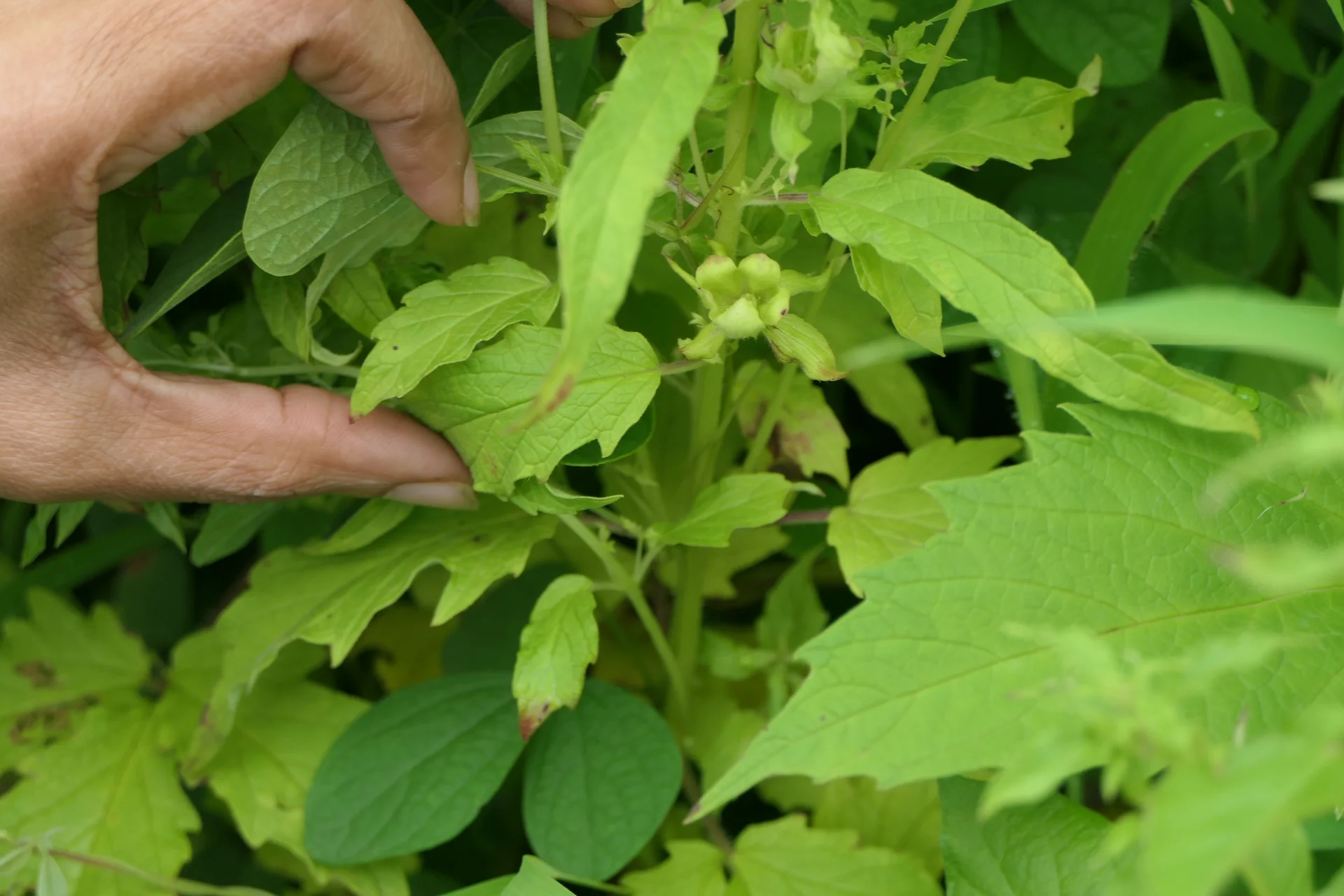
Photo: Dinesh Valke · CC BY-SA 2.0
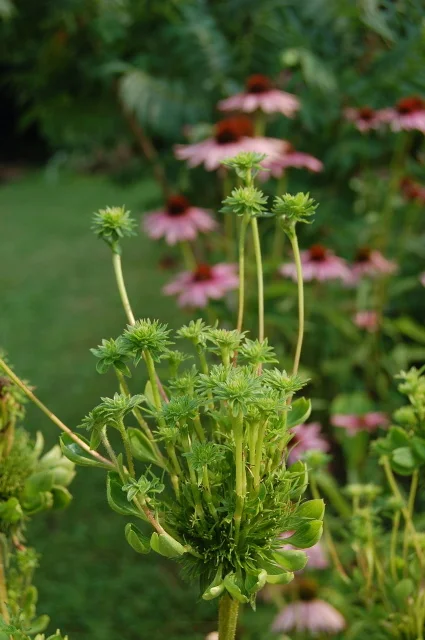
Phyllody is a disease of sesame, groundnut and chickpea caused by a phytoplasma — a tiny wall-less bacterium that lives inside the plant's sap-carrying tubes (phloem). It is carried from plant to plant by leafhoppers, small wedge-shaped sap-sucking insects that jump when disturbed. The germ scrambles how the plant makes flowers, so instead of normal blooms and pods you get little green leafy tufts, and the plant sets almost no seed.
Estreya · CC BY-SA 3.0 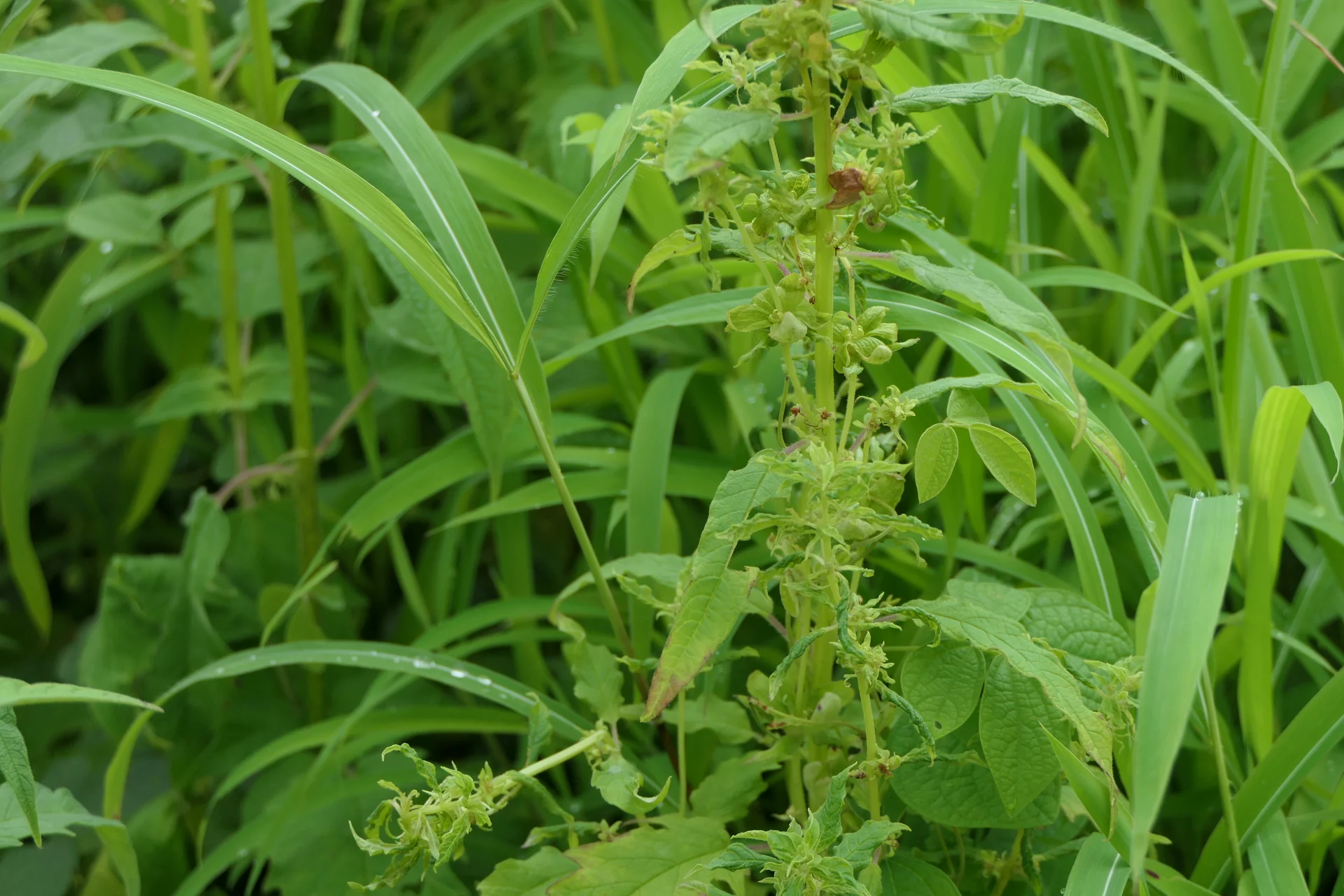
Dinesh Valke · CC BY-SA 2.0
Why it matters
Phyllody attacks your seed crop where it hurts most: instead of flowers and pods you get useless green leafy tufts, so a badly hit plant makes almost no seed at all. In a bad year it can wipe out up to 80% of your harvest. Worst of all, there is no cure — once a plant is infected you cannot spray it better; you can only pull it out and stop the leafhoppers before they carry the germ to your healthy plants.
When to act
First plants showing leaf-like flowers or excessive branching; rogue at once and manage leafhoppers (no cure)
This guidance is general, compiled from published agronomic references including FAO and CABI. Thresholds and timing shift with your crop, your variety and the season.
In much of the region a spray is simply called mushonga — medicine. But a chemical group you cannot name is one you cannot rotate, and a product you did not write down has no pre-harvest interval you can observe. Mushonga, and other farming words →
The full Phyllody field guide
Identify it
The first thing you see
is at flowering: the flowers on a plant look wrong. Instead of normal blooms that become pods, the flower parts turn into tiny green leaves — little leafy tufts sitting where a flower should be. This flower-turned-to-leaf is the tell-tale sign (the disease is named for it).
As it takes hold
, the whole plant changes shape. It throws out too many thin shoots and side-branches bunched together, so the top looks like a small green broom or a bird's nest — this bushy tangle is called a witches'-broom. The gaps between leaves get short and crowded, and the plant often looks stiff and upright.
Check the pods
On sesame the seed capsules stay small, green and empty; on groundnut and chickpea the pods are few, shrivelled or hold no good seed. A plant may look green and alive but give you nothing to harvest.
Don't confuse it
with drought or poor soil, which make the whole field small and pale evenly — phyllody hits scattered single plants while their neighbours flower normally. It is also not the same as an insect eating the plant: there are no holes, no chewing, no caterpillars — the flowers are simply the wrong shape and colour.
Scout for it
When to look
start walking your field from the time plants are growing strong and putting on branches (the development stage) and keep going right through flowering and mid-season — this is when the leafhoppers are active and when the twisted flowers first show. Look most closely in warm spells, which the leafhoppers love.
How to walk it
cross the field in a big "W" shape so you cover all four corners and the middle, not just the edge by the path. Make about 10 stops, and at each stop look closely at a small group of plants.
What to check at each plant
look at the flowers and pod-heads for green leafy tufts instead of blooms, and look at the top of the plant for bunched broom-like shoots. While you bend down, watch the leaves and stems for leafhoppers — small green or brown wedge-shaped insects, shorter than a grain of rice, that hop or run sideways when you disturb them.
The trigger to act
phyllody spreads fast and has no cure, so the threshold is low — as soon as you find even the first plant with leaf-like flowers or that broom-like bushy growth, act the same day: pull that plant out and start knocking back the leafhoppers before they carry the germ further.
Control it
Prevent it first (your strongest tool)
keep your seed clean — save seed only from healthy, well-podded plants or buy from a trusted source. Clear the weeds in and around the field before and during the season, because leafhoppers shelter and breed on them and weeds can hide the germ. Where you can, sow early so the crop is past its tender flowering stage before leafhopper numbers build up in the warm months; late-sown crops get hit hardest.
Rogue at the first sign (act early)
walk the field often and pull out every diseased plant the moment you spot it — roots and all. Carry it right out of the field and burn it or bury it deep; do not leave it on the edge or throw it on the compost, because it stays a source of infection for the leafhoppers. Removing sick plants early is the single most important thing you can do to protect the healthy ones.
Grow a tougher crop where you can
if a tolerant or resistant variety of your crop is offered by an extension officer or trusted seed seller, choose it — it will not stop phyllody completely but it stands up to the disease better than an ordinary variety.
Insecticide is a last resort, and only against the leafhoppers — never a cure:
spraying an insecticide kills the leafhoppers that carry the germ, so it slows the spread, but it cannot heal a plant that is already infected. Use it only when leafhoppers are many and the disease is appearing. Safety: cover your skin, eyes, nose and mouth, spray in the cool of morning or evening with the wind at your back (never into your face), and keep the spray away from food, drinking water, children and bees. Wait the number of days written on the label before you harvest (this waiting time is the pre-harvest interval), and wash yourself and your clothes afterwards. To stop the leafhoppers getting used to one poison, rotate to a different type of insecticide each time rather than using the same one over and over.
If it keeps spreading
keep roguing hard and stay on top of the leafhoppers and weeds — but if diseased plants are appearing across much of the field and few flowers are setting pods, accept that there is no cure for the plants already infected. Cut your losses: harvest whatever healthy pods remain, clear and destroy all crop residue after harvest so the germ has nowhere to overwinter, and next season rotate to a different, non-host crop on that land and start again with clean seed and early sowing.
Catch Phyllody before it costs you the harvest
This guide is the general answer. Divisi works out yours — the week to scout your own field for Phyllody, and what to do the day you find it.


Crops it affects
Plan the crops it attacks
-
 When to plant Chickpea in Nyaribari Chache
 -
 When to plant Groundnut in Songo
 -
 When to plant Sesame in Demba
All planting calendars, country by country
Get Insights by email
A short digest of new Divisi articles. No email on quiet weeks.
Frequently asked questions
How do I identify Phyllody?
The first thing you see. is at flowering: the flowers on a plant look wrong. Instead of normal blooms that become pods, the flower parts turn into tiny green leaves — little leafy tufts sitting where a flower should be. This flower-turned-to-leaf is the tell-tale sign (the disease is named for it).
When should I take action against Phyllody?
First plants showing leaf-like flowers or excessive branching; rogue at once and manage leafhoppers (no cure)
How do I control Phyllody?
Prevent it first (your strongest tool). keep your seed clean — save seed only from healthy, well-podded plants or buy from a trusted source. Clear the weeds in and around the field before and during the season, because leafhoppers shelter and breed on them and weeds can hide the germ. Where you can, sow early so the crop is past its tender flowering stage before leafhopper numbers build up in the warm months; late-sown crops get hit hardest.
Which crops are attacked by Phyllody?
Among the crops covered here: Chickpea, Groundnut, Sesame.