 Divisi
Tuber rots
· Fungal
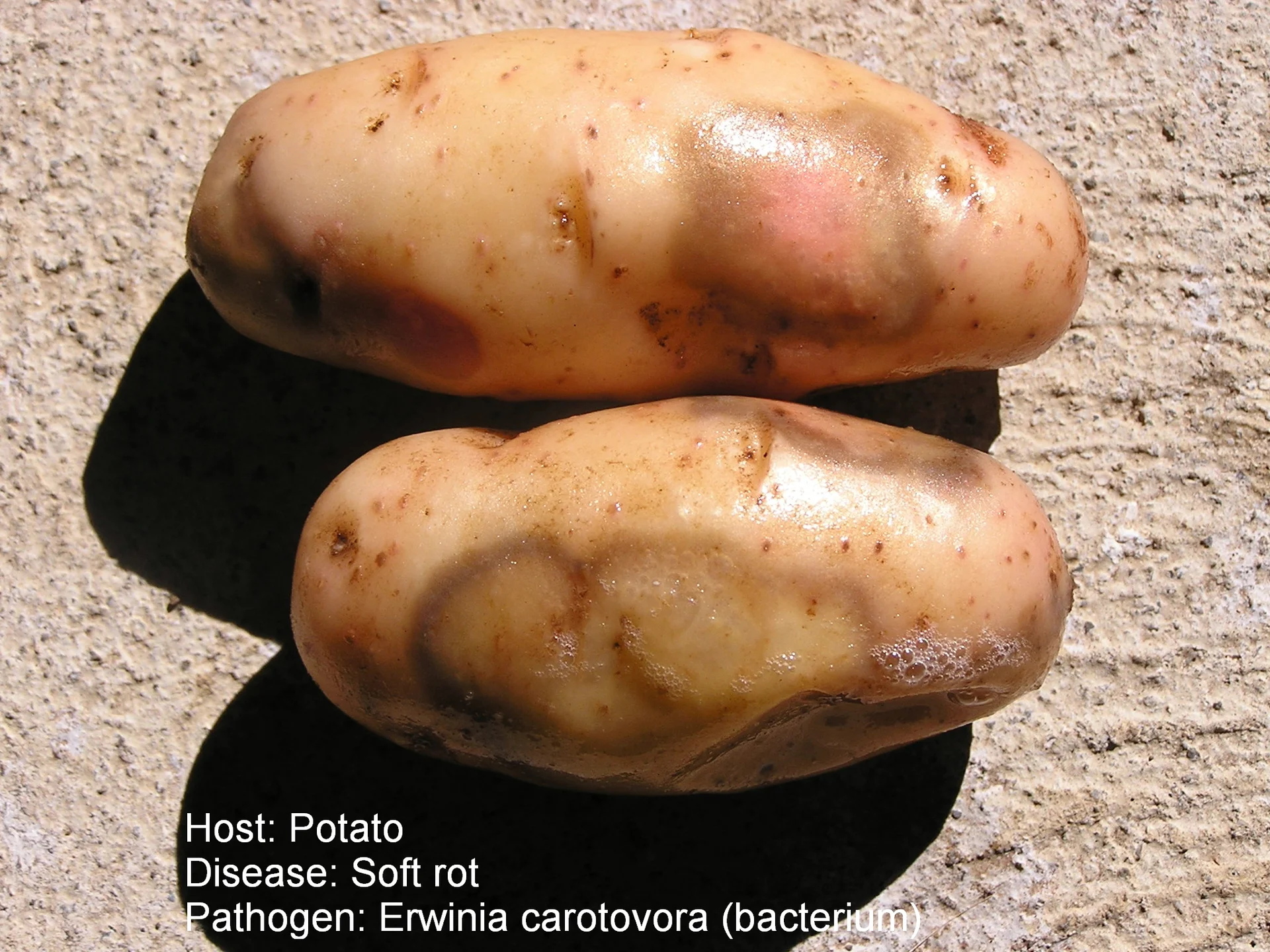
Photo: Scot Nelson · CC0
Tuber rots are a group of soft and dry rots caused by soil and wound fungi (and often bacteria) that get into potato, yam, cassava and sweet-potato tubers through harvest bruises, insect or nematode holes, or thin, unset skins. They do their worst damage late in the season and in the store, spreading tuber-to-tuber fastest in warm, damp, stuffy heaps.
Why it matters
Tuber rots turn a harvest you already grew and dug into a smelly, leaking mess — a bad rot can destroy up to 60% of your tubers, sometimes after they look fine going into store. It hurts most because it strikes at the end, when all the season's work is already spent, and it is hard to stop once it starts: one rotten tuber quietly infects the ones touching it, so a small patch can rot out a whole heap while it sits in the dark. You often only find out when you open the store to sell or eat, and by then the loss is done.
When to act
Rot found in stored or field tubers, or wounding during a wet harvest window; discard and cure remaining tubers immediately.
This guidance is general, compiled from published agronomic references including FAO and CABI. Thresholds and timing shift with your crop, your variety and the season.
In much of the region a spray is simply called mushonga — medicine. But a chemical group you cannot name is one you cannot rotate, and a product you did not write down has no pre-harvest interval you can observe. Mushonga, and other farming words →
The full Tuber rots field guide
Identify it
The first sign
is a soft or sunken patch on the tuber skin, usually starting at a bruise, a cut, or an insect hole. The patch is brown to black, and when you press it with your thumb it feels soft and gives way instead of staying firm like healthy flesh.
Cut a suspect tuber open
Healthy flesh is firm and pale (white, cream or yellow). Rotten flesh has turned discoloured — brown, grey or pink — and is either wet and slimy (soft rot) or dry, crumbly and powdery (dry rot). You may see fluffy mould (white, grey, green, blue or pink) growing on the surface, and it gives off a sour, rotten smell.
As it spreads in the heap
, whole tubers collapse and go mushy, leak dark liquid, and can glue neighbouring tubers together into a wet, foul-smelling clump.
Don't confuse it with a plain bruise or knock
A bruise is firm, only skin-deep, does not spread and does not smell — the flesh under it is still solid. Rot is soft, spreads inward and outward, and stinks. Also don't confuse it with greening (a green tint under the skin from sunlight, not rot) or frost/chill damage (glassy, water-soaked flesh from cold, with no mould or spreading patch).
Scout for it
When to look
tuber rots build up in the late season — the last weeks in the ground before and during harvest — and then in the store. Start checking at harvest, and then cut-test a sample every two weeks the whole time tubers are in store.
How to look
don't just check the tubers on top. Pull a sample from several spots — the bottom of the heap, the middle, and any warm or damp corner of the store — because rot hides where it is warmest and least airy.
How many
each time, cut open about 20 tubers from those different spots and look for soft, discoloured, or foul-smelling flesh.
Your trigger to act
if you find even 1 rotten tuber in 20 (or any tuber that is soft, off-colour or smelly), act now — sort out and remove every rotten one and cure the rest, before it runs through the heap.
Also treat the whole batch as at-risk if you had to harvest in wet weather or the tubers got knocked and bruised
— a wet, wounding harvest is the moment rot gets its opening, so cure that batch carefully before storing.
Control it
Prevent it first — this is where you win
Harvest at full maturity in dry weather, when the skin is firm and set (rub it — a mature skin does not slip off). Handle tubers gently: lift, don't throw or tip them, so you make no fresh bruises or cuts for the fungi to enter. Only ever store clean, whole, undamaged tubers.
Cure before you store
After harvest, hold the tubers 1–2 weeks in a warm, airy, shaded place so their skins toughen and small wounds heal over — this sealed skin is the tuber's own defence against rot. Then store them cool, dry, dark and well-ventilated, never in a hot, damp, closed heap.
Cut off the entry wounds in the field
Rot fungi get in through holes made by insects and nematodes (tiny soil worms that bore into roots and tubers), so controlling those field pests means fewer doorways for rot. And rotate — don't plant the same tuber crop back into a plot that rotted last season; give it a break with a different crop so the soil fungi die down.
Grow a tougher variety
Where you can get them, choose firm-skinned varieties known to store well — they bruise less and resist rot longer than thin-skinned types.
Act early with sorting (sanitation)
Rot spreads by contact, so check the store often and pull out every rotting tuber the moment you see it — one soft tuber left in the heap will infect the sound ones around it. Never pile damaged or cut tubers in with good ones, and keep your hands, knives and store clean and dry so you don't carry rot from a bad tuber to a healthy one.
If it keeps spreading — cut your losses cleanly
If rot is running through the store, sort hard now: pull out and use or sell the sound tubers quickly before they are reached, and dump the rotten ones far away from the store, from healthy tubers, and from anything you plan to plant. Never keep rotten or soft tubers as seed for next season — you would only plant the rot back into your field. Once the bad ones are out, clean and fully dry the empty store before refilling it.
Catch Tuber rots before it costs you the harvest
This guide is the general answer. Divisi works out yours — the week to scout your own field for Tuber rots, and what to do the day you find it.


Crops it affects
Plan the crops it attacks


All planting calendars, country by country
Get Insights by email
A short digest of new Divisi articles. No email on quiet weeks.
Frequently asked questions
How do I identify Tuber rots?
The first sign. is a soft or sunken patch on the tuber skin, usually starting at a bruise, a cut, or an insect hole. The patch is brown to black, and when you press it with your thumb it feels soft and gives way instead of staying firm like healthy flesh.
When should I take action against Tuber rots?
Rot found in stored or field tubers, or wounding during a wet harvest window; discard and cure remaining tubers immediately.
How do I control Tuber rots?
Prevent it first — this is where you win. Harvest at full maturity in dry weather, when the skin is firm and set (rub it — a mature skin does not slip off). Handle tubers gently: lift, don't throw or tip them, so you make no fresh bruises or cuts for the fungi to enter. Only ever store clean, whole, undamaged tubers.
Which crops are attacked by Tuber rots?
Among the crops covered here: Cassava, Sweet potato, Yam.