 Divisi
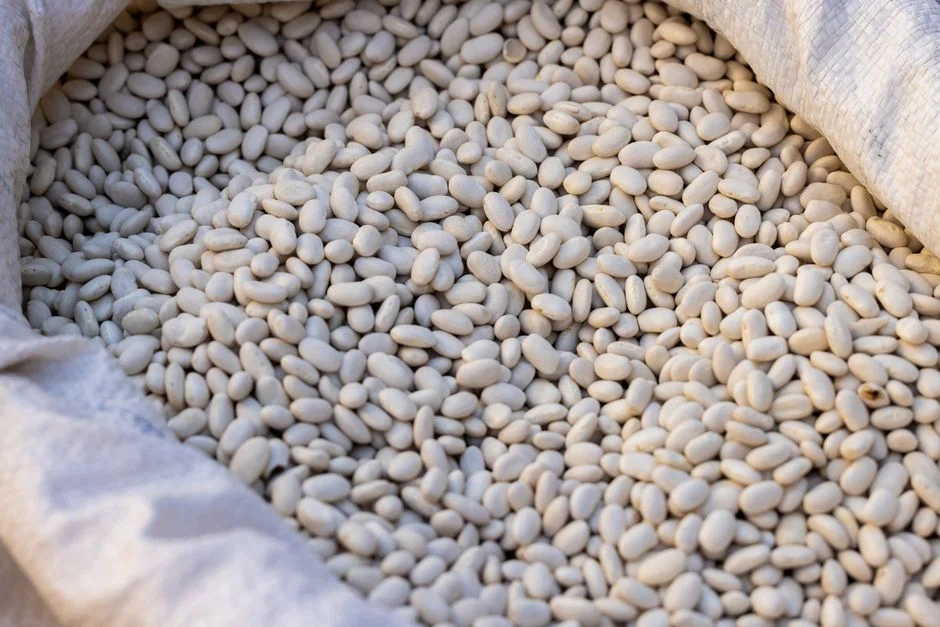
Those tiny round holes in your stored beans are the work of bruchid weevils — and left alone they can destroy a large share of your store, with untreated losses reported as high as 40%, and worse in poorly-kept stores (review of bruchid damage in African common bean, MDPI 2026). The fix is cheap and within every farmer's reach: dry the beans hard, then seal them airtight. Common bean is a staple and a cash crop across East and Southern Africa — from Rwanda and Kenya to Zambia and Malawi — so on a 90 kg bag that 40% is close to two bags in every five, real income you can keep.
Photo: Ana Vieira / Pexels
Why do my beans get holes weeks after harvest?
Two beetles cause most of the damage: the common bean weevil (Acanthoscelides obtectus) and the Mexican bean weevil (Zabrotes subfasciatus) (CABI Compendium). They often lay their eggs on the pods in the field, so beans can look perfectly clean at harvest. The larvae then eat the seed from the inside and chew their way out as adults — which is why a clean-looking store can fill with holes and dust a few weeks later. Warm, humid storage lets each generation breed faster, so a small hidden infestation becomes a ruined bag quickly.
How dry should beans be before storing?
Drying is the first line of defence — it slows the weevils and stops mould. Dry beans to about 13% moisture or lower before they go into store (common bean training handbook); get below about 11% and you all but halt the beetle's breeding (faba-bean safe-storage moisture trial, Crimson Publishers). No meter? Bite a bean — when it's dry enough it cracks and shatters rather than denting. Dry on a tarpaulin or raised rack, never on bare soil, and winnow out trash and any already-holed seed before storing.
How can I store beans without chemicals?
Airtight (hermetic) storage beats the bruchid on its own. Seal fully-dry beans in a PICS triple-layer bag, a sealed drum, a jerry can, or bottles filled to the top and closed tight. The trapped weevils use up the oxygen and die — even ones carried in from the field — and trials show hermetic bags keep stored beans in good condition right through the season (hermetic PICS storage of common bean, 2021).

Photo: King Shooter / Pexels
The one rule: beans must be bone-dry before sealing, or you trap moisture and grow mould. If you store in ordinary bags instead, add a low-cost protectant:
| Protectant | How much | What it does | Seed-safe? |
|---|---|---|---|
| Wood ash | ~1 part ash to 5 parts beans — about one 20-litre tin of fine, dry ash per five tins of beans (Farm Radio International) | fills the air gaps and blocks egg-laying | Yes |
| Cooking oil | ~5 ml (about one teaspoon) rubbed through each kilogram of seed beans (ECHO storage note) | coats the seed and smothers the eggs | Yes, at this rate |
| Dried neem or other botanical leaves | a layer worked through the store | cut weevil survival and breeding (botanicals against stored-bean bruchids, Tanzania trial) | Yes |
Keep the store clean, and never mix new beans with old stock — old grain is where carry-over weevils hide.
Before any bag goes into store, run this quick check:
- [ ] Beans crack, not dent, on the bite test — dry enough to store
- [ ] Trash and holed seed winnowed out
- [ ] No old stock mixed in with the new
- [ ] Container airtight and bone-dry
- [ ] Protectant added if you're using ordinary bags
What if my beans are already infested?
Don't panic, and don't just seal them away. Work through it in order:
- Sort. Tip the beans onto a tarp and pick out the badly holed, powdery ones — they are packed with live weevils.
- Sun-treat. Spread the rest in a single layer between a dark sheet and a clear plastic cover, in full midday sun. It climbs past 60°C within about 15 minutes, and roughly one hour of midday sun (turn once) kills the beetles at every stage — eggs, larvae and adults — without harming beans you plan to plant (solar heating kills stored-bean weevils, ECHO).
- Cool and dry. Let them cool in the shade so no moisture condenses.
- Seal. Pack into an airtight container so no new infestation takes hold.
- Watch. Check every store monthly, and act on any bag that is heating, dusty or moving.
Can I still eat beans that have weevil holes?
Lightly holed beans are usually still safe to eat once you sort out the badly damaged, powdery ones. But sort them out before storing the rest — they carry live weevils that will spread through the whole bag. For seed beans, avoid anything that harms germination: cooking oil, wood ash and airtight storage are all safe and keep the seed viable to the next planting.
Your next step this week
Bite-test your stored beans today. If they crack and shatter, seal them airtight this week in a PICS bag, drum or filled bottle; if they only dent, spread them to dry another day or two first, then seal. Do this and the beans you grew stay yours, right through to the season when they are worth the most.