 Divisi
Get more for your harvest. Buyers lowball farmers at harvest time — but not the smart ones. When your maize, beans or produce is ready, the price you accept is not fixed by fate. Four deliberate moves put the power back in your hands: sell together for volume, store for the higher-price window, add simple value, and know your costs and the going rate.
Why are crop prices so low at harvest time?
Because everyone sells at once. When the whole district harvests in the same few weeks, the market floods, prices fall, and buyers know it. They also know that many farmers need cash today — for school fees, inputs or debts — and can't hold their grain even for a week. That urgency is exactly what pushes the price down. Every strategy below works by taking away the buyer's advantage and handing a little of it back to you.
How does selling together get me a better price?
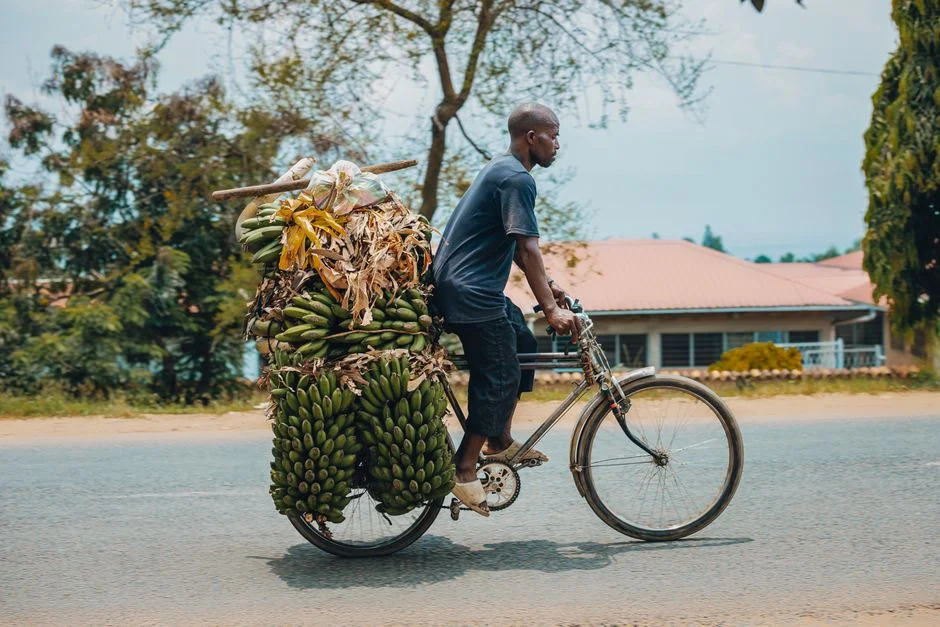
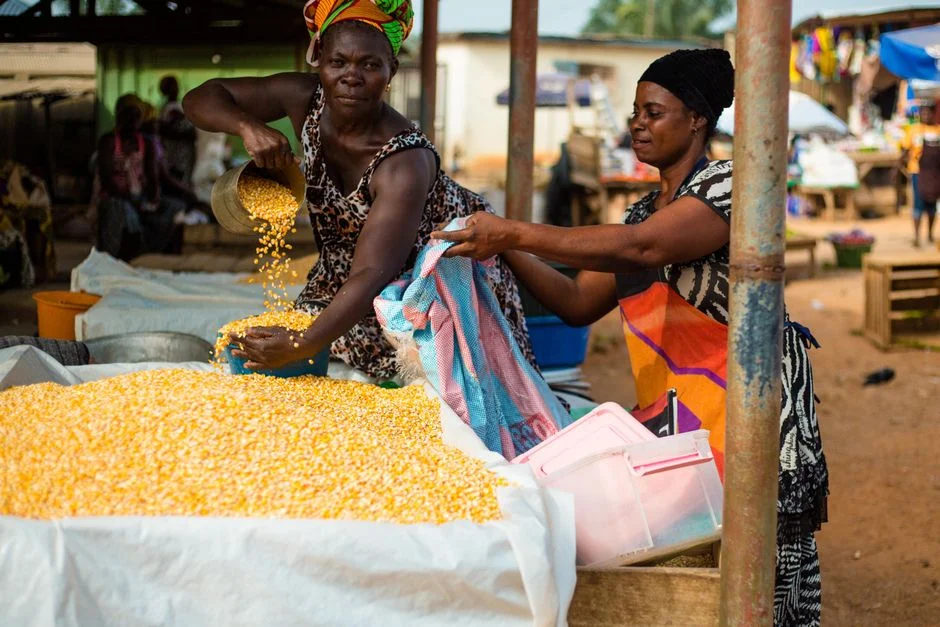
A single smallholder with three or four bags — a bag here being a 50 kg bag of shelled grain, or the 90 kg bag traded in Zambia and Zimbabwe — has almost no bargaining power. The buyer names a price and you take it or carry your grain home. But when farmers pool their harvest and sell as one lot, the picture flips. A large, combined volume is worth a serious buyer's time: bigger traders, millers and aggregators will come to you, compete, and pay more per bag than the roadside buyer ever would. Selling together also lets you share a truck instead of each paying to transport a few bags, and it means you meet the buyer as a group that can't be picked off one at a time.
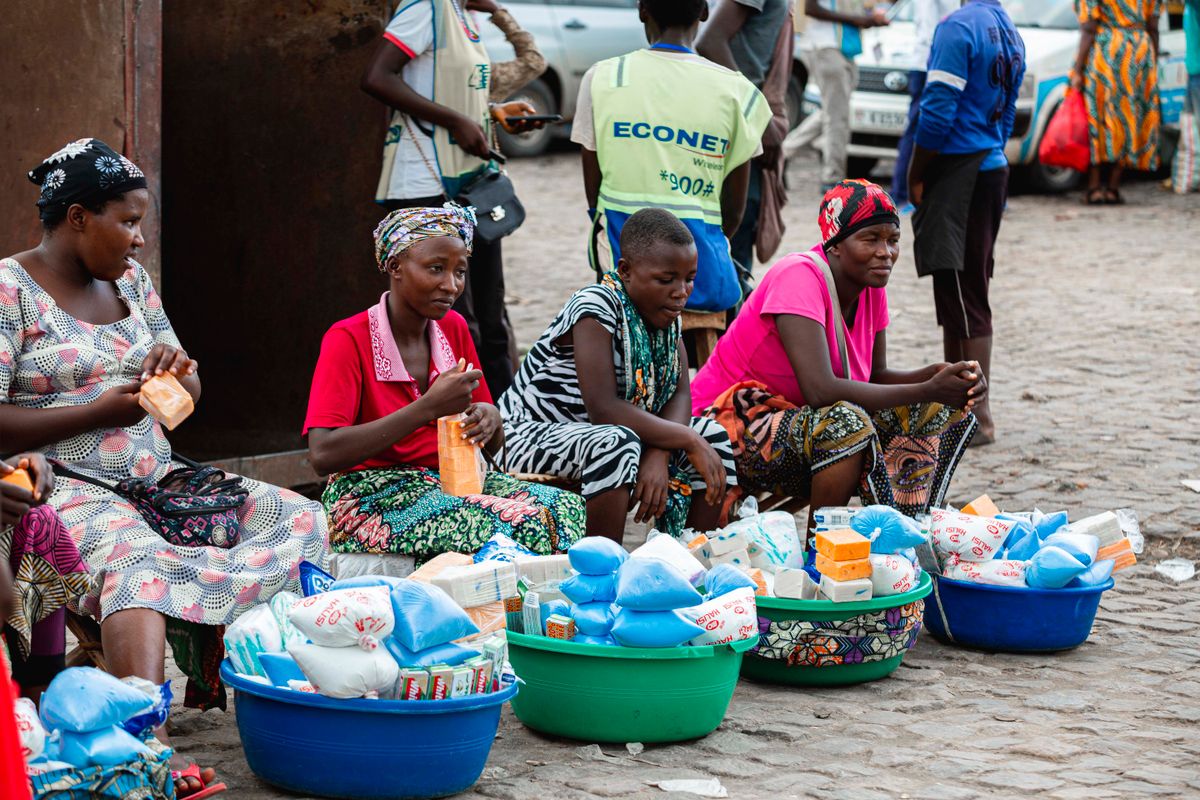
Photo: Safari Consoler / Pexels
Use your cooperative. A cooperative or farmer group is one of the most powerful tools a smallholder has — think of it as selling together, made permanent. Beyond bulking your harvest for a stronger price, a good group can offer shared storage, transport, market information, and sometimes cheaper inputs at planting or a link to structured buyers and warehouse receipts. If there's a working cooperative near you, join it. If there isn't, even a handful of trusted neighbours agreeing to sell together is a strong start.
Should I store my harvest and sell later?
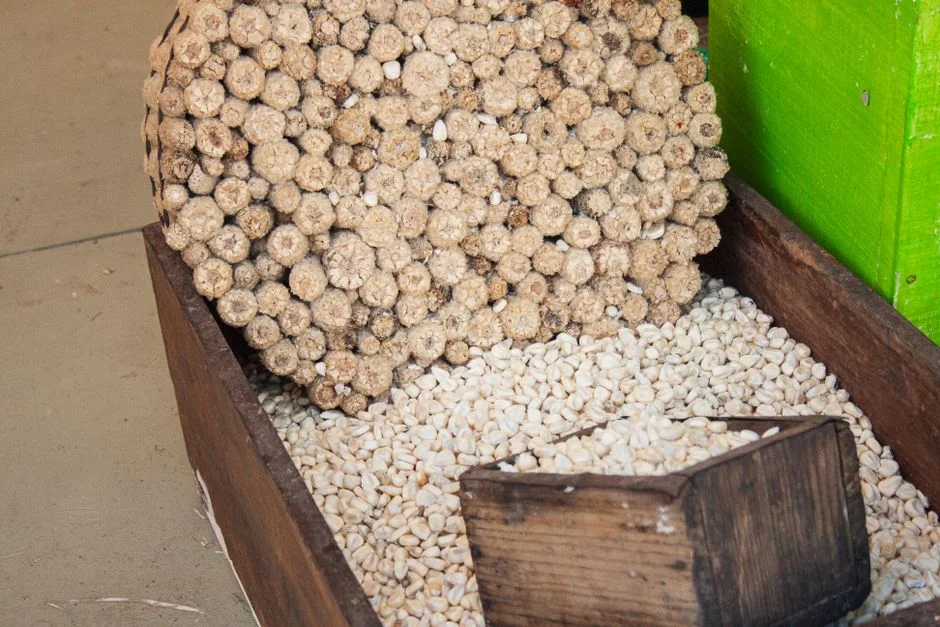
Prices are almost always lowest right after harvest and climb through the season as the region's grain is eaten and supply tightens. Across African markets the maize price rises about 33% on average between the harvest low and the lean-season peak, and in the worst-hit markets — Malawi, for one — the gap tops 50% (Gilbert, Christiaensen & Kaminski, Food Policy, 2017). The farmers who earn the most are frequently the ones who can wait — but you only capture that gain if the grain keeps.
So store it dry and sealed. Dry maize to about 13% moisture, the level FAO gives for safe grain storage (FAO, Maize: Post-harvest Operations), then keep it airtight in hermetic bags, a sealed drum or a clean granary. No moisture meter? Use the bite test: bite a few grains, and at about 12–13% they crack and shatter rather than dent or squash. Sealing the store airtight also starves the weevils: in Purdue trials, maize weevils sealed inside hermetic PICS bags drove the oxygen down to roughly 5%, at which point they stopped feeding and the grain held its quality far better than grain left in ordinary woven bags (Williams, Murdock & Baributsa, PLOS ONE, 2017). Treat a full, well-protected store as money in the bank: every month it stays safe, it can be worth a little more.
Can I add value before I sell?
Often, yes — and it costs little. Buyers pay more for grain that is clean, dry and evenly graded than for a mixed, damp, trashy bag, because they don't have to re-dry or re-sort it. Winnow out chaff and stones, dry to the right moisture, and sort into consistent grades (size, colour, no pest damage). Even simple steps — a clean sack, a uniform grade, produce that isn't bruised — lift the price per unit. For some crops, light processing (shelling, drying fruit, bagging in retail sizes) opens a better-paying buyer altogether.
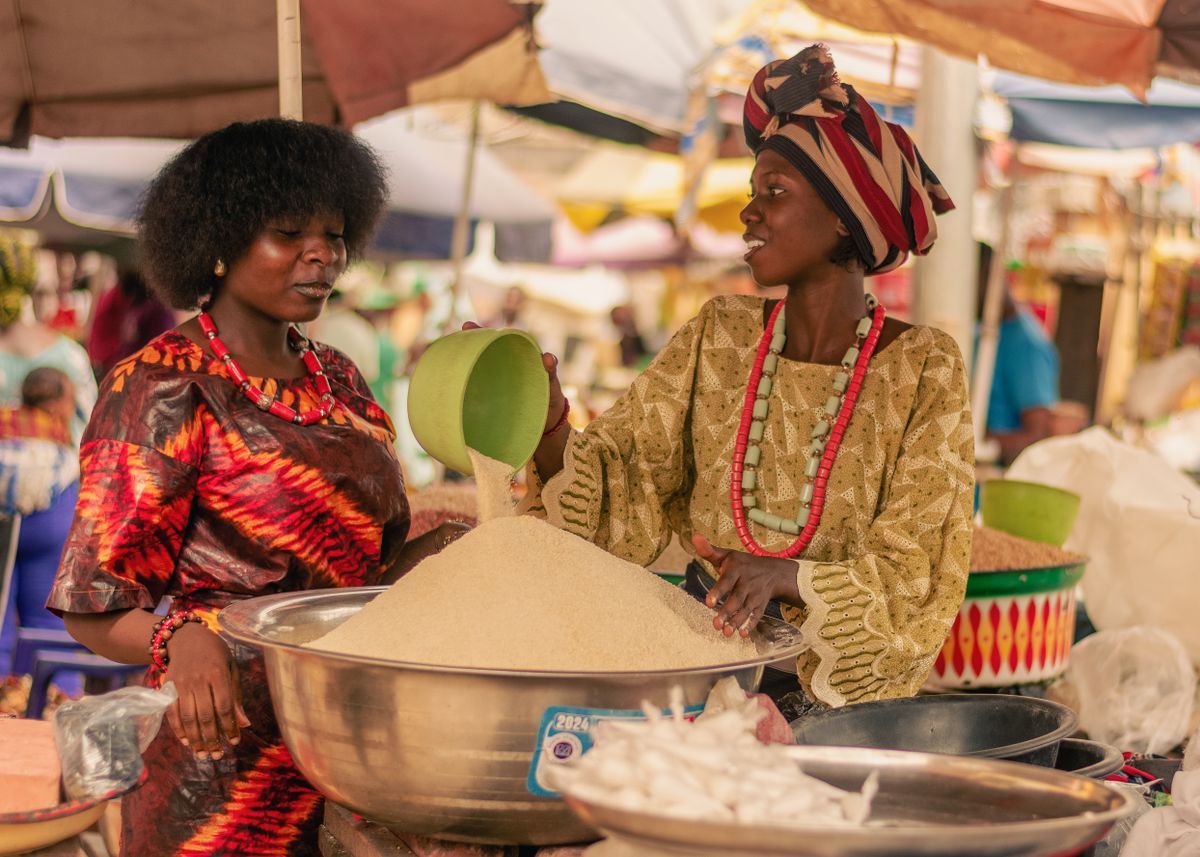
Photo: Kold Shots / Pexels
How do I know what price to accept?
Know your numbers. Know what your crop cost you to grow — seed, fertiliser, labour, transport — so you never sell below the price that makes sense. Know the going rate: ask other farmers, check a nearby larger market or a market-price service, and find out which buyers and which market days pay best. Then don't take the first offer — compare at least two or three, and be willing to say no and wait. A farmer who can say "I know what this is worth, and I can hold it" is a farmer who gets paid properly.
Your next step this week
Before your next sale, agree with two or three neighbours to pool your grain and check the going rate at the nearest large market — so when a buyer lowballs you, you can refuse the offer and mean it. That single move puts three of your four levers to work at once: you sell together, you negotiate from information, and a full, well-stored lot lets you hold out for the higher-price window instead of taking the harvest-time low.