 Divisi
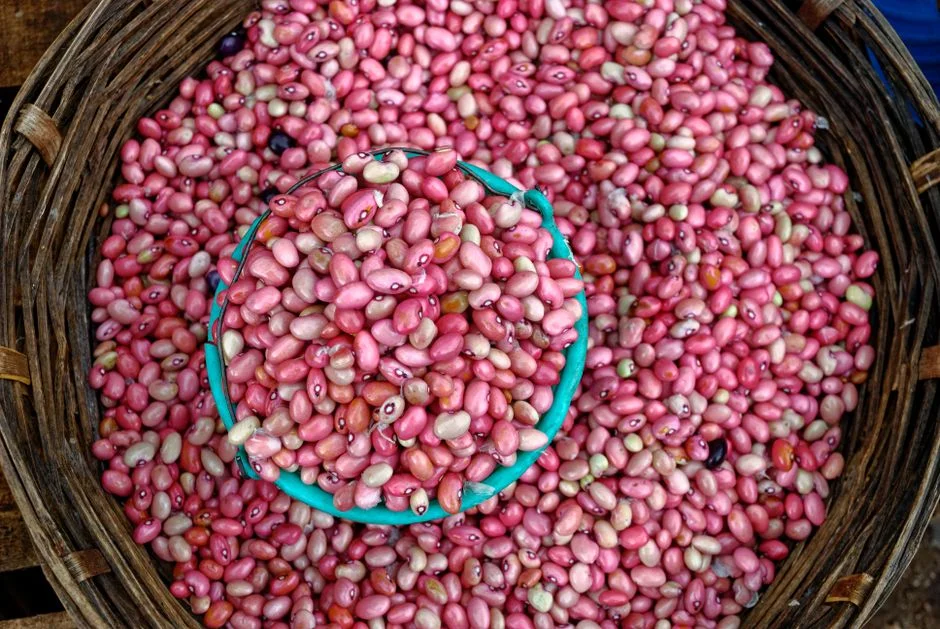
Pick an early-maturing bush bean and plant it so flowering lands in the coolest 3-4 weeks of your rains — that one move protects most of your yield in a hot, dry El Niño year. Beans are your fastest legume cash crop: many bush types are ready in 75-90 days, they fix some of their own nitrogen, and they sell by the 50 kg bag, by the gorogoro (~2 kg) in East African markets, and by the bucket or tin and the 90 kg bag in Zimbabwe.
A legume is a pod crop — beans, cowpea, groundnut — whose roots partner with bacteria to pull nitrogen from the air. Here is how to carry a bean crop through the heat.
Which beans are best for a hot, dry El Niño year?
Early-maturing, drought-tolerant bush beans. A bush bean grows knee-high, needs no stakes, and races to pods in about 75-90 days — so it "escapes" a short, hot season before the worst heat arrives. Climbing beans yield more per plant but take 100 days or more and need staking, so keep them for cooler highlands with long, reliable rains. Note that in East Africa (e.g. Uganda) El Niño usually skews the rains wetter, not drier, so there the flowering risk is heat rather than drought — the drought-tolerance emphasis below stays anchored to the hotter, drier Zimbabwe and wider Southern-Africa lowveld.
- Uganda: the NAROBEAN varieties, both bush and climbing, bred by NARO with the Alliance Bioversity-CIAT and PABRA network, are drought-resilient and rich in iron.
- Zimbabwe: sugar beans such as Bonus, Cardinal and Speckled mature in 75-100 days; in the hotter, drier lowveld pick the earliest type you can get.
- Dry beans need a mean of 15-20°C over 90-120 days — early bush varieties sit at the short, safe end of that.
Not sure which seed to buy? See choosing a drought-tolerant, early-maturing variety. In the driest, hottest zones where even beans struggle, cowpea is the tougher insurance crop.
Why are my bean flowers falling off without making pods?
Heat. Nights above 20°C or days above 30°C cut bean yields, and hot weather makes flowers and young pods drop. Warm nights do more damage than hot days.
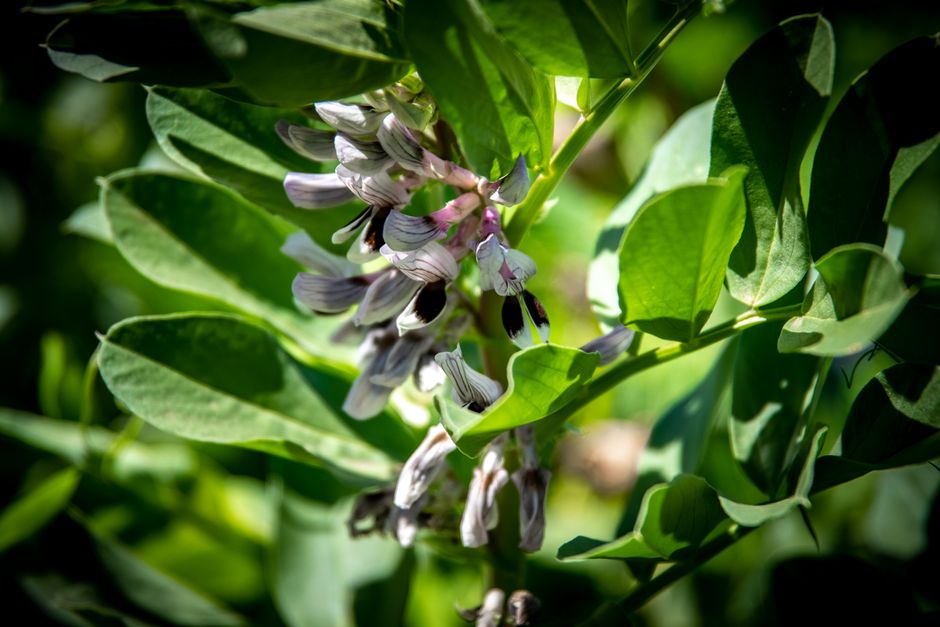
Photo: Magda Ehlers / Pexels
No-tool test: if flowers open and fall within a day or two without a pod forming — and you find no caterpillars or thrips — that is heat, not a pest.
The fix is timing, and it costs nothing:
- As a rough rule of thumb (it shifts with variety), count back about 35-45 days from planting — that is roughly when an early bush bean flowers.
- Line those flowering weeks up with the coolest, not the hottest, part of the season, and pin your planting date to the true onset of the rains, not a false start so the timing holds.
- Keep heat and dryness from striking together — build soil that holds water with compost and mulch, and don't let the soil dry past half its available water while the crop is flowering (FAO).
How far apart should I plant beans?
Space bush beans in rows 50 cm apart with seeds about 10 cm apart in the row — FAO's spacing for bush beans — which works out to roughly 200,000 plants per hectare, or about 100 kg of seed per hectare (two 50 kg bags). On 0.4 ha (1 acre) that is about 40 kg of seed.
| Bean type | Row spacing | In-row spacing | Days to maturity |
|---|---|---|---|
| Early bush | 50 cm | 10 cm | 75-90 |
| Climbing | 90-150 cm | 15 cm | 100-120+ |
Spacing from FAO. A full, even stand shades the soil, keeps it cooler and smothers weeds — all of which matter more in a dry year.
Do beans add nitrogen to the soil, and can I grow them with maize?
Yes — beans host rhizobium bacteria on their roots that fix nitrogen from the air, though beans fix less than cowpea or groundnut, so give them a hand:
- Inoculate the seed: mix 100 g of rhizobium inoculant with 1 litre of water and 50 g of sugar to coat 100 kg of seed at planting, or add a small starter dose of nitrogen fertiliser.
- Intercrop with maize: plant two to four rows of beans between every two rows of maize so the beans are not shaded — beans give up fast under a solid maize canopy. You harvest two crops from one plot and the legume feeds the soil.
How do I stop weevils eating my stored beans?
Dry the beans hard, then store them sealed and airtight. The bean bruchid (Acanthoscelides obtectus) lays eggs on drying pods and grain, and the larvae bore inside and can hollow out a whole bag within weeks.
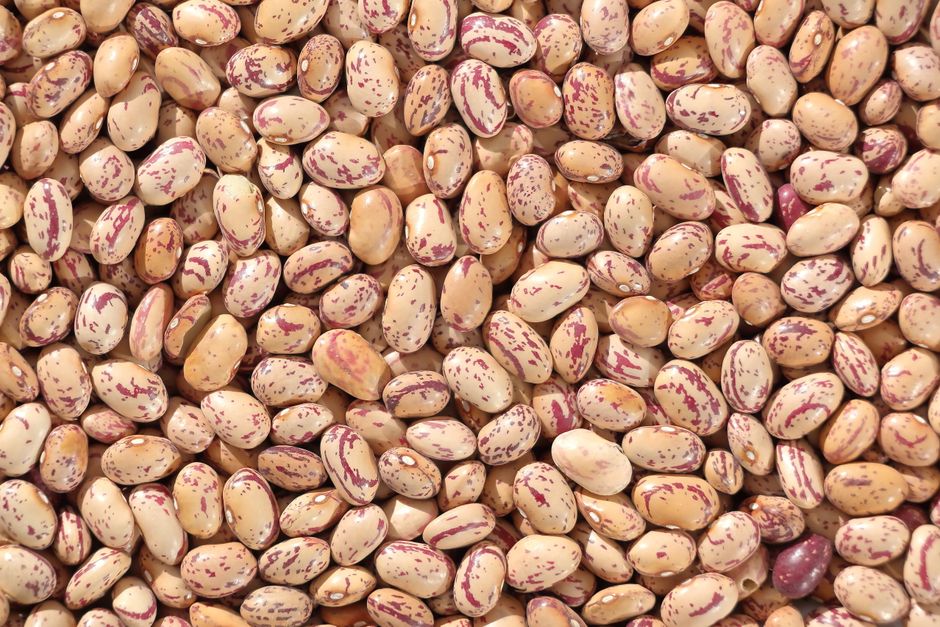
Photo: Mustafa Akın / Pexels
No-tool test: a bean is dry enough for safe storage (about 13% moisture) when it shatters rather than dents under a firm bite or a hammer tap. Then move it into a sealed, airtight container to starve the weevils of air — the full method is in stop bean bruchids ruining your stored beans.
Your next step this week
Before you buy seed this season, pick one early-maturing bush variety your seed shop or extension officer stocks, and mark a planting date that lands flowering in the coolest 3-4 weeks of your rains.