 Divisi
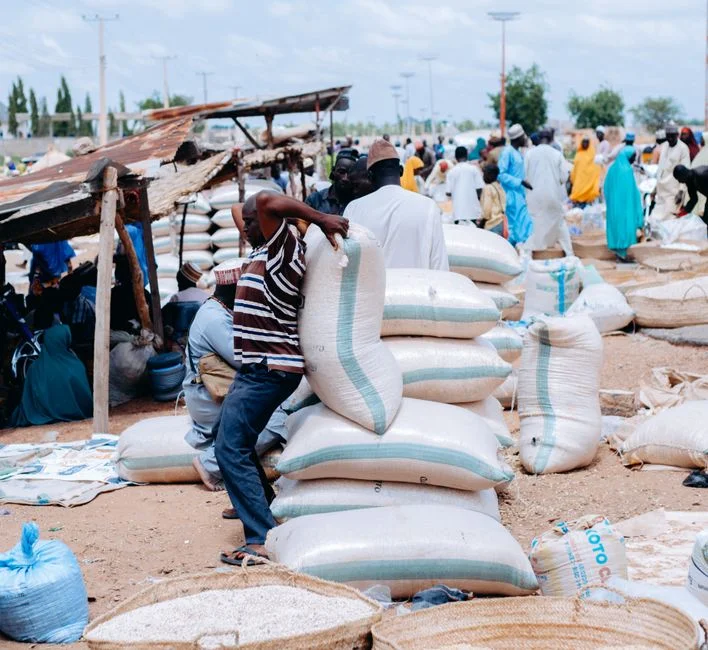
Soybean pays you twice. You sell the grain into a hungry market, then the crop leaves nitrogen in the soil for next season's maize — nitrogen you would otherwise buy in a bag.
In a variable El Niño year, when rains start late or stop early, that double return makes soybean one of the smartest crops on a small plot — if you grow it as a business.
Is soybean really a good cash crop for a small plot?
Yes. Soybean is the backbone of the animal-feed and cooking-oil industries, and demand across Africa is climbing fast. Nigeria's plants can now crush over 875,000 tonnes a year, and Tanzania's feed industry alone wants 173,000 tonnes, mostly for poultry. You sell by the 50 kg bag (90 kg bag in Zambia and Zimbabwe).
The gap is real: many Malawi smallholders get about 800 kg/ha when good management reaches 2,500–3,000 kg/ha — money left in the field.
Do I need inoculant, or can I use a promiscuous variety?
Rhizobium inoculant is a cheap powder of living bacteria (rhizobia); coat it on the seed and the roots grow nodules that pull nitrogen from the air — nitrogen fixation, free fertiliser the plant makes for itself. Inoculating soybean in northern Ghana raised yield by 12–19%. Use 10 g per kg of seed — one 100 g sachet treats 10 kg. Mix with a little clean water, coat the seed in shade, and plant the same day — sunlight kills the bacteria.
A promiscuous variety nodulates on its own using soil rhizobia, so it needs little or no inoculant — ideal where inoculant is scarce. Malawi's Tikolore is a self-nodulating, small brown-seeded type, and Uganda's MakSoy varieties — grown by 93% of its soybean farmers are bred for it.
Match maturity to your season too: an early type maturing in about three months can beat a late-season dry spell. Not sure which to buy? See choosing seed for a dry year.
What seed rate and spacing should I use for soybean?
Aim for a full, even stand of about 440,000 plants per hectare — thin stands let weeds and rust move in.
| Variety type | Rows apart | Space in the row | Seed rate |
|---|---|---|---|
| Most medium/large-seeded varieties | 75 cm | 5–10 cm, 2–3 seeds per spot | ~60–70 kg/ha (about 24–28 mudus) |
| Early or small-seeded (e.g. Tikolore) | 45–50 cm | 5 cm | ~50–60 kg/ha |
Sources: IITA northern Nigeria guide and the Malawi soybean guide.
Plant 3–4 cm deep into moist soil once the rains are steady. Add phosphorus if you can — 30 kg P₂O₅/ha (about three 50 kg bags of single super phosphate) feeds the nodules and pods — and weed early, at 2 weeks and 5–6 weeks, because young soybean is a poor competitor. Start with soil that holds every drop: build soil that holds water.
How do I control soybean rust and pod-sucking bugs?
Two pests decide your harvest. Tackle each cheapest, safest steps first — this is IPM, integrated pest management.
Soybean rust (Phakopsora pachyrhizi) can strip up to 80% of your yield, so learn to read the leaf. Scout the underside of the lower leaves from first flowering and use this field-ID check.
| Spot it early | What soybean rust looks like |
|---|---|
| Where to look | Underside of the lower, older leaves first, from flowering onwards |
| Colour | Many tiny tan to reddish-brown raised pustules, not smooth flat spots |
| No-tool test | Tap a suspect leaf over a dark cloth — rust-coloured spores dust off |
| How it spreads | Starts low in the canopy and climbs; infected leaves yellow and drop early |
| Don't confuse it with | Brown or bacterial spot (flat, sheds no powder) or holes from leaf-eating pests |
Sources: IITA soybean manual and University of Minnesota Extension.
Rust builds fastest in warm, humid, wet spells — infection takes off at 18–26.5°C with 6+ hours of leaf wetness and humidity above 75%. So it is more of a threat where El Niño brings rain — East Africa's wetter short rains, coastal or humid pockets and irrigated fields — than across much of Southern Africa, which usually runs drier in an El Niño year (what El Niño means for your region). Then work the cheapest, safest steps first:
- Resistant variety first: plant a tolerant type such as TGX 1835-10E or a rust-resistant MakSoy line.
- Cultural: rotate away from last year's soybean field and avoid over-thick stands that trap moisture.
- Scout: from first flowering, check the lower canopy every week, especially after rain.
- Chemical, only if rust appears early: use a fungicide registered in your country. Wear gloves, boots, long sleeves and a mask, spray in the cool of morning, and respect the label's pre-harvest interval.
Pod-sucking bugs (such as the green stink bug, Nezara viridula) attack from flowering onwards and ruin seed quality. Scout the pods and spray only at the action threshold — about 9 stink bugs per 25 net sweeps, or roughly 3 per row-metre shaken onto a cloth. Then the IITA guide suggests Cypermethrin + Dimethoate 10 EC at 100 mL in 15 L of water — but spray only a product registered in your country, because dimethoate's approval was not renewed in the EU and it is restricted or withdrawn in several markets. Keep the same PPE and respect the label's pre-harvest interval.
When do I harvest so my pods don't shatter?
Harvest the moment the crop is ready — wait too long and pods dry, twist and split open (shattering), spilling grain on the ground.

Photo: MELQUIZEDEQUE ALMEIDA / Pexels
- Cut or pull when 80–85% of pods have turned brown (use 80% for shatter-prone varieties), or at hard-dough stage when seed moisture is 14–16%.
- Work in the cool morning hours — pods snap open less when slightly damp with dew.
- Thresh on a tarpaulin — beat the dry plants or a sackful of pods, then winnow and dry a few more days before bagging. Then sell smart: 4 strategies for better farm prices.
How does soybean cut my fertiliser bill next season?
A well-nodulated crop can add around 20 kg of nitrogen per hectare to the soil — free fertiliser for the maize you plant next.
To bank it, leave the leaves and stems on the field and plant maize after soybean, not more soybean — the rotation at the heart of conservation agriculture. You spend less on nitrogen next season, and fertiliser microdosing shows how to stretch every gram you buy.
Your next step this week
At your nearest agro-dealer, ask two things about each soybean seed on offer: is it promiscuous or does it need inoculant, and how many days to maturity? Match that number to the rains you expect — first read the seasonal forecast and time your planting to the true onset, not a false start — then buy certified seed for a full, even stand.