 Divisi
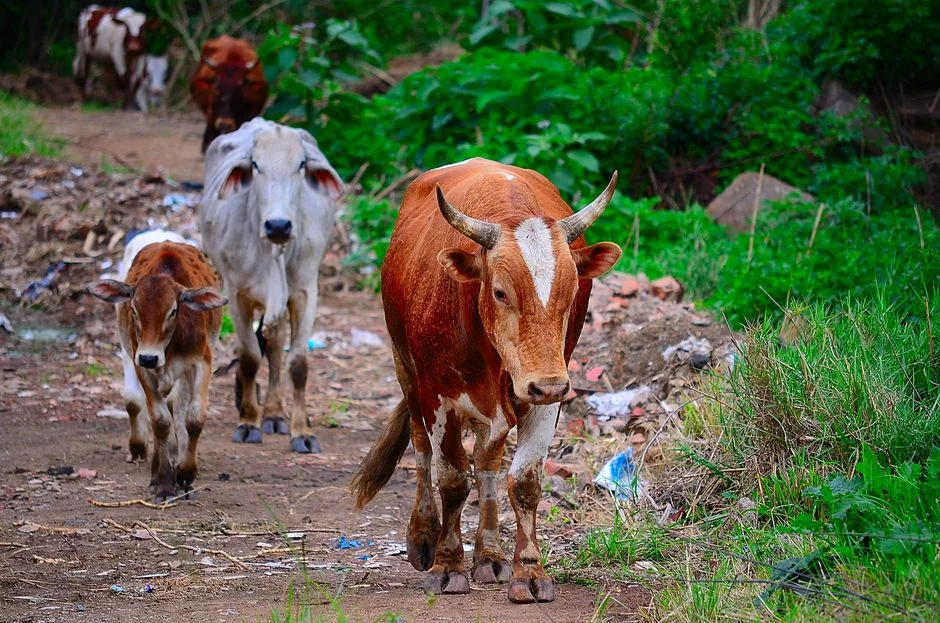
Build your feed bank now, in the rains, and your animals will hold their weight and their market value right through the dry season. A feed bank is a store of feed you grow and conserve while grass is plentiful, so a dry El Niño spell never forces you to sell thin animals cheap.
Fodder is any feed you grow for animals. The job is simple: grow a lot of it in the wet months, then lock the surplus away before it dries out and loses value in the field. Feed, water and herd size are one decision, so plan this alongside your dry-season water and destocking plan.
What is a feed bank and why build one before the dry season?
A feed bank turns a wet-season surplus into a dry-season asset. On dry grazing alone, a cow gets less than 50% of the protein and about 70% of the energy she needs in late pregnancy, and she can only eat about 1.5% of her body weight from it each day (FAO). Stored feed closes that gap and keeps a productive animal on your farm instead of at a distress sale.

Photo: Taiye Salawu / Pexels
Start while the grass is green:
- Green fodder is richest early; protein drops fast as it matures.
- Cut and store the surplus before it stands, seeds and spoils.
- Match your herd size to the feed you can realistically bank (see the table lower down).
Which fodder grows the most feed on a small plot?
Grow a mix: a high-yield grass for bulk, a legume (a protein-rich, soil-feeding plant like beans) for quality, and a fodder tree for the dry months. Dry matter (DM) is the feed left once water is removed, and it is how real feed value is measured.
| Fodder | Type | Feed value | Note |
|---|---|---|---|
| Napier (elephant) grass | grass | 20-80 t DM/ha/yr with manure | First cut at 1-1.2 m, then every 6-8 weeks |
| Brachiaria (Mulato II) | grass | bred for drought | Suits drier, low-fertility plots |
| Lablab | legume | ~6 t DM/ha, ~18% protein | Intercrop with maize |
| Gliricidia | fodder tree | ~22% protein leaves | Cut ~3 months before the dry season |
| Forage sorghum | grass | fast bulk | Excellent for silage |
Cut Napier young: its protein falls from about 21% at 30 days of regrowth to under 4% by 70 days (Feedipedia). Brachiaria Mulato II was bred to survive prolonged drought and now grows on over a million hectares across some 50 countries (ILRI). Lablab yields about 6 t DM/ha (up to 9 in Zimbabwe) at roughly 18% protein (Feedipedia), and Gliricidia leaves carry about 22% protein (Feedipedia). Lablab and desmodium double as soil-building cover crops, and Gliricidia fits a farmer-managed tree plan.
How do I make silage and hay at home?
Hay is fodder cut and dried; silage is fodder preserved wet by sealing it airtight to ferment. Use hay for fine grasses and legumes, and silage for lush, leafy material like Napier or forage sorghum.

Photo: Alexa Heinrich / Pexels
Hay:
- Cut grasses at pre-flowering and legumes as the first flowers open, when leaf and protein are highest (Infonet-Biovision).
- Dry in the sun 2-3 days, turning it, until it is crisp and snaps: aim for under 15% moisture so it stores without moulding.
- Stack under cover or tie box bales (~20 kg each). No-tool test: twist a handful; if it feels cool or damp, it is not dry yet.
Silage (a 200-litre drum, a plastic tube, or a lined pit all work):
- Chop the fodder into 1-3 cm pieces.
- Wilt it a few hours to about 30-35% dry matter, leafy but not wet.
- Add diluted molasses (1 part molasses to 2 parts water) as you pack, especially for low-sugar legume fodder (Infonet-Biovision).
- Pack it down hard to force out air, and fill and seal within a day.
- Seal airtight and leave at least 3 weeks before opening (FAO).
How do I make maize stover good enough to feed animals?
Treat it with urea. Dry maize stover (the stalks and leaves left after harvest) is bulky but poor, about 4% protein and only ~49% digestible (Feedipedia). Urea treatment lifts protein to around 9-10%, raises digestibility by 8-12 points, and animals eat 25-50% more (FAO).
- Dissolve 5 kg urea in about 50 litres of water per 100 kg of chopped dry stover.
- Sprinkle it evenly over the stover and mix well.
- Seal airtight in a drum, tube or pit for 2-3 weeks (faster in heat, 30-40°C).
- Open, let the sharp ammonia smell air off for a day, then feed.
Safety first: urea is poisonous if eaten undissolved. Dissolve it fully, keep the bag away from children and animals, never feed dry urea, introduce treated feed gradually, and do not give it to very young calves or to non-ruminants like pigs and poultry.
How much feed should I store per animal for the dry season?
Budget about 2.5% of body weight in dry matter a day for a productive animal; a well-fed cow reaches 2.5-2.7% on good silage (University of Nebraska), while on poor dry grazing she manages only about 1.5% (FAO). Store the difference.

Photo: Tope J. Asokere / Pexels
| Animal | Body weight | DM per day | ~150-day dry season |
|---|---|---|---|
| Local cow | ~300 kg | ~7 kg | ~1 tonne (about 50 box bales) |
| Goat or sheep | ~30 kg | ~1 kg | ~150 kg |
If some grazing remains, store enough to fill the gap, not the whole ration. Then match your herd to your bank: fatten and sell surplus and non-breeding animals early, while they still carry condition and fetch a good price, rather than watching their value melt away (FAO). A smaller, well-fed herd beats a big, hungry one. For stocking small ruminants, see poultry, goats and small stock in the dry season.
Your next step this week
Walk your plot and pick one high-yield fodder to plant now and one store to start filling: a drum of silage or a stack of hay. Cut your first surplus while it is still green, and write your herd number next to the amount of feed you can realistically bank.