 Divisi
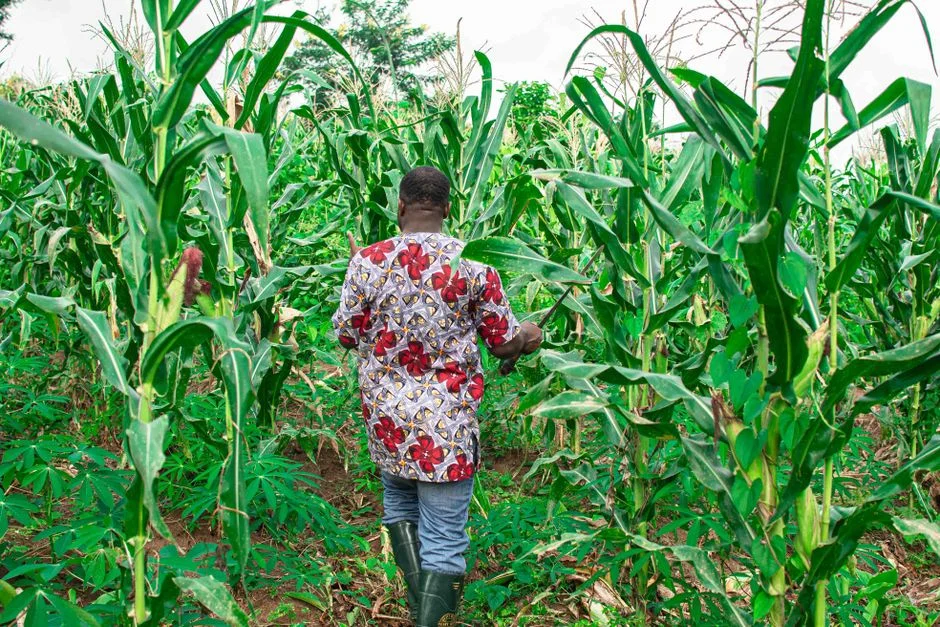
A seasonal rainfall forecast gives you the odds for the whole season ahead — drier than usual, wetter than usual, or near-normal — usually one to three months before your first rains. Treat it as odds, not a promise, and you can lock in your variety, your planting date and how much land to commit before you spend a shilling on seed. That is the difference between farming by hope and farming by plan.
What am I actually looking at in a seasonal forecast?
It is a science-based outlook for a three- or four-month block, built by feeding ocean and atmosphere data into models. The single biggest lever is the temperature of the Pacific Ocean — the pattern called El Nino–Southern Oscillation (ENSO). When it swings into El Nino or La Nina, it tilts the odds of your rains for the whole region. The WMO's latest global update expects a strong El Nino building through 2026, with the tropical Pacific running about 1.8 °C above normal — enough to tilt seasons across Sub-Saharan Africa. That tilt is not the same everywhere: El Nino tends to dry Southern Africa and soak much of East Africa, but there are exceptions like Ethiopia's highlands, which face a drier main season. The full regional split is in our El Nino explainer.
Where do I get a forecast I can trust?
Go to official, science-based sources — not rumour. Your national met service is the anchor; the regional Climate Outlook Forums pool the region's best models each season.
| Source | Covers | What it gives you |
|---|---|---|
| Your national met service | Your country, by zone | Website, radio, SMS, extension officers |
| SARCOF | Southern Africa | Season odds, released before the summer rains |
| GHACOF / ICPAC | East Africa / Horn | Onset dates plus wet and dry-spell length |
| PRESASS | West Africa & Sahel | Onset, cessation and dry-spell outlook |
Whatever the channel — a farming app, an SMS alert, a radio show or your extension officer — make sure the number traces back to one of these. ICPAC, for example, now publishes not just "wetter or drier" but the likely onset date and how long dry spells may run — exactly the detail a planting decision needs.
What does a 45% chance of below-normal mean for me?
Forecasters split the last 30 years of rainfall into three equal thirds — the driest third (below-normal), the middle third (near-normal) and the wettest third (above-normal), as SARCOF sets out. In a season with no signal, each outcome carries about a 1-in-3 (33%) chance. So a "45% chance of below-normal" means the dry outcome is a bit more likely than usual — but near-normal and above-normal still add up to 55%. It is a lean, not a drought warning.
| Outcome | No signal | 45% below-normal lean |
|---|---|---|
| Below-normal (drier third) | 33% | 45% |
| Near-normal (middle third) | 33% | 30% |
| Above-normal (wetter third) | 33% | 25% |
Words carry odds too. Kenya's met service uses "likely" for a 51–75% chance and "possible" for only 10–30%. Read the number or the word, then match your risk:
| If the forecast favours… | What the lean means | Your move |
|---|---|---|
| Below-normal | Dry season more likely than the usual 1-in-3 | Shorter variety, best land first, hold seed back |
| Near-normal | A typical season is most likely | Plan normal; keep a fallback |
| Above-normal | Wetter than usual — watch flooding and disease | Drainage, ridges, disease-tolerant seed |
How do I turn the forecast into planting decisions?

Photo: Junior Aklei Chaky / Pexels (Kagera, Tanzania)
Four moves, in order:
- Pick variety by season length. If the odds lean dry or short, choose a shorter-maturing variety that finishes before the rains stop — a fast sorghum like ICRISAT's SAMSORG 52 matures in 85–90 days, beating terminal drought, and can still reach 3.7 t/ha (about 37 of Nigeria's 100 kg grain bags per hectare). In a normal-to-wet lean you can back a longer-season crop for more yield — but match maturity to the season rather than assuming longer is always better. In a Zimbabwe trial in Hwedza, medium-season maize gave the highest yield at 0.925 t/ha (about 10 ninety-kg bags per hectare), beating both short-season (0.750 t/ha, about 8 bags) and long-season maize, which did worst at 0.479 t/ha (about 5 bags). Early varieties win only when the dry spell comes late; if stress hits mid-season they can do worst, so match maturity to when your rains usually fail.
- Plant on a real soaking, not the first shower. Met services define the onset of the rains as about 20 mm of rain over two or three days with no long dry spell straight after — so wait for roughly 25 mm in a week before you commit seed. With no rain gauge, catch it in a straight-sided tin — mark a line 25 mm up the side (about one and a half finger-widths) — and dig to check the soil is wet to a spade's depth, about 15 cm. Early "false starts" force costly replanting.
- Size your area to the odds. On a dry lean, commit your best, most reliable land first — prepared early with winter ploughing or Pfumvudza basins so it holds every drop — and hold some seed back. On a wet lean, you can commit more, but plan your drainage before the seed goes in.
- Stagger your planting. Split maize into two or three plantings a week or two apart, so one dry spell cannot wipe out the whole crop — the same logic behind the dry-spell playbook for the West African monsoon.
For the full dry-year approach, see growing maize in a dry year.
Your next step this week
Open your national met service's latest seasonal outlook (or ask your extension officer for it), find your zone, and write down the below/near/above-normal odds. That one number sets your variety and your planting date.