 Divisi
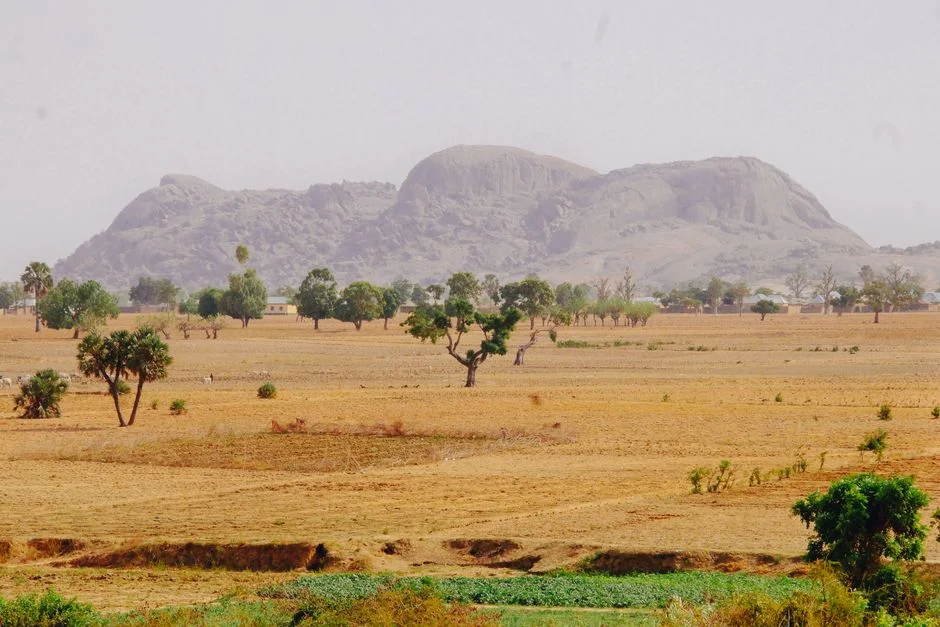
El Niño will not treat all of Nigeria the same way this season. In the dry Sudano-Sahelian north, your main risk is heat and dry spells of up to 21 days; in the humid south, it is the opposite problem — too much water at once, which brings waterlogging and disease.
So one country needs two plans. Find your agro-ecological zone — the band of land that shares the same climate, soil and growing season — then follow the column that matches you.
- The north (Sudano-Sahelian savanna) gets one short rainy season a year. That is a unimodal, or one-peak, season.
- The south (humid forest and coast) gets two rainy seasons — a bimodal, or two-peak, pattern with a short dry break in between.
This year NiMet, the national met service, expects a late start to the rains in Borno, shorter seasons in parts of Borno, Yobe and Niger, and a "little dry season" — the August Break — arriving by late July and biting hardest in the south. There is a sting in the tail, too: FEWS NET puts the chance of El Niño developing at 82% for May to July and flags a flood risk for northern Nigeria in September and October. So the north plans for dry, but keeps one eye on a late flood.
Your north-vs-south playbook at a glance
| North — Sudano-Sahelian | South — humid forest and coast | |
|---|---|---|
| Main El Niño risk | Heat and dry spells (up to 21 days) | Waterlogging, rot, disease |
| Rain pattern | One short season (unimodal) | Two seasons (bimodal) |
| Best crops | Drought-tolerant sorghum, pearl millet, cowpea | Cassava, maize, vegetables |
| Land prep | Flat or tied ridges to hold water | Ridges/mounds plus drains to shed water |
| Water plan | Fadama dry-season irrigation | Cut drainage channels |
| Watch for | Striga, a late Sept–Oct flood | Fall armyworm, root rot |
Will El Niño bring drought or flood to my part of Nigeria in 2026?
Both — but in different places and at different times. If you farm the north, expect a drier, hotter season with dry spells of up to 21 days in June to August, then a possible flood window in September and October; if you farm the south, expect near-normal to heavy rain broken by a sharp August Break.
Two no-tool field tests replace guessing:
- Drainage check (south): after a rain, if water still stands in your field 24 hours later, you have a drainage problem to fix now — not a rain shortage.
- Moisture check (north): before planting, dig to a spade's depth (about 15–20 cm) and squeeze a handful of soil. If it holds together in a ball, there is enough moisture to plant; if it crumbles, wait for the next good rain.
For a full walk-through, see how to read a seasonal rainfall forecast.
What crops should I plant in northern Nigeria this year?
Plant early-maturing, drought-tolerant varieties that finish before the rain runs out. Your three insurance crops are sorghum, pearl millet and cowpea:
- Sorghum — choose early, Striga-tolerant types. ICRISAT released SAMSORG 52, 53 and 54 for Nigeria's Sudano-Sahelian zone.
- Pearl millet — the toughest cereal for sandy, low-rain soils; the early CHAKTI variety was bred for exactly these ecologies.
- Cowpea — a fast legume that shades the soil, feeds you and fixes nitrogen. It is the classic Sahel insurance crop.
Buy certified seed by the mudu (~2.5 kg tin) so you know what you are getting, and store dried grain in a sealed drum rather than an open 50 kg bag to beat weevils. Watch for Striga (witchweed, Striga hermonthica), a purple-flowered parasite that saps cereals from the roots — hand-pull it before it flowers and rotate with cowpea. For the full dry-year cereal plan, see sorghum and millet agronomy.
How do I stop my cassava and maize rotting in the wet south?
Get water off the land fast, and give roots a raised, well-drained bed. Two moves do most of the work:
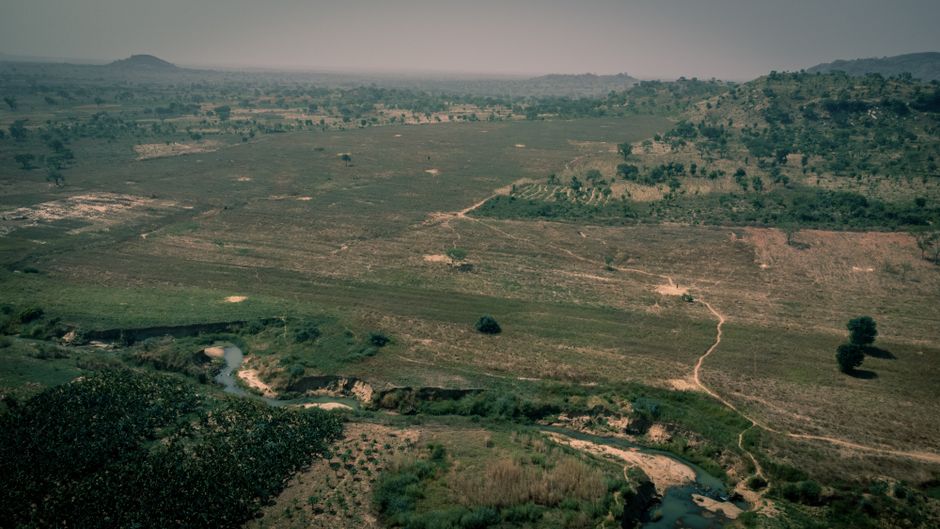
Photo: David Kwewum / Pexels
- Ridge or mound on heavy soil. IITA advises planting cassava on ridges or mounds where the soil is clayey and prone to waterlogging, and on the flat only where soil is deep, sandy and free-draining. In shallow clay, set the stakes at a slant (about 45°).
- Space for airflow. Cassava at 1 m × 1 m gives about 10,000 stems per hectare — 1 ha (2.5 acres) — close enough to shade weeds, open enough to dry the canopy after rain.
Cut shallow drains along the slope so standing water leaves within 24 hours.
Then scout for fall armyworm (Spodoptera frugiperda), the worst maize pest in the humid zone. Identify it by the four white dots that form a square near its tail and the pale upside-down "Y" on its head; the seedling-to-whorl stage is most at risk. Work through IPM — integrated pest management — in order:
- Sanitation: walk the field twice a week and crush egg masses and young caterpillars by hand.
- Cultural: plant early to dodge the peak; a maize-legume intercrop confuses the moth.
- Botanical/biological: dab neem into the funnel of the plant, and leave natural enemies (wasps, birds) to work.
- Chemical, last resort: spray only when about 20% of young plants show whorl damage at the seedling stage (rising to 40% at late whorl). Wear gloves and a mask, spray at dusk, and never eat a freshly sprayed cob — respect the pre-harvest interval printed on the label.
More on shielding your main crop is in the West Africa monsoon guide.
What is fadama farming, and can it help me in the dry season?
Fadama is low-lying land that floods in the rains and stays moist afterwards — and it is your second income when the sky closes. As the rains end, use that stored moisture plus a shallow well to grow high-value dry-season vegetables: tomato, onion, pepper and leafy greens.
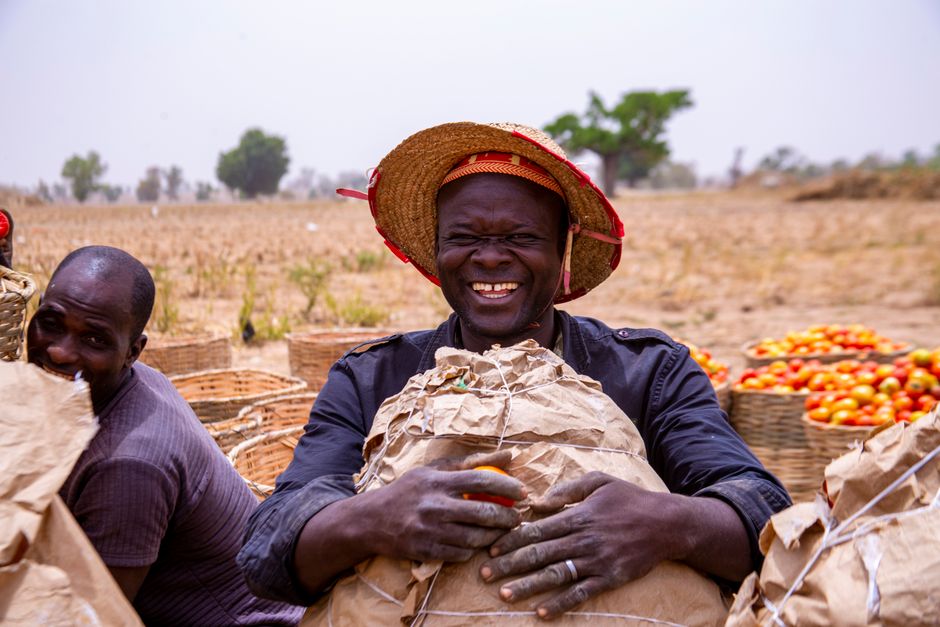
Photo: Achor David / Pexels
- Water each morning with a 10- or 20-litre bucket or watering can while plants are young.
- A short El Niño wet season stings far less when your fadama plot turns one rainy-season crop into two harvests a year.
Your next step
Look up your own state in NiMet's 2026 Seasonal Climate Prediction for its onset and cessation dates, then match one early-maturing variety to that window before you buy a single mudu of seed.