 Divisi
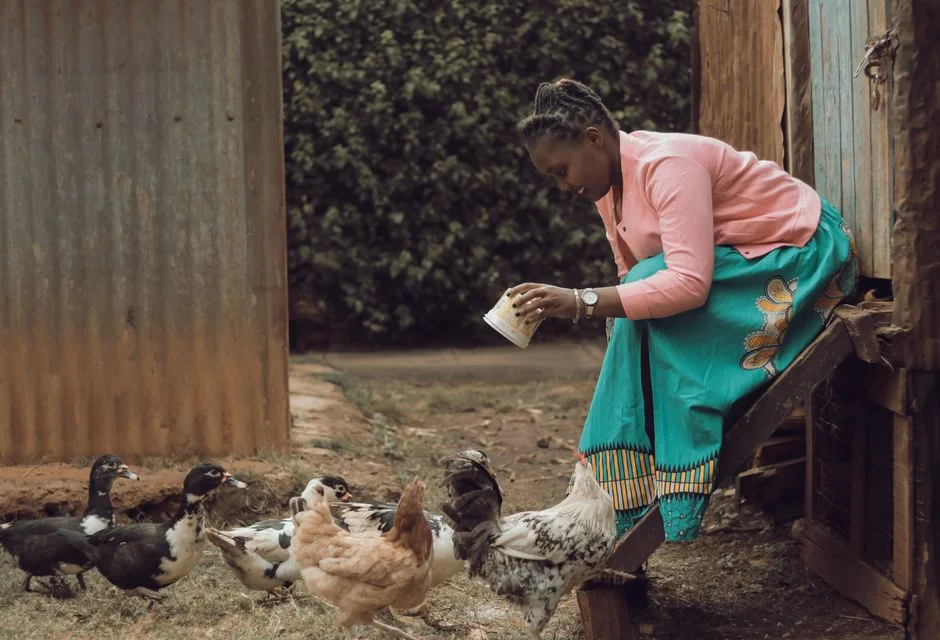
Keep your chickens and goats earning through a dry El Niño season by getting four things right: clean water, a feed store, shade, and Newcastle vaccination. Nail those and your small stock stays productive and sellable even when the maize looks thin — a flock of hens and a few goats keep the cash flowing, with eggs and birds you can turn into money in weeks and a goat you can sell in a hard month.
Treat this as a business decision, not a chore. Small stock in good condition sells for more, breeds more, and lets you avoid dumping animals at rock-bottom prices when everyone else does.
How much water do my chickens and goats need in a dry season?
Water first — it is the cheapest way to protect production, and the first thing that fails in a dry spell. Give it clean, cool and non-stop.
| Animal | Daily water | In the heat |
|---|---|---|
| Chickens | About twice the weight of the feed they eat, free-choice all day (UGA Extension) | 2–4× more (UMN Extension) |
| Goats | About 4–5 L a day for an adult goat in a dry season, with the range running up to ~5.7 L a head (UF/IFAS); lactation pushes intake to 4–5× the dry feed eaten (Merck Vet Manual) — a 50 kg dairy doe drinks about 9.5 L, up to ~13 L in full milk (Ontario Goat) | Intake climbs with heat and with milk (Merck Vet Manual). Offer water 2–3 times a day and never let it run dry — plan about one 20-litre bucket (a debe) for every 4–5 adult goats, more in a heatwave, and the most for a milking doe |
- Refill drinkers twice a day and scrub them daily — green slime and droppings spread disease.
- Don't ration a milking doe: in a Sahel trial, ewes watered only every 3 days lost more than half their milk yield (FAO) — expect the same in a doe, so keep her drinking.
- No-tool test: if you wouldn't drink it, don't give it to them.
- Site every trough in shade, and top it up through the day — never let it run dry.
- Line up the water supply before the dry spell bites: rainwater harvesting and smart water use shows how to catch and store it so the trough never runs dry.
What can I feed my goats and chickens when the grass dries up?
Build a feed store now, before the grass is gone — cured crop residues, tree browse and a simple home mix.

Photo: Thobane Innocent / Pexels
- Cure and store crop residues: maize stover, and the protein-rich haulms (dried leaves and stems) of groundnut, cowpea and beans. Stack them dry, off the ground and under cover so they don't rot. Split residues between feeding stock and building your soil, and return the manure to your plot.
- Cut-and-carry browse: leaves from fodder trees and shrubs (leucaena, sesbania, calliandra, pigeon pea) hold protein when grass is brown.
- Chickens forage insects and seeds, but top up in the lean months with cracked grain, greens and kitchen scraps; give layers grit and crushed shell.
- Skip urea licks. For goats and sheep, urea is easy to get wrong and can make them sick. A safe supplement is chopped residue plus a handful of legume haulm plus a mineral or salt lick.
- A roofed feeding rack keeps feed off the ground: less waste, fewer worms.
How do I protect my chickens and goats from heat stress?
Shade plus water, and watch for panting. Chickens are comfortable at about 16–24°C and start to overheat above roughly 29°C (UMN). The signs: open-beak panting, wings held away from the body, and a pale comb and wattles (Poultry Extension). Goats crowd shade and pant.
- Shade the run, the kraal and the water for the hot midday-to-afternoon hours.
- Feed birds early and late; pull their feed in the 6 hours before peak afternoon heat (UMN) so digestion doesn't add body heat.
- The same heat is dangerous for you — work safely in extreme heat.
How often should I vaccinate village chickens against Newcastle disease?
Vaccinate every 3–4 months with the thermotolerant I-2 vaccine — the single highest-value thing you can do for a flock. Newcastle disease is a fast-spreading virus that can cause losses of up to 100% in unvaccinated village birds (FAO).
The I-2 vaccine is thermotolerant (heat-stable): it keeps working for about 8 weeks at 28°C in freeze-dried form (FAO), so it holds up where there is no fridge. Given by eye-drop every 4 months, it gives about 80% protection in the field (FAO).
| Route | Dose | Repeat |
|---|---|---|
| I-2 eye-drop | 1 drop in the eye | Every 3–4 months |
Watch your goats too:

Photo: Royal Wave ENT / Pexels
- Worms (barber pole worm, Haemonchus contortus) cause anaemia. Pull down the lower eyelid: deep red is healthy; pale pink to white means deworm now. That is FAMACHA eyelid scoring, where you deworm at score 4–5 and recheck a 3 in 5–7 days. Check the withdrawal period on the dewormer label before selling milk or meat from a treated animal. In zones where El Niño brings heavy short rains, worm larvae surge after the first rains — check eyelids every 2 weeks.
- PPR (peste des petits ruminants): fever of 40–41°C, watery discharge from eyes, nose and mouth, mouth sores and foul watery diarrhoea; 20–90% of affected animals die (FAO). A vaccine protects for 3 years or more.
- CCPP: coughing, laboured breathing, fever and nasal discharge, caused by a Mycoplasma; a vaccine exists (WOAH).
Call a vet fast if several birds die suddenly, goats cough as a group, or you see mouth sores with diarrhoea. Keep biosecurity tight: quarantine new animals for 2 weeks, and never let sick stock share a water point — crowding at the last waterhole spreads disease fastest. Protect yourself too: wash your hands after handling sick birds or goats and after giving the eye-drop vaccine or a dewormer, and wear gloves around any animal with eye, nose or mouth discharge — Newcastle is a mild zoonosis that can give people short-lived conjunctivitis (eye inflammation) (WOAH).
When should I sell some of my goats or chickens?
Sell early, while animals are in good condition and prices are strong — not when feed runs out and everyone floods the market at once. This planned selling is called destocking.
- Sell surplus males, old hens and non-productive animals first; keep your best breeding does and layers.
- Time it with the market, and read the full destocking playbook for the bigger herd decision.
Your next step this week
Set up one clean, shaded water point and book your Newcastle I-2 vaccination. Those two moves protect the most income for the least money — do them this week, then start cutting and storing crop residues for the lean months ahead.