 Divisi
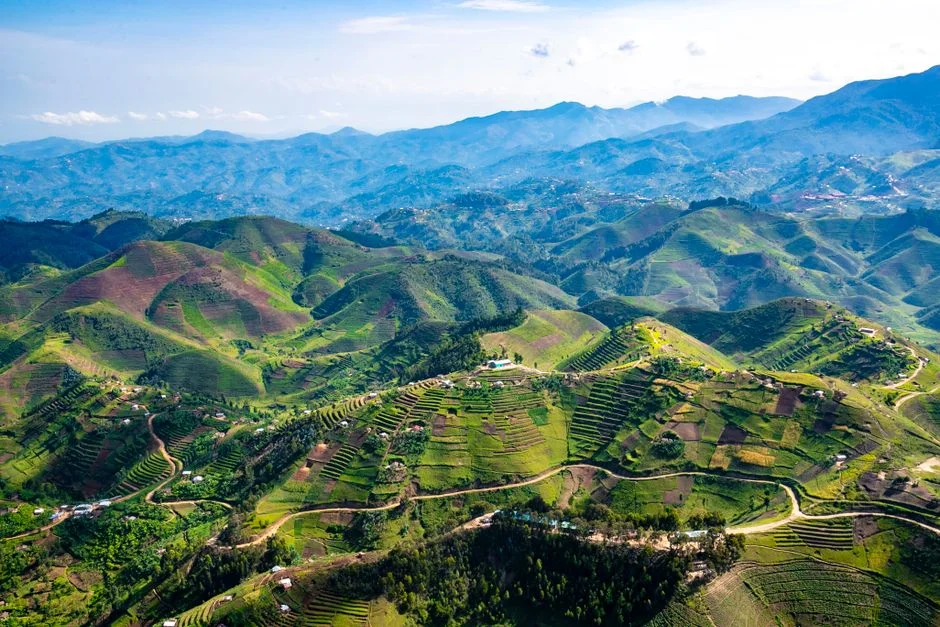
Rwanda's Season A rains — your main September-to-December crop — look set to arrive early, heavy and erratic under El Niño, so on your hills the real enemy is not drought but erosion and waterlogging. Move rainwater slowly off your slope before you plant, and a risky wet season becomes your strongest potato and bean harvest yet.
Forecasters put El Niño above 90% for late 2026, with a wetter-than-normal October-to-December across Rwanda (FEWS NET). Rwanda already loses about 25 tonnes of topsoil per hectare a year, worth around RWF 37.9 billion in lost harvest (RWB and IUCN) — on bare slopes, that is your money running downhill. First, read your district's seasonal forecast so you plant to the rain you'll get.
Your best moves depend on your agro-ecological zone (climate-and-soil band). The steep, wet north-west — Congo-Nile Crest and Buberuka highlands, potato and climbing-bean country — needs drainage and strong terraces; the gentler Central Plateau, contour bunds and mulch; the drier Eastern lowlands, ground cover.
Will El Niño bring too much rain for my hillside farm this Season A?
Most likely yes, and in bursts — run-off, gullies and soggy root zones, the flood side of El Niño, not the drought elsewhere (more on East Africa's wet El Niño). No-tool check: after a heavy shower, brown water running off the lower edge means that slope is losing soil now.
How do I stop my soil washing down the hill when it rains?
Four low-cost defences, strongest first:
- Terraces and contour bunds — ridges of soil or stone across the slope (on the contour, not up-and-down) that catch run-off and let it soak in.
- Grassed waterways — a shallow, grass-lined channel that carries what your terraces shed to a drain instead of cutting a gully.
- Cut-off drains — a ditch across the top of the plot that diverts water from higher ground before it reaches your crop.
- Mulch and cover — crop residue or living cover over bare soil. Surface residue cut soil loss from 200 tonnes per hectare to 0.4 — over 99% — in FAO trials (FAO); go deeper on cover, min-till and planting basins in our conservation-agriculture guide.
No-tool contour line: hang a stone on a string from an A-frame of three sticks. Where the string reads level you are on the contour — peg a line and plant your rows and bunds along it.
Should I build radical or progressive terraces before the rains?
It depends on your slope:
| Your slope | Best structure | Why it works |
|---|---|---|
| Gentle to moderate (plateau and mid-hill) | Progressive terraces — contour bunds of soil or stone with a planted grass strip | Built with hand tools now; the flat bench forms over a few seasons as soil banks up behind the strip |
| Steep, above 50% | Radical (bench) terraces with a reverse-slope bed under 6% | Cuts run-off on the steepest hills; full benefit shows after 5-6 years of good upkeep (RWB) |

Photo: Ana Kenk / Pexels
Plant the risers (banks) with grass or fodder — they hold firm and feed your livestock. Pair terraces with soil that holds water and smart water harvesting so the rain you catch works all season.
How do I protect my Irish potato from late blight in the wet season?
Drain the beds and plant a resistant variety — wet, cool hillsides suit late blight (Phytophthora infestans), a water-mould that can wipe out 80-100% of an unsprayed crop (FreshPlaza, reporting RAB trials). Spot it early: dark, water-soaked patches with white fuzz underneath, spreading fast once the canopy closes.
Work through the steps, cheapest first:
- Sanitation: pull out volunteer potatoes and cull piles, rogue out and bury or burn infected plants, and never plant blemished or rotting seed.
- Cultural: plant certified seed, space for airflow, and hill soil over the tubers. Drain every bed — dig a 30 cm hole and fill it with water; if it hasn't drained within a day, don't plant potato there.
- Host resistance: your strongest non-chemical shield — varieties like Ndamira (about 30 t/ha) and Victoria (about 33 t/ha) yield well even without spraying (FreshPlaza, reporting RAB trials).
- Chemical, only in blight weather: a protectant before infection, not after. A common choice is a mancozeb-based spray — Plantwise gives a metalaxyl-plus-mancozeb product at about 35 ml per 20 L knapsack, every two weeks in wet weather until two weeks before harvest (Plantwise). Kenya's approved list sets the pre-harvest interval (PHI — days from last spray to harvest) for mancozeb at 7-14 days (NPCK); confirm both on your own label. Wear gloves, goggles, long sleeves and a mask. Forecast-guided spraying cut sprays from 8 to 5 a season and lifted yield from about 13 to 20 t/ha — roughly 260 to 400 bags of 50 kg (Meteo Rwanda blight model).
Use this no-meter guide to time your scouting and sprays:
| Warning sign (no meter needed) | What it means | Do this |
|---|---|---|
| Leaves still wet from mist or dew past mid-morning, most days | Humidity above 90% for 12+ hours — blight weather (source) | Scout every 2-3 days |
| Dark, water-soaked leaf patches with white fuzz underneath | Active late blight | Remove affected plants; apply a protectant |
What should I do plot by plot before the rains start?
Walk every plot and fix the weakest link. On the steepest, repair terraces and clear a top cut-off drain; plant maize and beans on the contour. Then, crop by crop:

Photo: JUNLIN ZOU / Pexels
- Potato plot: open the drains, run the water-soak test, and order certified resistant seed.
- Bean plot: plant climbing beans — 3-4 times the yield of bush beans (an extra 270 kg, over five 50 kg bags, per hectare) and their canopy shields the soil (CGIAR). Cut and stack strong stakes now.
Your next step this week
Before the September rains, mark one contour line on your steepest plot with a home-made A-frame and peg your first bund or grass strip along it. Start with the slope that worries you most.