Divisi
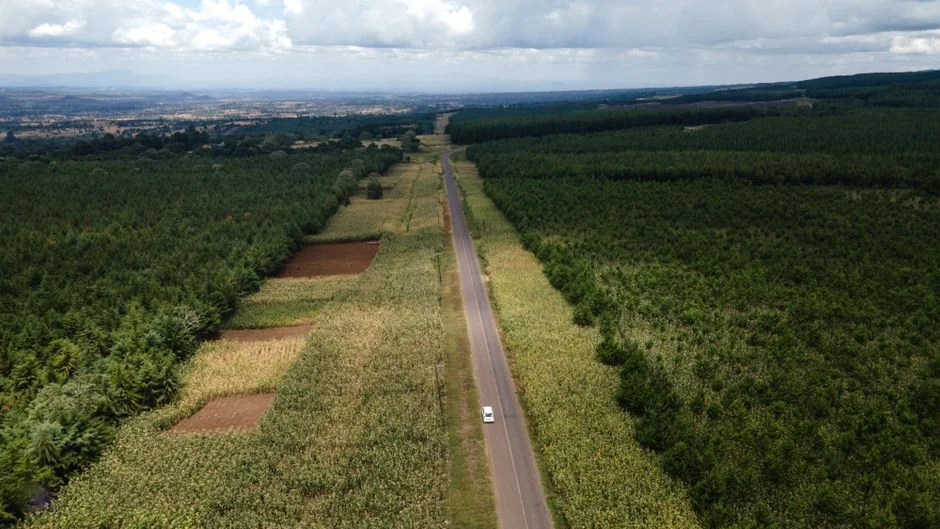
In an El Niño Vuli, if you farm Tanzania's northern, north-eastern, Lake or coastal belt, plant your short-rains crop as the rains open in October — the forecast is for above-average rain with December the wettest month, and a fast-maturing variety turns that water into a full harvest. If you farm the central or southern zone, don't: your rain comes as one long Msimu season, so save your seed and prepare land instead.
El Niño usually pushes the East African short rains wetter, not drier — the opposite of the drought many farmers expect. FEWS NET sees an increased likelihood of above-average October–December rain across the bimodal parts of East Africa, and Tanzania's TMA has flagged above-normal Vuli rain across the northern belt in El Niño years, with December the peak. For the regional picture, see why El Niño means floods, not drought, in East Africa; to read your own forecast, see how to read a seasonal rainfall forecast.
Should I plant the Vuli short rains in my part of Tanzania this year?
Only if you are in a bimodal zone — an area with two rainy seasons. Find your region in the split below, mapped from TMA's rainfall zones:
| Zone | Your region | Plant the Vuli now? |
|---|---|---|
| Bimodal — two seasons (Vuli Oct–Dec + Masika Mar–May) | Kagera, Geita, Mwanza, Shinyanga, Simiyu, Mara, Manyara, Arusha, Kilimanjaro, Tanga, Dar es Salaam, northern Morogoro, Pwani, Mafia, plus Unguja and Pemba | Yes — the Vuli is a real growing season. Plant an early-maturing crop as the rains open in October. |
| Unimodal — one Msimu season (~Nov to Apr/May) | Dodoma, Singida, Tabora, Kigoma, Katavi, Rukwa, Songwe, Mbeya, Iringa, Njombe, Ruvuma, Lindi and Mtwara | No — a short October crop gets no follow-on rain and will fail. Prepare land and buy seed for the single Msimu instead. |
Plant on the true onset, not the first shower that tempts you out — time your planting to the first real rains so a false start doesn't cost you your seed.
Kenya's short rains fall in the same window, but the whole country shares them — Tanzania's split is the key difference. See the Kenya short-rains planting guide for the cross-border picture.
Which maize and beans mature fast enough for the short Vuli season?
Pick varieties that finish inside the roughly three-month rain window — early-maturing types, not your long-season favourites.
| Crop | Example variety | Days to maturity |
|---|---|---|
| Maize (early) | Situka | about 75 days, against 90-plus for standard types |
| Beans (Phaseolus vulgaris) | Selian 13, released by TARI | 60–75 days |
| Amaranth / mchicha (leafy) | local leaf types | about 20–45 days (roughly 3–6 weeks) |

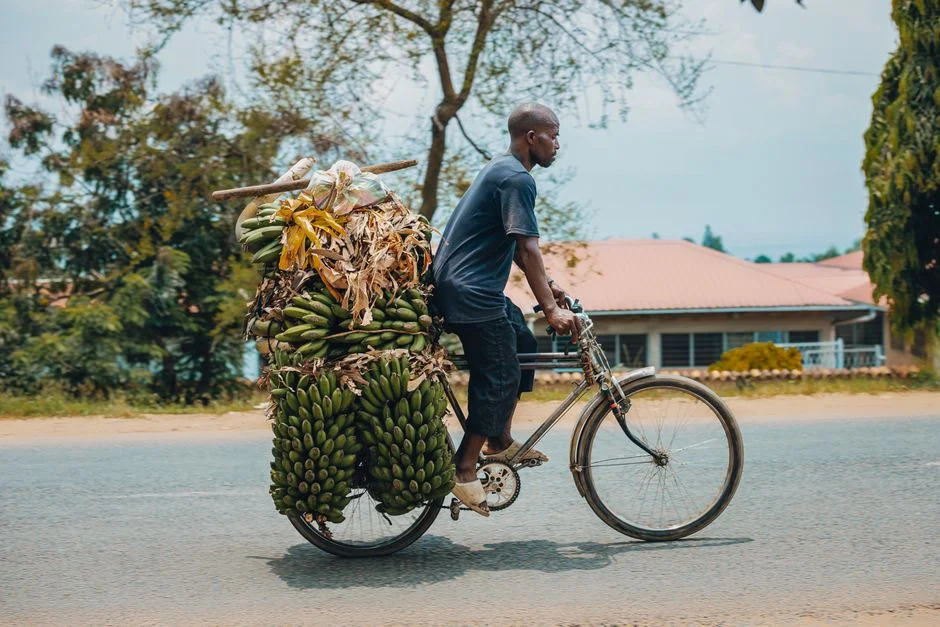
Photo: Joseph K. Masonda / Pexels
That extra fortnight of earliness decides whether you fill grain in the rain or dry it in a downpour. A gorogoro (~2 kg) or two of early bean seed at the agrodealer is enough to start, and the amaranth doubles as a quick cash crop while the maize grows.
Choosing seed is the highest-leverage decision you make. Our guide to picking early-maturing varieties walks through it.
How do I stop my Vuli crop from rotting in all this rain?
Get the water off the roots and keep the field clean. Maize and beans drown in waterlogged soil, so plant on ridges or raised beds rather than flat ground.
- Build beds high enough that water drains into the furrows. No-tool test: if water is still standing in the furrow a few hours after rain, your beds are too low — raise them.
- Space plants a little wider than in a dry year so air moves and leaves dry faster; wet, crowded leaves are how fungal blights spread.
- Never weed or harvest when leaves are wet — you carry disease spores plant to plant. Rogue out (pull and remove) any plant with spreading leaf spots.
When should I spray for fall armyworm in my maize?
Only after scouting crosses a clear threshold — not on sight. Fall armyworm (Spodoptera frugiperda) chews ragged holes and "window-panes" in the young whorl and leaves moist, sawdust-like droppings; the caterpillar has a pale upside-down Y on its head. It hits hardest from seedling to whorl stage. Work in order:
- Sanitation and cultural first: plant early and all at once — a staggered field feeds the pest non-stop. Walk the rows twice a week and crush egg masses and caterpillars by hand at dawn.
- Biological: a push-pull layout (Desmodium between rows, Napier grass around the edge) cut larvae by 82.7% and plant damage by 86.7% in icipe East Africa trials.
- Botanical: drop a scoop of dry sand or wood ash into the whorl, or apply a neem solution.
- Chemical, last: only when scouting crosses the action threshold — 20% of knee-high (early-whorl) plants infested, or 40% of late-whorl plants infested with live larvae (CIMMYT action thresholds for Africa). Wear gloves and a mask, and respect the pre-harvest interval on the label — commonly 7–14 days before you can eat or sell.
How do I keep aflatoxin out of my maize when it's so humid?
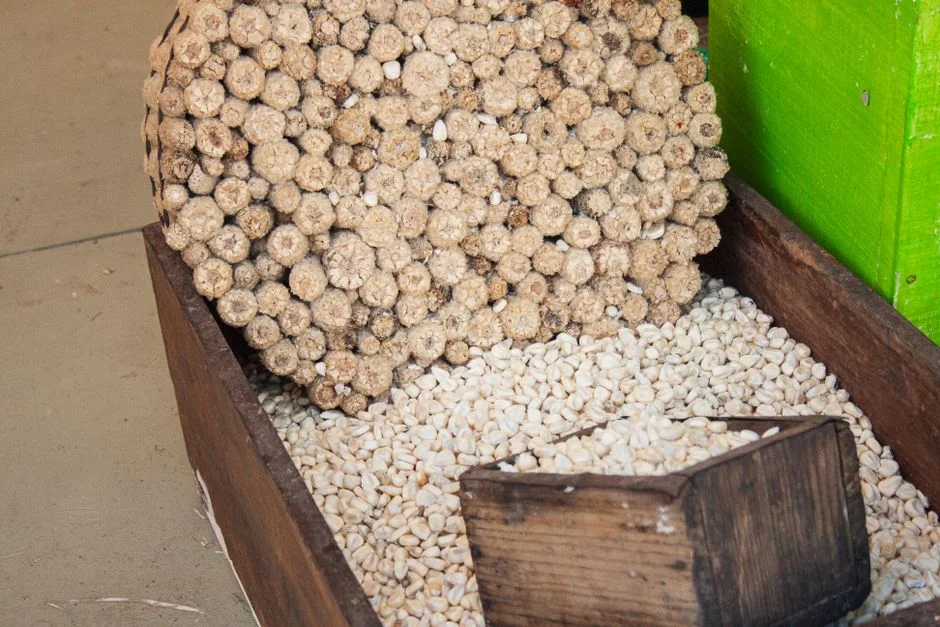
Dry the grain hard and seal it. Aflatoxin is a poison made by the mould Aspergillus flavus, which thrives in warm, damp grain — it grows fastest around 30°C, 85% humidity and 18% kernel moisture, and research shows it stops once grain drops below about 13% moisture; FAO puts safe storage at 12–13%.

Photo: Luis Quiló / Pexels
- Dry until it passes the bite test — the 12–13% moisture FAO calls safe. A kernel should crack sharply, not dent; or shake a handful of grain with a spoon of salt in a dry, sealed bottle for three minutes, and if salt sticks to the glass it is still too wet.
- Turn a debe (~20 L) of cobs on the rack or tarpaulin several times a day so it dries evenly — never on bare soil — and throw out cracked or discoloured cobs, which carry the mould.
- Store in airtight bags: a well-sealed 50 kg or 100 kg hermetic bag, or a drum, starves both the mould and the weevils of oxygen.
Your next step this week
Find your region in the zone table above. If you're in the bimodal belt, buy an early maize or bean variety and start ridging your beds now, before the Vuli rains open in October.