Divisi

You can fund your own farm this season — without waiting on a bank. Join or start a village savings group, and the money members save together can grow 30–60% in a single year (Mastercard Foundation VSLA brief), ready to buy seed and fertiliser the week the rains start — not a month late.
Late inputs are the quiet profit-killer. This guide gives you three ways to raise capital — savings groups, input credit and warrantage — and how to borrow without the debt trap. In an El Niño season, when your harvest may be smaller or later, finance you match to your own crop is the safe kind.
How does a village savings group actually work?
A village savings and loan association (VSLA) is a small group of neighbours who save together and lend to each other. You may know it as a chama (Kenya), stokvel (South Africa), susu (Ghana), tontine (francophone West Africa), or merry-go-round.

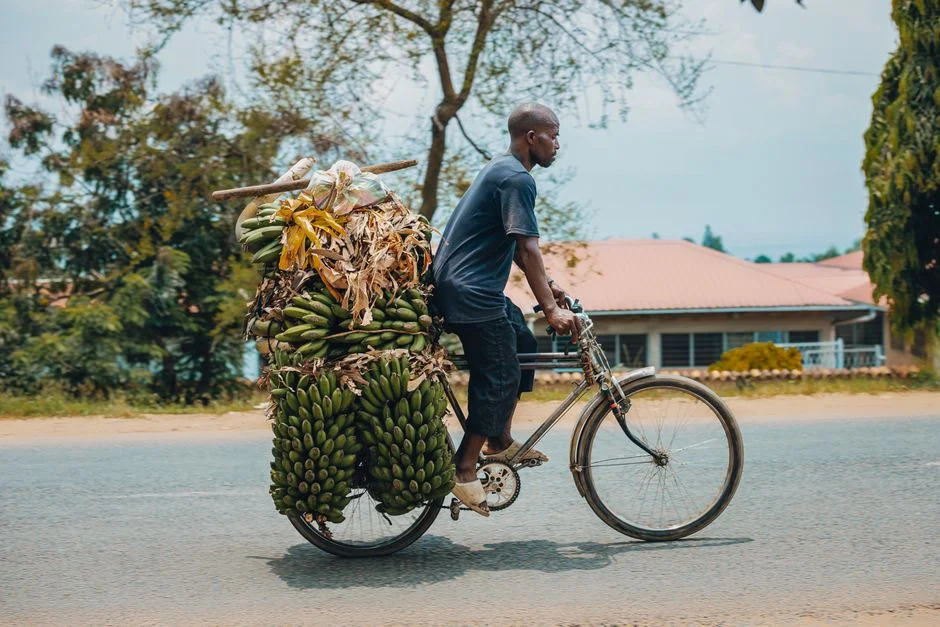
Photo: Muhammad Muktar / Pexels
Most groups follow the same pattern (CARE, VSLA.net):
- 15–25 members you choose and trust.
- You meet every week and buy 1–5 shares each time — save what you can.
- Once the cashbox has money, members borrow up to three times their own savings, repaid within three months at a monthly service charge the group sets — commonly 10% a month, with some groups at 5% and some at 20% (CARE). It is charged each month the loan is out, so a three-month loan costs far more than the headline rate — read the total, not the monthly figure.
- After about one year comes the share-out: every loan is repaid, and the whole pot — savings plus the interest earned — is split back to members in proportion to what each one saved.
The interest borrowers pay stays inside the group. That is why your savings grow instead of a bank's.
How much money can I really make from a savings group?
Members typically earn a return on their savings of 30–60% a year (Mastercard Foundation brief) — CARE's own analysis puts the average near 50% while a group is supported (CARE Evaluations). No bank savings account comes close.
More than 13.7 million people have joined these groups since 1991 (CARE Evaluations). Time your share-out for the start of the season and you walk into the agro-dealer — the shop that sells seed, fertiliser and tools — with cash in hand, owing interest to no one outside your group.
What is warrantage, and how do I store my grain to get a loan?
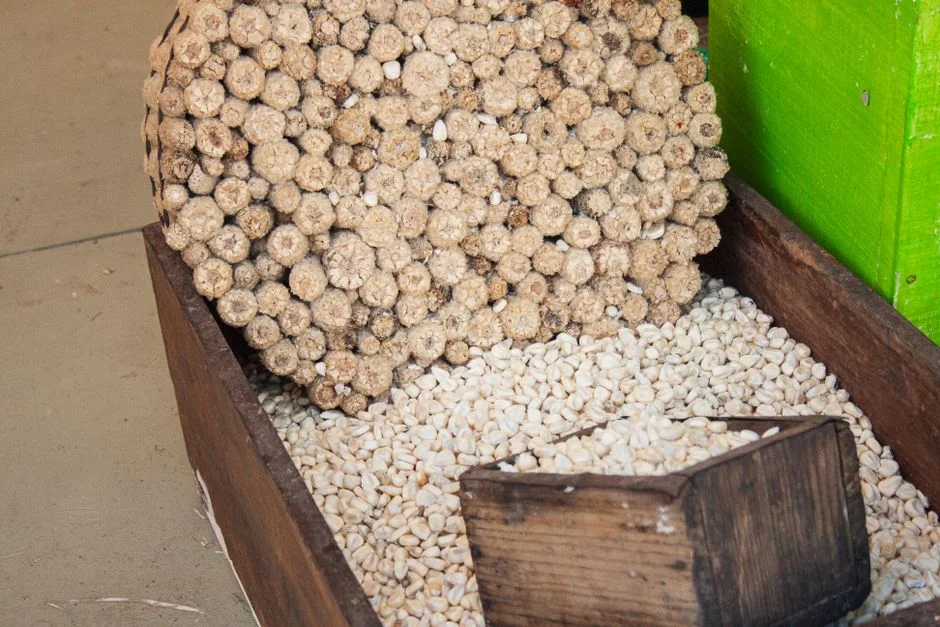
Warrantage (inventory credit) means you store your harvest as collateral — the security a lender holds — take a loan against it now, and sell the grain later when prices climb.
Prices reward patience. In East African markets, maize prices typically rise 25–40% between harvest and the lean season (study in western Kenya) (VoxDev). Farmers using warrantage in Burkina Faso earned 33% more from crop sales (World Bank); across Burkina Faso, Mali and Niger, incomes rose 52–134% as members sold high and bought inputs cheaper (IITA/TAAT).
How to do it:
- At harvest, put your grain in a secure, sealed store — a double-lock warehouse or airtight bags.
- A lender advances a loan worth less than the grain's value (World Bank) — so you never owe more than the crop.
- Spend the loan on next season's inputs, or on another income stream.
- In the lean season, sell high, repay, and keep the price gain.
No-tool test: only store grain dry enough that a kernel cracks — not bends — when you bite it. Damp grain molds and loses its value as collateral. Warrantage suits the drier cereal zones (Sahel and Sudan savanna), where grain stores well and prices swing most; in humid, bimodal zones grain spoils faster, so sealing it well matters even more. Get the drying and hermetic storage right first — see dry and seal your maize to beat weevils and aflatoxin (for a stored-bean crop, stop bruchid weevils). To sell well when you open the store, see 4 strategies for better farm prices.
How do I borrow for inputs without falling into a debt trap?
One rule: borrow only for productive inputs, and match every repayment to your harvest. Never agree a repayment date before your crop is sold, and never borrow more than one season's input cost that a normal harvest can cover.
Compare before you sign:
| Option | How it works | Best for | Watch for |
|---|---|---|---|
| Savings group (chama/stokvel) | Save weekly, borrow up to 3× your savings | Small, fast, flexible loans | Small loans early in the cycle; commonly 10% per month (5–20%), so keep it short |
| Agro-dealer credit | Inputs now, pay after harvest | Buying at the right time | A mark-up hidden in the price — ask the cash price too |
| Input-on-loan scheme | A company supplies seed and fertiliser, deducts at sale | Bundled inputs plus advice | Being locked to one buyer |
| Warrantage | Store grain, borrow against it, sell later | Turning stored grain into cash | Only works if you have grain to store |
Read the terms, not the smile: the total cost over the whole loan, the repayment date, and what happens if the season is poor. Drought-index insurance can cover the repayment when El Niño cuts your yield — see smallholder drought index insurance.
How do I prove I am worth lending to?
Keep simple records — that is your creditworthiness, the proof that you repay what you borrow. Write down every date, cost and sale: what you spent on seed, fertiliser and labour, and what each 50 kg bag fetched.
A treasurer's ledger and your own notebook or phone turn you from a stranger into a farmer with numbers. Lenders back numbers. Build the habit with why smart farmers track everything.
Your next step this week
- If a chama, stokvel, susu or tontine meets nearby, ask to join before its next cycle starts. If not, gather 15–25 people you trust and agree a weekly share amount.
- Add up this season's input cost — seed plus fertiliser for your plot — so you know your savings target. Pair it with a drought-tolerant, early-maturing variety and you have a plan any lender can trust.