 Divisi
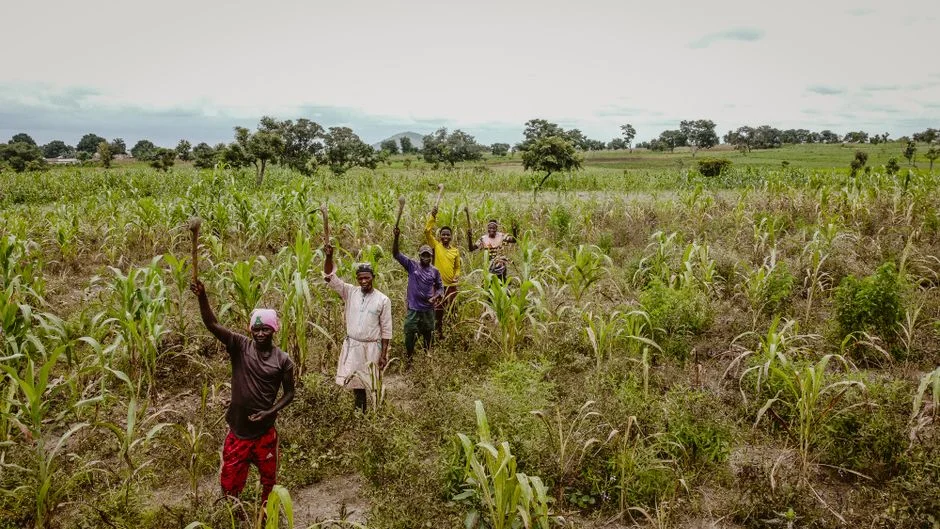
El Niño probably won't fail your West African season — but it can drop a two- to three-week dry spell into the middle of it, or cut the rains off early. Match your variety to the likely end-of-rains date, guard the flowering window, and keep your fields weeded, and you'll still bank a full harvest. The 2026 picture so far is genuinely mixed: rains are average to above-average in the bimodal south, but running into moderate-to-severe deficit across parts of Guinea, Sierra Leone, Liberia, Côte d'Ivoire, Ghana, Benin and central Nigeria, with a slow Sahel onset and forecasts flagging above-normal heat and crop heat-stress risk (FEWS NET). Treat that like a business risk — plan for it, don't panic over it — and a patchy season is still a bankable one.
Is El Niño going to hurt my crops in West Africa this year?
Probably not on its own — but it can make a good season patchy. Unlike Southern Africa, where El Niño usually means a clear drought, West Africa's monsoon is only loosely tied to it — and the link is genuinely weak and inconsistent. El Niño years have delivered the Sahel both wetter-than-normal and drier-than-normal rainy seasons, because the outcome hangs on Atlantic and global ocean patterns as much as on El Niño itself (Pomposi et al., 2020, Journal of Climate). As one recent review puts it, ENSO's influence on Africa "varies strongly by season, region, phase, event and decade," and West Africa's signal is among the hardest to predict (Nature Reviews Earth & Environment, 2025). So the message isn't "brace for disaster." It's "protect a good crop from a bad fortnight" — and don't bank on the rains running long.
What are the main risks to watch during the rains?
Three, really:
| The risk | What you'll see in your field | Why it matters |
|---|---|---|
| A mid-season dry spell | Two to three weeks with little or no rain while crops are growing | If it lands at flowering, it hits yield hardest |
| Patchy, uneven rain | Heavy in one place, almost nothing a few kilometres away | Makes planting and fertiliser timing a gamble |
| An early end to the rains | Rains stop before your crop finishes filling grain | Late or long-maturing varieties may not make it |
The one to respect most is a dry spell at flowering. Cereals like maize, sorghum and millet are most sensitive to water stress when they are tasselling, silking and filling grain — FAO rates the flowering period as the stage where water deficits cause the greatest loss of grain yield (FAO). A dry fortnight then costs you far more than the same gap earlier in the season. (Growing maize in a dry year breaks this down stage by stage.)
How do I protect my crop during a dry spell?
You can't make it rain, but you can make every drop count and keep the crop steady until it does.

Photo: mk_photoz / Pexels
- Weed early and often. Weeds are thieves — they drink the water your crop needs. Keep fields clean through roughly the first six weeks after emergence: this is the critical window when weed competition does the most yield damage, and letting weeds run past it can cut yields sharply (Iowa State University Extension).
- Mulch and keep the soil covered. Crop residues or cut grass spread over the soil cut evaporation and keep roots cooler through a hot, dry pause.
- Keep a short-maturing backup. Set aside a mudu (about 2.5 kg) of an early millet, cowpea or maize variety. If a dry spell kills your first planting, you can replant something that still finishes before the rains end.
- Protect the flowering window above all. If you can give any supplementary water — from a pan, a well, or a low-cost pump — save it for tasselling and grain-fill, not the seedling stage.

Photo: Kimberly Alves / Pexels
What fertiliser should I use if the rain is unreliable?
When rain is unreliable, don't broadcast fertiliser and hope for a downpour to wash it in — concentrate it. Microdosing means placing a small dose — about a bottle-cap, 2–6 g — right in the planting hole or beside each plant or hill, so scarce nutrients sit where the roots can reach them on limited moisture. On the low-fertility, sandy soils of the Sahel it can lift cereal yields by roughly 43–120% in trials (CGIAR). One honest caveat: a multi-year ICRISAT study in Niger found more modest average gains of about 43–69 kg/ha, and around 36% of demonstrations returned less than they cost (a value-cost ratio below 1) — so microdosing pays best on poor Sahel soils and where seed, fertiliser and credit are within reach (ICRISAT field trials). Hold any heavy top-dressing until rain is actually falling.
Should northern and southern farmers do different things?
Yes — your risk depends on where you sit:
| If you farm in… | Your main El Niño risk | Lean towards… |
|---|---|---|
| The Sahel and far north (Kano, Maiduguri, Zinder) | Dry spells and an early cutoff | Short-maturing millet and cowpea, microdosing, and backing the earliest, hardiest varieties |
| The humid south and coast | Less rain shortage; more disease and waterlogging in wet spells | Drainage, scouting for fungal disease, and staggered planting |
Your next step this week
Find your area's seasonal outlook and likely rainfall cessation date — your national met service or the regional PRESASS forecast is the place to start — and match your variety to it. Reading a seasonal rainfall forecast before you plant walks through exactly how. If the rains might end early, a shorter-maturing variety isn't the cautious choice — it's the smart business one. Then get your fields weeded and your backup seed set aside, so a two-week dry spell becomes an inconvenience, not a disaster.