Divisi
El Niño is a natural warming of the Pacific Ocean that changes where rain falls — and for the 2026/2027 season, it is heading Africa's way. The important thing to know is that it does not treat every farm the same. In Southern Africa it usually brings less rain and more heat; in much of East Africa it does the opposite — heavier rain and floods. And here is the good news: this is a forecast, not a surprise. Like any sharp business, the farmers who come out ahead are the ones who read the risk early and plan for it — starting now, in the dry season, while there is still time to act.
What is El Niño, really?
Every few years, the surface of the central and eastern Pacific Ocean — far out off the coast of South America, on the other side of the world from your field — grows warmer than usual, and that shift changes weather patterns worldwide (FAO). As the water warms, the trade winds that normally blow west along the equator weaken, and the world's rains get nudged out of their usual pattern — a cycle scientists call ENSO, short for El Niño–Southern Oscillation (NOAA). You will never see the Pacific from your field, but you feel it in your rains: they might come late, stop early, arrive all at once, or skip a season. El Niño is the warm phase of this cycle; its cooler twin is called La Niña.
Here is the whole picture at a glance — one ocean event, but three very different stories depending on where you farm:
| Where you farm | What El Niño usually brings in 2026/27 | When to watch |
|---|---|---|
| Southern Africa — Zimbabwe, Zambia, Malawi, Mozambique, South Africa | Drier and hotter; drought risk | Oct 2026 – Mar 2027 (planting to grain-fill) |
| East Africa & the Horn — Kenya, Somalia, eastern lowlands | Heavier short rains; flood risk | Oct – Dec 2026 (short rains) |
| West Africa & the Sahel — Nigeria, Niger, Mali | An erratic, stop-start monsoon | Jun – Sep 2026 |
Sources: FEWS NET and the Kenya Times, reporting the Kenya Meteorological Department.
Will El Niño bring drought to my farm?
That depends on where you farm — and it is the most important thing to get right, because El Niño pushes different regions in opposite directions:
- If you are in Southern Africa (Zimbabwe, Zambia, Malawi, Mozambique, South Africa), it usually means drier and hotter. For 2026/27, forecasters expect below-average rain and extreme heat from October 2026 to March 2027 — right across your planting season (FEWS NET).
- If you are in East Africa (Kenya, the Horn), your October–December short rains may come heavier than normal, and the real risk is flooding — Kenya's weather service has already said so (the Kenya Times, reporting the Kenya Meteorological Department). We cover flood-smart farming in our East Africa floods guide. Parts of Ethiopia, by contrast, may lean drier.
- If you are in West Africa or the Sahel, the signal is weaker: expect an unreliable, stop-start monsoon rather than a clean drought.
So the question to ask is not "how bad will El Niño be?" but "which way will it push my rains?"
When will El Niño reach my fields?
It follows your own season, not the calendar on the wall:
- Southern Africa: the pressure comes October–March, on planting and grain-filling. Your window to prepare is right now, up to October.
- East Africa: watch the October–December short rains for too much water, then the March–May long rains.
- West Africa: it is your June–September monsoon that is on the line this year.
As a farmer, what can I do about El Niño now?
Quite a lot — and the growers who act now, before the rains, are the ones who protect both their harvest and their income. Here is where a smart operator starts:
- Find out your forecast. Your national weather service, extension officer, local radio, or a farming app on your phone will carry the seasonal outlook. Our next article walks you through how to read a seasonal rainfall forecast before you plant.
- Build soil that holds water. Winter ploughing and Pfumvudza-style land prep where your land suits it, plus compost, manure and mulch, turn your soil into a store of moisture you can draw on during dry spells.
- Pick the right crops and seed. Choose shorter-maturing, drought-tolerant varieties — and small grains like sorghum and millet. Early maize matures in about 80–110 days (FAO) and early sorghum in about 90–110 days (FAO), against about 110–140 days for medium, main-season maize (FAO) — early enough to fill the grain before a late dry spell shuts the season down. In Zambia and Zimbabwe, where the harvest is still counted in 90 kg bags, a variety that finishes on time is the one that fills them.
- Store water, and get ready for the heat. Set up simple water harvesting, and make a plan to keep both your family and your animals safe and productive when it turns hot.
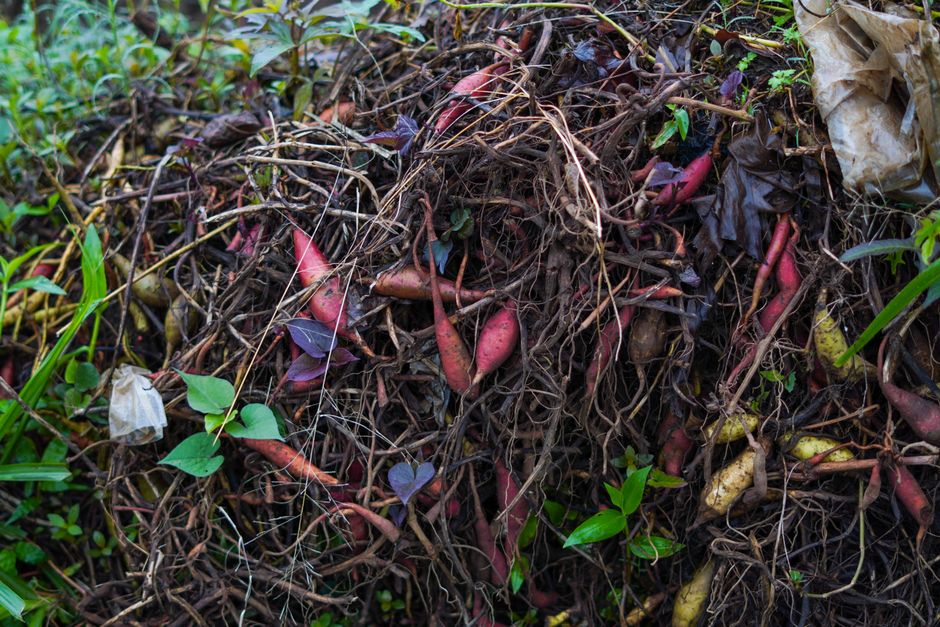
Photo: Robbi F / Pexels
In the last strong El Niño, in 2023/24, Southern Africa's maize harvest came in about 19% below the year before — and about 9% below the five-year average — with Zambia losing more than half its crop and Zimbabwe about 72% (FEWS NET) — yet the farms that read the forecast and prepared early came through in far better shape. That is the real opportunity here: El Niño is not the end of your season, it is a forecast, and a forecast is something a good farmer plans around and can even turn to their advantage.
Your next step this week
Find out what the seasonal forecast is saying for your area. That one answer shapes every decision you make this season — and getting it right early is what turns a risky year into a well-run one.