 Divisi
Angoumois grain moth
Sitotroga cerealella · Storage
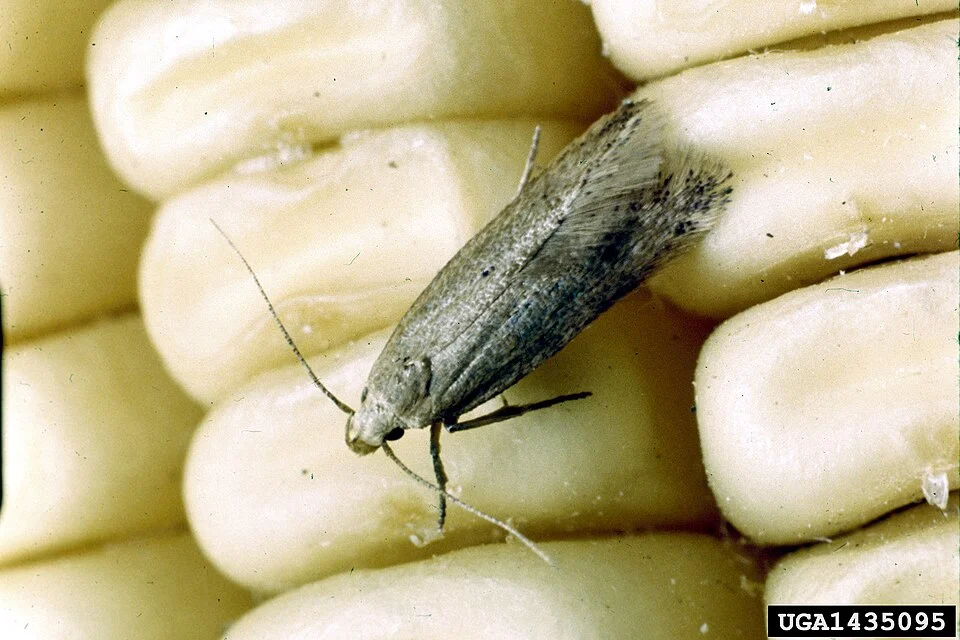
Photo: Clemson University - USDA Cooperative Extension Slide Series, Bugwood.org · CC BY 3.0 us
The Angoumois grain moth (Sitotroga cerealella) is a small, straw-coloured storage moth of cereals — maize, sorghum, rice and wheat. Its grub bores into a single grain and feeds, pupates and grows up hidden inside that one kernel, then cuts a neat round exit hole capped by a thin, see-through 'window' as the adult moth flies out. The trouble usually starts quietly in the field as the crop ripens, then builds through several overlapping generations in the warm store, hollowing the grain from the inside.
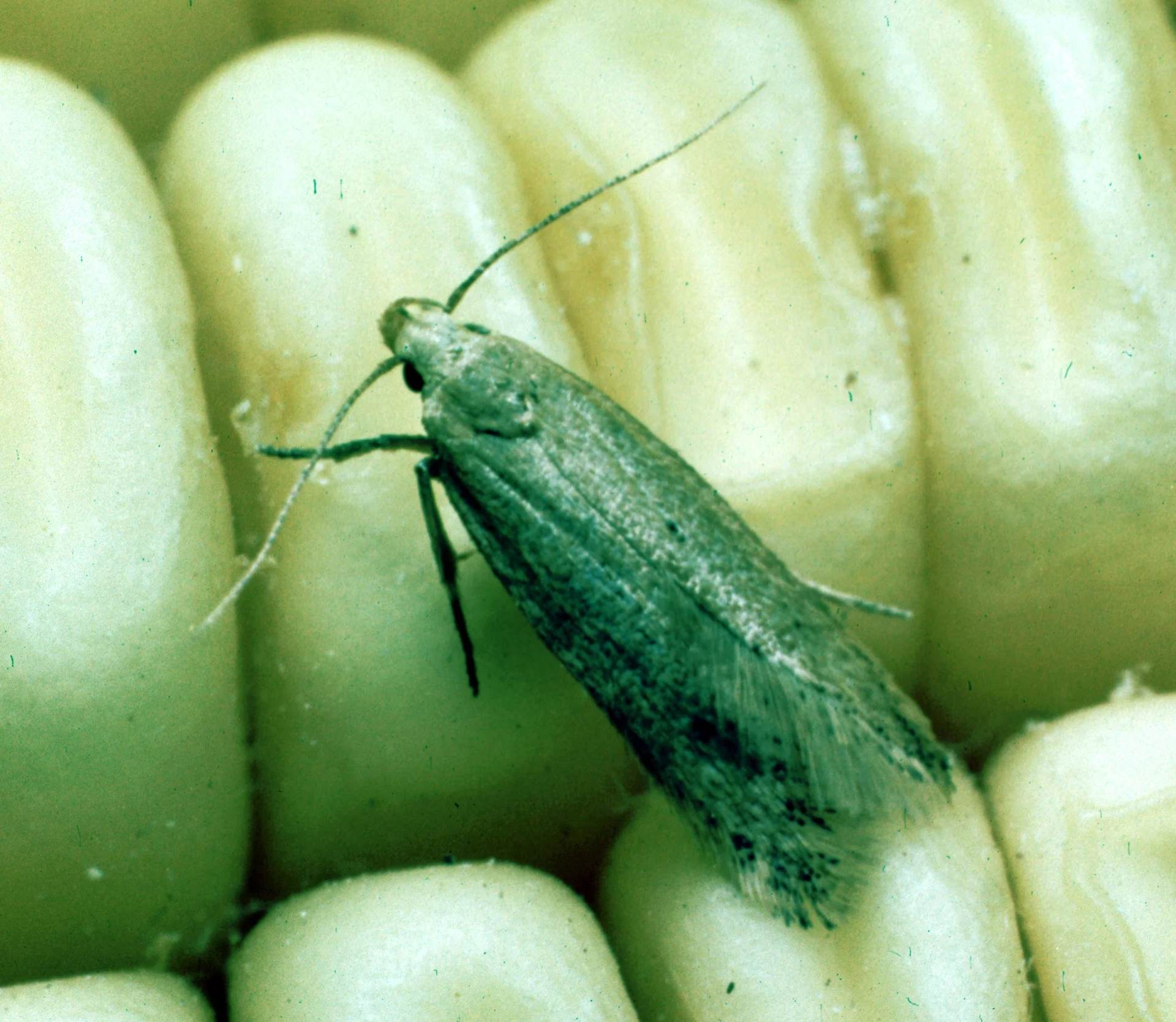
Clemson University - USDA Cooperative Extension Slide Series, Bugwood.org · CC BY 3.0 us 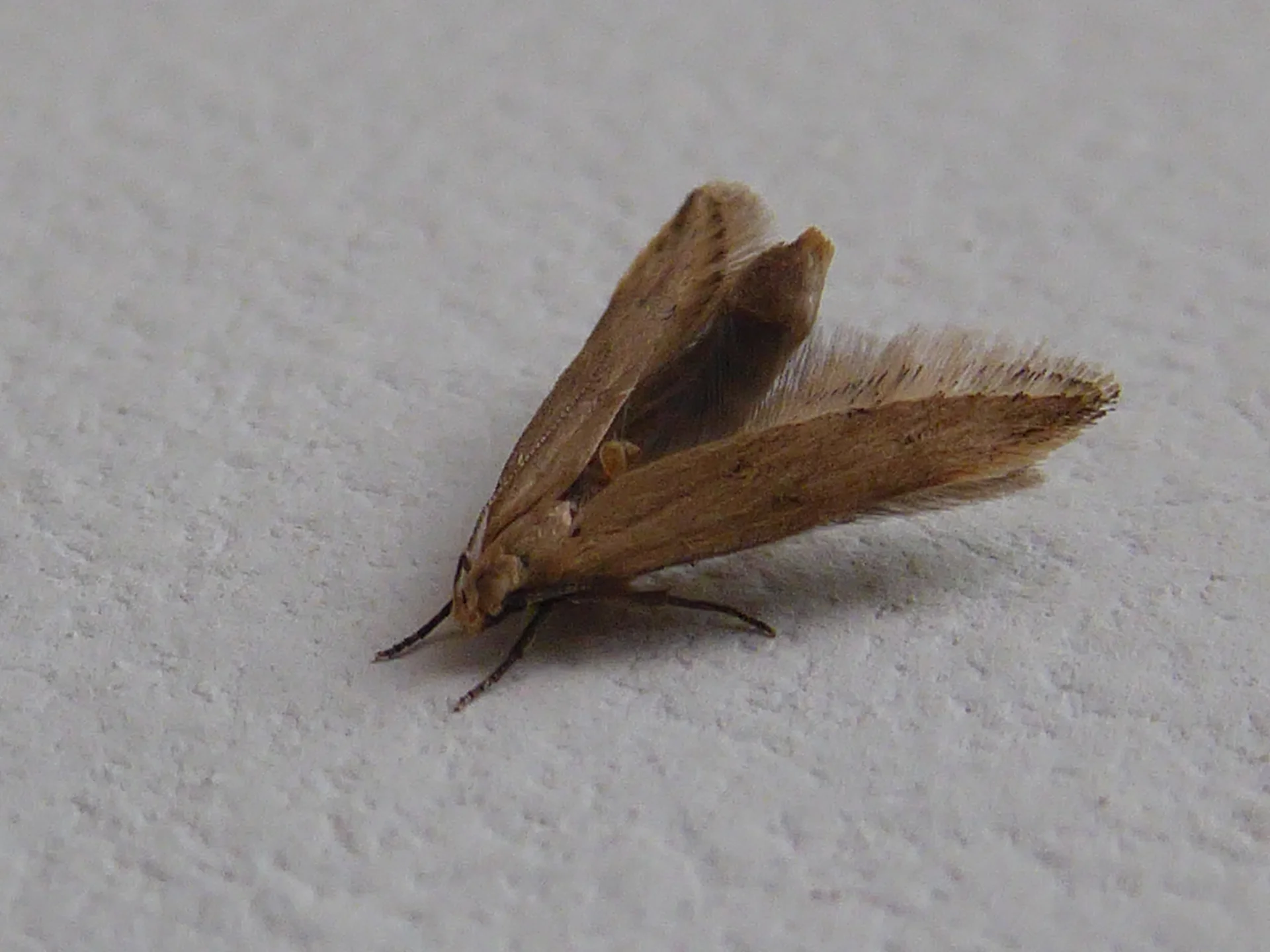
Syrio · CC BY-SA 4.0
Why it matters
This little moth attacks your grain after you have harvested it — in the granary, the sacks, the drum — and can quietly eat up to 40% (nearly half) of the maize, sorghum, rice or wheat you kept to feed your family and to sell. It is so hard to beat because each grub feeds hidden inside a single kernel, where you cannot see it or reach it; it slips in from the field as the crop ripens, then breeds generation after generation in the warm store until the grain is hollow, webbed and musty. Grain it has hollowed out weighs less at market and will not sprout if you save it for seed. Once a store is full of moths it is very hard to clear — so the whole fight is about keeping them out and catching the very first one.
When to act
Any live moths flying in the store, or bored kernels with round exit holes found on inspection.
This guidance is general, compiled from published agronomic references including FAO and CABI. Thresholds and timing shift with your crop, your variety and the season.
In much of the region a spray is simply called mushonga — medicine. But a chemical group you cannot name is one you cannot rotate, and a product you did not write down has no pre-harvest interval you can observe. Mushonga, and other farming words →
The full Angoumois grain moth field guide
Identify it
The first thing you see is the damage
kernels with a neat round hole about the size of a pin-head, often capped by a thin, see-through flap or 'window' of grain skin where the moth pushed its way out. Hold a handful up to the light — the bored grains look empty and papery and feel light. Tip the handful into water and the hollow, moth-eaten grains float while the good, solid grain sinks.
Moths flying up
when you open the store or pour the grain, small straw-coloured (buff) moths flutter up, most of all at dusk; they settle on the grain, the sacks and the walls. In a heavy attack the grain feels warm to your hand, smells musty or mouldy, and carries patches of fine silk webbing.
The moth up close
it is tiny — about the length of a grain of rice — pale yellow-brown, and it folds its wings roof-like along its back. Its back wings are narrow and pointed, with a long fringe of hairs down the edge, like a little feather. The grub is a small white caterpillar you will almost never see, because it lives sealed inside one kernel the whole time it is feeding.
Don't confuse it
the maize or rice weevil also bores holes, but it is a hard, dark beetle with a long snout that crawls — not a moth that flies up. The flour or meal moth spins lots of tangled webbing and feeds on the outside of broken grain and flour; the grain moth instead bores into whole, sound kernels and leaves that clean round hole with the little window-flap.
Scout for it
Start before you even harvest
This moth lays its first eggs out in the field once the crop reaches the late season — grain hard, cobs drying down, ready to pick. So do not leave ripe grain standing in the field or sitting on the cob any longer than you must; get it in, shelled and dried fast. Every extra day of ripe grain in the field gives the moths a head start into your store.
In the store, check every month — and every single time you tip in a new load
Grain can look clean on top and be alive with moths underneath, so never judge by the surface alone.
Take a scoop from several spots and depths
— top, middle and bottom, the corners, and any patch that feels warm — say 5 or more spots. Spread each scoop on a cloth or tray in good light and look right through it for round exit holes, hollow papery kernels and the little window-flaps. Then at dusk, stand and watch the store for moths flying up.
Act on the very first sign — the threshold here is basically zero
Even one live moth flying up, or one kernel with a round exit hole in your samples, means act now. This is not a field pest where you wait for '2 in 10' — in a warm store a few moths become thousands in a matter of weeks, so treat the first moth or first bored grain as your signal to move.
Control it
Prevent it — dry the grain hard first
This moth needs damp grain (about 12% moisture or more) to breed, so dry your grain right down before you store it — until a kernel is so hard it cracks instead of denting when you bite it, or shatters under a stone. Well-dried grain alone starves most of them out, and this drying-and-clean-store routine is the strongest defence you have that needs no chemical, so do it properly.
Store clean grain airtight, in a clean store
Shell the grain off the cob and seal it in hermetic (completely airtight) bags or closed drums — shut so tightly that any insect inside uses up the air and suffocates. Before the new crop goes in, sweep out and burn the old grain leftovers, empty sacks and dust in and around the store, and never mix in carry-over grain from last season — that old grain is exactly where the moths hide and cross over into your new harvest. Keep the store cool and shaded.
Act early with an inert dust
If you do find them, mix a fine dust right through the grain as you bag it — diatomaceous earth (a soft powder of ground fossil shells that scratches the insect's waxy skin so it dries out and dies) or clean wood ash. It is safe for you to handle and does not poison the grain, but still keep the dust out of your eyes and nose while you work it in. In a large bulk store you can also release Trichogramma — a tiny, harmless wasp that kills the moth's eggs before they ever reach the grain.
Only as a last resort, reach for a chemical grain-protectant
If a store is already badly infested, you can mix a registered grain-protectant dust evenly through the grain at exactly the rate on the label, or have a trained, licensed operator fumigate a sealed store with phosphine — phosphine is a deadly gas, so never attempt it yourself. For any grain treatment: cover your skin, nose and eyes, mix in the open air with the wind behind you, keep it well away from children, food, drinking water and animals, and wash yourself well afterwards. Respect the withholding period — the number of days the label says you must wait after treating before the grain is safe to eat or sell. And to stop the moths getting used to the chemical (resistance), rotate to a different chemical group next time instead of using the same product season after season.
If it keeps spreading
empty the store completely, take out and destroy — burn or bury — the badly hollowed, webbed grain so it cannot re-seed the rest, then re-dry and re-treat the sound grain into clean, airtight containers. If a whole batch is already hollow, warm and musty, it is past saving as food or seed — cut your losses: get it away from your good grain and use or sell it quickly at feed value before the moths spread any further.
Catch Angoumois grain moth before it costs you the harvest
This guide is the general answer. Divisi works out yours — the week to scout your own field for Angoumois grain moth, and what to do the day you find it.


Crops it affects
Plan the crops it attacks
-
 When to plant Maize in Mougalaba
 -
 When to plant Rice in Mbama
 -
 When to plant Sorghum in Maracha
 -
 When to plant Wheat in Hammedi
All planting calendars, country by country
Get Insights by email
A short digest of new Divisi articles. No email on quiet weeks.
Frequently asked questions
How do I identify Angoumois grain moth?
The first thing you see is the damage. kernels with a neat round hole about the size of a pin-head, often capped by a thin, see-through flap or 'window' of grain skin where the moth pushed its way out. Hold a handful up to the light — the bored grains look empty and papery and feel light. Tip the handful into water and the hollow, moth-eaten grains float while the good, solid grain sinks.
When should I take action against Angoumois grain moth?
Any live moths flying in the store, or bored kernels with round exit holes found on inspection.
How do I control Angoumois grain moth?
Prevent it — dry the grain hard first. This moth needs damp grain (about 12% moisture or more) to breed, so dry your grain right down before you store it — until a kernel is so hard it cracks instead of denting when you bite it, or shatters under a stone. Well-dried grain alone starves most of them out, and this drying-and-clean-store routine is the strongest defence you have that needs no chemical, so do it properly.
Which crops are attacked by Angoumois grain moth?
Among the crops covered here: Maize, Rice, Sorghum, Wheat.