 Divisi
Jassids (leafhoppers)
· Insect
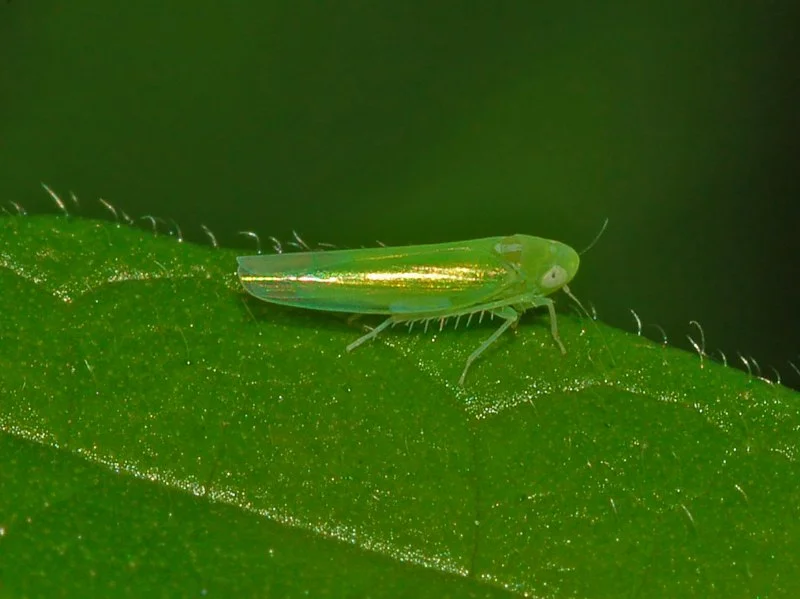
Photo: Hectonichus · CC BY-SA 3.0
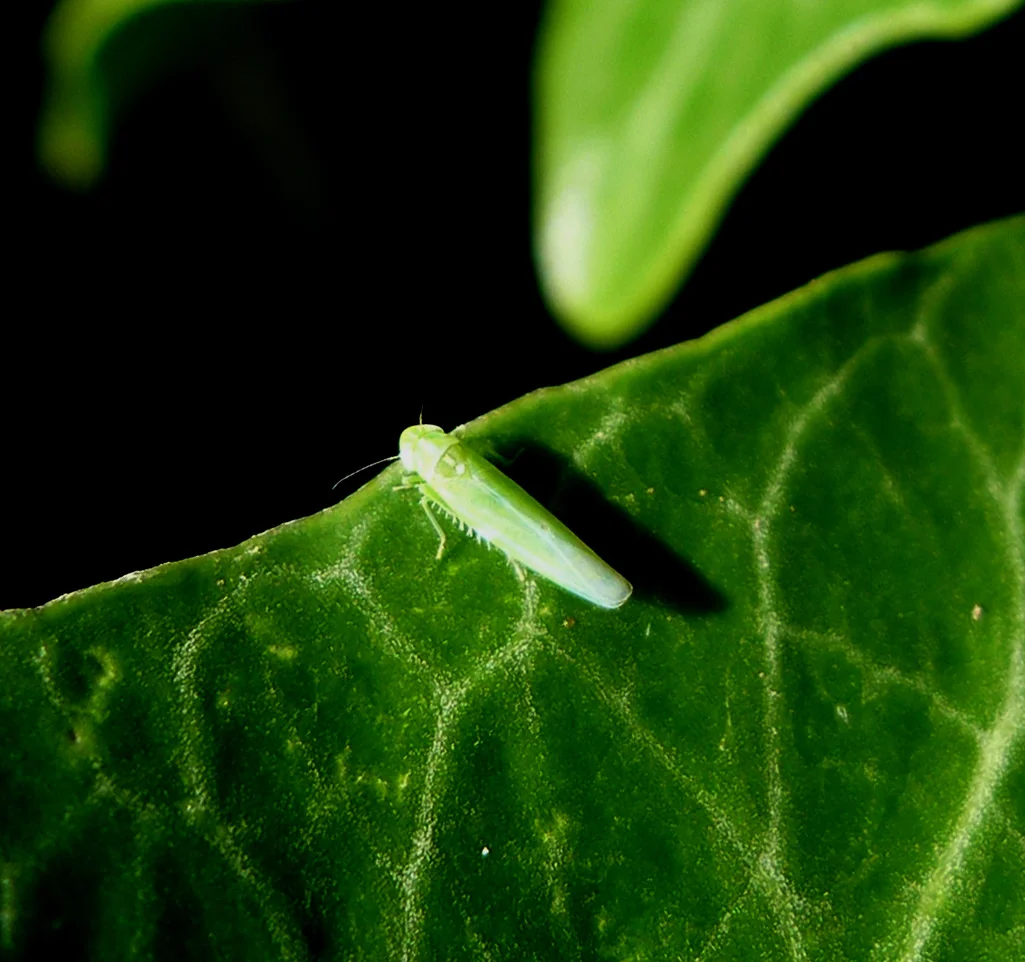
Jassids, or leafhoppers, are small, active, wedge-shaped green insects (Amrasca and Empoasca species) that gather on the underside of leaves and suck the plant's sap. As they feed they inject a toxic saliva that scorches the leaf, causing the tell-tale edge-yellowing, curling and bronzing known as hopperburn. On seedlings and on smooth-leaved susceptible varieties this checks growth badly and can sharply cut the yield of cotton, okra, beans, brinjal (eggplant) and groundnut.
gailhampshire · CC BY 2.0 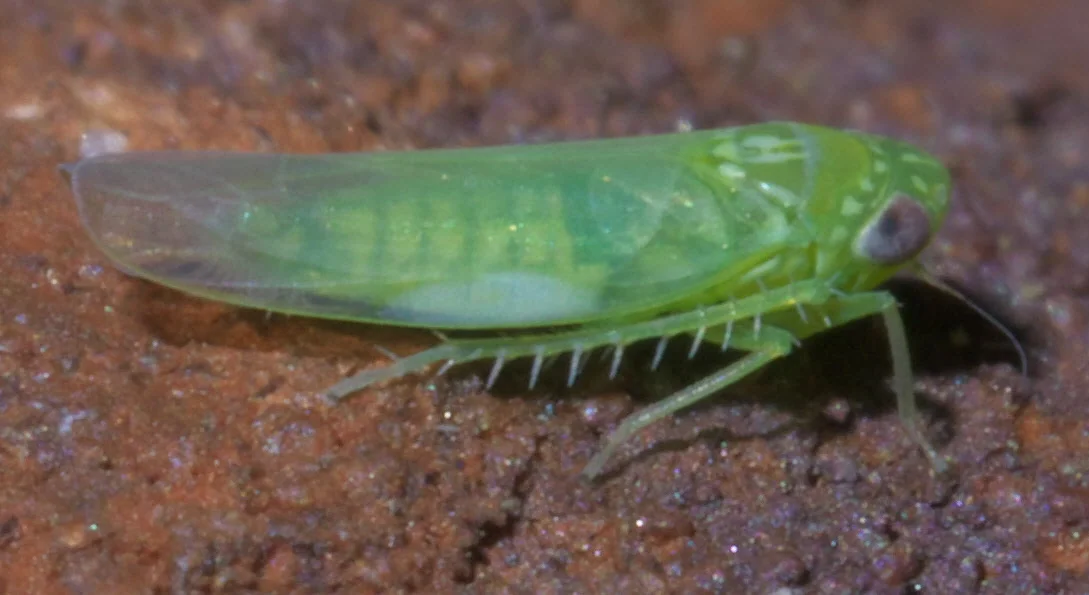
xpda · CC BY-SA 4.0
Why it matters
Jassids are tiny green leafhoppers that sit under your leaves and suck the sap, and as they feed they inject a poison. That poison burns the leaf edges yellow, then red-brown, and curls them under — this is called hopperburn — so the leaf can no longer feed the plant, and a heavy attack on young plants can cost you up to 40% of your crop (nearly half). The hard part is that once a leaf is burned and curled it will not recover, even after the jassids are gone; they hide underneath the leaves and breed fast in warm, dry weather, and hitting them with a strong, kill-everything spray also kills the ladybirds and spiders that were holding them down — so they bounce back worse than before. That is why catching them early, while the plants are still young, matters far more than spraying late.
When to act
About 2 or more nymphs per leaf on the lower canopy, or first leaf-margin yellowing and cupping (hopperburn) on young plants.
This guidance is general, compiled from published agronomic references including FAO and CABI. Thresholds and timing shift with your crop, your variety and the season.
In much of the region a spray is simply called mushonga — medicine. But a chemical group you cannot name is one you cannot rotate, and a product you did not write down has no pre-harvest interval you can observe. Mushonga, and other farming words →
The full Jassids (leafhoppers) field guide
Identify it
The damage — you see this first:
the edges of the leaves turn yellow, then red-brown or bronze, and curl and cup downward. This is called hopperburn. Badly hit leaves go brittle and dry from the rim inward, and young plants stay short and stunted. The give-away is that the burning always starts at the leaf margin (the edge) and works inward — never in the middle of the leaf first.
The pest itself
turn a leaf over and look at the underside. Jassids are tiny, wedge-shaped, pale-green insects, smaller than a grain of rice (the adults are only about 2–3 mm long). The young ones — the nymphs (the wingless babies) — are even smaller and paler. Both give themselves away by how they move: they run sideways, crab-fashion, and the winged adults hop or flit off the instant you disturb the leaf. They shelter on the lower and middle leaves and thrive in warm, dry weather.
Don't confuse it with look-alikes
aphids also sit under the leaf but are slow, soft and pear-shaped, packed together in clusters, and they leave a sticky, shiny film (honeydew) — jassids are fast, green, wedge-shaped and dart sideways. Whiteflies are snow-white and fly up in a little cloud, like tiny moths, when you shake the plant. Plain hunger (a nutrient shortage) or drought yellows the whole leaf, or the strips between the veins, with no insects underneath — whereas hopperburn bites the leaf edge, curls it under, and hides small green hoppers beneath.
Scout for it
When to look
start at the seedling stage and keep checking right through the growing and mid-season stages — young plants are hit the hardest, and jassid numbers build up fastest in warm, dry weather (about 25–35 °C). During a hot, dry spell, check at least twice a week.
How to walk the field
walk a big "W" shape so you cover all four corners and the middle of the field, not just the row nearest the path. Make about 10 stops as you go.
What to check at each stop
turn over the lower and middle leaves and look on the underside for the small, pale-green nymphs, and run your eye along the leaf edges for the first signs of yellowing and downward cupping.
Act now if you find, on average, 2 or more nymphs on a single lower leaf
across your stops — or the first leaf-edge yellowing and downward cupping (hopperburn) on young plants. On tender seedlings, don't even wait for the count: the first patch of hopperburn is your signal to act, because a seedling has the least leaf to spare and is set back the worst.
Control it
Prevent it first — plant a hairy-leaved variety:
in cotton and okra, choose the hairy-leaved (fuzzy) tolerant varieties. The tiny hairs on the leaf physically stop the small jassids from settling, feeding and laying their eggs, so this is your strongest single defence — and it needs no spraying at all. For beans, brinjal (eggplant) and groundnut, ask your extension officer or seed dealer for the tolerant varieties recommended for your area.
Keep the plants tough and the field clean
don't over-use nitrogen fertiliser — lush, soft, dark-green growth is exactly what jassids love; balanced feeding grows a tougher, less attractive plant. And pull out the weeds in and around the field, because weeds and other host plants are where jassids breed and carry over between crops.
Protect the helpers that fight them for you, and act early
ladybird beetles (ladybugs), lacewings, spiders and predatory bugs already in your field eat jassid nymphs and eggs for free. Don't reach for a strong, kill-everything spray the moment you see one hopper — wiping out these natural enemies makes the jassids come back even worse (this is called a resurgence). Let the predators do the early work while you keep scouting, and act firmly only once you hit the threshold.
Spray only as a last resort — and only at threshold:
if you reach 2 or more nymphs per lower leaf, or the first hopperburn on young plants, and the natural enemies clearly aren't coping, use a registered systemic insecticide. Systemic means the chemical travels inside the plant's sap, so it reaches the jassids hiding and sucking under the leaves — unlike a contact spray, which only kills what it directly lands on and mostly misses insects tucked underneath. A seed treatment (insecticide coated onto the seed at planting) is another good option, protecting the plant from the inside through the risky seedling stage. Safety every single time: cover your skin, eyes, nose and mouth; spray in the cool of the morning or evening, with the wind at your back; aim at the leaf underside where they hide; keep it well away from food, drinking water, children and bees; wait out the pre-harvest interval (the number of days the label tells you to leave between spraying and picking) before you harvest; and wash yourself and your clothes afterwards. To stop the jassids becoming resistant (no longer killed by the chemical), rotate to a different chemical group each time rather than using the same product over and over.
If it keeps spreading → do this
don't just re-spray the same product — switch to a different chemical group, and re-check your two biggest levers, variety and nitrogen, for next time. When it's already too late — a young crop burnt brown and stunted right across the field will not recover, because the poison damage is permanent — so protect the healthy plants that remain, cut your losses on the worst patches, and plan next season around a hairy-leaved tolerant variety, balanced feeding, and clean, weed-free field margins.
Catch Jassids (leafhoppers) before it costs you the harvest
This guide is the general answer. Divisi works out yours — the week to scout your own field for Jassids (leafhoppers), and what to do the day you find it.


Crops it affects
Plan the crops it attacks
-
 When to plant Cotton in Kalemie
 -
 When to plant Eggplant in Kiuaba-N'Zoji (Cuaba Nzogo)
 -
 When to plant Groundnut in Songo
 -
 When to plant Okra in Kouroussa
All planting calendars, country by country
Get Insights by email
A short digest of new Divisi articles. No email on quiet weeks.
Frequently asked questions
How do I identify Jassids (leafhoppers)?
The damage — you see this first:. the edges of the leaves turn yellow, then red-brown or bronze, and curl and cup downward. This is called hopperburn. Badly hit leaves go brittle and dry from the rim inward, and young plants stay short and stunted. The give-away is that the burning always starts at the leaf margin (the edge) and works inward — never in the middle of the leaf first.
When should I take action against Jassids (leafhoppers)?
About 2 or more nymphs per leaf on the lower canopy, or first leaf-margin yellowing and cupping (hopperburn) on young plants.
How do I control Jassids (leafhoppers)?
Prevent it first — plant a hairy-leaved variety:. in cotton and okra, choose the hairy-leaved (fuzzy) tolerant varieties. The tiny hairs on the leaf physically stop the small jassids from settling, feeding and laying their eggs, so this is your strongest single defence — and it needs no spraying at all. For beans, brinjal (eggplant) and groundnut, ask your extension officer or seed dealer for the tolerant varieties recommended for your area.
Which crops are attacked by Jassids (leafhoppers)?
Among the crops covered here: Cotton, Eggplant, Groundnut, Okra.