 Divisi
Maize weevil
Sitophilus zeamais · Storage
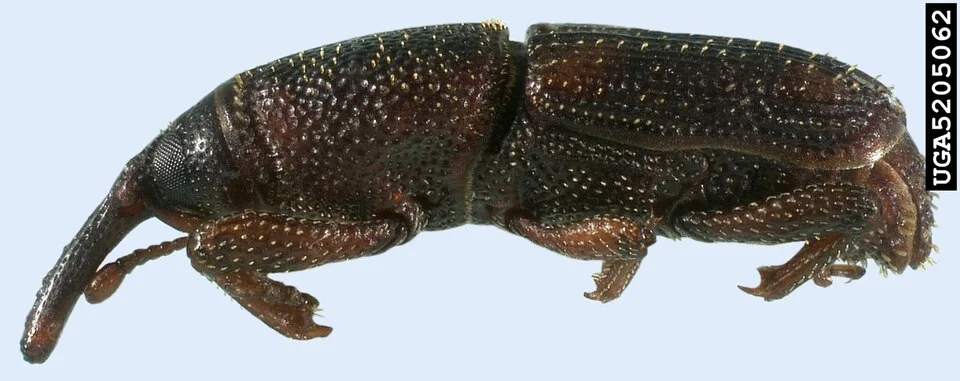
Photo: Natasha Wright, Florida Department of Agriculture and Consumer Services, Bugwood.org · CC BY 3.0 us
The maize weevil (Sitophilus zeamais) is a small reddish-brown, long-snouted beetle — a storage pest that ruins cereals after harvest: maize above all, but also sorghum, rice, wheat and beans. Adults start boring into cobs as the crop dries down in the field, then breed explosively in a warm, humid store. The female drills into a single kernel and lays one egg inside; the grub grows hidden within the grain, eating it hollow before chewing its way out as a new adult — which is why a bag can look whole on top while it is being quietly emptied from within.
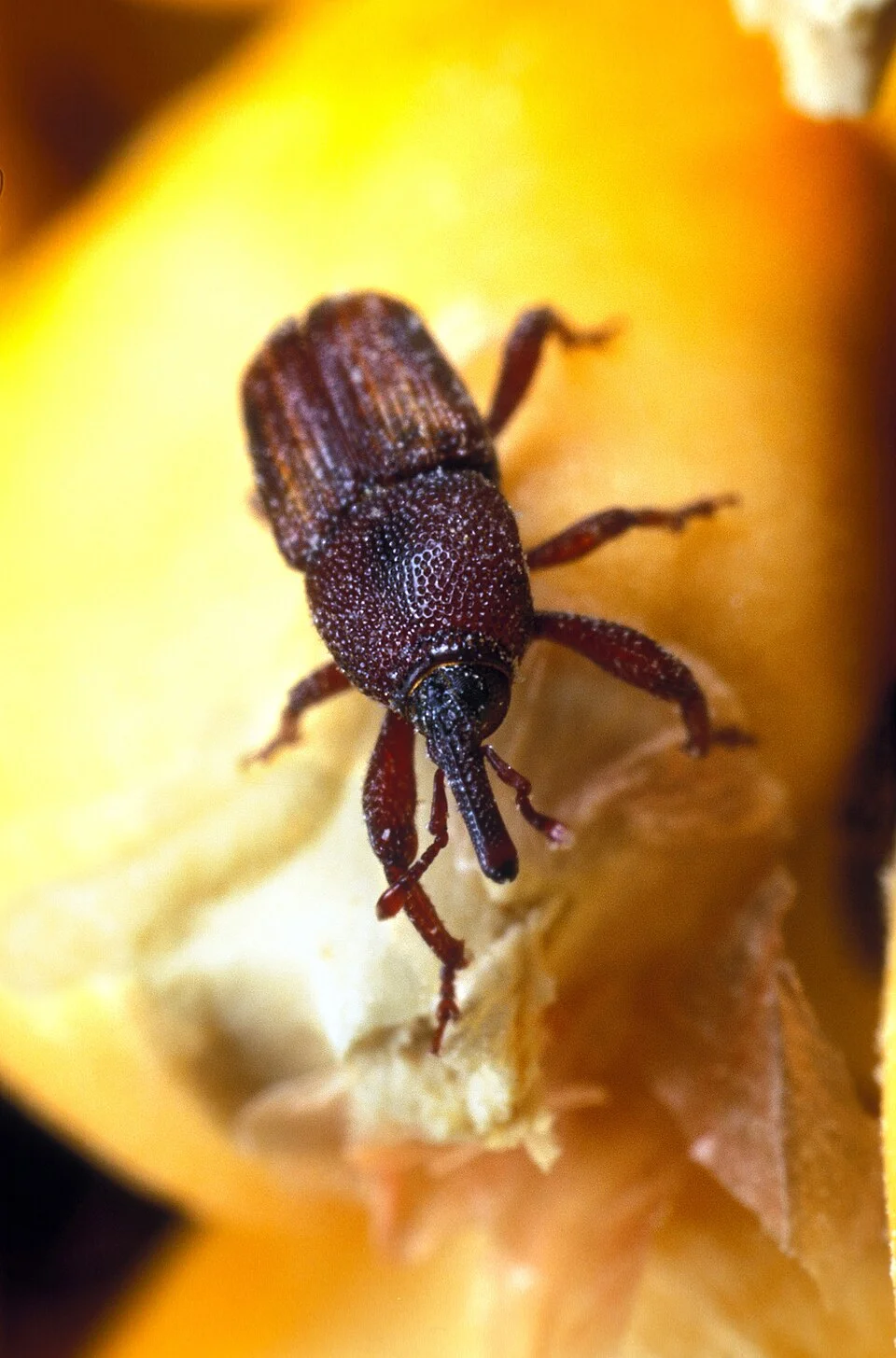
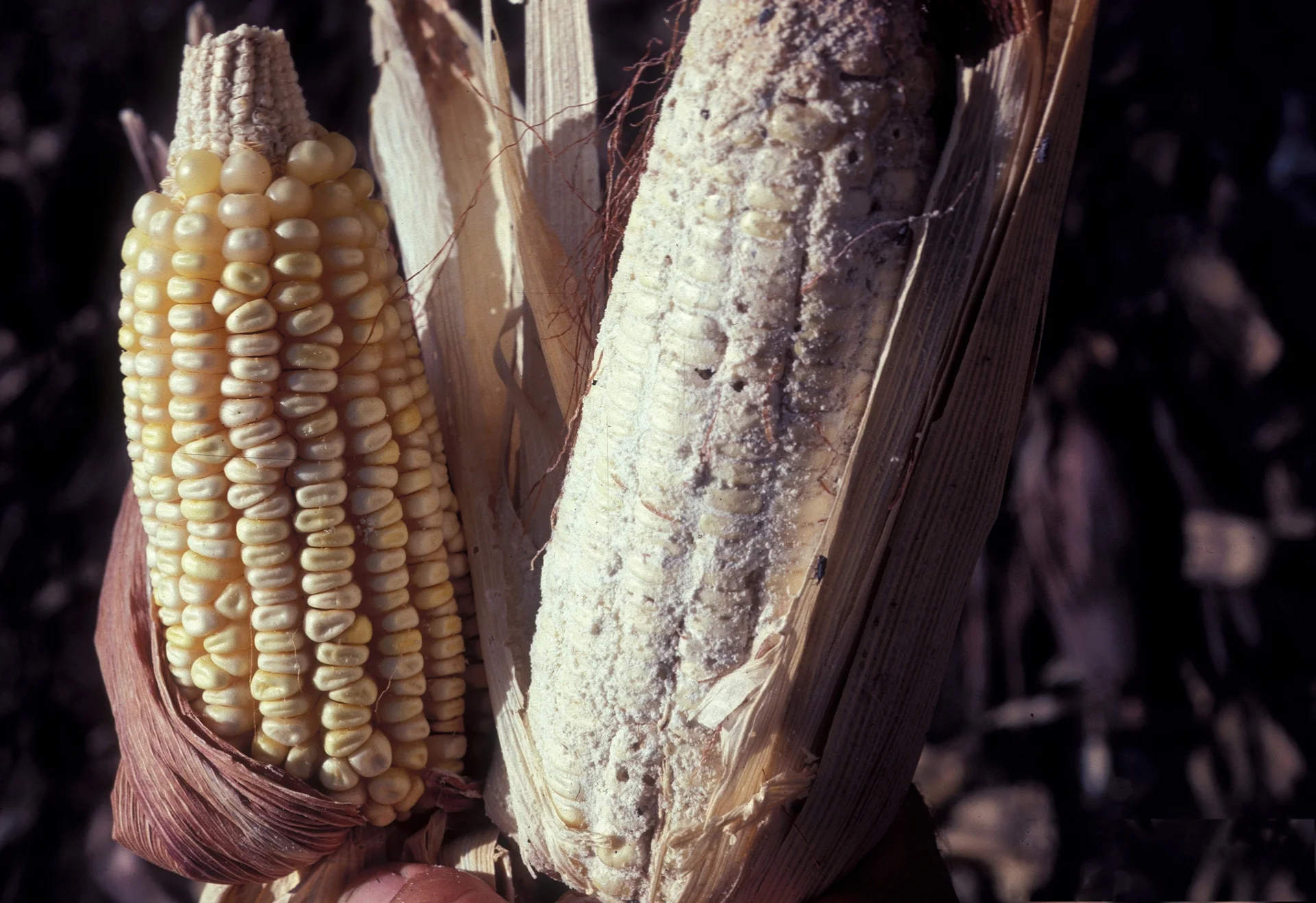
Frank Peairs, Colorado State University, Bugwood.org · CC BY 3.0 us
Why it matters
The maize weevil attacks the grain you have already grown, harvested and are counting on to feed your family and sell for cash — it can hollow out and spoil up to 40% (almost half) of everything you put in the store. The cruel part is that it works hidden inside the kernels: each grub eats a grain from the inside out, so the bag looks fine on top while it is quietly being emptied underneath. Once weevils are breeding inside the grain you cannot reach the grubs to kill them, and they carry over from one season to the next in leftover grain and in the cracks of the store. So the real battle is to stop them getting in — by storing your grain dry, clean and sealed.
When to act
any live weevils or fresh bore holes seen in stored grain during routine checks
This guidance is general, compiled from published agronomic references including FAO and CABI. Thresholds and timing shift with your crop, your variety and the season.
In much of the region a spray is simply called mushonga — medicine. But a chemical group you cannot name is one you cannot rotate, and a product you did not write down has no pre-harvest interval you can observe. Mushonga, and other farming words →
The full maize weevil field guide
Identify it
The damage shows first
Look for small round holes bored in the kernels (like tiny gunshot holes), grain that feels light, hollow and powdery with a flour-like dust gathering in the bag, and kernels that crumble when you press them. Quick test: tip a handful into water — badly eaten grain floats because it is hollow inside. A heavily infested bag also warms up and turns damp, caked and mouldy.
The weevil itself
is a small reddish-brown to almost-black beetle about the size of a grain of rice (about 3 mm long), with a long, down-curved snout like a tiny elephant's trunk and often four faint orange spots on its back. It burrows down into the grain and rises to feed in the warm surface layer; when you disturb the bag it usually 'plays dead' — folds in its legs and lies still — so search slowly and look closely.
Don't confuse it with the larger grain borer
, the other main store beetle: that one is a dark, cylinder-shaped beetle with no snout and its head tucked under a hood, and it grinds grain into large heaps of powder. If your beetle has the long snout and leaves neat round bore-holes rather than piles of flour, it is the maize weevil. (The near-identical rice weevil is stored and treated in exactly the same way, so you don't need to tell those two apart.)
Scout for it
Start watching at the tail of the season
Weevils fly to the crop and begin laying eggs in the cobs while they are still maturing and drying in the field (late season), so grain can reach your store already infested. Dry and shell promptly — but remember the store is where they do their real damage, so that is where you keep checking.
Check the store every month
— and more often in the warm, humid weather weevils breed fastest in (around 25–30°C). Each visit, draw a handful from several spots: the warm top layer, the middle, the bottom, and from different bags or corners — weevils are never spread evenly through the grain, so one clean handful is not proof the whole store is clean.
Examine each sample closely
Sieve it, or pour it onto a pale cloth or plate, and hunt for live weevils crawling, fresh round bore-holes, and fine flour-like dust. Rub a handful in your palm — infested grain feels light and hollow and may crumble — and drop some in water to watch for floaters.
Act on the very first sign: even ONE live weevil, or ONE fresh bore-hole, in a sample means treat now
Stored grain has no safe 'tolerance' number — a few weevils become thousands within weeks, so there is no waiting and seeing. First weevil = act.
Control it
Prevent it — start with grain that is bone-dry and clean (this is your strongest tool)
Harvest as soon as the grain is mature and dry it hard: a kernel should be difficult to dent with a thumbnail and should crack, not squash, when you bite it. Then shell it and winnow out the chaff, dust and broken kernels — weevils breed fastest in damp grain and slip straight into powder and cracked grains.
Clean the store and cut off the carry-over
Empty and scrub the granary or bins, finish all the old grain first, and seal the cracks where weevils hide between seasons — never tip this year's grain on top of last year's. Store shelled grain, not whole cobs, in hermetic (airtight) bags or a sealed metal silo: sealed grain runs out of air, so any weevils inside suffocate and no new ones can get in.
As you fill the store, mix in a natural grain protectant
Stir an inert dust such as diatomaceous earth — a fine, food-safe stone powder that dries the insects out and scratches through their shells — or a trusted local botanical, evenly through the shelled grain. Coat every part of the grain as you bag it, not just the top layer.
Only as a last resort, use a grain-protectant dust
If weevils are already in the grain, admix (mix right through the grain) a storage insecticide dust that is registered for grain — never a field spray or an unknown chemical on food. While mixing, cover your nose, mouth, eyes and skin, work in the open air with the wind at your back, and keep children, animals, food and drinking water well away; wash thoroughly afterwards. Do not eat the grain until the safe-waiting period on the label has passed (the number of days you must wait before treated grain is safe to eat). Each season rotate to a different chemical group so the weevils do not become resistant (stop being killed by it). A large bulk can be fumigated, but only by a trained person under supervision — the fumigant gas can kill people.
If it keeps spreading
move the still-good grain straight into fresh airtight containers to starve the weevils of air, and keep it well away from any heat, damp or heavily-holed bags. Grain that is already hollow, powdery and floating is too far gone to save as food or seed — pull it out and feed it to poultry or livestock, then protect the rest before the weevils reach it. For a large bulk you cannot bring under control, call an extension officer to arrange supervised fumigation.
Catch maize weevil before it costs you the harvest
This guide is the general answer. Divisi works out yours — the week to scout your own field for maize weevil, and what to do the day you find it.


Crops it affects
Plan the crops it attacks
-
 When to plant Maize in Mougalaba
 -
 When to plant Rice in Mbama
 -
 When to plant Sorghum in Maracha
 -
 When to plant Wheat in Hammedi
All planting calendars, country by country
Get Insights by email
A short digest of new Divisi articles. No email on quiet weeks.
Frequently asked questions
How do I identify maize weevil?
The damage shows first. Look for small round holes bored in the kernels (like tiny gunshot holes), grain that feels light, hollow and powdery with a flour-like dust gathering in the bag, and kernels that crumble when you press them. Quick test: tip a handful into water — badly eaten grain floats because it is hollow inside. A heavily infested bag also warms up and turns damp, caked and mouldy.
When should I take action against maize weevil?
any live weevils or fresh bore holes seen in stored grain during routine checks
How do I control maize weevil?
Prevent it — start with grain that is bone-dry and clean (this is your strongest tool). Harvest as soon as the grain is mature and dry it hard: a kernel should be difficult to dent with a thumbnail and should crack, not squash, when you bite it. Then shell it and winnow out the chaff, dust and broken kernels — weevils breed fastest in damp grain and slip straight into powder and cracked grains.
Which crops are attacked by maize weevil?
Among the crops covered here: Maize, Rice, Sorghum, Wheat.