 Divisi
Mealybugs
· Insect
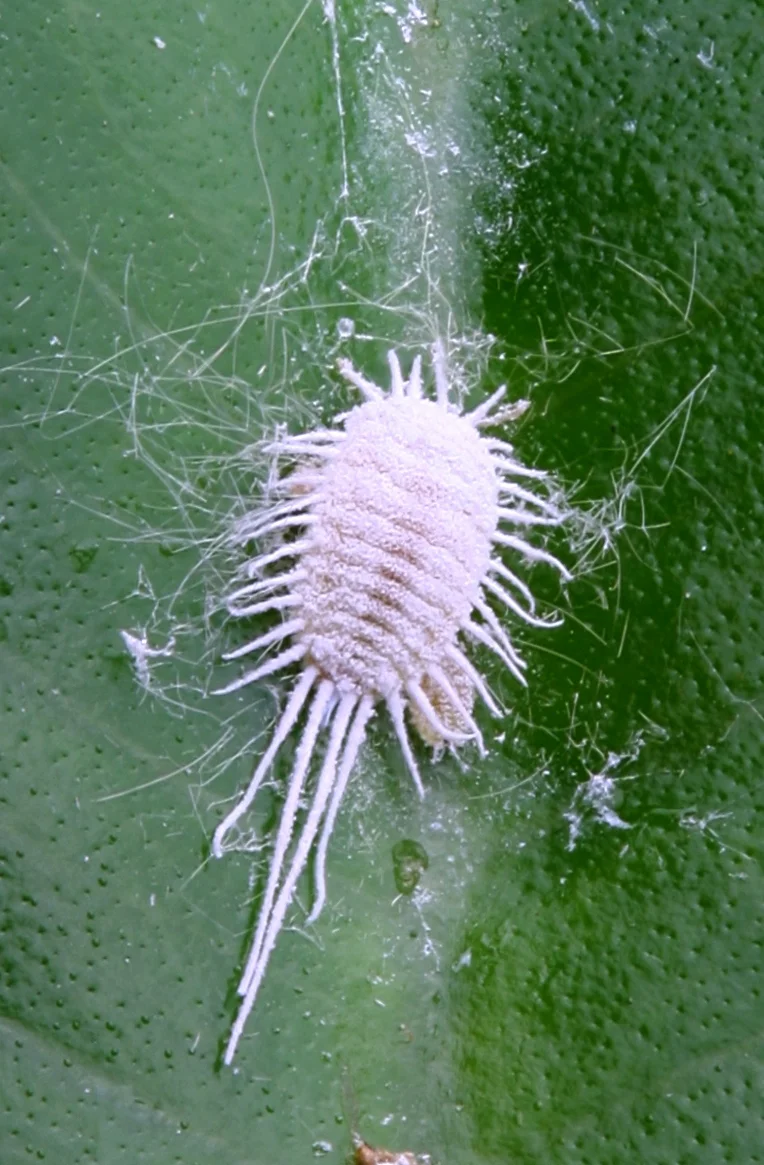
Photo: D-Kuru · CC BY-SA 3.0 at
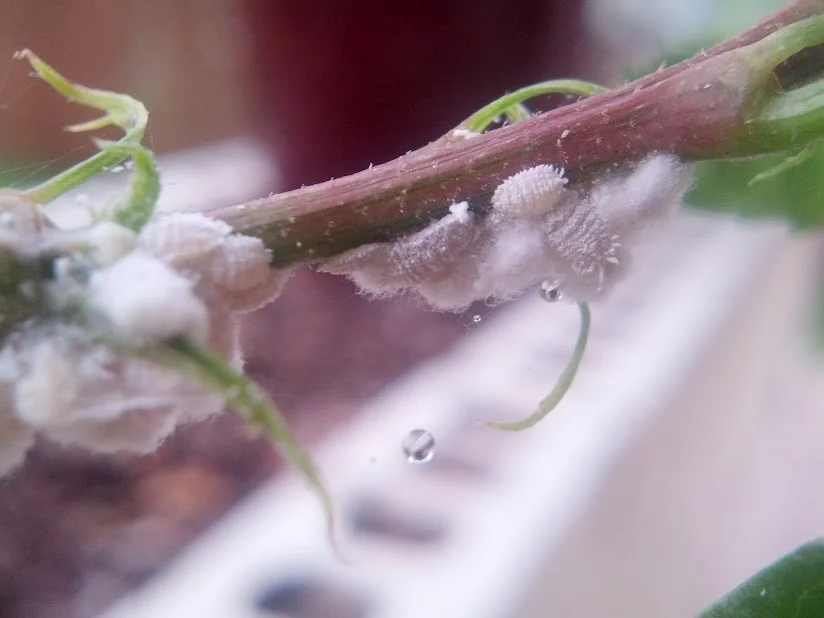
Mealybugs are soft-bodied, sap-sucking insects that hide under a coat of white, mealy wax. Females and their crawling young cluster on the tenderest parts of a plant — growing tips, leaf joints, the underside of leaves and on the fruit — where they suck the sap and dribble a sticky, sugary liquid (honeydew) that turns the leaves black with sooty mould. Ants farm and guard them for that honeydew, carrying them from plant to plant, and they also travel out on cuttings and seedlings and drift on the wind onto clean crops.
Alexlutor · CC BY-SA 3.0 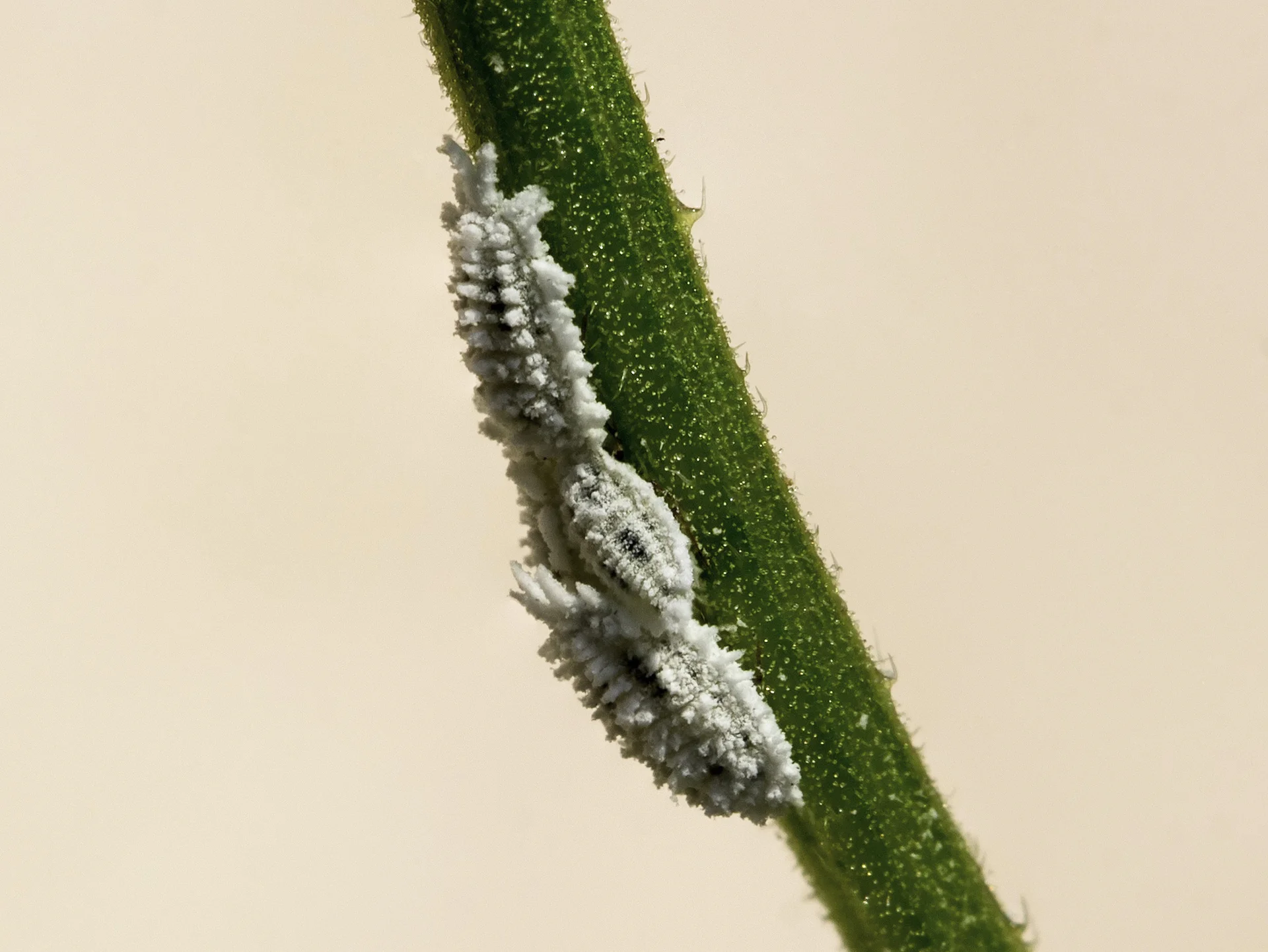
Crisco 1492 · CC BY-SA 4.0
Why it matters
Mealybugs quietly bleed the sap out of your plants and can cost you up to 40% of your harvest on crops like cassava, tomato, citrus, coffee and cotton — stunting the tips, blackening the leaves with sooty mould and spoiling the fruit. Once a colony has settled it is hard to shift: the bugs pack deep into tight leaf joints and growing points under a waxy coat that sheds ordinary sprays, and ants stand guard over them and carry them onto your clean plants. Worse, they ride out on cuttings and seedlings, so an infested field also spoils next season's planting material. Catching them early, while the colonies are small and few, is far easier than fighting them once they blanket the crop.
When to act
Colonies with white waxy masses on more than 1 in 10 plants or on growing points, or ants actively tending colonies.
This guidance is general, compiled from published agronomic references including FAO and CABI. Thresholds and timing shift with your crop, your variety and the season.
In much of the region a spray is simply called mushonga — medicine. But a chemical group you cannot name is one you cannot rotate, and a product you did not write down has no pre-harvest interval you can observe. Mushonga, and other farming words →
The full Mealybugs field guide
Identify it
The damage shows first
the easiest sign to spot is leaves that go shiny and sticky, then turn black with a soot-like film, along with little tufts of white 'cotton wool' wedged into leaf joints, growing tips and on the fruit. Under attack the tips bunch up, curl and yellow, growth stunts, and young leaves and fruit drop early. On cassava the growing tip crowds into a tight, stunted 'bunchy top' shaped like a candlestick.
The bug itself
part the white fluff and you find soft, oval, slow-moving bodies smaller than a grain of rice (about 2–4 mm) under a dusting of white mealy powder, often fringed with short waxy threads around the edge. They cannot fly — they sit still in tight clusters or crawl slowly, tucked into the sheltered inner canopy: leaf axils (the notch where a leaf meets the stem), leaf undersides, growing points, shoots and packed fruit. Squash one and it smears pink, orange or yellow. A line of ants marching up the stem leads you straight to a colony.
Don't confuse it
unlike whiteflies, which puff up in a little white cloud when you shake the plant, mealybugs stay put. Unlike hard, glued-down scale insects, mealybugs are soft and powdery and can crawl. And the black film on the leaves is sooty mould growing on their sweet droppings (honeydew) — it wipes off with your finger and is a sign of the bugs, not a leaf disease to spray with fungicide.
Scout for it
When to look
start scouting once the crop is in active growth (the development stage) and keep it up right through mid- and late-season fruiting — the whole time there are tender tips and fruit on the plant for them to feed on. Look hardest in warm, humid weather (around 22–32°C), and on any day you notice ants running up the stems or blackened, sticky leaves.
How to walk the field
cross it in a big 'W' so you cover all four corners and the middle, not just the row nearest the path. Make about 10 stops, and at each stop check 5 plants up close — around 50 plants in all.
What to check on each plant
part the leaves and look into the leaf joints, growing tips, leaf undersides, along the shoots and in the fruit clusters for white, cottony colonies. Follow any ant trail — it almost always ends at a hidden colony. Search the crowded, shaded inside of the plant, not just the outer leaves.
When to act — 1 in 10 plants:
treat now the moment you find white waxy colonies on more than 1 plant in every 10 you check (a handful of your 50), or on the growing tip of any plant, or with ants actively farming them. Don't wait — one colony on a tip today becomes a covered plant in a few weeks, so hit them while they are still small and few.
Control it
Prevent it — start clean:
never take cuttings or seedlings from an infested plant, and check every one for white fluff before you plant — mealybugs travel on planting material more than any other way. Go easy on nitrogen fertiliser, because the soft, lush growth it forces is exactly what they feed on. And don't crowd your plants: an open, airy canopy leaves them fewer sheltered places to hide.
Cut off the ants
ants defend mealybugs from their natural enemies and ferry them to clean plants, so breaking that partnership is the single most useful thing you can do. Dig out or destroy nearby ant nests and smear a sticky or greasy band around the stem or trunk so ants cannot climb up. With the ants gone, natural predators can move in and do the work for you.
Let the natural enemies do the killing — your strongest tool:
tiny parasitic wasps and the mealybug ladybird hunt down and eat mealybugs, and on cassava they have brought huge outbreaks across Africa under control. Protect them by not spraying broad poisons and by keeping the ants down. One caution: the mealybug ladybird's young look like big, fuzzy white mealybugs — learn to know them so you don't kill your own helper.
Knock down small outbreaks by hand
on just a few plants, wipe the colonies off with a cloth or brush dipped in soapy water, or blast them off with a strong jet of water. Prune out and burn badly infested tips and shoots — don't just drop them in the field, where the bugs crawl straight back onto the crop.
Only if it keeps spreading — a systemic insecticide, as a last resort:
the waxy coat sheds ordinary contact sprays, so reach for a systemic insecticide (one the plant draws up into its sap, so it reaches the bugs even under their wax and deep in the joints), or add a wetting agent (a spreader that breaks the waxy film so the spray can grip). Spot-treat only the colonies and growing tips, never the whole field. Stay safe: cover your skin, eyes, nose and mouth; spray in the cool of the day with the wind at your back; keep it well away from food, water, children and bees; respect the pre-harvest interval (the set number of days you must wait between spraying and picking, so no poison is left on the fruit); and wash yourself and your clothes afterwards. Rotate to a different chemical group each time, so the bugs don't build resistance (stop being killed by it).
If it still keeps spreading — cut your losses:
cut out and burn the worst-hit plants before the colonies overrun the rest of the field, and next season's cuttings with them. Never save seed, cuttings or planting material from an infested field. If a crop is overwhelmed too late to save, pull and burn it, clear away all crop residues and weeds the bugs shelter in, keep the ants down, and start the next season with clean planting material and the predators protected — a clean start beats chasing a lost crop.
Catch Mealybugs before it costs you the harvest
This guide is the general answer. Divisi works out yours — the week to scout your own field for Mealybugs, and what to do the day you find it.


Crops it affects
Plan the crops it attacks


All planting calendars, country by country
Get Insights by email
A short digest of new Divisi articles. No email on quiet weeks.
Frequently asked questions
How do I identify Mealybugs?
The damage shows first. the easiest sign to spot is leaves that go shiny and sticky, then turn black with a soot-like film, along with little tufts of white 'cotton wool' wedged into leaf joints, growing tips and on the fruit. Under attack the tips bunch up, curl and yellow, growth stunts, and young leaves and fruit drop early. On cassava the growing tip crowds into a tight, stunted 'bunchy top' shaped like a candlestick.
When should I take action against Mealybugs?
Colonies with white waxy masses on more than 1 in 10 plants or on growing points, or ants actively tending colonies.
How do I control Mealybugs?
Prevent it — start clean:. never take cuttings or seedlings from an infested plant, and check every one for white fluff before you plant — mealybugs travel on planting material more than any other way. Go easy on nitrogen fertiliser, because the soft, lush growth it forces is exactly what they feed on. And don't crowd your plants: an open, airy canopy leaves them fewer sheltered places to hide.
Which crops are attacked by Mealybugs?
Among the crops covered here: Cassava, Cotton, Tomato.