 Divisi
Potato tuber moth
Phthorimaea operculella · Insect
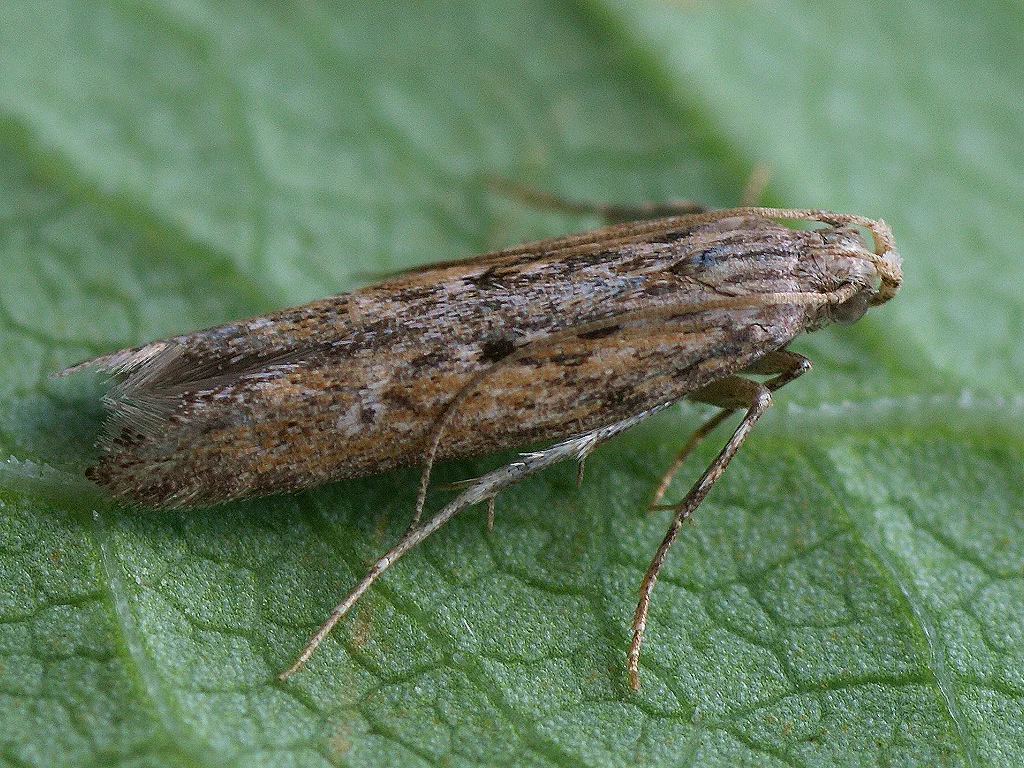
Photo: Ilia Ustyantsev · CC BY-SA 2.0
The potato tuber moth (Phthorimaea operculella) is a small, grey, night-flying moth whose caterpillar — not the moth itself — is the enemy of your potatoes. In the field it mines the leaves and kills shoot tips, but its worst damage is done to the tubers, the part you eat and sell: the caterpillar bores in and leaves silk-lined, droppings-packed tunnels that rot. It loves hot, dry weather that cracks the soil and bares the tubers, and it breeds on and on inside warm stores — so a small field problem can turn into a ruined store. It also attacks tomato and tobacco.
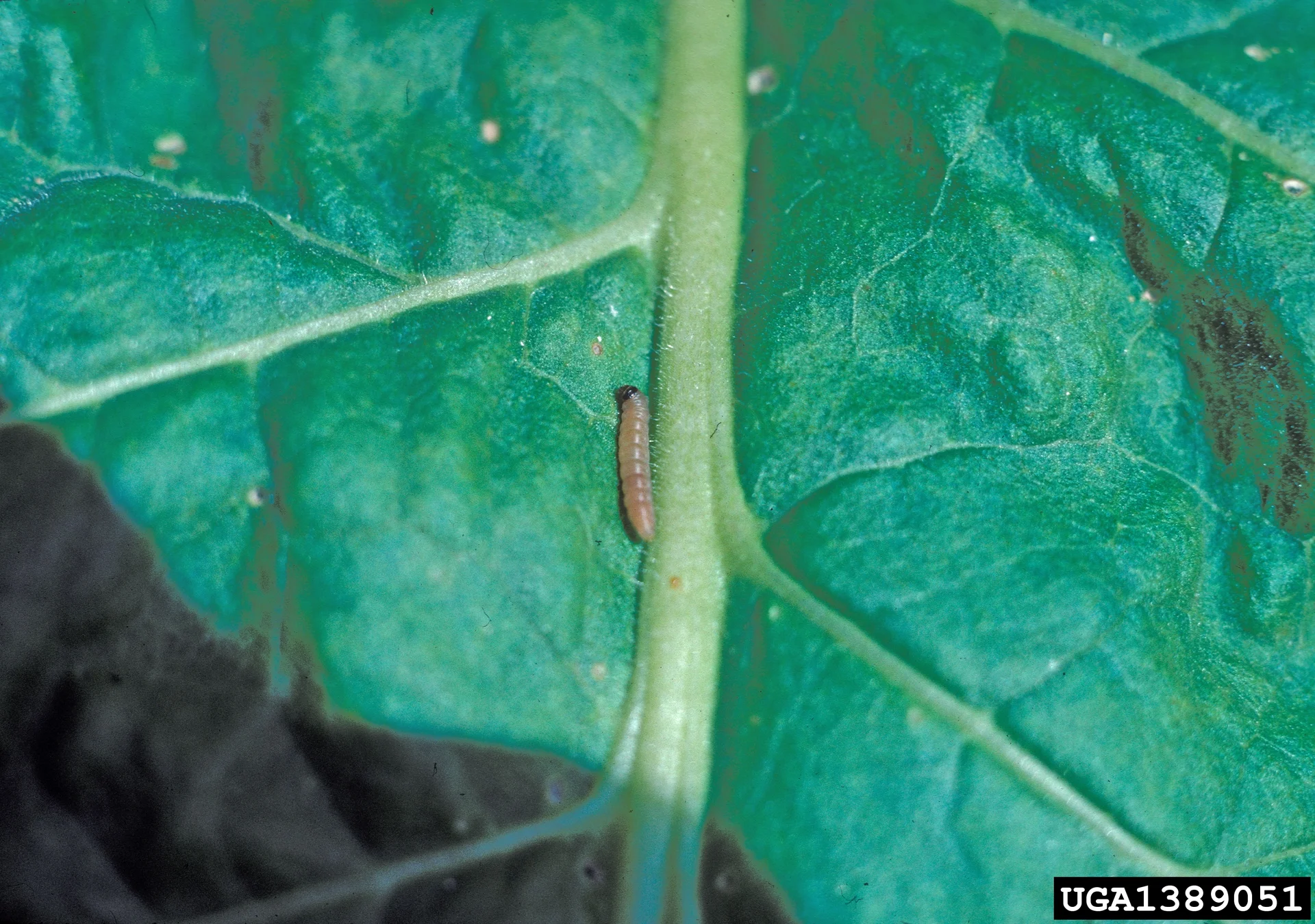
David Jones, University of Georgia, Bugwood.org · CC BY 3.0 us 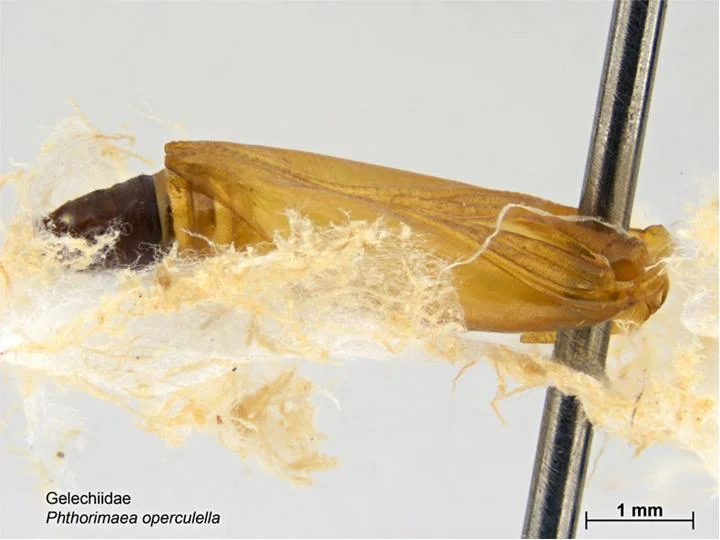
Caroline Harding, MAF · CC BY 3.0 au
Why it matters
This moth goes straight for the part you eat and sell — its caterpillar tunnels right into the tubers. A bad attack can wipe out up to 70% of your potatoes, first in the field and then all over again in the store. The worst part is that the caterpillars follow your harvest indoors and keep breeding in the warm store, so the loss grows week after week, generation after generation, long after the crop is lifted. Once it is loose in a store it is very hard to stop — which is why keeping it out and catching it early matters so much.
When to act
Adults caught in pheromone traps rising, or first mines seen in leaves; in store, any tuber tunnelling
This guidance is general, compiled from published agronomic references including FAO and CABI. Thresholds and timing shift with your crop, your variety and the season.
In much of the region a spray is simply called mushonga — medicine. But a chemical group you cannot name is one you cannot rotate, and a product you did not write down has no pre-harvest interval you can observe. Mushonga, and other farming words →
The full potato tuber moth field guide
Identify it
What you see first (in the leaves)
pale, blotchy blister-like mines wandering through the leaves — patches where the caterpillar has eaten the soft green out from between the two leaf skins, so the leaf looks papery and see-through in blotches. Young shoot tips and stems get bored out, then wilt and die back (farmers call these dead shoots "dead hearts").
The sign that matters most (on the tubers)
tiny entry holes near the "eyes" of the tuber, each with a little heap of dark, crumbly droppings (frass — the caterpillar's droppings). Cut the tuber open and you find silk-lined tunnels packed with frass just under the skin, going soft and rotten. In the store you see the same holes and frass, and sometimes fine webbing between the tubers.
The pest itself
the caterpillar is small — only about 1 cm long, the size of your thumbnail — whitish-green to pinkish with a dark brown head. The adult is a narrow greyish-brown moth about 1 cm long, with a little fringe along the back edge of its wings; by day it hides in soil cracks, under leaves and in the store, and it flies at dusk and after dark.
Don't confuse it
true leaf miners (a different tiny fly grub) make thin, winding, snake-like trails in the leaf and never touch the tubers — the potato tuber moth makes blotchy mines AND kills shoot tips AND tunnels the tubers. Clean, narrow holes in a tuber with no silk and no frass are usually wireworms or a nick from your hoe, not this moth.
Scout for it
When to look
start once the tubers begin to form and swell (mid-season) and check hardest as the crop matures and the leaves start to die back (late season) — especially in hot, dry spells, when the soil cracks open, bares the tubers, and the moth moves in. Then keep checking right through harvest and into the store, because the store is where it does its worst.
Hang a pheromone trap
or two — a small lure that gives off the female moth's scent to pull in the males — and count the catch every morning. Watch the trend, not one day: when the morning counts climb day after day, a flight is building and that is your signal to act. Don't wait for a big number.
Walk a big "W" across the field twice a week
so you cover all four corners and the middle, not just the edge by the path. Make about 5 stops, and at each stop check 10 plants: turn up the leaves for fresh mines, feel for wilted dead shoot tips, and scratch the soil at the base for cracks and any exposed, greening tubers — lift one or two near-surface tubers and check for entry holes and frass.
Your threshold is one
Because this pest only ever multiplies, you act on the first sign, not a big count: 1 mined leaf or 1 dead shoot tip on your walk, a rising trap catch, or — worst of all — 1 tunnelled tuber in the store. Even a single tunnelled tuber indoors means treat the whole store now, before it breeds through the pile.
Control it
Prevent it first — this is your strongest tool:
plant clean, certified seed tubers so you don't carry the moth in from the start. Hill up deeply and re-hill whenever the soil cracks, so every tuber stays buried and out of the moth's reach. Where you can, irrigate to keep the soil from cracking open. Harvest promptly once the crop is mature and never leave lifted tubers lying out in the field — moths lay eggs on exposed tubers within hours. Where you can, rotate potatoes away from last season's plot.
Protect the store — this is where it multiplies:
keep tubers in a cool, insect-proof store with screened windows and doors. Cover the pile with a layer of dry sand or wood ash, or lay strong-smelling repellent leaves (dried lantana or eucalyptus) over it, so the moths cannot reach the tubers to lay. Clear away and destroy every cull pile, infested residue and volunteer (self-sown) potato — sun-dry or bury them well away from the crop and store, because each leftover tuber is a breeding site.
Act early with a safe biological — Bt:
Bt (short for Bacillus thuringiensis, a natural soil bacterium that harms only caterpillars and is safe for you, bees and helpful insects) can be sprayed on the leaves to kill the young caterpillars in the mines, and used to dust or dip seed tubers before you store them. Keep the field's tiny parasitic wasps (natural enemies that kill the moth for free) working for you by avoiding broad poisons, and let the pheromone traps also mass-trap the males to cut down mating.
Chemicals are a last resort — for field flights only:
when mines and trap catches are rising you may spray a recommended insecticide on the growing crop, but never spray tubers meant for eating. Protect yourself: cover your skin, eyes, nose and mouth, spray in the cool of the day with the wind at your back, and keep the spray off food, water, children and bees. Respect the pre-harvest interval (the set number of days you must wait between spraying and lifting the crop, so no poison is left on it), wash yourself and the sprayer well afterwards, and rotate to a different chemical group each spray — this moth builds resistance (stops being killed by a chemical it meets too often) very fast.
If it keeps spreading
get the crop out of danger — harvest as soon as the tubers are mature and move them straight into a clean, cool, protected store, rather than leaving a dying, cracked field as a moth factory. In the store, sort the tubers and pull out every tunnelled one at once, re-cover the rest with fresh sand, ash or Bt dust, and sell or eat them quickly before the moth breeds through the pile. Tubers that are heavily tunnelled and rotting cannot be saved — remove and destroy them so they don't seed the store and next season's crop.
Catch potato tuber moth before it costs you the harvest
This guide is the general answer. Divisi works out yours — the week to scout your own field for potato tuber moth, and what to do the day you find it.


Crops it affects
Plan the crops it attacks
-
 When to plant Irish potato in Ayene
 -
 When to plant Tobacco in Opobo/Nkoro
 -
 When to plant Tomato in Goma
All planting calendars, country by country
Get Insights by email
A short digest of new Divisi articles. No email on quiet weeks.
Frequently asked questions
How do I identify potato tuber moth?
What you see first (in the leaves). pale, blotchy blister-like mines wandering through the leaves — patches where the caterpillar has eaten the soft green out from between the two leaf skins, so the leaf looks papery and see-through in blotches. Young shoot tips and stems get bored out, then wilt and die back (farmers call these dead shoots "dead hearts").
When should I take action against potato tuber moth?
Adults caught in pheromone traps rising, or first mines seen in leaves; in store, any tuber tunnelling
How do I control potato tuber moth?
Prevent it first — this is your strongest tool:. plant clean, certified seed tubers so you don't carry the moth in from the start. Hill up deeply and re-hill whenever the soil cracks, so every tuber stays buried and out of the moth's reach. Where you can, irrigate to keep the soil from cracking open. Harvest promptly once the crop is mature and never leave lifted tubers lying out in the field — moths lay eggs on exposed tubers within hours. Where you can, rotate potatoes away from last season's plot.
Which crops are attacked by potato tuber moth?
Among the crops covered here: Irish potato, Tobacco, Tomato.