 Divisi
Stem and bulb nematode
Ditylenchus dipsaci · Nematode
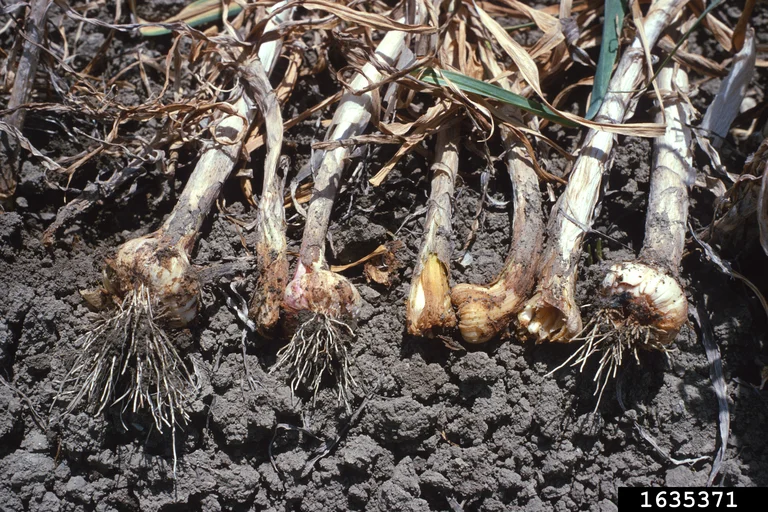
Photo: Ed Kurtz, Bugwood.org · CC BY 3.0
Stem and bulb nematode (Ditylenchus dipsaci) is a microscopic, thread-like worm — thinner than a hair — that lives and breeds inside the stems, bulbs and growing points of onion, garlic, beans, maize and potato. It bloats and twists young plants, turns bulbs soft with brown rings inside, then survives for years as a dry, dormant fuzz called 'eelworm wool' hidden in seed, cloves and crop trash. Because it travels mainly inside the very sets, cloves and seed you plant, this is a fight you win with clean planting material — not a sprayer.
Ed Kurtz, Bugwood.org · CC BY 3.0 
Howard F. Schwartz, Colorado State University, Bugwood.org · CC BY 3.0
Why it matters
Once this tiny worm gets into your onions, garlic or beans it can rot up to 60% of the crop — first in the field, then again in storage, where bulbs that looked fine collapse weeks after you lift them. The hard part is that you cannot see it: it hides inside the seed, sets and cloves you plant, and it can sleep in dry soil and crop trash for years. There is no spray that cures it — plant infested cloves, or into infested land, and you carry the problem into every new season. Winning means starting clean and keeping it out.
When to act
Presence in a field or seed lot; because it is seed- and soil-borne and hard to eradicate, act on clean planting material and rotation rather than a numeric count.
This guidance is general, compiled from published agronomic references including FAO and CABI. Thresholds and timing shift with your crop, your variety and the season.
In much of the region a spray is simply called mushonga — medicine. But a chemical group you cannot name is one you cannot rotate, and a product you did not write down has no pre-harvest interval you can observe. Mushonga, and other farming words →
The full Stem and bulb nematode field guide
Identify it
The first sign — bloat:
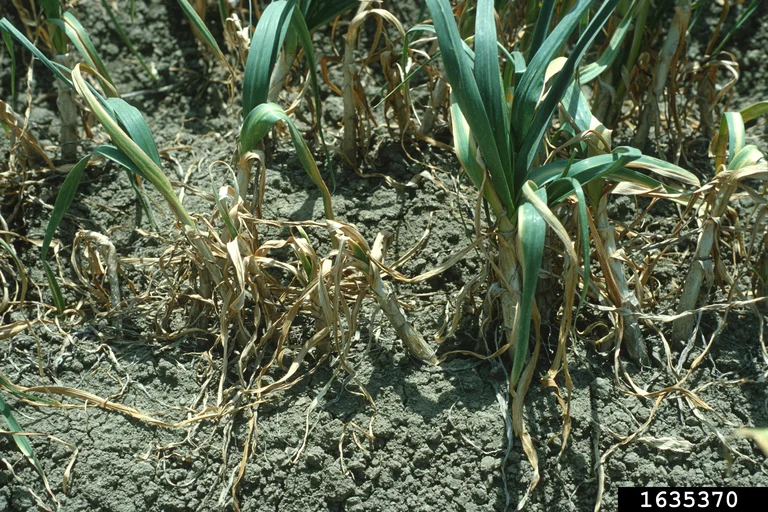
young onion and garlic leaves and stems push up swollen, twisted, bent and stunted, often paler than the healthy plants around them; beans show thick, distorted stems. The plant looks puffed-up and deformed even though nothing has bitten it — it has swollen from the inside.
Inside the bulb
gently squeeze a suspect bulb — an infested one feels soft and spongy, not firm. Cut it across and you'll see brown rings in the flesh with soft, discoloured layers; garlic cloves split, shrink and go brown. Later whole plants yellow and topple, and bulbs that looked healthy at lifting rot in the store.
You will not see the worm itself
A nematode is a worm far thinner than a hair — far too small to see without a microscope. The only trace you may catch is on badly infested, drying plants, where the worms clump into a whitish, cottony fuzz called 'eelworm wool' on the surface of rotting bulbs and stems.
Tell it apart from look-alikes
basal rot and white rot begin at the root-plate at the very bottom of the bulb (white rot also leaves tiny black specks like poppy seeds). This nematode does the opposite — it bloats and twists the tops and leaves brown rings inside a soft bulb. Thrips, drought or weedkiller can curl leaves too, but they don't turn the bulb soft and brown-ringed with no insect anywhere in sight.
Scout for it
Your threshold is presence, not a count
there is no 'safe number' of these worms. Even ONE patch of bloated, twisted plants — or ONE soft bulb with brown rings inside — means it is already here. Treat that single find as your signal to act on clean seed and rotation now, before it spreads further.
Check your planting material FIRST — this is the most important scouting you do
Before planting, sort through every onion set, garlic clove and seed and throw out any that are soft, spongy, browned, split, shrivelled or dusty with 'wool'. The worm rides inside the sets and cloves, so one bad lot plants the trouble straight into clean land.
Scout the young crop at the right time
look hardest from emergence through early growth — the seedling and early-development stages — because that is when the worms invade and when swollen, twisted, stunted seedlings first show. Cool, wet weather and low, damp corners of the field make it worse, so search those spots first.
Walk a big "W" across the field
so you cover all four corners and the middle, not just the edge by the path. Make about 10 stops; at each, pull a few suspect plants and cut open two or three bulbs to check for soft flesh and brown rings. The pest spreads outward from a starting point, so mark and watch any patch of stunted, deformed plants.
At harvest, count as you lift
if about 1 in 5 bulbs is soft with brown rings inside, that block is badly infested — save none of it for seed or replanting, and don't carry its soil on your tools into a clean field.
Control it
Prevent
-
start clean (your single strongest tool):
plant only clean, certified nematode-free seed, onion sets and garlic cloves. 'Certified' means the material was officially tested and declared free of the pest. Never save your own seed, bulbs or cloves from a crop that showed any bloat. This one habit beats everything else, because the worm travels inside the planting material.
-
rotate and rest the land:
don't grow host crops on infested ground for several years (aim for 3–4). Keep onion, garlic, beans, maize and potato — all hosts — out during that rest and grow non-host crops instead, so the worms in the soil starve with nothing to feed on. Pull and burn infested plants and any 'volunteers' (self-sown plants sprouting from last year's leftover bulbs), and weed hard, since many weeds shelter the pest.
-
keep your hygiene tight:
the worm hitches a ride in soil clinging to boots, hoes and tools. Knock and scrub the soil off before you move from an infested block to a clean one, and don't let run-off from an infested field wash into the channels that water clean fields.
Act early — hot-water treat your planting material:
where a recommended protocol exists, soak garlic cloves and onion sets in hot water before planting to kill the worms hidden in the tissue. Follow the recommended temperature and time exactly — too hot cooks the clove, too cool spares the worm — so use a thermometer and treat only clean-looking material.
Chemical is a last resort, not a cure
registered nematicides (poisons made to target nematodes) only partly knock this pest back — they never clear it, and clean seed plus rotation still do the real work. Reach for one only as backup on top of those, never in their place.
If you do use a nematicide, handle it safely
these are among the most poisonous farm chemicals. Cover your skin, eyes, nose and mouth, apply in the cool of the day with the wind at your back, and keep it well away from food, drinking water, children, animals and bees. Respect the pre-harvest interval — the set number of days you must wait between the last treatment and harvest so no poison is left on the food. Wash yourself and your clothes straight after, follow the label, and rotate to a different chemical group each time so the pest never builds resistance.
If it keeps spreading — cut your losses honestly:
you cannot spray this worm out of the soil. If a block stays infested, stop planting host crops there for several years, rest it or rotate it to non-hosts, and start fresh on clean ground with clean certified material. Lift and destroy badly infested plants — burn or bury them far from the field, never compost them beside the crop — and accept the loss on that block rather than carrying the worms across your whole farm on soil, tools and seed.
Catch Stem and bulb nematode before it costs you the harvest
This guide is the general answer. Divisi works out yours — the week to scout your own field for Stem and bulb nematode, and what to do the day you find it.


Crops it affects
Plan the crops it attacks


All planting calendars, country by country
Get Insights by email
A short digest of new Divisi articles. No email on quiet weeks.
Frequently asked questions
How do I identify Stem and bulb nematode?
The first sign — bloat:. young onion and garlic leaves and stems push up swollen, twisted, bent and stunted, often paler than the healthy plants around them; beans show thick, distorted stems. The plant looks puffed-up and deformed even though nothing has bitten it — it has swollen from the inside.
When should I take action against Stem and bulb nematode?
Presence in a field or seed lot; because it is seed- and soil-borne and hard to eradicate, act on clean planting material and rotation rather than a numeric count.
How do I control Stem and bulb nematode?
Prevent — start clean (your single strongest tool):. plant only clean, certified nematode-free seed, onion sets and garlic cloves. 'Certified' means the material was officially tested and declared free of the pest. Never save your own seed, bulbs or cloves from a crop that showed any bloat. This one habit beats everything else, because the worm travels inside the planting material.
Which crops are attacked by Stem and bulb nematode?
Among the crops covered here: Garlic, Maize, Onion.