 Divisi
Striga (witchweed)
Striga hermonthica · Parasitic Weed
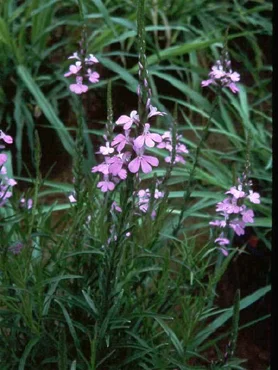
Photo: United States Department of Agriculture: Agricultural Research Service · Public domain
Striga, or witchweed, is a parasitic weed — a weed that lives by driving a sucker into the roots of a cereal crop underground and drinking off its water and food. Its dust-fine seeds lie in wait in the soil and wake up only when they sense the roots of a crop they can feed on; the young parasite then attaches below ground and bleeds the plant for weeks before it ever breaks the surface. Unlike most root parasites it does carry small green leaves and pretty pink-purple flowers, so above ground it looks like an innocent flowering weed standing between the crop rows — but a single plant sheds tens of thousands of seeds that stay alive in the soil for many years, so it builds up fast where maize, sorghum or millet are grown season after season on tired, low-nitrogen ground.
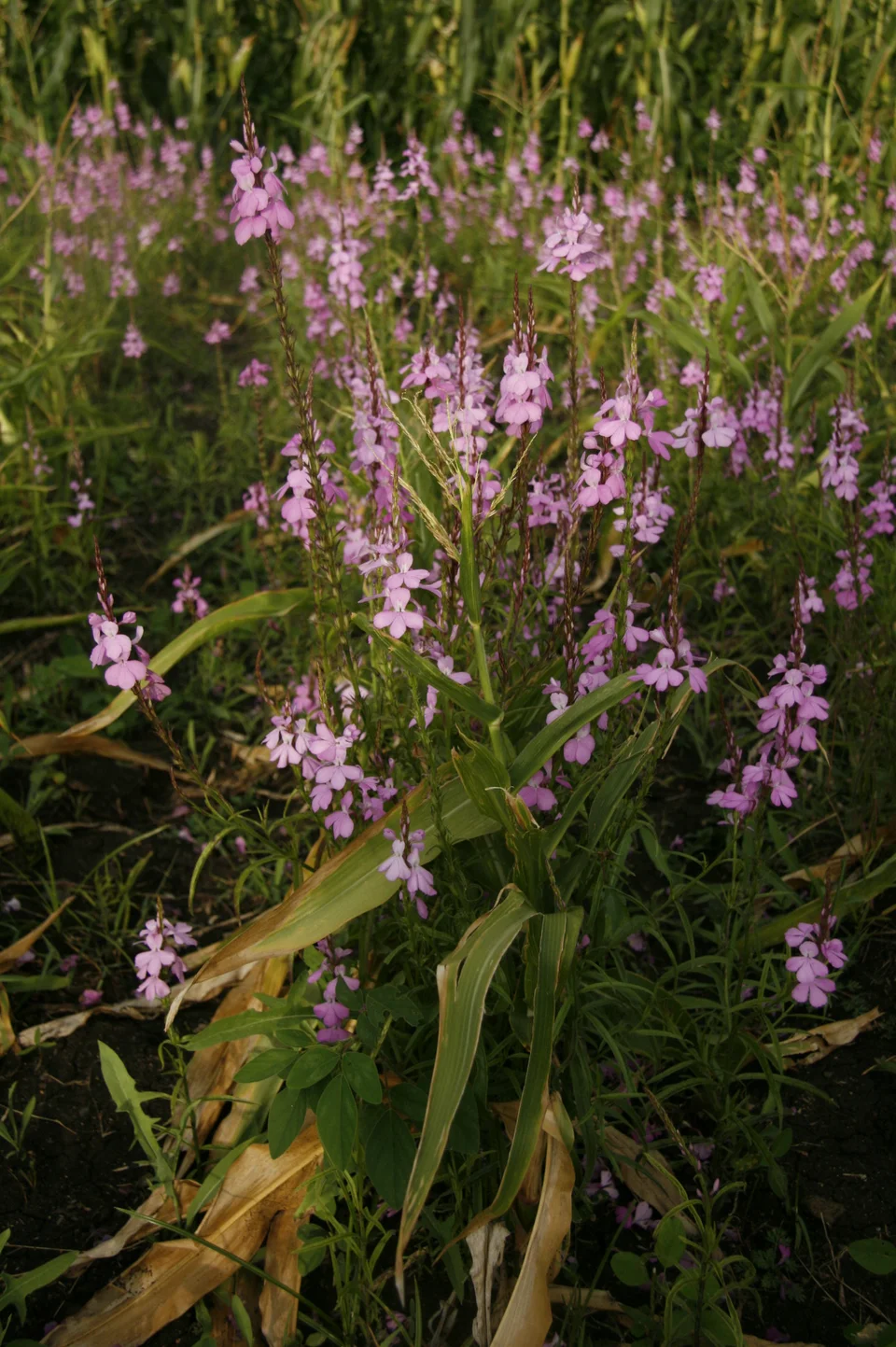
Ethan Bass · CC BY-SA 4.0 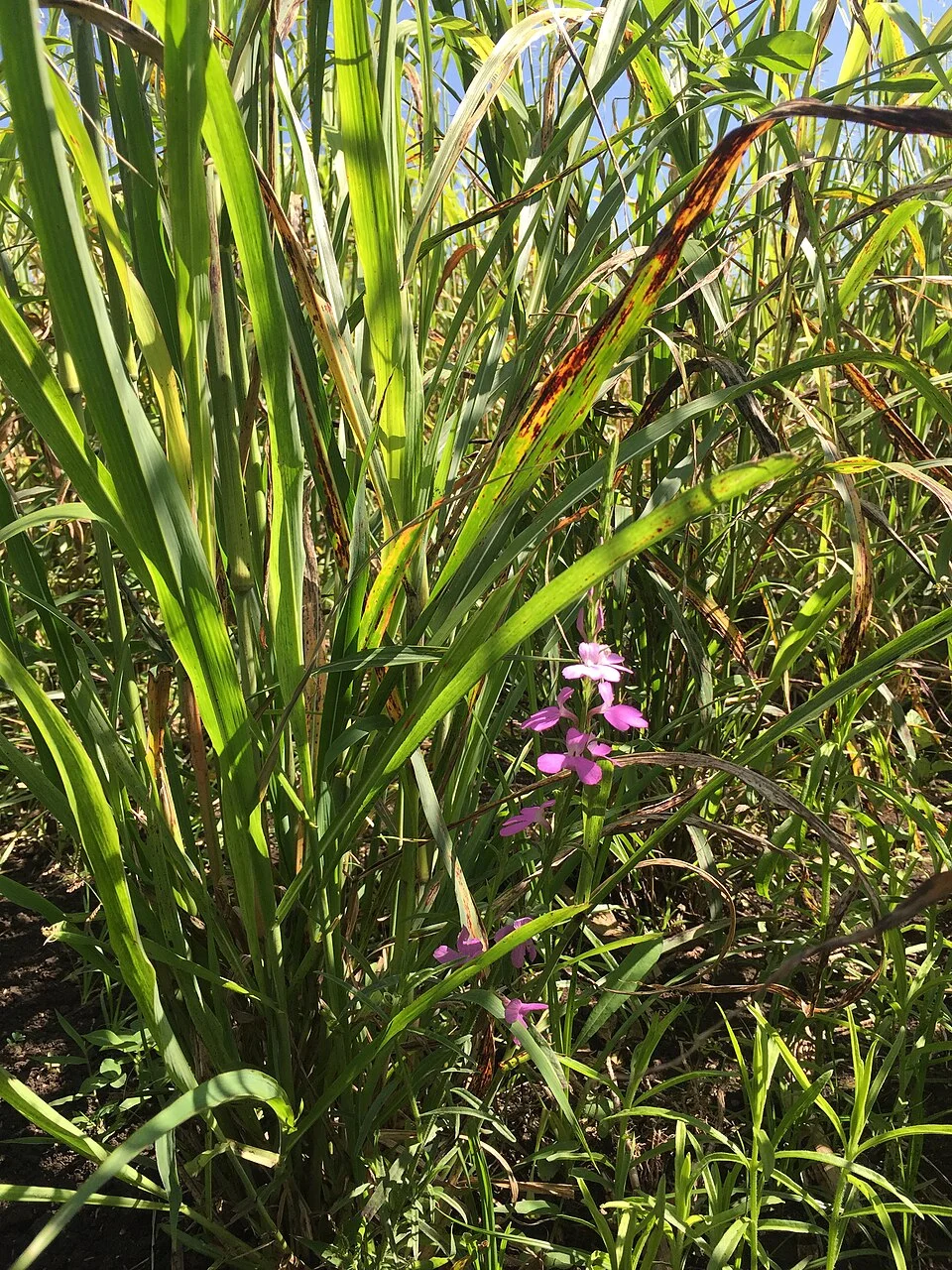
Aneth David (SLU) · CC BY-SA 4.0
Why it matters
Striga is a parasitic weed (a weed that lives off your crop and gives nothing back) — it fixes onto your cereal's roots underground and drinks its water and food, so your plants starve from below while they still look like they are only growing badly. A heavy attack can take up to 80% of your harvest — as much as four of every five plants' worth of grain, and on the worst fields almost the whole crop. The cruel part is that most of the damage is done underground before you ever see the weed — by the time its purple flowers show between the rows, your maize is already robbed. And a single Striga plant left to flower drops tens of thousands of dust-fine seeds that stay alive in your soil for many years, ready to attack every cereal you plant, so beating it is a multi-season job of starving those seeds in the soil, not a one-time spray.
When to act
Any emerged Striga plants, or a known infested field; act pre-emptively because most damage is done underground before the weed emerges, and each plant sheds tens of thousands of long-lived seeds.
This guidance is general, compiled from published agronomic references including FAO and CABI. Thresholds and timing shift with your crop, your variety and the season.
In much of the region a spray is simply called mushonga — medicine. But a chemical group you cannot name is one you cannot rotate, and a product you did not write down has no pre-harvest interval you can observe. Mushonga, and other farming words →
The full Striga (witchweed) field guide
Identify it
The first warning, before you see the weed
a patch of crop that is stunted, yellowing and wilting in the afternoon heat even though the soil is still moist. The parasite is drinking your plant's water and food from below, so the crop shows a thirst and a hunger it should not have — leaves may redden or scorch at the edges, plants stay short, and cobs or heads fill poorly. It shows in spreading patches, worst on the poorest, driest parts of the field. Mark these weak patches — Striga is at work underground right there.
The weed itself
a few weeks after your crop is up, small weeds push up between the rows and close to the crop stems — usually ankle- to knee-high, on a rough, squarish stem, with small, narrow, hairy green leaves and clusters of bright pink-purple flowers about the size of your fingernail (some kinds are red, yellow or white). Unlike most root parasites it is green and leafy above ground, so it looks like a pretty flowering weed — but it comes up right in the crop rows, often in those same stunted patches.
Don't confuse it
Plain hunger or drought yellows the crop but recovers after good rain or a feed of manure — Striga stress does not, and it comes with that purple-flowered weed rooted right against the crop. Ordinary weeds stand in open ground between plants; Striga hugs the crop rows and stem bases. To be sure, gently dig at the base of a stunted plant: you may find pale, swollen Striga shoots — or the young parasite — fixed onto your crop's roots underground before it has even flowered.
Favoured by: warm weather (soil around 25–35°C), dry, drought-stressed conditions, and poor, low-nitrogen soil — and above all by growing cereals on the same land season after season, which builds up a large store of Striga seed in the ground.
Scout for it
When
begin watching from the development stage, about 3–4 weeks after your crop is up and rooting down, and look hardest through mid-season and flowering — that is when Striga attaches below ground and then breaks the surface. It presses hardest in the warm, dry, drought-stressed part of the season and on your poorest soils.
First, hunt the weak patches
Even before any weed shows, walk the field for patches of stunted, yellow, afternoon-wilting plants and mark them — that is where Striga is feeding underground, and where the flowering weed will break through first.
Walk a big "W"
across the field so you cover all four corners and the middle, not just the edge by the path. Make about 10 stops — and add extra stops inside every weak patch you marked.
At each stop, look low and between the rows
for the small purple-flowered weed at the base of the crop stems, and check whether the crop there is stunted or yellow. In a field you know was infested before, pull or dig at the base of a few stunted plants to catch pale Striga shoots gripping the roots before they emerge.
Even ONE Striga plant is too many — the threshold is zero
There is no safe number the way a few caterpillars might be tolerable: a single plant left to flower seeds the soil for years. The moment you find one, act now — pull it before its flowers open. And if the field was infested in past seasons, don't wait to see it — act pre-emptively, because the underground damage is already happening before anything shows.
Map the patches
each time so you know where Striga lives — that tells you where to scout first next season, and which part of the field to weed, work and harvest last so you don't carry its seed onto clean ground.
Control it
Best defence — feed your soil
Striga thrives on poor, hungry, low-nitrogen soil, so a well-fed crop is your strongest weapon: it attacks far fewer plants where the ground is rich. Work in manure or compost, add nitrogen, and a strong, well-fed cereal will shrug off Striga that would cripple a starved one. This is the single most important thing you can do.
Plant resistant or tolerant seed
Where you can get it, sow a cereal variety bred to resist or tolerate Striga — the parasite attaches to far fewer of these plants, or the crop yields on despite it. In some areas you can buy herbicide-resistant maize sown with herbicide-coated seed: the coating kills Striga as it tries to grip the young root, before it can do harm. Ask your seed supplier or extension officer what resistant, tolerant or coated seed is available for your crop.
Starve it out — rotate onto legumes
Striga can only live on cereals — maize, sorghum, millet, upland rice. Move the field for a season or two onto a legume it cannot feed on — cowpea, groundnut or soybean — so the waiting seeds find no cereal host and slowly die. Better still, those legumes feed nitrogen back into the soil, fixing the very hunger that lets Striga thrive, so rotation fights it two ways at once.
Turn the weed against itself — push-pull and trap crops
Plant desmodium (a low, spreading legume) between your cereal rows: its roots make Striga seeds sprout but then give them nothing to grip, so they die — this is called suicidal germination, and it drains the seed out of the soil. Ring the field with a fodder grass such as Napier or Brachiaria. A legume trap (catch) crop — cowpea, groundnut or soybean grown for a season — works the same way, tricking the buried seed into a wasted sprout. Push-pull also feeds the soil and cuts stem borers at the same time.
Pull every plant before it flowers — this is the key action
The moment you see Striga, pull it out and carry it off the field in a bag to burn or bury it — always before the flowers open and set seed. Do not leave it on the ground or throw it on the compost; it can still seed. Pulling will not save this crop (the root damage is already done), but it stops tens of thousands of fresh seeds reaching your soil. Keep coming back every week or two through mid-season, because new plants keep pushing up.
Chemical — herbicide, as a last resort
Only where feeding the soil, rotation and pulling are not enough: use herbicide-coated seed of a herbicide-resistant maize, or spot-spray the emerged Striga with a registered weed-killer (herbicide) — never as your only tool, always alongside building fertility and rotating crops, because the seed in the soil lives on regardless. It is the weakest option here, so let prevention do most of the work. Safety: cover your skin, eyes, nose and mouth; spray in the cool of morning or evening with the wind at your back; keep it off food, drinking water, children, animals and bees; wash yourself and your clothes after; and wait the full pre-harvest interval (the number of days the label tells you to leave between the last spray and harvest so the food is safe to eat). To stop the weed becoming immune (resistance), do not lean on the same chemical every season — rotate to a different weed-killer group.
If it keeps coming back — switch to a multi-season plan
A soil loaded with Striga seed takes years to clean, so change the goal from saving this crop to starving the seed for the next ones. Take the worst fields out of cereals for a season or two, put them under legumes and trap crops to drain the seed and rebuild fertility, keep pulling every shoot before it seeds, and always weed and harvest the infested field last with cleaned tools so you don't carry seed onto clean ground. If this season's crop is already lost, still pull the Striga before it flowers — you may lose this harvest, but you protect the next several seasons of them. Beat it one field, one season at a time.
Catch Striga (witchweed) before it costs you the harvest
This guide is the general answer. Divisi works out yours — the week to scout your own field for Striga (witchweed), and what to do the day you find it.


Crops it affects
Plan the crops it attacks
-
 When to plant Cowpea in Bangui-Rapides
 -
 When to plant Maize in Mougalaba
 -
 When to plant Pearl millet in Kono
 -
 When to plant Sorghum in Maracha
All planting calendars, country by country
Get Insights by email
A short digest of new Divisi articles. No email on quiet weeks.
Frequently asked questions
How do I identify Striga (witchweed)?
The first warning, before you see the weed. a patch of crop that is stunted, yellowing and wilting in the afternoon heat even though the soil is still moist. The parasite is drinking your plant's water and food from below, so the crop shows a thirst and a hunger it should not have — leaves may redden or scorch at the edges, plants stay short, and cobs or heads fill poorly. It shows in spreading patches, worst on the poorest, driest parts of the field. Mark these weak patches — Striga is at work underground right there.
When should I take action against Striga (witchweed)?
Any emerged Striga plants, or a known infested field; act pre-emptively because most damage is done underground before the weed emerges, and each plant sheds tens of thousands of long-lived seeds.
How do I control Striga (witchweed)?
Best defence — feed your soil. Striga thrives on poor, hungry, low-nitrogen soil, so a well-fed crop is your strongest weapon: it attacks far fewer plants where the ground is rich. Work in manure or compost, add nitrogen, and a strong, well-fed cereal will shrug off Striga that would cripple a starved one. This is the single most important thing you can do.
Which crops are attacked by Striga (witchweed)?
Among the crops covered here: Cowpea, Maize, Pearl millet, Sorghum.