 Divisi
Anthracnose
Colletotrichum spp. · Fungal
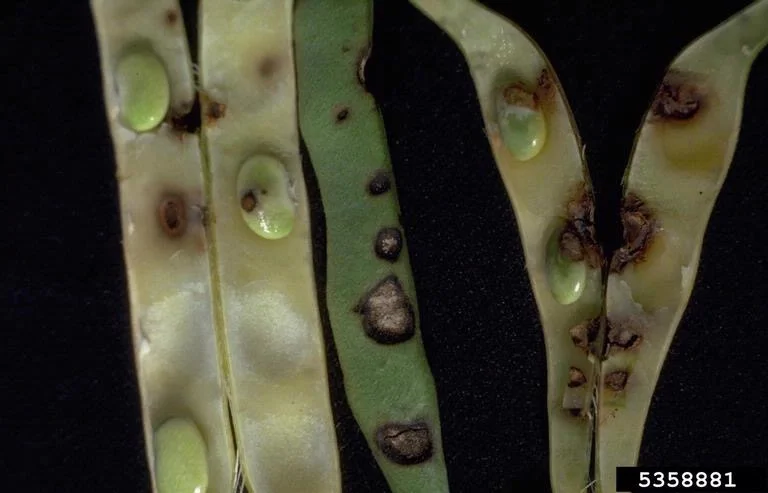
Photo: Howard F. Schwartz, Colorado State University, Bugwood.org · CC BY 3.0 US
Anthracnose is a family of fungal diseases (Colletotrichum species) that rots the leaves, stems, pods and fruit of many smallholder crops — beans, tomato, chili, mango, banana, cassava and sorghum. It carries over from season to season on seed, crop trash and shrivelled 'mummy' fruit, then spreads in the splash of warm rain, thriving in muggy 20–30°C weather when leaves and fruit stay wet for 8 hours or more. Its signature is a dark, sunken spot that oozes pink-to-orange spores — and its cruel trick is hiding inside a fruit that looks clean at harvest, only to rot on the way to market.
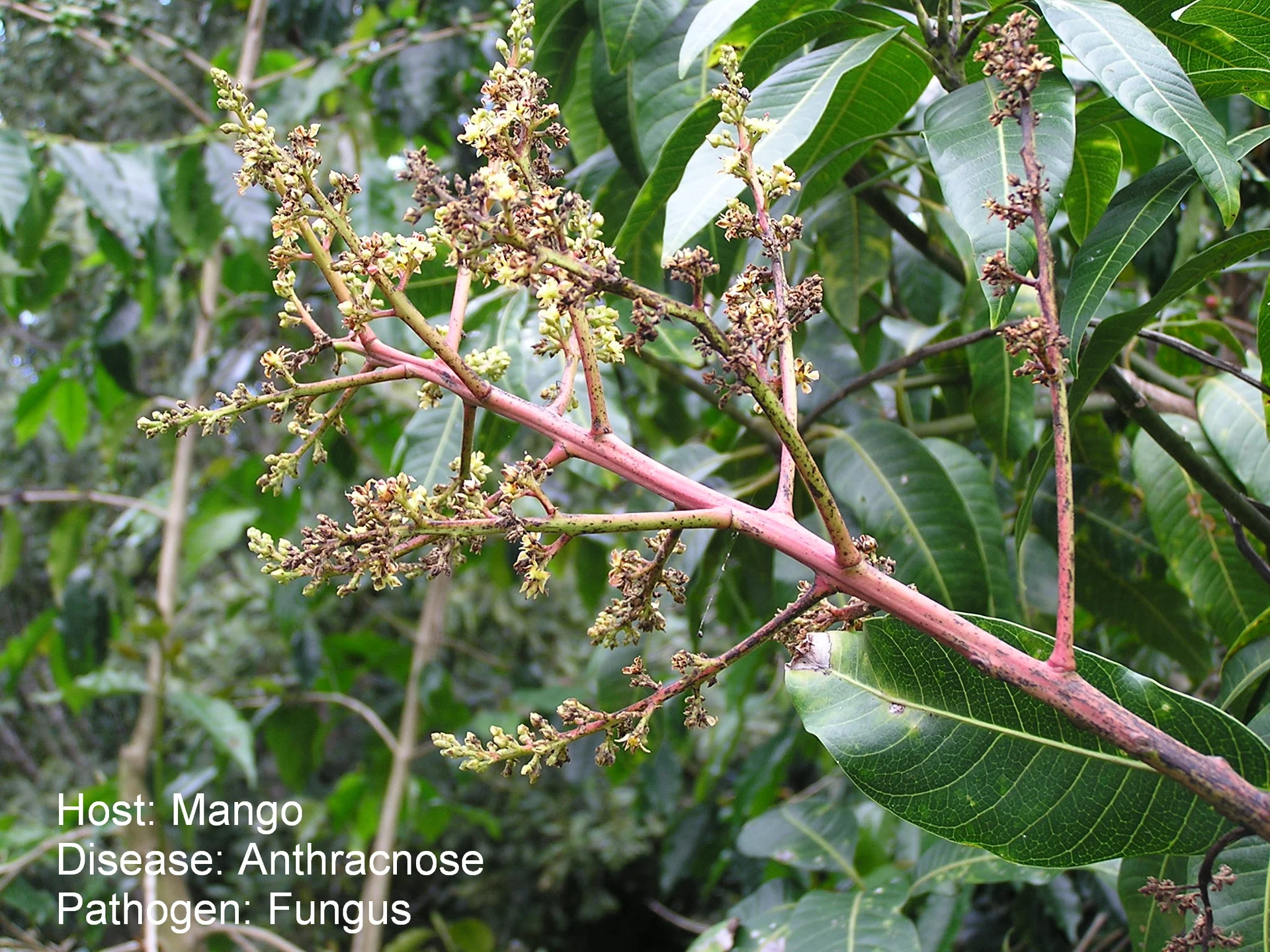
Scot Nelson · CC0 1.0 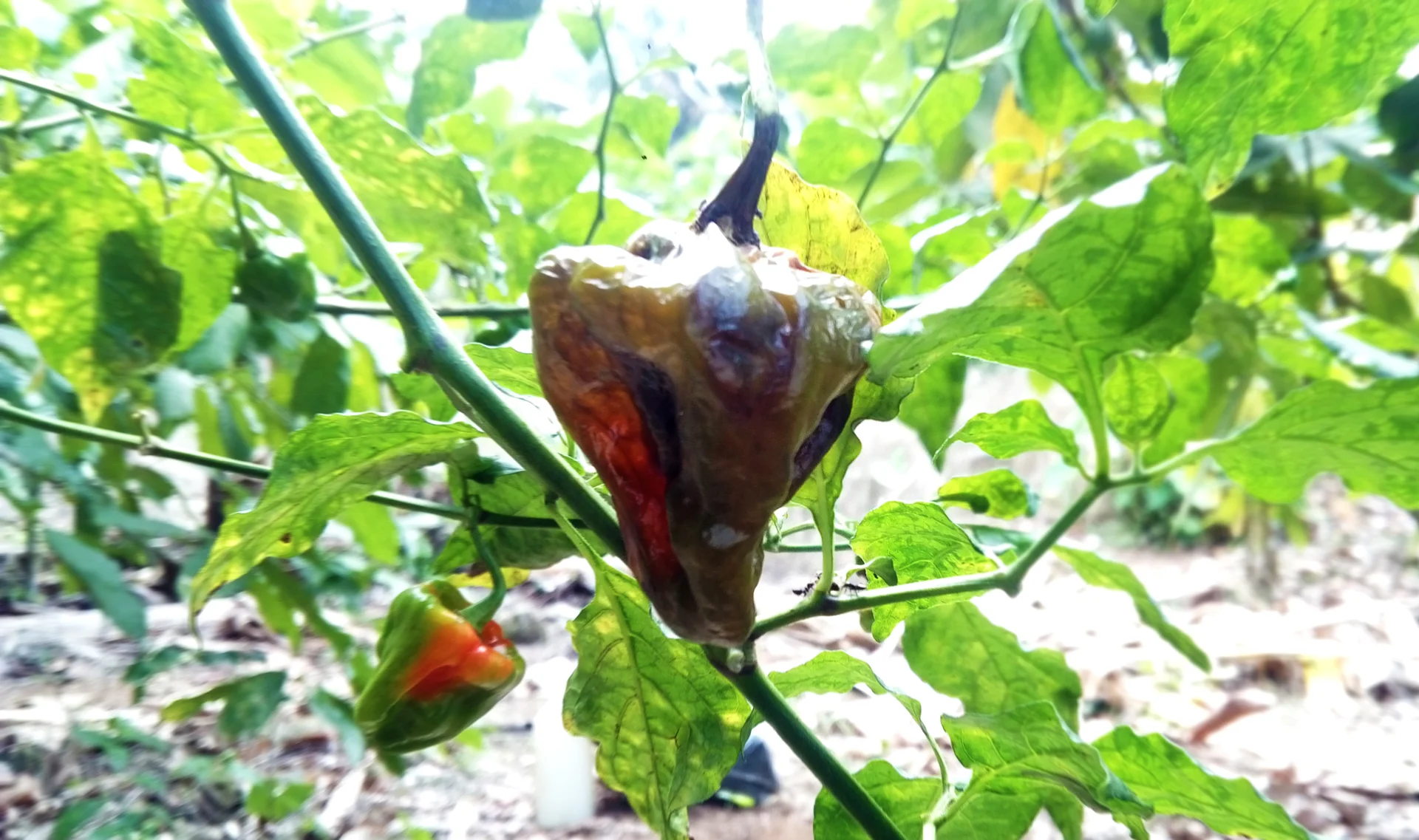
Dannykhorskhi LXII · CC BY-SA 4.0
Why it matters
In a warm, wet season anthracnose can rot away up to 60% of your crop — more than half the pods, fruit or grain you were counting on. The worst of it is hidden: a fruit can look perfect when you pick it, then turn into a sunken rotten patch in the basket on the way to market, so you lose it after all your work. Once the fungus is inside the plant, no spray can cure it — every warm rain just splashes it onto more clean pods and fruit. That is why with anthracnose everything rides on keeping it out and stopping it at the very first spot, not curing it later.
When to act
Protect the crop when sunken dark lesions first appear on stems, pods or fruit in warm wet weather.
This guidance is general, compiled from published agronomic references including FAO and CABI. Thresholds and timing shift with your crop, your variety and the season.
In much of the region a spray is simply called mushonga — medicine. But a chemical group you cannot name is one you cannot rotate, and a product you did not write down has no pre-harvest interval you can observe. Mushonga, and other farming words →
The full Anthracnose field guide
Identify it
What shows first
small dark, water-soaked spots on pods, stems, ripening fruit or leaves that quickly turn sunken — pressed inward like a thumbprint or a dimple — with a dry, darkened, often cracked centre. On beans, look for dark sunken 'eye-spots' on the pods and dark streaks running along the veins on the underside of the leaves.
The give-away sign
in warm, wet weather the centre of a sunken spot oozes a slimy pink-to-orange paste of spores, and older spots show rings inside rings, like a shooting target, dotted with tiny black specks. That pink-orange slime on a sunken, ringed spot is what sets anthracnose apart from every other spot.
On fruit crops (mango, tomato, chili, banana)
black tear-like streaks run down mango leaves and fruit, and ripe fruit develop soft, sunken, rotting patches that spread from the stem-end. The cruel trick: a fruit can look clean when you pick it, then collapse into a sunken rotten patch in the basket days later — the fungus was hiding inside all along, waiting for the fruit to ripen.
Don't confuse it with
insect or hail damage (holes and tears, but no sunken spreading spot and no pink slime); bacterial spot (angular, water-soaked patches with a yellow halo and cloudy-white — not pink — ooze); or fruit sunscald (a pale, papery, dried patch on the sun-facing side only, with no rings and no slime). If a spot is sunken, ringed, and oozes pink-orange in the wet, treat it as anthracnose.
Scout for it
When to look hardest
from the time pods and fruit start to form right through filling and ripening — the crop's most vulnerable months — and step it up every time the weather turns warm and muggy with rain or long dew. The fungus needs about 8 hours of wetness on the plant at 20–30°C to break in, so check within a day of every rain or heavy dew, not on the dry sunny days when it is resting.
How to walk it
cross the field in a big 'W' so you hit all four corners and the middle, making about 10 stops — and go especially into the shady, crowded, low-lying, slow-to-dry patches, because that is where anthracnose starts, not on the breezy dry edge by the path.
What to check at each stop
turn several leaves over to see the veins underneath, and look closely at the pods, stems, and every ripening fruit — including the stem-end of mangoes and the low fruit near the wet soil. Carry a bag so anything suspect goes straight into it, not back onto the ground.
The threshold — act at the very first spot:
one sunken, dark, pink-or-orange-centred spot found on a pod, stem or fruit in warm, wet weather is enough to act now. You do not wait for a percentage or for it to spread — anthracnose has no cure once inside, and every rain splashes that one spot onto dozens of clean pods within days.
Before you even plant,
check your saved seed and last season's leftovers: throw out shrivelled, stained or 'mummified' pods and fruit and any discoloured seed — that trash is exactly where the fungus hides between seasons and how it sneaks into next year's crop.
Control it
Prevent first
-
plant resistant and plant clean:
where you can get one, grow a tolerant or resistant variety — a type bred to shrug the disease off, best available for beans and sorghum; it is your cheapest, most reliable shield. And always start with clean, certified or seed-treated seed and healthy planting material — anthracnose rides into your field on infected seed and last year's trash, so this one choice keeps it out from day one.
-
starve it and dry it out:
rotate away from host crops (beans, tomato, chili, mango, cassava, sorghum, banana) for 2–3 seasons so old infected debris rots away before you plant them again. After harvest, gather and burn or bury all mummified fruit, old pods and crop trash. Space and prune plants for airflow so leaves and fruit dry quickly, and water the soil, not the leaves — avoid overhead irrigation, because the fungus needs long wetness and travels in splashing water.
Act early — remove it and don't carry it:
the moment spots appear, cut out and bag infected pods, fruit, shoots and cankered stems and carry them off the field (never drop them on the ground). Do not work or harvest the crop while it is wet — your hands, tools and legs smear the sticky spores from plant to plant. Pick ripening fruit promptly and gently — bruises let the fungus in — and never pack a spotted fruit in with clean ones.
Last resort — a protectant spray (mancozeb):
if wet weather keeps coming and you have found those first lesions, protect the clean growth with a mancozeb fungicide. Know what it does: mancozeb is a protectant (contact) fungicide — it lays a shield on the surface to block new infections but cannot cure a spot already there. So it only pays off if you start at the very first spots and re-spray the new growth and after every rain, at the interval printed on the label.
Spray safely, every time
cover your skin, eyes, nose and mouth; spray in the cool, calm part of the day with the wind at your back; keep spray off food, drinking water, children and bees; and respect the pre-harvest interval — the minimum number of days the label tells you to wait between the last spray and picking, so no poison is left on the food you eat or sell. Wash yourself and your clothes afterwards, and don't lean on one product forever — rotate to a different chemical group whenever you add another fungicide, so the fungus never gets used to it.
If it keeps spreading — cut your losses cleanly:
when lesions keep multiplying through the pods and fruit despite protection, accept that no spray will cure what is already infected. Harvest everything still clean early, before the next rain; sort ruthlessly — sell or eat the sound fruit and cull the spotted ones (they rot fast and infect the rest in the basket). On badly hit ground, cut and clear the whole crop and all its debris, and never save seed from it. Next season come back clean: resistant variety, treated seed, and a 2–3 season rotation.
Catch Anthracnose before it costs you the harvest
This guide is the general answer. Divisi works out yours — the week to scout your own field for Anthracnose, and what to do the day you find it.


Crops it affects
Plan the crops it attacks
-
 When to plant Cassava in Banalia
 -
 When to plant Common bean in Dilolo
 -
 When to plant Mango in South Imenti
 -
 When to plant Sorghum in Maracha
 -
 When to plant Tomato in Goma
All planting calendars, country by country
Get Insights by email
A short digest of new Divisi articles. No email on quiet weeks.
Frequently asked questions
How do I identify Anthracnose?
What shows first. small dark, water-soaked spots on pods, stems, ripening fruit or leaves that quickly turn sunken — pressed inward like a thumbprint or a dimple — with a dry, darkened, often cracked centre. On beans, look for dark sunken 'eye-spots' on the pods and dark streaks running along the veins on the underside of the leaves.
When should I take action against Anthracnose?
Protect the crop when sunken dark lesions first appear on stems, pods or fruit in warm wet weather.
How do I control Anthracnose?
Prevent first — plant resistant and plant clean:. where you can get one, grow a tolerant or resistant variety — a type bred to shrug the disease off, best available for beans and sorghum; it is your cheapest, most reliable shield. And always start with clean, certified or seed-treated seed and healthy planting material — anthracnose rides into your field on infected seed and last year's trash, so this one choice keeps it out from day one.
Which crops are attacked by Anthracnose?
Among the crops covered here: Cassava, Common bean, Mango, Sorghum, Tomato.