 Divisi
Late blight
Phytophthora infestans · Fungal
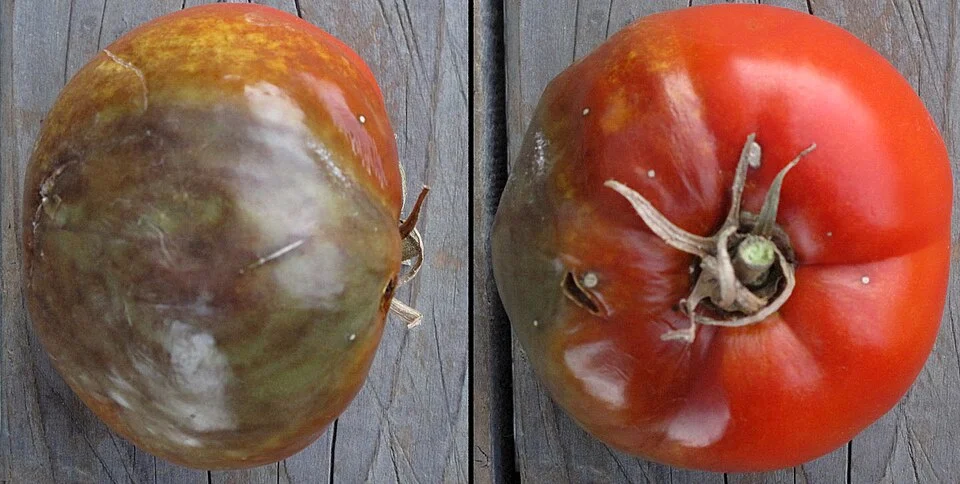
Photo: Downtowngal · CC BY-SA 3.0
Late blight is a fast-moving water mould (an oomycete, a fungus-like organism) that attacks potato and tomato. Its spores ride on wind and splashing rain in cool, wet weather and can turn a green field black in a matter of days. It rots potato tubers in the ground and in the store as well, so the loss follows you home after harvest.
Howard F. Schwartz, Colorado State University · CC BY 3.0 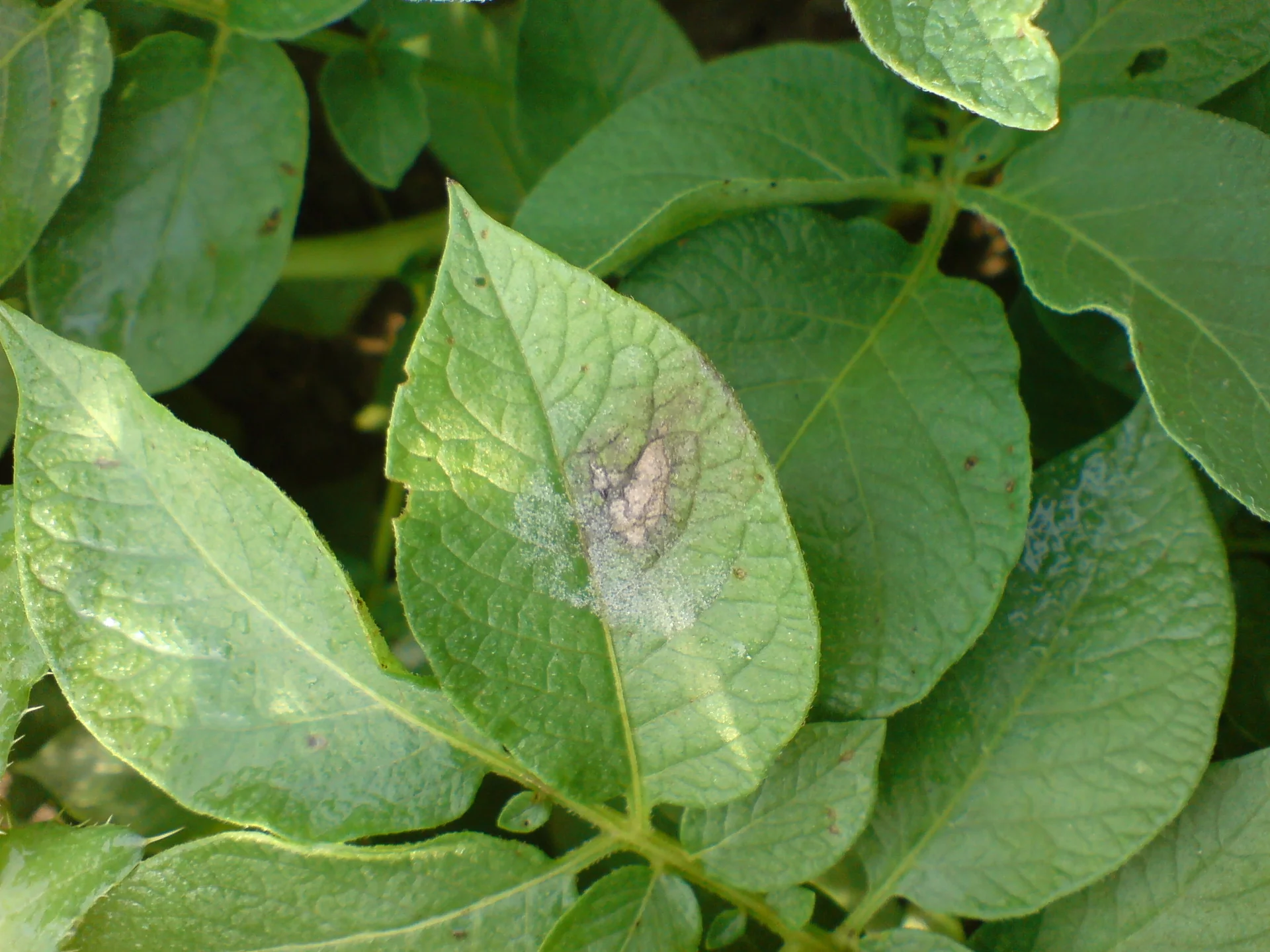
Björn Andersson (SLU) · CC BY-SA 4.0
Why it matters
Late blight is the disease that once caused famine, and it can still take up to 8 in every 10 plants (80% of your crop) once it takes hold. It moves shockingly fast — a healthy-looking field can collapse into black, rotting stems within a week of cool, wet weather. It is so hard to stop because the spores blow in on the wind and wash down in the rain from a single sick plant, and by the time you see the blotches the mould is already spreading unseen. Worse, it follows the potatoes into the ground and rots the tubers in store, so a crop that looked saved can still be lost.
When to act
first water-soaked lesions seen, or cool wet weather forecast to persist; spray protectant before symptoms in high-risk conditions
This guidance is general, compiled from published agronomic references including FAO and CABI. Thresholds and timing shift with your crop, your variety and the season.
In much of the region a spray is simply called mushonga — medicine. But a chemical group you cannot name is one you cannot rotate, and a product you did not write down has no pre-harvest interval you can observe. Mushonga, and other farming words →
The full Late blight field guide
Identify it
The first thing you see
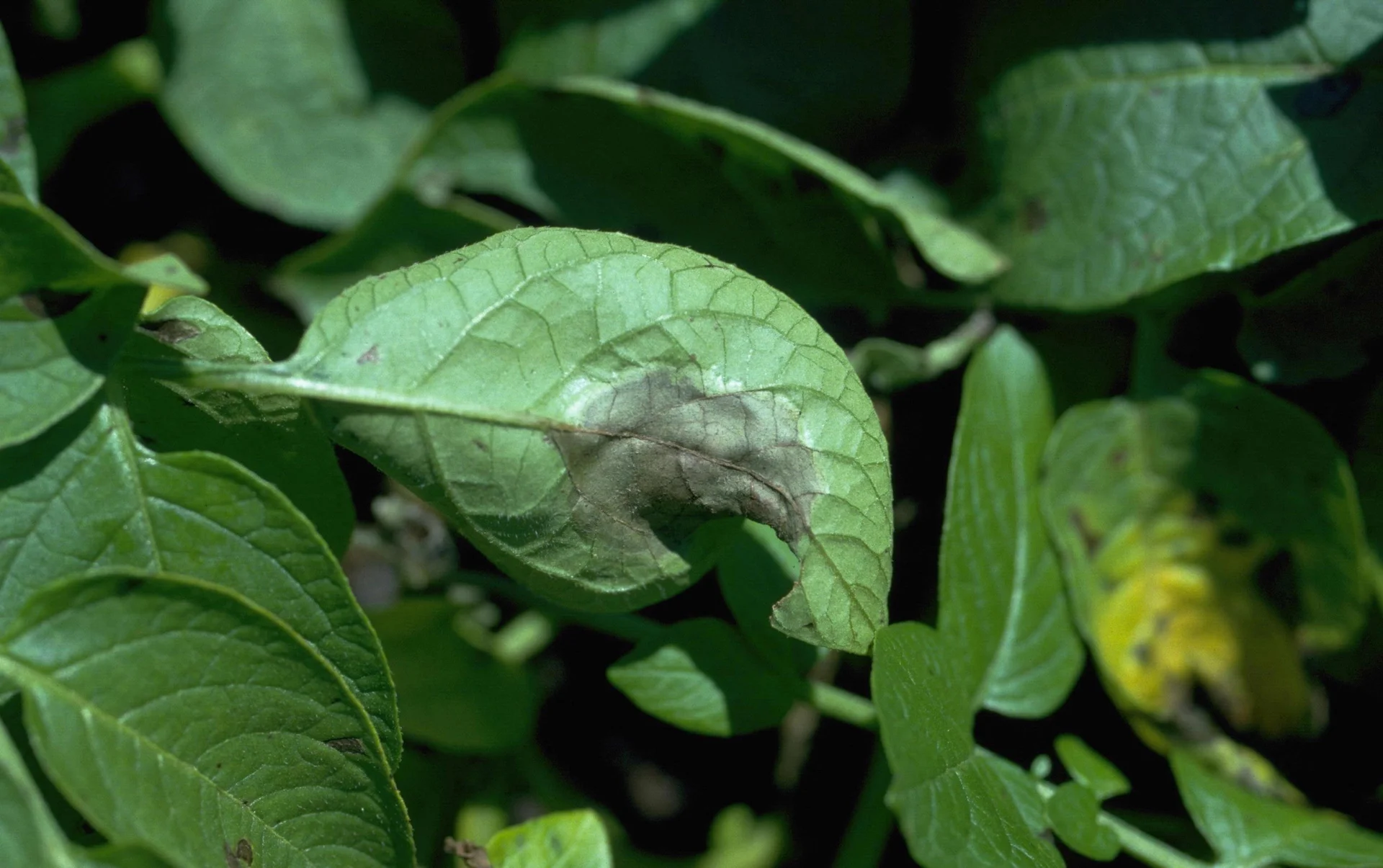
dark green to brown water-soaked blotches on the leaves — they look wet, oily or greasy, as if the leaf was scalded, and they spread outward fast. They often start at the leaf tip or edge and are ringed by a pale, sickly halo where the healthy green fades.
The tell-tale sign
on a cool, damp morning turn the leaf over — under the blotch you will find a soft white downy mould, like a fine dusting of flour or cobweb, right at the edge between the dead brown patch and the living green. This white fuzz is the disease making new spores.
As it spreads
the brown-black rot climbs onto the stems and leaf stalks, which go dark and collapse. On tomato fruit you get greasy brown patches that stay firm, not soft; on potatoes, the tubers show a reddish-brown firm rot under the skin that you only see when you cut them.
Don't confuse it
with early blight, which makes dry, dark-brown spots with rings inside them like a target or an archery board, starts on the old lower leaves, and has no white mould underneath. Late blight looks wet and greasy, spreads fast, and grows white fuzz on the underside. Frost, sunburn and drought can also brown a leaf, but they never grow that white downy mould.
Scout for it
When to look hardest
from when the crop is growing fast and the leaves start to close over the rows (the development and mid-season stages) — this tender, leafy growth is what the disease loves. Step up your checks the moment the weather turns cool and wet (about 10-24 degrees C), foggy, or after rain or a heavy dew, because those are the conditions it explodes in.
How to walk the field
every few days, walk a big "W" shape so you cross all four corners and the middle — not just the edge nearest the path. Make about 5 to 10 stops along the way.
What to check at each stop
look at the lower and shaded leaves first (they stay damp longest), and turn leaves over in the early morning while the dew is still on them, hunting for water-soaked blotches and the white downy mould underneath.
The number that means act now
the threshold is the very first plant you find with a spreading water-soaked lesion — 1 sick plant is enough to trigger action, because this disease doubles so fast there is no safe waiting. And when cool, wet weather is forecast to settle in, protect the crop before any spots appear rather than waiting to find them.
Control it
Prevent it first
-
choose the right seed and variety (your strongest non-spray tool):
plant a late-blight tolerant/resistant potato or tomato variety where you can find one, and always use certified disease-free seed potatoes. Starting clean and tough is the single most effective thing you can do without a sprayer.
-
grow an airy, dry crop:
give plants wide spacing so the leaves dry quickly after rain and air moves through the rows; water at the base, never over the top of the leaves, and water early so foliage dries by night. Hill up (heap soil over) your potatoes well so spores washing down can't reach the tubers. Clear out volunteer potato plants and cull piles left from last season — they are where the disease hides and starts again.
Act early — cut out the first sick plants:
the moment you find a lesion, pull or cut the infected plants (and the ones touching them) and destroy them — burn or bury them deep, well away from the field. Do this on a dry day so you don't spread wet spores by hand, and never throw the sick plants on the compost or the cull pile.
Chemical as a last resort — protectant fungicide:
if the weather is against you and the disease is moving, use a protectant (contact) fungicide such as mancozeb. "Protectant" means it coats the leaf and stops spores landing on it — it shields healthy leaves but cannot cure a leaf already infected, so it must go on before or at the very first sign, and be re-applied on a tight schedule (about weekly) through wet spells and after rain washes it off.
Spray safely
cover your skin, eyes, nose and mouth; spray in the cool of the morning or evening with the wind at your back; keep the spray off food crops you'll eat soon, off drinking water and rivers, and away from children and bees. Respect the pre-harvest interval — the number of days the label says you must wait between the last spray and eating or selling the crop. Wash yourself and your clothes afterwards.
Fight resistance
don't lean on one product forever — rotate to a different chemical group each time so the disease can't get used to it, and never rely on a curative/systemic product alone. Protectant sprays like mancozeb used preventively are the backbone.
If it keeps spreading — cut your losses the smart way:
when the tops are collapsing and you can't hold it, cut off and remove all the potato foliage (the haulm) and let the spores on the ground die. Then wait about 2 to 3 weeks before lifting the potatoes, so the tubers harden their skins and any spores on the soil surface die off — this stops the rot following your crop into the store. Never bag or store soft, rotting or blighted tubers; sort them out, because one rotten potato will rot the whole sack.
Catch Late blight before it costs you the harvest
This guide is the general answer. Divisi works out yours — the week to scout your own field for Late blight, and what to do the day you find it.


Crops it affects
Plan the crops it attacks
-
 When to plant African nightshade in Gwer East
 -
 When to plant Irish potato in Ayene
 -
 When to plant Tomato in Goma
All planting calendars, country by country
Get Insights by email
A short digest of new Divisi articles. No email on quiet weeks.
Frequently asked questions
How do I identify Late blight?
The first thing you see. dark green to brown water-soaked blotches on the leaves — they look wet, oily or greasy, as if the leaf was scalded, and they spread outward fast. They often start at the leaf tip or edge and are ringed by a pale, sickly halo where the healthy green fades.
When should I take action against Late blight?
first water-soaked lesions seen, or cool wet weather forecast to persist; spray protectant before symptoms in high-risk conditions
How do I control Late blight?
Prevent it first — choose the right seed and variety (your strongest non-spray tool):. plant a late-blight tolerant/resistant potato or tomato variety where you can find one, and always use certified disease-free seed potatoes. Starting clean and tough is the single most effective thing you can do without a sprayer.
Which crops are attacked by Late blight?
Among the crops covered here: African nightshade, Irish potato, Tomato.