 Divisi
Mungbean yellow mosaic virus
Mungbean yellow mosaic virus · Viral
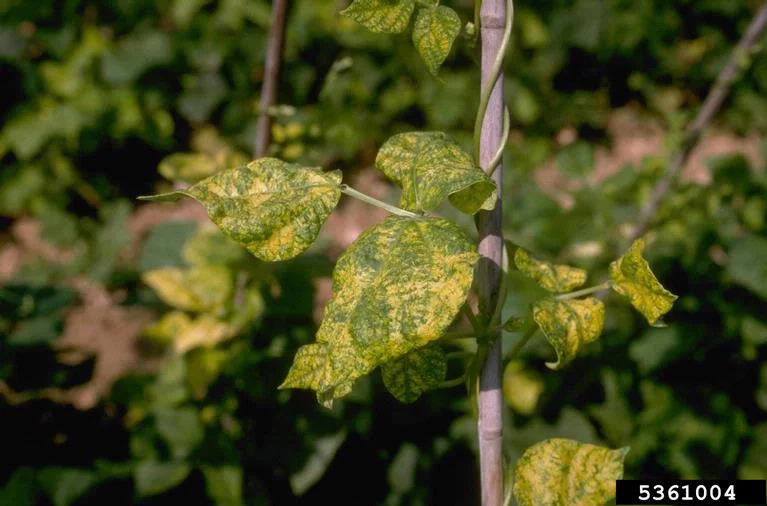
Photo: Howard F. Schwartz, Colorado State University, Bugwood.org · CC BY 3.0
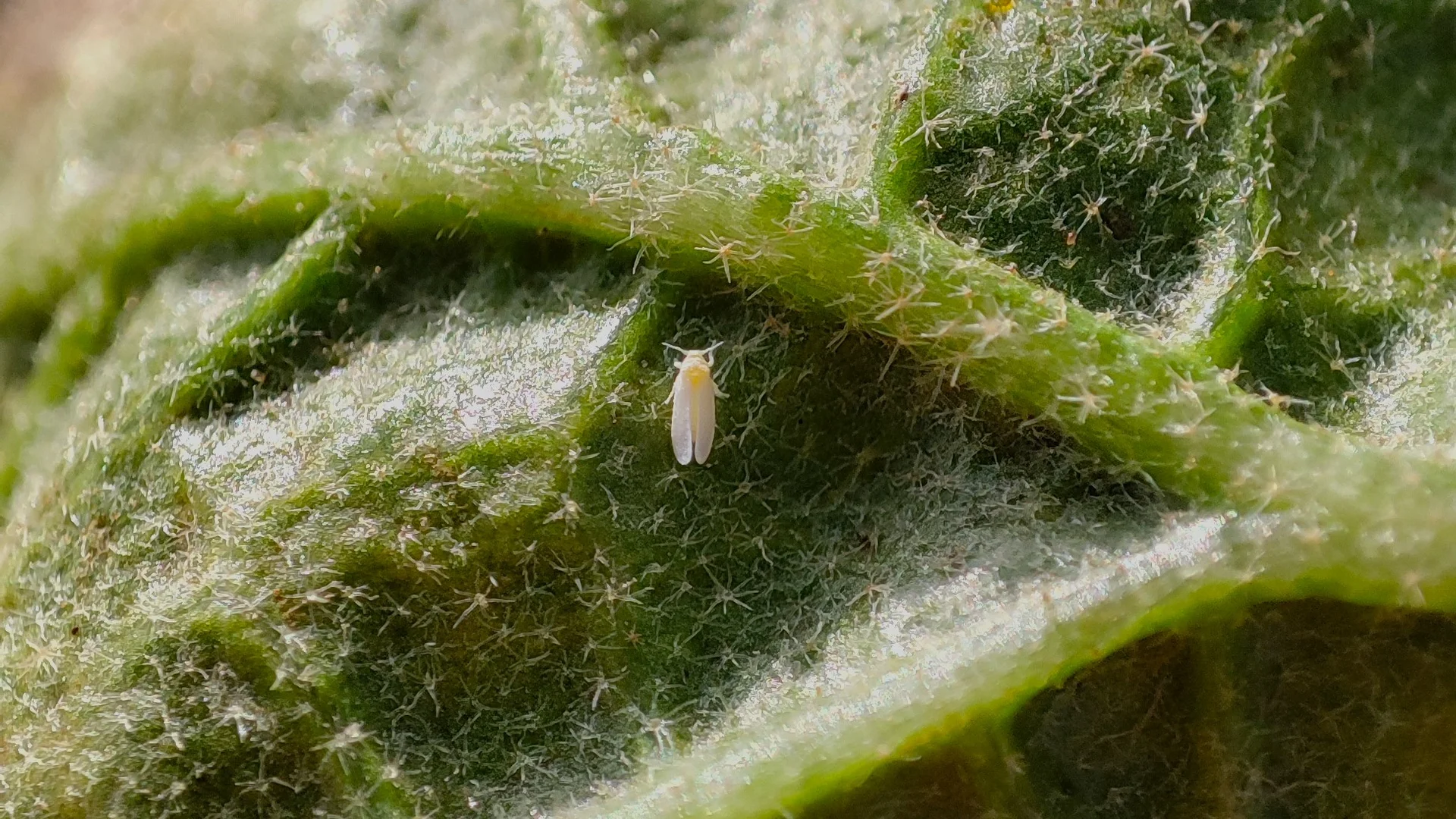
Mungbean yellow mosaic virus is a virus disease of mungbean and other legumes (cowpea, soybean, common bean) carried from plant to plant by the tiny white flying insect called the whitefly. It is not a spray-away disease: once a plant is infected there is no cure. Infected plants turn bright yellow, stay small, and set only a few shrivelled pods. Because the whitefly moves the virus fast in warm weather, the whole battle is won or lost by stopping the fly and pulling out sick plants early.
Wee Hong · CC BY-SA 4.0
Why it matters
This virus can wipe out up to 70% of your harvest — more than half the crop gone. A plant that catches it young stays stunted and yellow and gives you almost no filled pods, so the money and seed you put in are wasted. The hard truth: there is no medicine that cures an infected plant. Once the yellow shows, that plant will never recover — all you can do is stop the whitefly and remove the sick plants before they infect the rest of the field.
When to act
First bright-yellow mosaic on young leaves or rising whitefly numbers; act early on the vector, as there is no cure once plants are infected.
This guidance is general, compiled from published agronomic references including FAO and CABI. Thresholds and timing shift with your crop, your variety and the season.
In much of the region a spray is simply called mushonga — medicine. But a chemical group you cannot name is one you cannot rotate, and a product you did not write down has no pre-harvest interval you can observe. Mushonga, and other farming words →
The full Mungbean yellow mosaic virus field guide
Identify it
The first sign
scattered bright yellow flecks or spots on the youngest leaves at the top of the plant. They are the colour of a ripe lemon and stand out clearly against the healthy green.
As it spreads
the yellow flecks join up into a bright yellow-and-green patchy pattern (a "mosaic") over the whole leaf. Badly hit leaves turn almost fully yellow, and the plant stays short and stunted with very little flowering.
The cost you'll see later
infected plants set few small, twisted pods with shrivelled, half-empty seed — plants that got sick young may give no usable pods at all.
Look for the messenger
turn a young leaf over and look underneath for tiny white flies the size of a pinhead. Brush the plant and a little cloud of them flies up like white dust, then settles back. These whiteflies are what carry the virus from plant to plant.
Don't confuse it with
yellowing from hunger (poor soil / lack of nitrogen), which is an even, all-over pale yellow starting on the OLD lower leaves — not a bright patchy mosaic on the young top leaves. Virus yellow is bright, blotchy, and worst at the growing tip; hunger-yellow is dull, even, and worst at the bottom. Yellowing from waterlogging affects whole patches of low ground, not scattered single plants.
Scout for it
When to look
start checking from the moment seedlings come up and keep it up hard through the first half of the season (seedling, branching and early-podding stages) — this is when the plant is most easily infected and when early infection does the most damage.
How to walk
at least twice a week, walk a big "W" shape across the field so you cover all four corners and the middle — not just the row nearest the path where you always look.
What to check at each stop
at about 10 stops look at the youngest top leaves of 10 plants for bright yellow flecks or mosaic, and turn a few leaves over to check for whiteflies underneath.
Use a simple trap
hang a few yellow sticky cards (or a yellow tin smeared with grease/oil) at plant height around the field. Whiteflies are drawn to yellow and stick to it — a card that is filling up fast with tiny white flies is your warning that the fly is building up.
The action number
act the moment you find even one plant with bright yellow mosaic on its young leaves, OR whitefly numbers clearly rising on your leaf checks and sticky traps. There is no "wait and see" — because the disease has no cure, the trigger is the first sign, not a big count. One sick plant left standing is a factory feeding the virus to the rest.
Control it
Prevent it first
-
plant a resistant variety (your strongest tool):
where you can get them, sow resistant or tolerant mungbean varieties. This is the single most reliable and cheapest protection — the plant fights the virus for you. Ask your seed dealer or extension officer for a variety bred to resist yellow mosaic.
-
sow early and all at once:
plant early in the season and together with your neighbours so the crop passes its tender young stage before whitefly numbers build up. Avoid staggered or late sowing, and don't grow overlapping legume crops (cowpea, soybean, beans) side by side that give the whitefly a year-round home.
-
clear the virus's hiding places:
pull out and destroy volunteer legume plants and weeds around the field between seasons; they carry the virus and the whitefly over to your new crop. Start every season on clean ground.
Act early — rogue out sick plants:
as soon as you spot a plant with yellow mosaic, pull it out whole and remove it from the field (bury or burn it). Do this the same day you see it. Removing one infected plant early stops it feeding the virus to a hundred healthy neighbours — this is the most important thing your own hands can do.
Chemical — LAST RESORT, and only against the whitefly:
remember, no spray cures a virus-sick plant. Sprays only reduce the whitefly that spreads it. If the fly is building up badly, use a systemic insecticide — a "systemic" means the chemical is taken up inside the plant and poisons the flies as they feed (unlike a "contact" spray that only kills what it lands on). A seed treatment at planting plus a careful early foliar spray protects the young crop when it matters most.
Spray safely
cover your skin, eyes, nose and mouth; spray in the cool of the morning or evening with the wind at your back, never towards yourself. Keep the spray away from food, drinking water, children, animals and bees. Respect the pre-harvest interval — the number of days the label says you MUST wait between the last spray and picking pods, so no poison is left on the food. Wash your body and clothes afterwards.
Slow resistance
don't use the same insecticide over and over. Rotate to a different chemical group each time you spray so the whitefly doesn't become immune to it and the product keeps working next season.
If it keeps spreading
if new yellow plants keep showing up despite roguing, step up whitefly control, remove sick plants daily, and note that a crop badly hit early may not be worth saving. When most plants are already yellow and stunted, cut your losses — harvest whatever healthy pods remain, clear and destroy the crop residue so it can't seed next season's outbreak, and next time plant a resistant variety, sow early, and start on clean weed-free ground.
Catch Mungbean yellow mosaic virus before it costs you the harvest
This guide is the general answer. Divisi works out yours — the week to scout your own field for Mungbean yellow mosaic virus, and what to do the day you find it.


Crops it affects
Plan the crops it attacks
-
 When to plant Common bean in Dilolo
 -
 When to plant Cowpea in Bangui-Rapides
 -
 When to plant Green gram in Ika
 -
 When to plant Soybean in Dola
All planting calendars, country by country
Get Insights by email
A short digest of new Divisi articles. No email on quiet weeks.
Frequently asked questions
How do I identify Mungbean yellow mosaic virus?
The first sign. scattered bright yellow flecks or spots on the youngest leaves at the top of the plant. They are the colour of a ripe lemon and stand out clearly against the healthy green.
When should I take action against Mungbean yellow mosaic virus?
First bright-yellow mosaic on young leaves or rising whitefly numbers; act early on the vector, as there is no cure once plants are infected.
How do I control Mungbean yellow mosaic virus?
Prevent it first — plant a resistant variety (your strongest tool):. where you can get them, sow resistant or tolerant mungbean varieties. This is the single most reliable and cheapest protection — the plant fights the virus for you. Ask your seed dealer or extension officer for a variety bred to resist yellow mosaic.
Which crops are attacked by Mungbean yellow mosaic virus?
Among the crops covered here: Common bean, Cowpea, Green gram, Soybean.