 Divisi
Root rot
Fusarium solani · Fungal
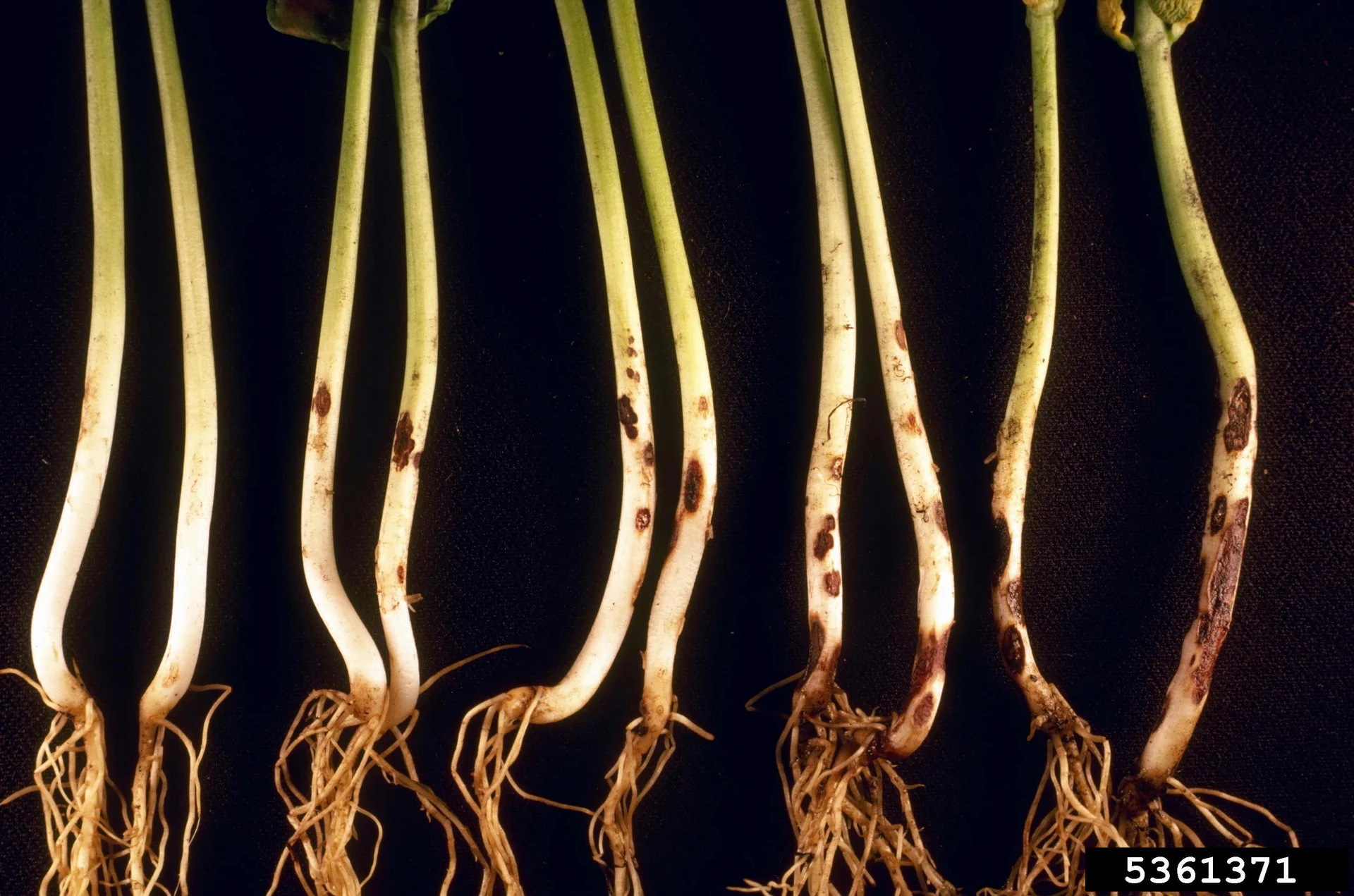
Photo: Fred Brooks from United States University of Hawaii at Manoa · CC BY 3.0 us
Root rot is a soil-borne fungal disease of grain legumes such as beans, cowpeas, soybeans, groundnuts and peas. The fungus (a Fusarium-led complex) lives in the soil and attacks the roots and the stem just below and above the ground, rotting away the fine feeding roots and browning the taproot so the plant can no longer draw up water and food. It hits hardest in cold or warm wet ground that drains poorly or is compacted, and it strikes young plants first — from just after they come up through their early growth.
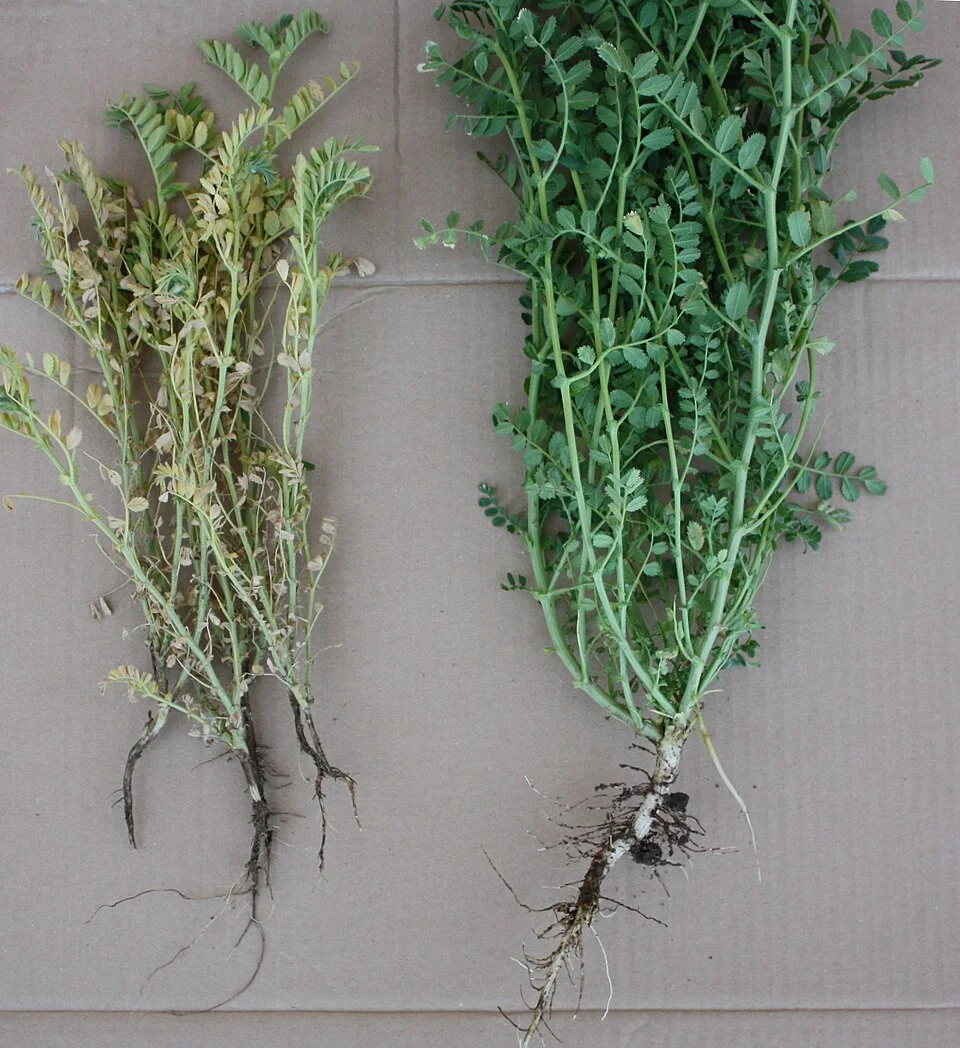
Davide Palmieri1 · CC BY-SA 3.0 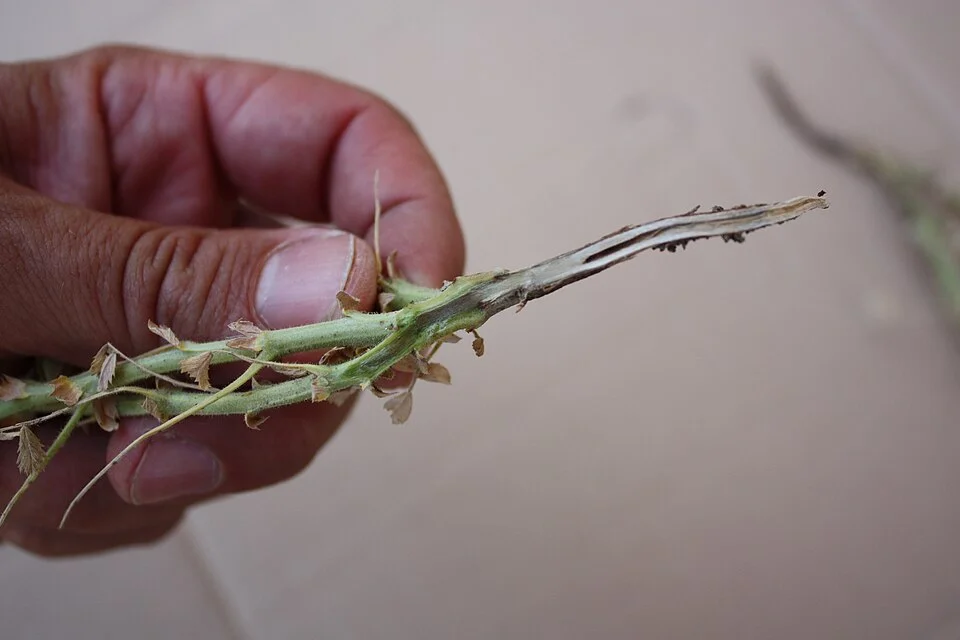
Davide Palmieri1 · CC BY-SA 3.0
Why it matters
Root rot rots the roots your plants feed with, so they starve and wilt even when the soil looks wet. In a bad, wet season it can wipe out up to 7 in every 10 plants (70% of your crop) — whole patches simply fail to grow. It is one of the hardest problems to beat because the fungus lives in the soil for years and does its damage underground where you cannot see it or spray it; once a plant's roots are rotted there is no cure — you can only protect the healthy plants and the next crop.
When to act
patches of yellowing, stunted or wilting seedlings with discoloured roots on sampling
This guidance is general, compiled from published agronomic references including FAO and CABI. Thresholds and timing shift with your crop, your variety and the season.
In much of the region a spray is simply called mushonga — medicine. But a chemical group you cannot name is one you cannot rotate, and a product you did not write down has no pre-harvest interval you can observe. Mushonga, and other farming words →
The full Root rot field guide
Identify it
What you see first (above ground)
patches of plants that are stunted, pale or yellow, and wilting in the heat of the day even though the soil is moist. Whole sections of the row stay small while the rest grow away, and some seedlings simply die and leave gaps in the stand.
Pull up a sick plant and look at the roots
— this is where the disease shows itself. Healthy roots are white and firm with plenty of fine feeder roots; rotted roots are reddish-brown to black, soft and slimy, with the fine roots stripped away. The main taproot is often browned and may be hollow or shredded inside.
Check the stem at the soil line
look for a dark, sunken, reddish-brown rot ring on the lower stem where it meets the ground. On beans and other legumes you will also see few or no root nodules (the little pink lumps that feed the plant) — a rotted root cannot make them.
Tell it apart from look-alikes
yellow, stunted plants can also mean waterlogging (whole field evenly wet, roots still whitish), nitrogen hunger (even yellowing on older leaves first, roots healthy), or root-knot nematode (roots swollen with round knots, not rotted and dark). Root rot is different: it comes in patches on the wet, low or compacted spots, and the roots are dark, soft and rotten.
Scout for it
When to look
watch closely from just after your crop comes up right through its early growth — the young seedling and early-growth stages are when root rot strikes. Look hardest after heavy rain or a cold wet spell, and always check the low, wet, or hard compacted parts of the field first.
How to walk the field
walk a large "W" shape so you cross all four corners and the middle, not just the edge by the path. Make about 10 stops along the W.
What to check at each stop
first look down the rows for patches of yellow, stunted or wilting plants and gaps where seedlings died. At a few of these bad spots, gently dig up 2 or 3 suspect plants (don't just pull — you'll snap the rotted root off) and look at the roots and the stem base.
The number that means act now
if you find even one clear patch of yellowing, stunted or wilting seedlings and the dug-up plants show dark, rotted roots, the disease is established — act now to protect the rest. Mark the patch so you remember it is a bad, infected spot for next season.
Control it
Prevent it first — this is your strongest tool (cultural)
Root rot is beaten mostly in the soil, before planting: rotate away from legumes for at least 3 to 4 seasons (plant maize, sorghum or another cereal instead) so the fungus starves; fix the drainage — plant on ridges or raised beds so water runs off and roots never sit in wet ground; break up hard, compacted soil and dig in compost or well-rotted manure to build healthy, living soil; and plant a tolerant variety where one is sold locally.
Plant clean and plant right
Use certified, treated seed — never seed saved from a field that had root rot. Do not plant into cold, wet ground or too deep; wait for the soil to warm and drain, and sow at the shallow depth for your crop so seedlings come up fast and strong instead of sitting weak in the wet where the fungus wins.
Give the good soil-life a hand (biological)
Treat your seed or the planting furrow with a Trichoderma biocontrol (a friendly fungus, sold as a powder or liquid) — it grows around the roots and crowds out and fights the rot fungus. Follow the packet for the rate, keep it in a cool dark place, and use it before its expiry date.
Chemical, only as a seed-treatment and only to protect emergence (last resort)
There is no spray that cures rotted roots — chemicals only shield the new seedling. Coat the seed with an approved seed-treatment fungicide before planting. Handle it safely: wear gloves, cover your skin, eyes, nose and mouth, treat the seed in the open air or the cool of the day with the wind behind you, keep the treated seed away from food, water, children, animals and bees, and never eat or sell treated seed. Wash your hands, and change and wash your clothes when you finish. To stop the fungus getting used to one product, rotate to a different chemical group in later seasons.
If it keeps spreading
accept that the plants already wilting are lost — do not waste money spraying them. Pull out and remove or burn the worst dead plants so they don't feed the soil fungus, improve the drainage on that patch, and put your effort into the healthy plants and next season. Where it is too late and a patch has collapsed, cut your losses: stop replanting legumes there, mark the spot, and rest the ground under a cereal for several seasons to starve the fungus out before you risk a legume again.
Catch Root rot before it costs you the harvest
This guide is the general answer. Divisi works out yours — the week to scout your own field for Root rot, and what to do the day you find it.


Crops it affects
Plan the crops it attacks
-
 When to plant Common bean in Dilolo
 -
 When to plant Cowpea in Bangui-Rapides
 -
 When to plant Groundnut in Songo
 -
 When to plant Soybean in Dola
All planting calendars, country by country
Get Insights by email
A short digest of new Divisi articles. No email on quiet weeks.
Frequently asked questions
How do I identify Root rot?
What you see first (above ground). patches of plants that are stunted, pale or yellow, and wilting in the heat of the day even though the soil is moist. Whole sections of the row stay small while the rest grow away, and some seedlings simply die and leave gaps in the stand.
When should I take action against Root rot?
patches of yellowing, stunted or wilting seedlings with discoloured roots on sampling
How do I control Root rot?
Prevent it first — this is your strongest tool (cultural). Root rot is beaten mostly in the soil, before planting: rotate away from legumes for at least 3 to 4 seasons (plant maize, sorghum or another cereal instead) so the fungus starves; fix the drainage — plant on ridges or raised beds so water runs off and roots never sit in wet ground; break up hard, compacted soil and dig in compost or well-rotted manure to build healthy, living soil; and plant a tolerant variety where one is sold locally.
Which crops are attacked by Root rot?
Among the crops covered here: Common bean, Cowpea, Groundnut, Soybean.