 Divisi
Smut
· Fungal
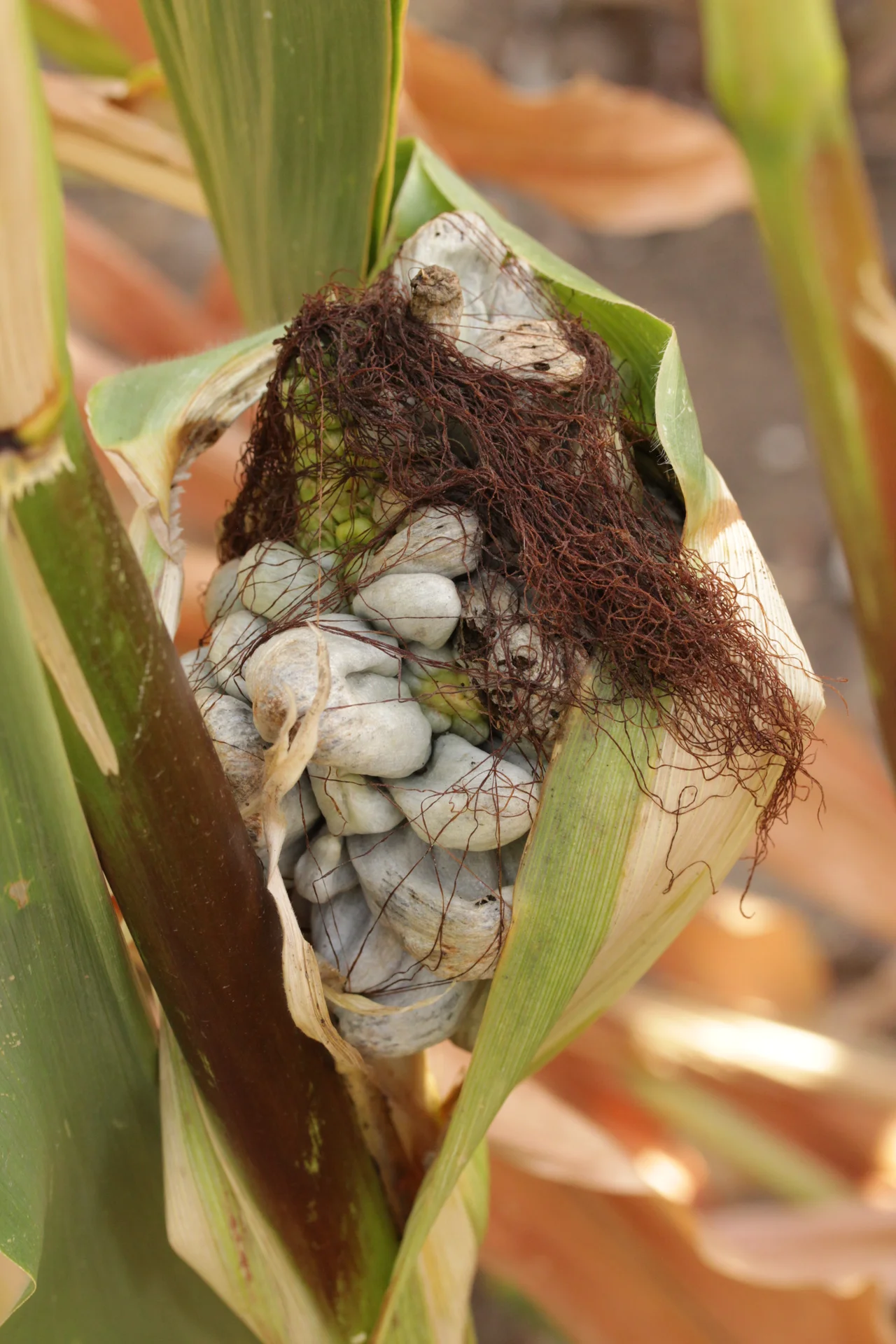
Photo: Björn S... · CC BY-SA 2.0
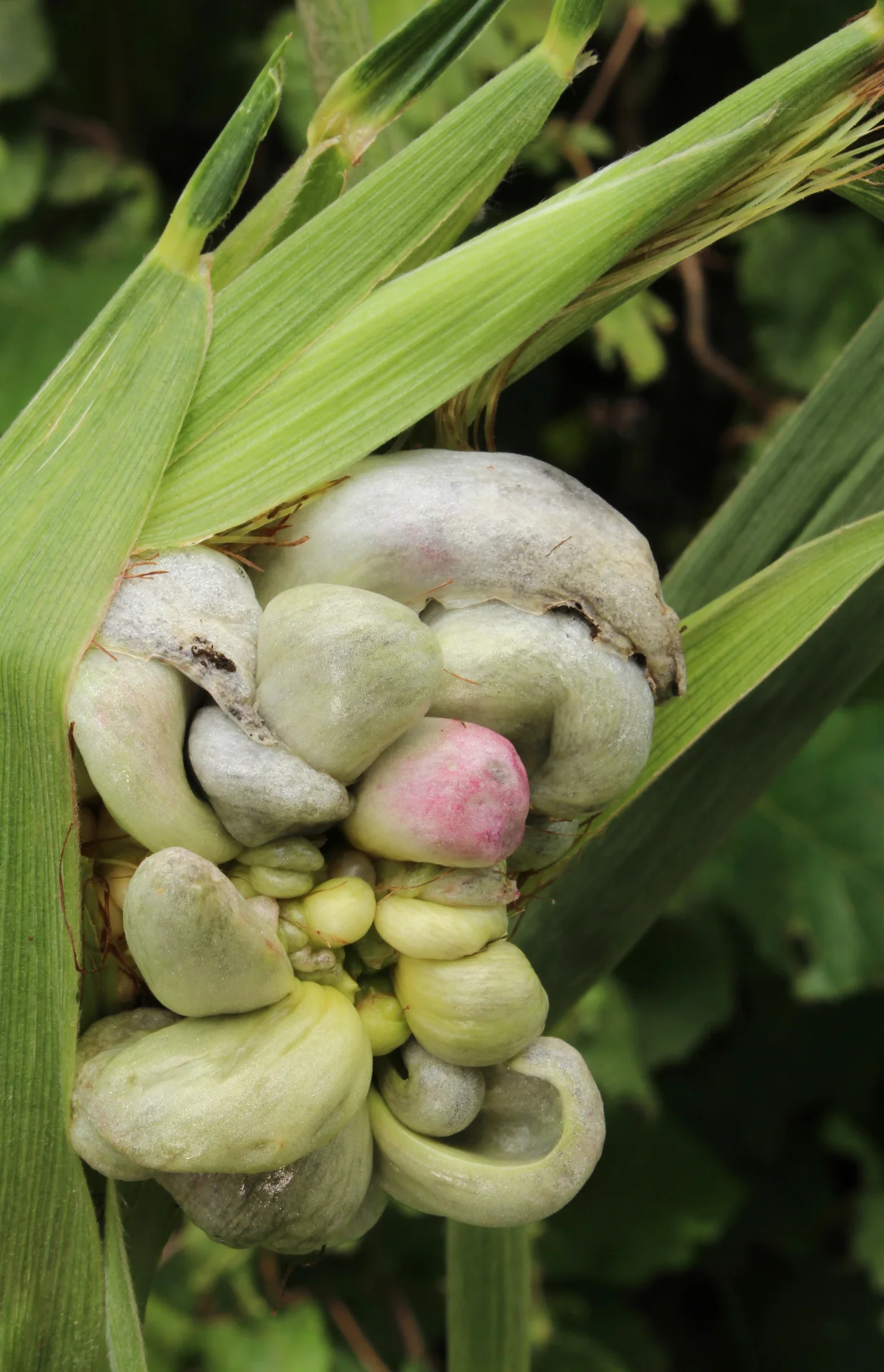
Smut is a family of fungal diseases (Ustilago and Sporisorium species) of cereals — maize, sorghum, pearl millet, wheat and barley. The fungus lives on seed and in the soil, sneaks into the young plant or an open flower, and grows unseen until flowering, when it turns kernels, cobs, tassels or grain-heads into swollen galls packed with sooty black dust (spores). Those spores fall to the soil and cling to seed, ready to start the disease again next season.
Holger Krisp · CC BY 3.0 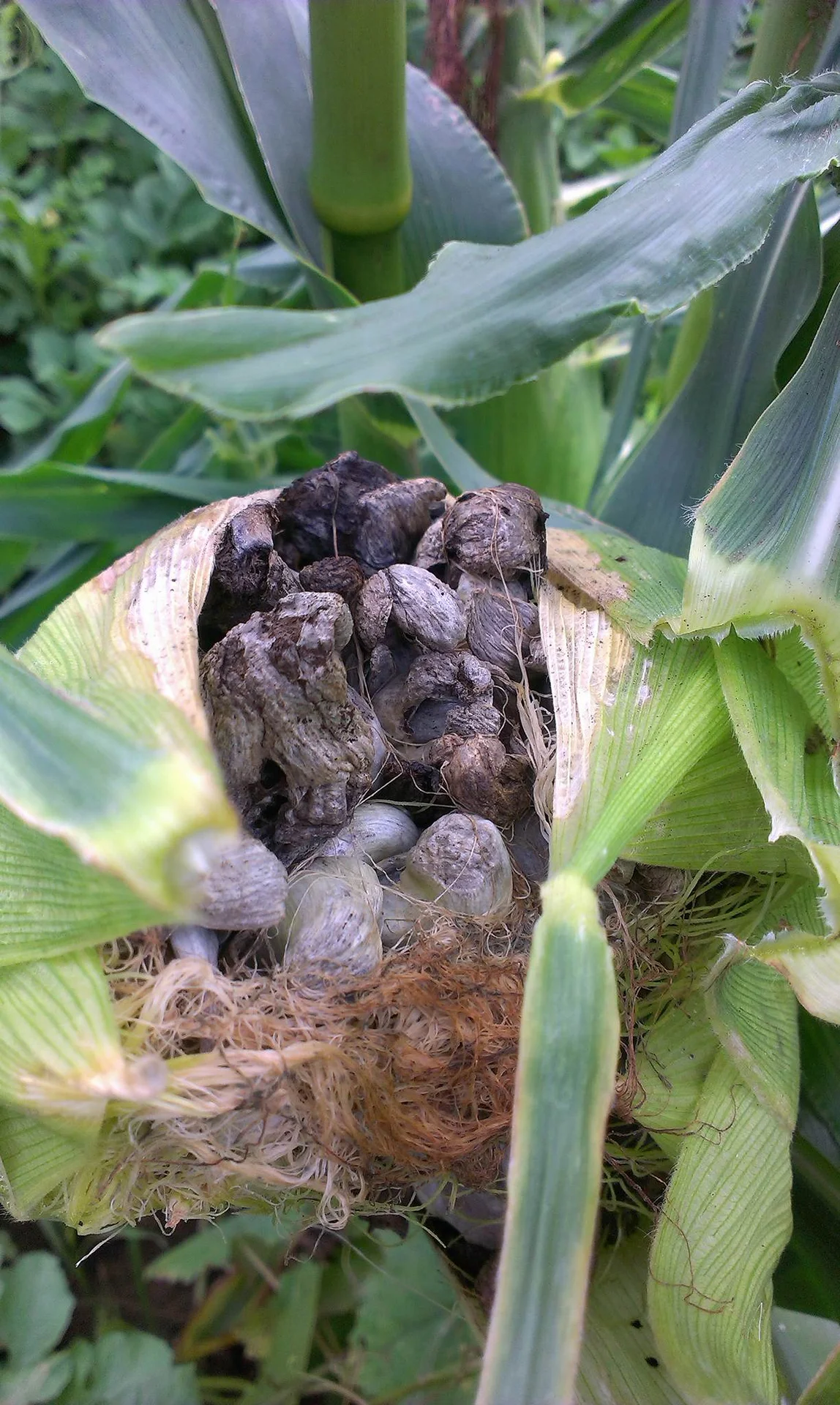
Nolanna · CC BY-SA 4.0
Why it matters
Smut attacks the part you harvest — it swaps your grain for a swollen bag of black powder, so every smutted head or cob is grain you will never eat or sell. A bad year can cost you up to a quarter of your crop (25%). Worst of all, there is no spray that cures a plant once the heads are infected — by the time you see the black galls the damage is done. Smut is only beaten by stopping it before it starts: with clean seed, resistant varieties and destroying galls before they burst and seed the soil for next year.
When to act
Any galls or smutted heads seen; smuts are managed pre-emptively because there is no rescue treatment once heads are infected.
This guidance is general, compiled from published agronomic references including FAO and CABI. Thresholds and timing shift with your crop, your variety and the season.
In much of the region a spray is simply called mushonga — medicine. But a chemical group you cannot name is one you cannot rotate, and a product you did not write down has no pre-harvest interval you can observe. Mushonga, and other farming words →
The full Smut field guide
Identify it
The damage you see first
at flowering and grain-fill, instead of normal cobs, tassels or grain-heads you find swollen, distorted lumps (galls) where the grain should be. On maize they look like shiny, silver-grey boils or blisters — some as big as a fist — on the cob, tassel or stem.
The tell-tale sign
those galls have a smooth silvery-white or grey skin that splits open to spill a mass of sooty black powder (the fungus spores) — like someone tipped soot or fine charcoal dust over the head. On sorghum, millet, wheat and barley you'll see whole grain-heads or single grains turned into black, dusty smutted grains instead of plump seed.
Also watch for
twisted, swollen tassels, cobs or seed-heads that never fill properly; and grain sites replaced by dark spore masses, sometimes held together by fine grey threads.
Don't confuse it with
ordinary cob or head rot (that is soft, wet, and smells mouldy — smut galls are firm and dry, then powdery-black), bird or insect damage (that leaves torn or eaten grain, not a smooth swollen gall), or normal darkening of a ripe head. Smut's black dust is dry, fine and sooty, and it sits inside a swollen gall where good grain should have been.
Scout for it
When to look
from flowering through to harvest — the mid-season and late-season stages when tassels, cobs and grain-heads are forming and filling. This is when smut finally shows itself; there is nothing to see before then.
How to walk the field
walk a large "W" shape so you cross all four corners and the middle, not just the row by the path. Make about 10 stops, and at each stop look closely at 10 plants.
What to check on each plant
the tassel (top), the cobs or grain-heads, the silks, and the stem and growing point — anywhere grain forms. You are hunting for swollen galls, silver-grey boils, or blackened grain replaced by sooty dust.
Your action number — act on the very first one:
because there is no rescue spray, the threshold is a count of one. If you find even a single galled or smutted plant, act now — mark it and remove it before the gall bursts. Do not wait for it to spread; one burst gall throws out millions of spores that infect the soil and seed for next season.
Control it
Prevent first — this is where smut is won (start here every season):
Plant a smut-resistant or tolerant variety suited to your crop — this is your strongest single defence. Always sow certified clean seed, never grain saved from a field that had smut. Rotate — plant a different, non-cereal crop on that land for a season or two so the soil spores starve with no host to infect. And keep the crop unstressed at flowering: avoid moisture and nutrient shortage at heading, because dry, hungry plants are the ones smut hits hardest.
Act early — cut it out before it bursts (there is no spray that cures an infected plant):
As soon as you spot a gall or smutted head, carefully cut it off — ideally with a bag or cloth over it so spores don't scatter — while it is still firm and unbroken. Burn or bury it deep; never leave it in the field and never put it in the compost or feed it to animals. Removing galls before the black dust escapes is the single act that stops next year's outbreak.
Chemical — only as a seed dressing, before you plant (a seed treatment, not a rescue spray):
For seed- and seedling-infecting smuts, treat your seed before sowing with a systemic seed-treatment fungicide — systemic means it soaks into the young plant and protects it from inside; a seed dressing is powder or liquid coated onto the seed. Safety: wear gloves and cover your nose and mouth when coating seed; keep treated seed away from children, food, water and animals; never eat or grind treated seed or sell it as grain — it is poison, not food; and wash your hands well after handling it. To slow resistance, don't use the same product every season — rotate to a different chemical group when you can.
If it keeps spreading — cut your losses cleanly:
Once heads and cobs are smutted, no spray or effort will bring that grain back this season. Focus on stopping next year: rogue out and burn every galled plant you can before harvest, harvest the clean plants carefully so you don't spread dust onto good grain, and do not save any seed from this field. Next season, come back with a resistant variety, fresh certified seed and a rotation — that break in the cycle is what finally beats smut.
Catch Smut before it costs you the harvest
This guide is the general answer. Divisi works out yours — the week to scout your own field for Smut, and what to do the day you find it.


Crops it affects
Plan the crops it attacks
-
 When to plant Fonio in Luebo
 -
 When to plant Maize in Mougalaba
 -
 When to plant Pearl millet in Kono
 -
 When to plant Sorghum in Maracha
 -
 When to plant Wheat in Hammedi
All planting calendars, country by country
Get Insights by email
A short digest of new Divisi articles. No email on quiet weeks.
Frequently asked questions
How do I identify Smut?
The damage you see first. at flowering and grain-fill, instead of normal cobs, tassels or grain-heads you find swollen, distorted lumps (galls) where the grain should be. On maize they look like shiny, silver-grey boils or blisters — some as big as a fist — on the cob, tassel or stem.
When should I take action against Smut?
Any galls or smutted heads seen; smuts are managed pre-emptively because there is no rescue treatment once heads are infected.
How do I control Smut?
Prevent first — this is where smut is won (start here every season):. Plant a smut-resistant or tolerant variety suited to your crop — this is your strongest single defence. Always sow certified clean seed, never grain saved from a field that had smut. Rotate — plant a different, non-cereal crop on that land for a season or two so the soil spores starve with no host to infect. And keep the crop unstressed at flowering: avoid moisture and nutrient shortage at heading, because dry, hungry plants are the ones smut hits hardest.
Which crops are attacked by Smut?
Among the crops covered here: Fonio, Maize, Pearl millet, Sorghum, Wheat.