 Divisi
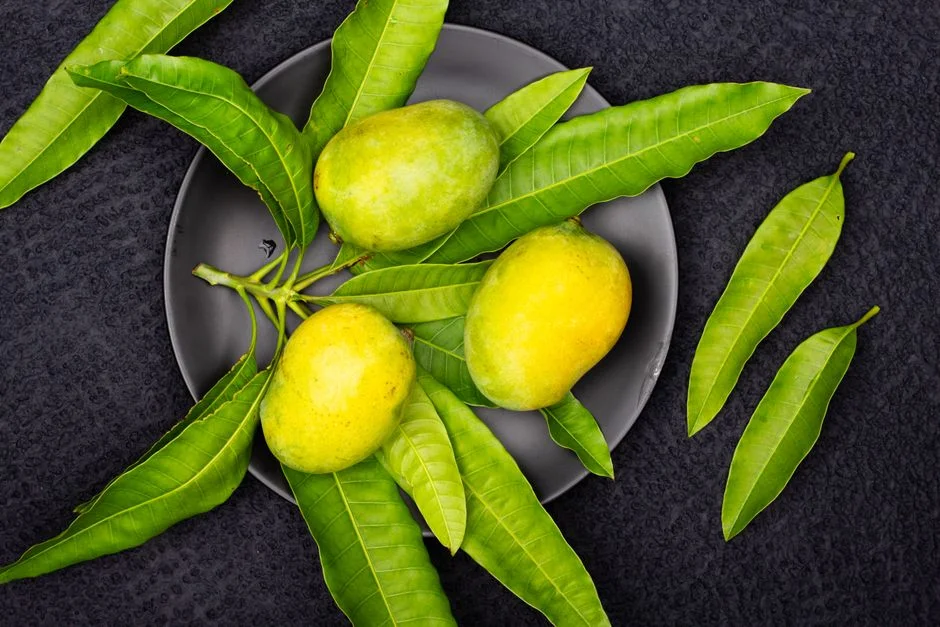
The five moves that protect your mango income start the second you pick: harvest at the right maturity, stop sap burn, handle gently, cool fast, and sort out damaged fruit. Get them right and you keep fruit that would otherwise bruise, scald or rot before it reaches a buyer — the kind of post-harvest loss that runs to 25–44% of Kenya's mango crop from tree to market, and as high as 60% in one study (IFPRI, Post-Harvest Losses in Fruits and Vegetables: The Kenyan Context). Here is each move, and it costs little more than care and timing:
- Pick at the right maturity.
- Stop sap burn at harvest.
- Handle gently, tree to market.
- Cool fast to shed field heat.
- Sort out the damaged fruit.
When should I pick mangoes so they last?
Spoilage usually starts at picking. Harvest at mature-green: the shoulders fill out and flatten around the stalk, the cheeks plump, the skin shows a colour break (dark green lightening), and the flesh around the seed turns from green-white to yellow (UC Davis Postharvest; World Agroforestry). Fruit picked mature-green ripens evenly and travels; too early never builds flavour, too late spoils fast.
Not sure? Float-test a sample. Drop fruit in water — a mature mango sinks (denser flesh, higher specific gravity) while an immature one floats. Plain water is a fine rough field check; the calibrated UPLB version uses a light salt solution and a clear trigger — sample 12 fruit, and if about 9 of them sink (75%), the crop is ready to harvest (UPLB flotation method). It catches many growers out, because it is the opposite of what you would guess.
| Sign | Mature — pick and keep | Immature — leave it |
|---|---|---|
| Shoulders | Full and rounded, flat around the stalk | Flat, sloping, sharp beak |
| Skin | Colour break, dark green lightening | Hard, dark green |
| Flesh by the seed | Turning yellow to orange | Green-white |
| In water | Sinks | Floats |
Know your variety's window, too. Across East Africa the crop comes in as the season turns — early types like Apple, Ngowe and Dodo from around November, Tommy Atkins mid-season, and Kent and Keitt late into April (World Agroforestry). Pick on the signs, not the calendar.
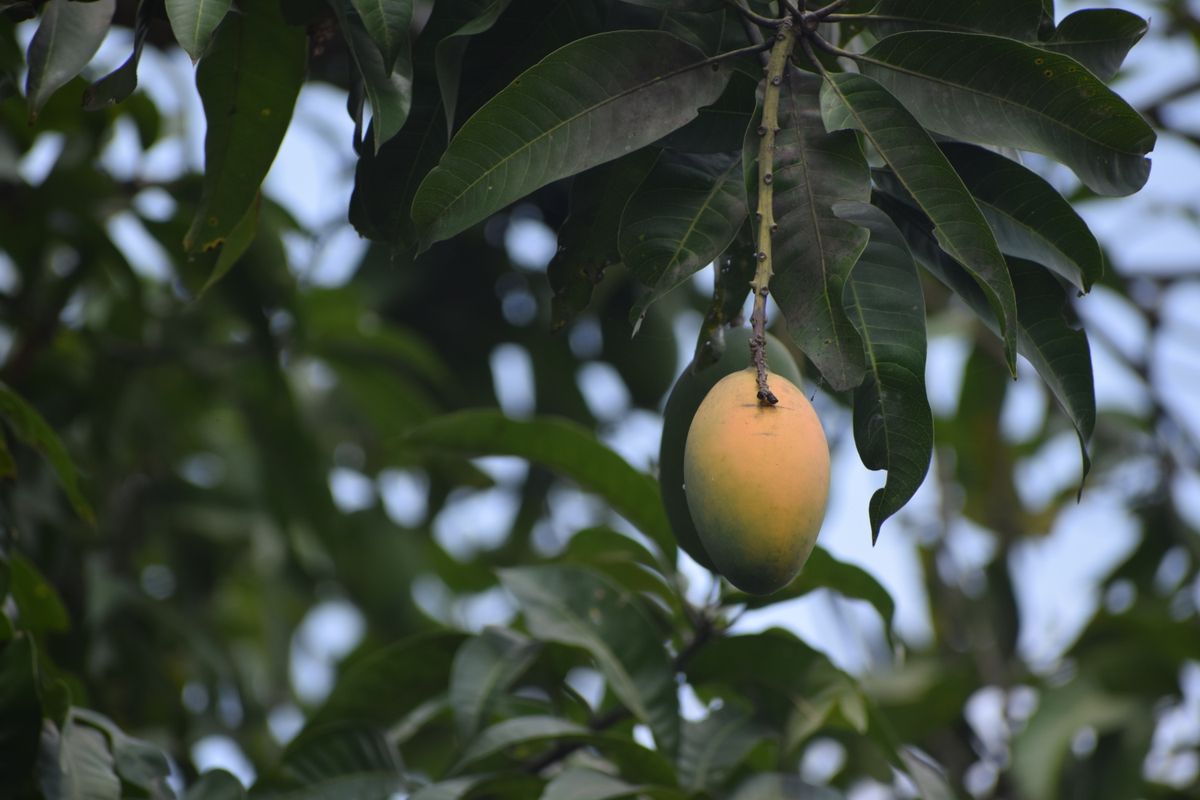
Photo: Tanbirul Islam / Pexels
What is sap burn, and how do I stop it?
When you snap a mango off, latex (sap) spurts from the cut stalk and burns dark "sapburn" scald marks into the skin that drop the fruit's grade (UC Davis Postharvest). Two habits stop it:
- Leave a short stalk. Cut about 2 cm from the fruit so the wound sits away from the skin, and never tip fruit into a gunny sack (World Agroforestry).
- Drain or dip. Stand picked fruit stalk-down so the first sap runs off away from other fruit, or trim the stalk and dip the cut end for 5 minutes in a mild desapping solution such as 0.5% alum (about 5 g in a litre of water), which sharply cut sapburn in trials (Journal of Food Science and Technology); a 1% hydrated-lime wash (about 10 g of lime in a litre of water) that neutralises the sap is a cheaper alternative (Business Queensland).
How do I stop my mangoes bruising before market?
Mango bruises easily, and every bruise becomes a soft, rotting patch a day or two later (UC Davis Postharvest). Pick and place each fruit by hand — don't drop it into hard containers or pile it deep. Pack into ventilated or padded crates of about 20 kg rather than sacks, and don't overfill. Gentle hands from tree to market are the cheapest quality control you have.
How do I keep mangoes fresh without a cold room?
Heat is the enemy of shelf life. Harvest in the cool of the morning and move fruit straight into shade — shedding the field heat early buys days and a shot at a better-paying market. If you can hold fruit in a cool store, mature-green mangoes keep best near 13°C and ripe fruit near 10°C; don't go colder, or the fruit chills, pits and discolours (UC Davis Postharvest). Then:
- Sort before you pack. One rotting mango spoils its neighbours, so pull out any stung, cracked, bruised or over-ripe fruit and grade the rest by size — buyers pay more for an even crate. Those fruit-fly stings begin in the orchard, not on the packing table: a study in Benin found infestation alone can claim from about 17% of the crop early in the season to 70% at the peak (PEF White Paper), and you beat that with orchard sanitation, protein baiting and picking a touch earlier — a separate job from the handling steps here.
- Ripen in batches. Don't ripen the whole harvest at once. Bring fruit on in a cool, shaded, airy place so you always have sound fruit to sell and less that over-ripens before a buyer turns up.
- Send mature-green fruit to distant markets and let it ripen on the way; sell ripe fruit locally first.
A grower in Kenya's Makueni belt who picks Apple mango mature-green at dawn, desaps it and packs even 20 kg crates can hold quality long enough to reach a Nairobi buyer instead of dumping ripe fruit at the roadside.
What can I do with mangoes I can't sell fresh in time?
Dry them. Peel and cut surplus or slightly blemished fruit into thin slices — about 3 mm — and dry in a simple solar drier until leathery and no longer sticky. Sun-dried mango slices settle at around 14% moisture (MOJ Food Processing & Technology); give it a good day or so of strong sun — a companion solar trial on mango leather (blended pulp, not slices) reached its leathery stage after about 14–16 hours (hortijournal). The slices are done when they stop losing weight. Dried mango is light, stores for months and sells year-round — turning would-be waste into a second income stream.
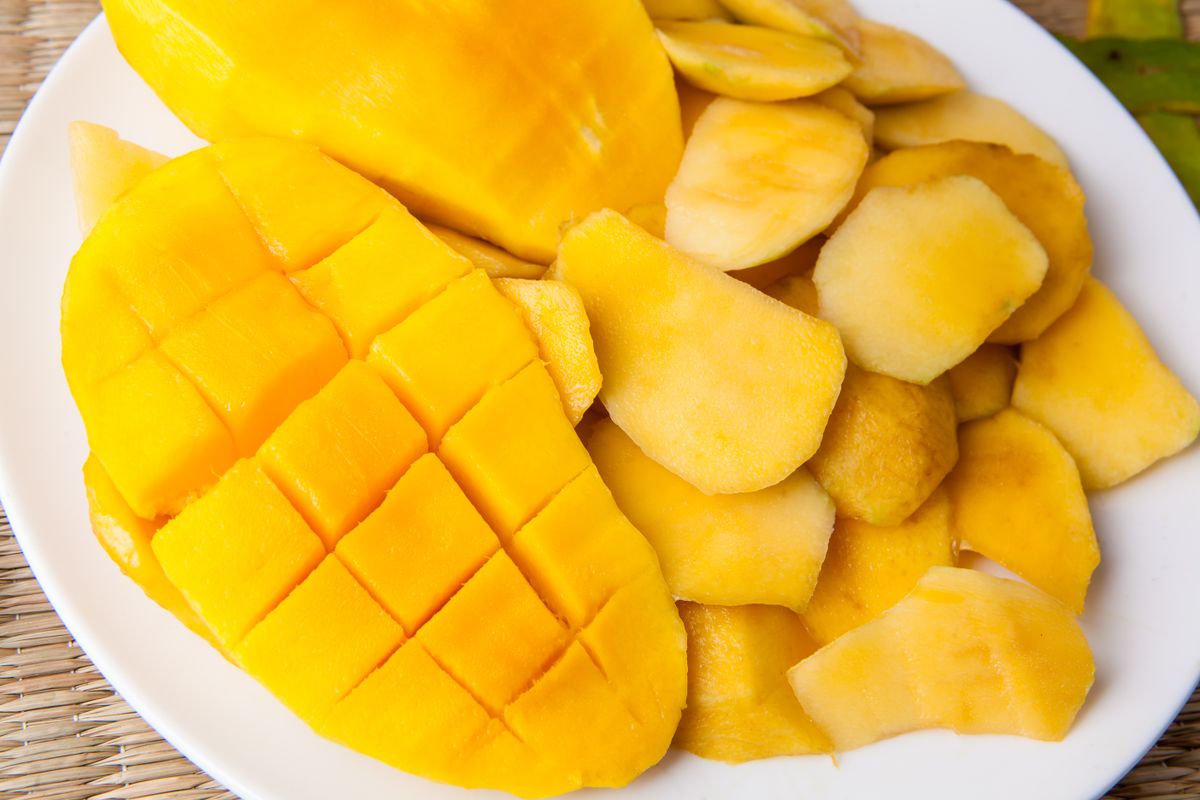
Photo: Riki Risnandar / Pexels
Your next step this week
Before your next pick, run the water test on a few fruit so you know your trees are at mature-green. Then harvest those into ventilated ~20 kg crates in the cool of the morning, leave a short stalk and drain them stalk-down. That one morning's discipline protects the grade — and the price — of the whole crate.