 Divisi
El Niño will likely pull Angola's 2026-2027 rains below normal, and the dry south — Cunene, Namibe and southern Huíla — will feel it first and hardest. You can still bring in a crop and keep your animals healthy: plant tougher crops, catch every drop of rain, and decide on your herd now, before grazing runs short. Here is your dry-year plan. (For the bigger picture, start with what El Niño means for your farm.)
Will El Niño bring drought to Angola this season?
Yes — expect below-average rain across most of Angola from October 2026 to January 2027, driven by El Niño, a warming of the Pacific Ocean that pulls rainfall away from southern Africa (FEWS NET, June 2026). Forecasters put the chance of El Niño lasting into late 2026 at 80% or higher (WMO, May 2026).
Where you farm changes the risk:
- The dry south (Cunene, Namibe, southern Huíla): rain in the southeast is expected to start late. These are agropastoral zones — farming that mixes crops and livestock — and last season sorghum and pearl millet harvests already came in well below average (FEWS NET).
- The central planalto (Huambo, Bié, Cuanza Sul): the highland plateau that normally feeds the rest of Angola. Rain there ran at just 50-90% of average last season (FEWS NET) — enough to cut yields, so plan for less.
- The north and northwest: likely to get average to above-average rain — the safer zone this year.
Watch your provincial INAMET (Angola's national weather service) bulletins, and plan around them.
What should I plant in a dry year in southern Angola?
Spread your risk — do not bet the whole plot on one long-season maize. Match the crop to how much rain it can handle:

Photo: Daniel Dan / Pexels
| Crop | Copes with rain as low as | Why it protects you |
|---|---|---|
| Pearl millet | 200 mm | Toughest cereal — grows where maize and sorghum cannot |
| Sorghum | between millet and maize | Hardy grain, stores well in the arid south |
| Cassava | 500 mm | A living store — harvest roots only when you need them |
| Cowpea / beans | short-season | Fix nitrogen, mature fast, add protein |
| Drought-tolerant maize | needs the most water | Best on the planalto; big edge over old maize in a dry year |
On the planalto, keep maize as your main grain but switch to a drought-tolerant, early-maturing variety. These yield 20-35% more than standard maize under moderate to severe drought — about 0.6 t more per hectare (twelve 50 kg bags) in Zimbabwe trials, worth around USD 240 extra (IITA). See growing maize in a dry year.
In the arid south, lead with pearl millet and sorghum. Pearl millet yields on as little as 200 mm of rain — too little for maize or sorghum (Crop Trust).
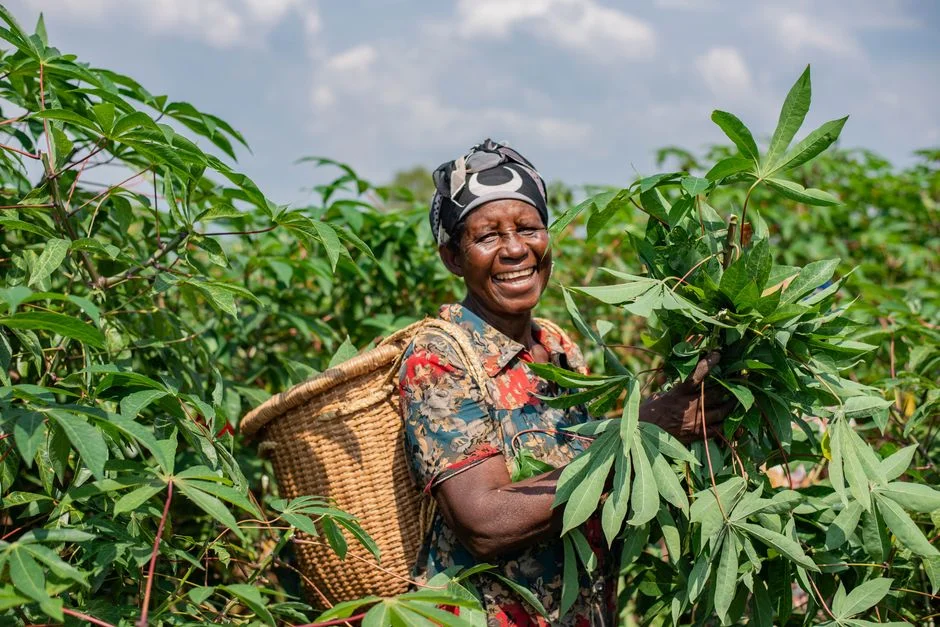
Add cassava as your insurance. It grows best on 1000-1500 mm but keeps producing down to 500 mm (FAO), and because you dig the roots only when you need them, it sits in the ground as a living store through a bad spell. See preparing land for cassava in a dry season.
How do I protect my cattle and goats through the drought?
Act on your herd early, while animals are still in good condition and prices hold. In southern Angola, cattle prices have already fallen from about 400,000 kwanza a head in 2023 to 150,000 kwanza by May 2026 — one animal now buys only two 100 kg bags of maize, down from six (FEWS NET). Waiting to sell a thin animal into a flooded market costs you.
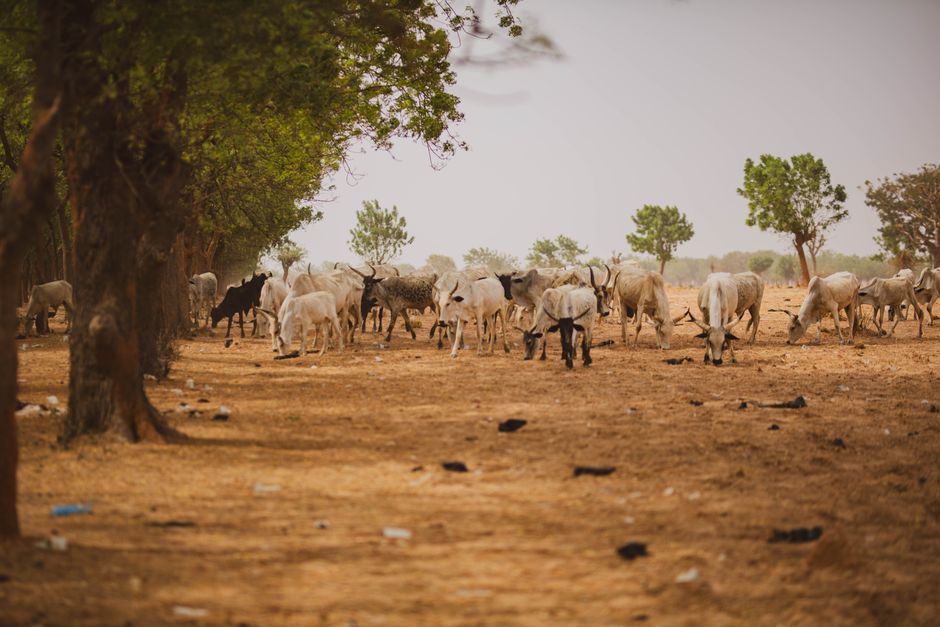
Photo: Express_photographyy / Pexels
- Destock early: sell or slaughter your weakest animals now — destocking means cutting your herd to the number your grazing and water can actually carry, so the rest stay strong.
- Store feed: cut and store crop residues — maize stalks, cowpea and groundnut haulms — before they rot or blow away.
- Secure water before the dry season bites.
Full plan: protecting livestock through an El Niño dry season.
How can I make the most of little rain on my plot?
Catch and hold every drop where it falls. Two low-cost methods suit Angola's dry south:
- Planting basins or half-moons: curved pits 2-3 m across and 15-30 cm deep that trap runoff around each planting station. They suit zones getting under 250-500 mm, concentrating scarce rain on the crop; add about 35 kg of compost or manure per half-moon — three to four 20 L tins (latas) (CCARDESA).
- Keep the soil covered: leave last season's residue or spread mulch so the ground stays shaded and loses less water, and disturb the soil as little as possible.
More: smart rainwater harvesting.
When should I plant if the rains come late?
Wait for the real rains, not the first shower — a false start (one storm, then a dry fortnight) kills seedlings and wastes seed. Dig a small hole: if the soil is moist to about a hand's depth and more rain is forecast, it is safe to plant. More on timing planting to the first real rains.
Your next step this week
Choose your dry-year crop mix now: a drought-tolerant, early-maturing maize for the planalto, or pearl millet and sorghum for the arid south, plus a corner set aside for cassava as your living store. Then reserve or buy that seed before demand rises.