 Divisi
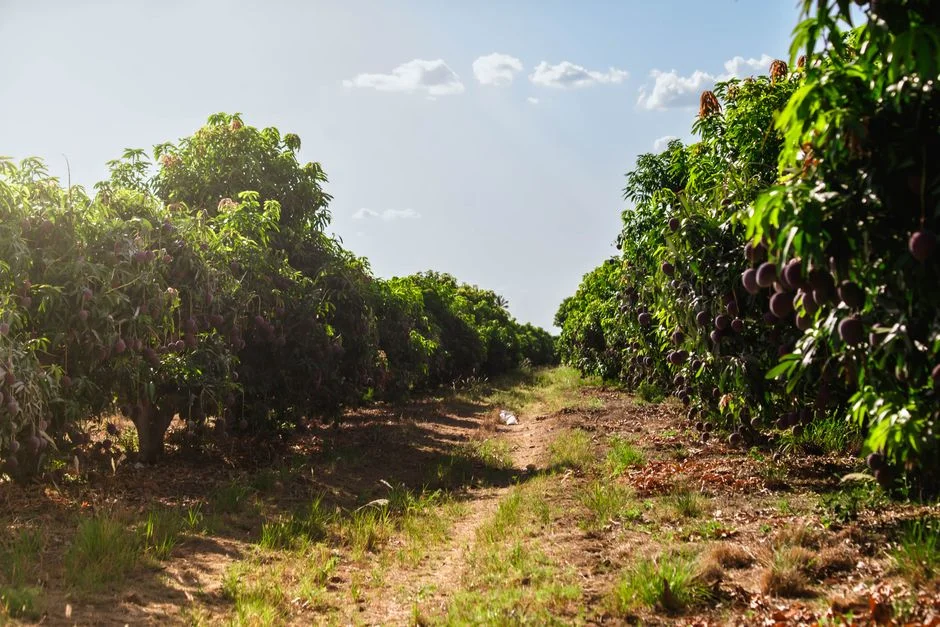
Mango flowers on a simple cue: a cool, dry rest - nights around 10-15°C plus a dry spell of two to three months before bloom - tells the tree to push out its flower panicles together (National Mango Board; World Agroforestry). A warming, erratic climate blurs that cue, so the levers you can actually pull are variety choice, mulch, the timing of your water, and protecting the flowers. Get them right and your trees can carry a full crop in a year when your neighbour's barely set.
The familiar symptoms - flowering at odd times or barely at all, rain arriving when the tree wants dry weather, fruit setting poorly one year and glutting the market the next - all trace back to that disturbed trigger. Here's what to do about it this season.
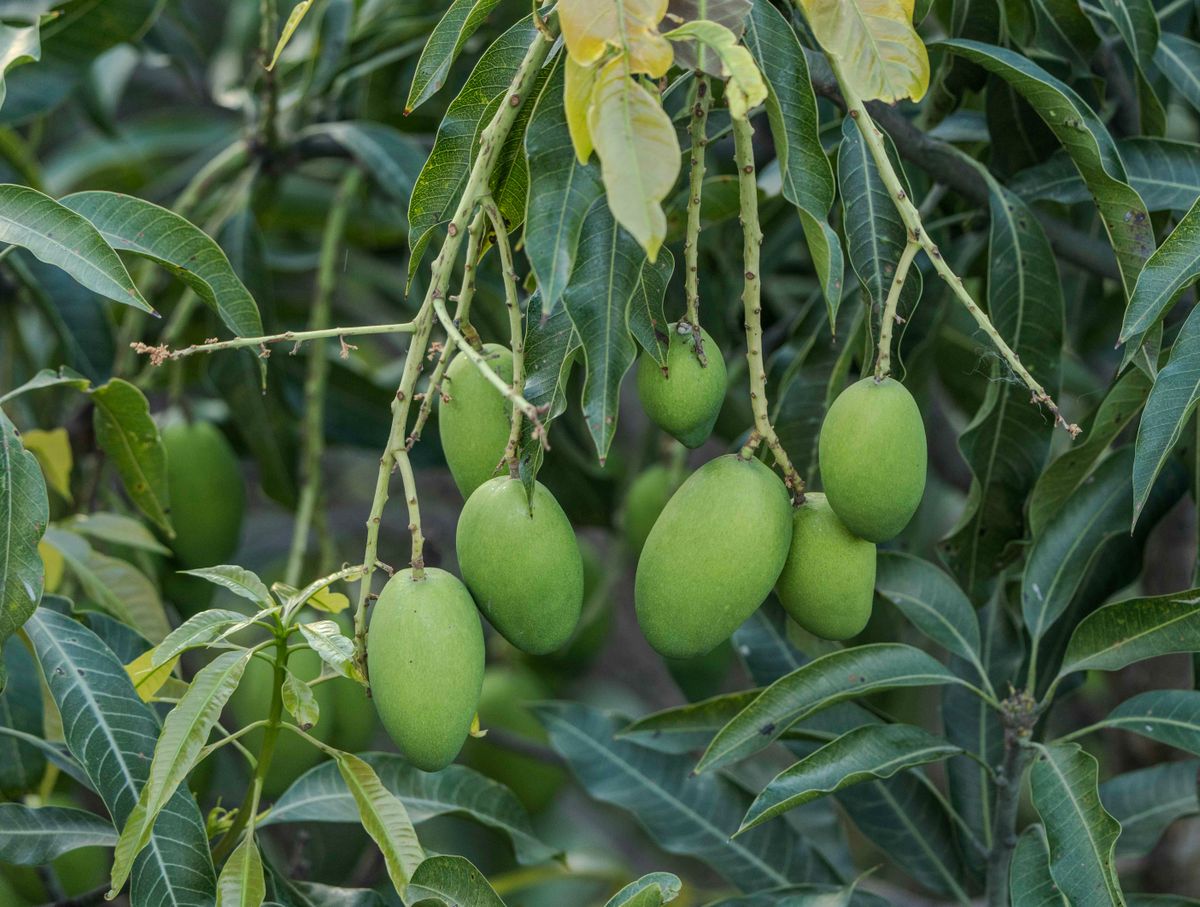
Photo: Rajesh S Balouria / Pexels
Why is my mango tree flowering at odd times or not fruiting?
Mango needs that cool, dry rest - nights near 10-15°C for the cool signal (National Mango Board) and a two-to-three-month dry spell before bloom (World Agroforestry) - to bring the panicles out evenly. Warmer winters weaken the cool signal, so flowering turns scattered and irregular.
If rain or high humidity then lands during flowering, two things go wrong at once: the flowers set poorly, and the damp feeds anthracnose (Colletotrichum gloeosporioides), the fungus that blackens panicles and spots young fruit. Extreme heat piles on, making the tree shed flowers and struggle to fill fruit.
Warmth also speeds up the mango fruit fly (Bactrocera dorsalis, formerly B. invadens): egg-to-adult development drops from about 64 days at 15°C to roughly 16 days at 30-33°C, so hotter seasons pack in more generations and heavier pressure (IITA temperature model). Fruit flies already cost African growers an estimated US$2 billion a year (icipe) - this is money off your bottom line, not just a nuisance.
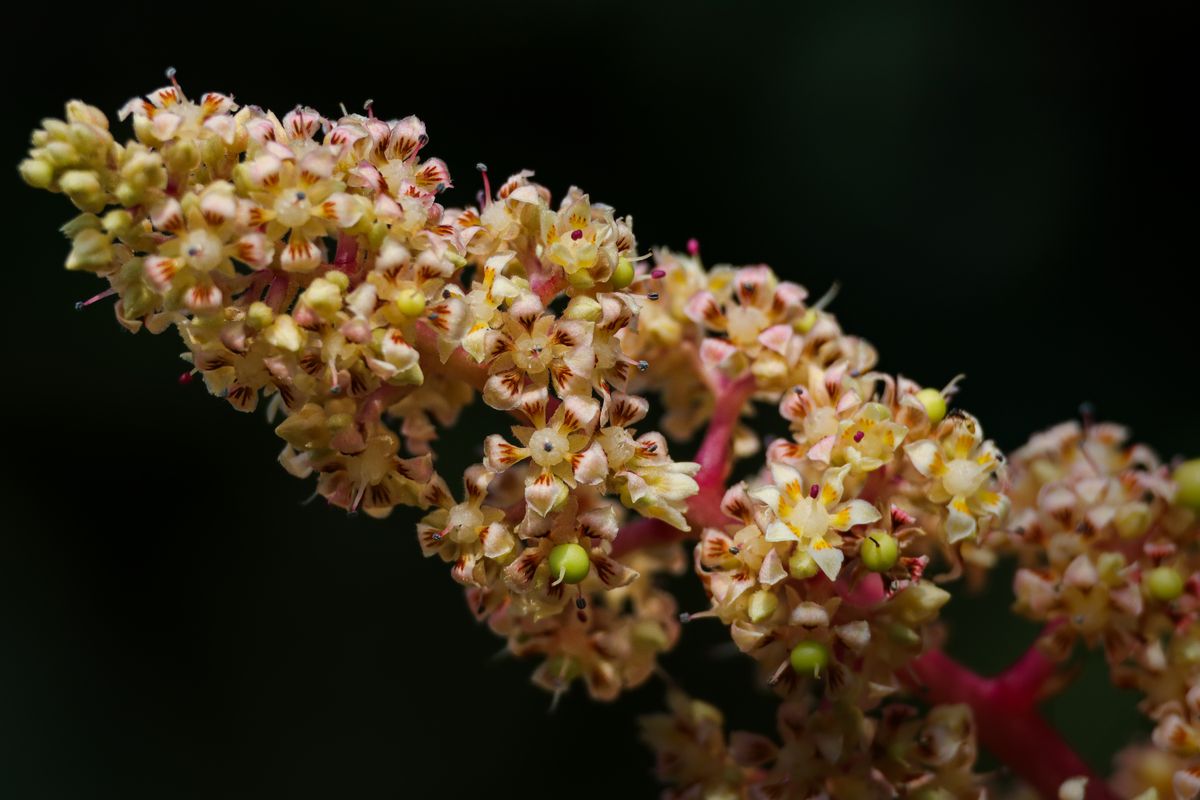
Photo: NATIVE WILD / Pexels
How can I adapt my mango trees to erratic weather?
You can't set the weather, but you can stack the odds - and variety is your biggest lever. Grow an early and a late type together so a single bad flowering window can't wipe out the season:
| Variety | Harvest window (Kenya) | Notes | Where it fits |
|---|---|---|---|
| Ngowe | Early (Nov–Jan) | First to market, thin skin | Eastern & Coast belt |
| Apple | Early–mid (Dec–Jan) | Strong local-market favourite | Eastern (Machakos, Makueni) |
| Tommy Atkins | Mid (Dec–Feb) | Less anthracnose-prone than Haden; tough skin travels well | Eastern lowlands |
| Kent | Late (Feb–Apr) | Sweet, export-grade | Embu/Meru highlands |
| Keitt | Latest (Mar+) | Flowers late, dodges early-rain windows | Higher, cooler sites |
Sources: Infonet-Biovision; Selina Wamucii.
Pairing a late Kent or Keitt with an early Ngowe or Apple widens your selling window and lets the late type flower after an early-rain spell has passed. Then keep the trees themselves in fighting shape, working in IPM order - cultural steps first, chemicals last:
- Open the canopy. Prune so air and light move through; panicles dry faster after rain and anthracnose gets less of a hold.
- Spray only if it stays wet through flowering. A copper-based fungicide (short one-day pre-harvest interval) or mancozeb at label rate every 14 days from first flower - stopping mancozeb 14 days before harvest - protects the bloom (NT Government; UF/IFAS-TREC). Wear gloves and a mask, and rotate products so the fungus can't build resistance.
Does mulching help mango trees in a changing climate?
Yes - it's one of the cheapest wins you have. A thick organic mulch under the canopy holds soil moisture through longer dry spells and steadies soil temperature in the heat, so trees stay unstressed and flower and set better. Fruit-tree guidance is a generous 15-20 cm of straw, grass or leaf litter, spread out to the drip line and kept a hand's width off the trunk (UMass Extension); top it up as it rots down. For more on moisture-holding soil, see our compost, manure and mulch guide.
How should I water mango trees through the season?
Mango wants opposite things at different times. Hold water back for the two to three months before flowering - watering then just pushes leafy growth instead of flowers (World Agroforestry). Once it flowers, switch to steady water every 8-12 days right through fruit fill to carry a full crop (World Agroforestry). Keep drainage sharp so heavier storms don't waterlog the roots. Where water is tight, smart water-harvesting stretches every drop.
Your next step this week
Adaptation isn't one big change - it's small, timed moves. Match the action to the stage your trees are at now:
| Stage | Do this now | Why | Measurable trigger |
|---|---|---|---|
| Before flowering | Stop irrigating; open the canopy | Sharpens the cool-dry flowering cue | ~2–3 months before you expect flowers; nights near 10–15°C |
| At flowering (if wet) | Start protective anthracnose sprays; scout panicles | Wet flowers set poorly and feed the fungus | Rain or heavy dew during bloom, or first black spots on panicles |
| After fruit set | Resume watering every 8–12 days; lay 15–20 cm mulch; start fruit-fly sanitation | Steady water fills fruit; sanitation breaks the fly cycle | Collect and bury fallen fruit ≥50 cm deep at least twice a week; hang bottle bait-traps 10–50 m apart (Infonet-Biovision) |
| At harvest | Pick at maturity, never overripe | Overripe fruit on the tree draws fruit flies | Shoulders filled level with the stem, skin breaking from deep green to lighter, flesh yellow by the stone when you cut one (UC Davis) |
| Between seasons | Add one earlier and one later variety | Spreads risk across two flowering windows | e.g. plant Keitt/Kent (late) beside Ngowe/Apple (early) |
Get this right and a grafted tree can carry 200-500 fruits a year, with a mature orchard reaching about 15 tonnes a hectare from its seventh year - some 750 market crates at roughly 20 kg each (Infonet-Biovision). Read the cool-dry cue, choose suited varieties, mulch, time your water and guard the flowers, and you protect both the crop and the income it brings.