 Divisi
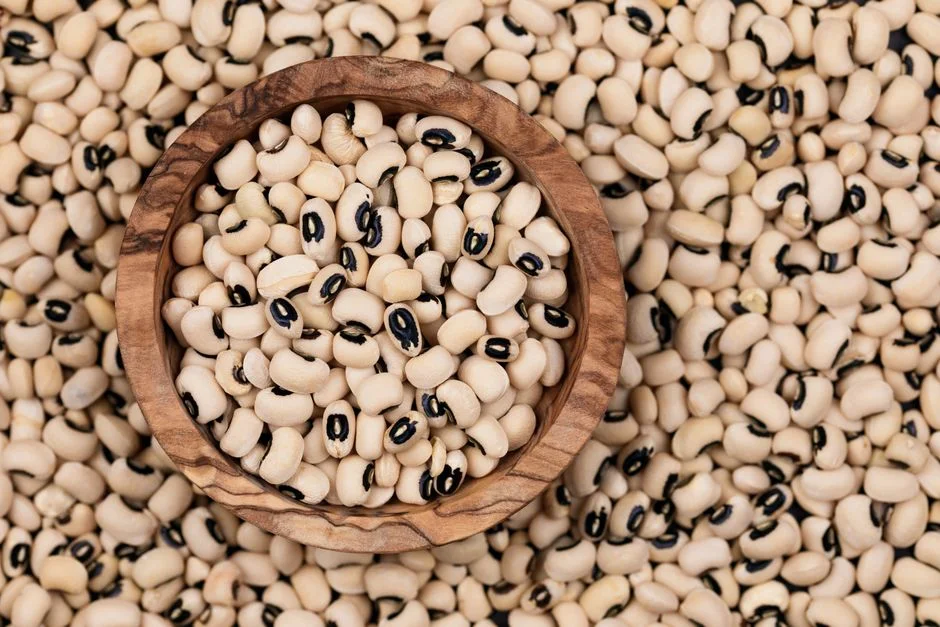
Cowpea — niebe — is the crop to plant when the monsoon looks shaky, because early types can mature in as little as 60 days, feed themselves by fixing nitrogen from the air, and give you grain to sell plus fodder for your animals. In a wobbly El Nino monsoon, that makes it your insurance crop: short, drought-hardy, and built to protect your income when the rains start late or cut out early.
Why is cowpea the safest crop to plant in a shaky monsoon?
Because it lowers your risk three ways at once. Improved varieties reach harvest in 60–79 days, so a short cowpea crop can finish before a dry spell bites (IITA West Africa guide). Its root nodules fix nitrogen — field studies in Africa measured 1–71 kg of nitrogen per hectare pulled from the air, with up to 92% of the plant's nitrogen coming from fixation (Sustainability, 2023). That means a smaller fertiliser bill now and a nitrogen deposit left for next year's millet or sorghum. And it is dual-purpose: you sell the grain, and the leaves and vines feed your goats or sell as fodder. Grow it alongside your groundnut plan and you spread risk across two hardy legumes.
Which cowpea variety should I choose this year?
Match the variety to the rain you expect — in a doubtful season, lean early.
| Variety | Type | Days to maturity | Grain yield |
|---|---|---|---|
| IT93K-452-1 | Extra-early | 60–69 | ~1.2 t/ha |
| IT90K-82-2 | Early | 70–79 | ~1.5 t/ha |
| IT97K-499-35 | Medium, dual-purpose | 80–89 | ~1.6 t/ha + strong fodder |
Varieties and figures: IITA West Africa guide. That top yield of 1.6 t/ha is about 1,600 kg — roughly 640 mudu (a mudu is about 2.5 kg) from one hectare.
How do I space cowpea and slot it into my millet or sorghum?
Sow erect types at 50 cm between rows and 20 cm within rows, dropping 3 seeds per hole and thinning to 2 strong plants about two weeks after emergence. That comes to about 30 kg of seed per hectare — roughly 12 mudu (a mudu is about 2.5 kg) (IITA cowpea manual). Before you sow, dress the seed with a fungicide (Apron Plus, about 10 g per 4–5 kg of seed) to protect emergence from damping-off and seed-borne fungi — this guards germination, but it is not an aphid control (IITA cowpea manual).
To intercrop, plant cowpea 4–6 weeks after your cereal so it is not shaded out, in a strip pattern:
| In the field | Arrangement |
|---|---|
| Cereal strip | 2 rows of millet or sorghum |
| Cowpea strip | 4 rows of cowpea |
| Cowpea spacing | 20 cm apart, 3 seeds per hole (thin to 2) |
| Timing | Cowpea 4–6 weeks after the cereal |
A small dose of phosphorus (about 30 kg P/ha) helps the nodules fix nitrogen well (IITA West Africa guide). Building soil that holds water makes every drop of a variable rain count.
How do I stop striga, aphids and pod borers cutting my yield?
Know the pest first, then act early. Here is what each one looks like and when it shows up:
| Pest | What to look for | When it strikes |
|---|---|---|
| Striga (witchweed) | Small purple-flowered weeds between the rows; stunted, yellowing cowpea | A few weeks after emergence |
| Cowpea aphid (Aphis craccivora) | Dense clusters of shiny black insects on shoots, buds and pod stalks; sticky, curling leaves | Seedling stage, 14–21 days after planting |
| Pod borer (Maruca vitrata) | Webbed, holed flowers and bored pods; small caterpillars tucked inside the bloom | From flowering, ~30–35 days after planting |

Photo: Petr Ganaj / Pexels
Then work the playbook:
- Striga: rotate cowpea with cereals and plant a resistant variety like IT99K-573-1-1, which also yields up to 2.6 t/ha — control that costs you nothing extra (IITA cowpea manual).
- Aphids: the fungicidal dressing at planting guards emergence but is not an aphicide. Where aphids bite, use an insecticidal seed dressing such as Apron Star 42 WS, which adds thiamethoxam to shield young seedlings from early insect pests (Syngenta); then scout seedlings 14–21 days after planting and act on the first black clusters.
- Pod borer (Maruca): protect the flowers with three sprays, the first at 30–35 days after planting, then about 10 days apart (IITA cowpea manual).
- No-tool field test: shake a flowering branch over your open palm. If tiny caterpillars or clustered aphids drop, it is time to act.
How do I store my cowpea so weevils don't eat my profit?
Seal it airtight and starve the weevils of oxygen. In Niger trials, hermetic PICS triple-layer bags dropped oxygen inside to about 10.6% within two days and held grain with almost no weight loss, while ordinary woven bags lost up to 29% of grain weight to bruchids (PICS trial, Niger).
| Step | Do this | How you know it is right |
|---|---|---|
| Dry it hard | Sun-dry the grain before storing (aim below 10% moisture) | Bite test: a dry seed shatters and does not dent under your teeth |
| Seal it airtight | Fill a PICS/triple-layer bag (about 50 kg), press out the air, tie each liner separately | The neck ties tight with no gaps and the bag holds its shape |
| Sun-heat option | Spread grain thin on a dark sheet in strong midday sun | The grain climbs above 50°C — too hot to hold — which kills hidden weevils in under an hour (K-State solar heat) |
| Low-cost extra | Coat grain with a spoon of cooking oil (about 5 mL per kg) before sealing | Grain looks lightly glossed and evenly coated (IITA West Africa guide) |
Your next step this week
- Check your seasonal rainfall outlook, then pick one extra-early and one medium variety.
- Buy certified seed — about 12 mudu (30 kg) per hectare — plus a phosphorus starter.
- Set aside one PICS or triple-layer bag now, so your harvest is protected before the weevils arrive.