 Divisi
This El Niño year, your biggest risk in DR Congo is not too much rain or too little — it is rain that starts late, stops early, and falls in bursts. Protect your income with three moves: plant on the real rain, plant only clean cassava cuttings, and dry your maize hard before you store it.
El Niño doesn't hand DR Congo a tidy "wetter" or "drier" verdict the way it does East Africa's floods or the southern dry spells — over the equatorial Congo Basin its signal is weak and mixed. The surer trend is a slow drying: the central basin has been losing about 90 mm of rain per decade since 1981. So plan for an unpredictable season, not a simple wet or dry one.
Will El Niño make my rains heavier or drier this year?
Neither, reliably. Most of DR Congo is bimodal — you get two rainy seasons — and El Niño mostly makes their onset (start) and mid-season dry spells harder to predict.
| Where you farm | Rain pattern | Plant your main crop |
|---|---|---|
| Eastern highlands (Kivu, Ituri) | Two seasons | Saison A: Sept–Jan; Saison B: Feb–May |
| North & central basin (Équateur, Tshopo) | Rain most of the year | Two crops; sow on each rain's real start |
| Southern plateau (Haut-Katanga, Kasaï) | One long season | Sow Oct–Nov; this zone leans drier, like neighbouring Zambia |
No-tool onset test: don't plant on the first shower. Wait until the soil is wet to a spade's depth (about 20–30 cm) after two good rains within a week — that is how you dodge a false start that wastes your seed. New to reading a forecast? See how to read a seasonal rainfall forecast and what El Niño means for your farm.
How do I stop cassava mosaic and brown streak in my field?
Start with clean planting material — both diseases ride in on your cuttings and on whiteflies (Bemisia tabaci). Cassava mosaic disease (CMD) is caused by cassava mosaic geminiviruses (begomoviruses such as East African cassava mosaic virus); cassava brown streak disease (CBSD) is caused by Cassava brown streak virus and Ugandan cassava brown streak virus. Learn to tell them apart before you cut a single stem:
| What to check | Cassava mosaic disease (CMD) | Cassava brown streak disease (CBSD) |
|---|---|---|
| Leaves | Yellow-green mottling; twisted, misshapen leaflets | Yellow blotches along the veins, in feathery patches |
| Stems | Stunted, bushy young shoots | Brown streaks on the green stems |
| Roots | Often look normal, but yield is still cut | Brown, dry corky rot inside — seen only when you cut a root open |
| Hits hardest | Young plants grown from infected cuttings | The longer the crop stays in the ground |
Work in this order:
- Sanitation: take cuttings only from healthy plants, cut from the middle of the stem, and throw away any stem with brown streaks. Pull out and destroy sick plants.
- Resistant variety + clean seed: CMD-resistant types like Nabana or Sawasawa cut mosaic losses, but they are still susceptible to brown streak — so even with them, plant only clean cuttings, keep spacing even, and rogue sick plants. Where you can source one, a variety with combined CMD and CBSD tolerance is better still.
- Intercrop, don't lean on tall barriers: growing cassava at good density with a legume such as cowpea or groundnut is linked to lower whitefly numbers and less mosaic spread — dense planting does more than a few tall rows around the plot.
- Chemical (last resort): only where pressure is high; wear gloves and a face mask, and follow the label's pre-harvest interval.
The stakes are real: even with a CMD-resistant variety like Nabana, brown-streak-infected cuttings still cut yield about 44% at 9 months and up to 86% at 12 months, and cassava virus diseases together can cost 20–95% of a crop.
Field test: cut two or three roots at about 6 months and look inside for brown, corky streaks. If you find them, plan an early harvest.
When should I harvest my cassava?
If brown streak is in your field, harvest by 9 months — waiting to 12 nearly doubles the rot. Infected roots yielded 52.5% less at 12 months than at 9. Healthy, resistant varieties are different: they reach peak yield at 12–15 months and can stay in the ground as a living store of food and cash until you need it. Sell fresh roots by the basin (bassin) or dry them into cossettes to store and sell by the 50 kg bag (sac).

Photo: micka randrianjafisolo / Pexels
How do I dry and store maize so it doesn't spoil in the humidity?
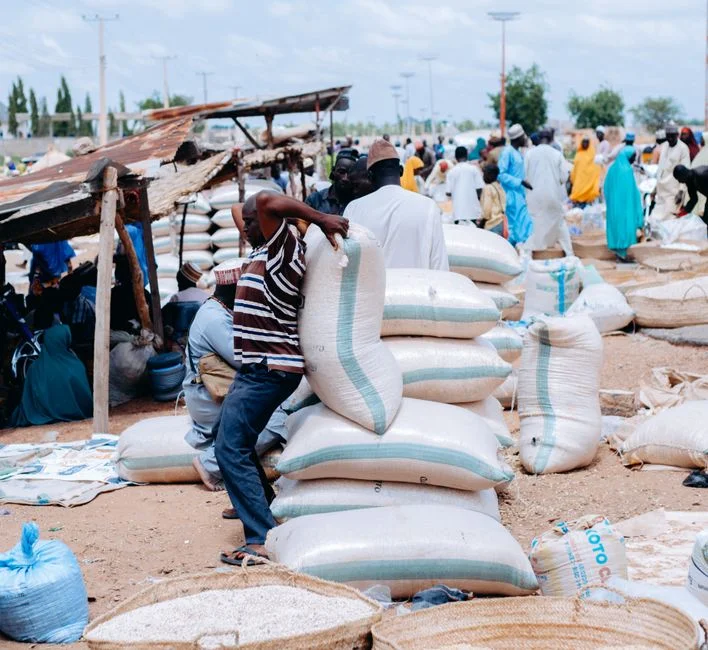
Dry maize to 14% moisture and seal it in a hermetic bag — in humid Congo air that is the line between a sellable 50 kg bag and a mouldy one. The mould that makes aflatoxin (Aspergillus flavus) takes hold fast: if wet grain isn't dried within 72 hours, aflatoxin becomes a problem, so shell within 24–48 hours of harvest and dry until no part is above 15% moisture.
- No-tool moisture test: seal dry grain with a spoon of dry salt in a clear bottle for 15 minutes. If the salt clumps or sticks to the glass, the grain is still too wet. A ready kernel shatters when you bite it — it does not dent.
- Beat weevils and grain borers (Sitophilus zeamais, Prostephanus truncatus): ordinary bags lost 41% of grain weight to insects over eight months, versus under 1% in a triple-layer hermetic (PICS) bag.
More detail in dry-store maize and beat aflatoxin.
What should I plant to spread my risk this season?
Keep cassava as your backbone and add shorter crops so one bad spell can't take everything.
| Crop | Why it fits a variable year |
|---|---|
| Cassava | Backbone; harvest flexibly 9–15 months by disease status |
| Early maize | Cash in about 90–120 days; store dry in 50 kg bags |
| Groundnut | Fixes nitrogen in the soil; dry hard to dodge aflatoxin |
| Beans | Quick food and cash; fit Saison B |
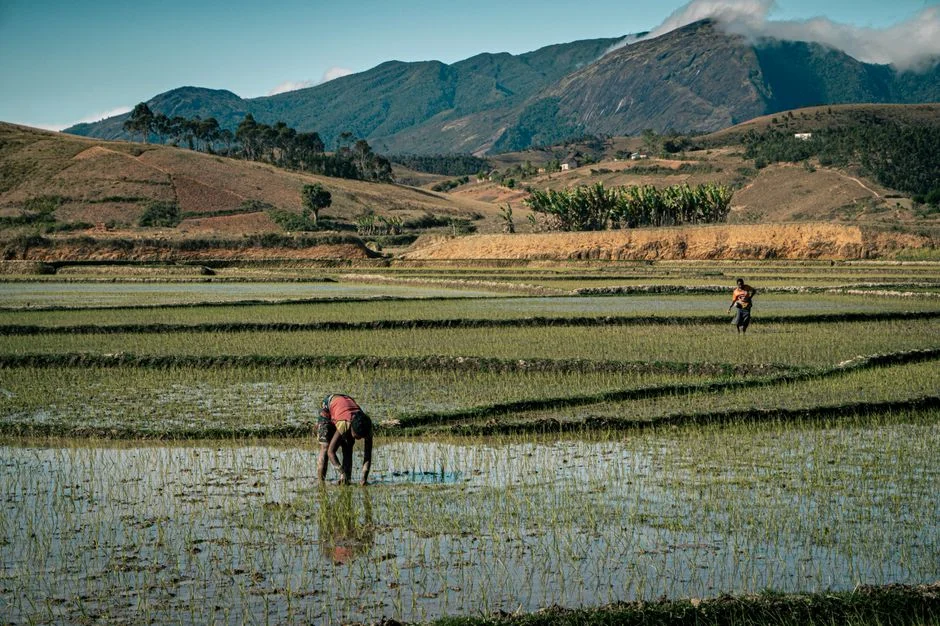
| Lowland rice | Uses wet valley bottoms if the rains come heavy |
Stagger planting over two or three weeks so a false start or a dry spell hits only part of your land — and pick certified, early-maturing drought-tolerant seed for your maize so it finishes before the rains quit. For cassava land preparation in the drier south, borrow steps from Zambia's cassava plan.
Your next step this week
Walk your cassava plot and mark your cleanest, healthiest plants now — those are your cutting source for next season. Then check your maize store: if the salt test clumps, spread the grain to dry before you lose a single bag.