Divisi
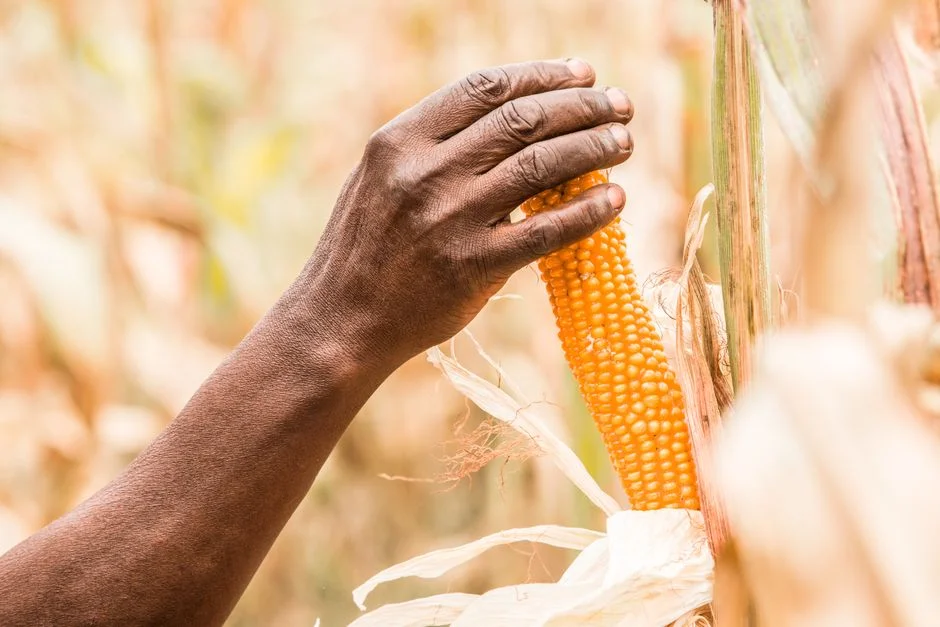
In a short-rains season your maize yield is mostly decided before any drought bites — by the variety you choose, the day you plant, and how you space and feed the crop. Get those right and a drought-tolerant, early-maturing variety can still add about one tonne per hectare under moderate drought — roughly 11 more 90 kg bags off every hectare (CIMMYT).
This is the agronomy that protects your maize when the rains are short. If you are still weighing up whether this season will be dry where you farm, start with what El Niño means for your region; this guide picks up from the moment you know the season will be tight.
Which maize variety should I plant if the rains will be short?
Choose a drought-tolerant (DT), early-maturing variety and match its days-to-maturity to a short season. DT maize bred by CIMMYT and national programmes yields about a tonne per hectare more under moderate drought and 20–30% more than farmers' current varieties, and now reaches more than 40 million people across 13 African countries.
Maturity length is your safety margin. Early hybrids reach maturity in 120–140 days, medium-to-late types in 141–155 days (Seed Co). In a season the forecast says will be short, pick a 120–130 day variety so flowering and grain-fill finish before the rain quits.
No-tool maturity test: look for the black layer — a small black dot at the base of each kernel. Once it appears, the grain is made and no longer needs rain.

Photo: William Lucord / Pexels
How far apart should I plant maize in a dry area?
Plant fewer plants per hectare in drier zones so each one gets its share of scarce water. Aim for about 37,000 plants per hectare in low-rainfall areas, at a seed rate of roughly 25 kg/ha (about 10 kg per acre) — seed is sold in kilogram packs, so that is about one 10 kg pack per acre (Seed Co). One seed per station: a single, evenly-spaced stand beats a crowded one when moisture is short.
| Your zone this season | Row spacing | In-row spacing | Plants/ha |
|---|---|---|---|
| Dry / short El Niño season | 90 cm | 30 cm, 1 seed | ~37,000 |
| Normal / good rainfall | 75 cm | 25 cm, 1 seed | ~53,000 |
Spacing and plant populations: Seed Co, Zambia.
When exactly should I plant on the first rains?
Plant on the first effective rains, not the first shower. A workable onset rule developed in the West African Sahel and now applied widely across dryland Africa: at least 20 mm of rain over 3 consecutive days, with no dry spell longer than 7 days expected in the next 30 (Sivakumar, ICRISAT). Southern-African meteorologists work to a similar effective-onset idea — a proper soaking backed by steady follow-up rain, not a single storm (Moeletsi & Walker). Under dryland conditions, planting with the first rains (often November in the south) is the safest bet (Seed Co).
Field test: after the rain, dig down 15–20 cm. If the soil is moist that deep, it is charged for planting. A 5 mm shower that dries by afternoon is a false start — it germinates your seed straight into a dry spell. Before you commit seed, read the seasonal forecast.
How do I feed and weed my maize without wasting money?
Two cheap moves protect most of your yield:
- Microdose your fertiliser. Place a three-finger pinch of compound fertiliser in each planting hole at sowing, or at the plant base two weeks after. CGIAR reports 43–120% yield increases from microdosing — figures drawn from Sahelian millet and sorghum trials, though the same put-it-at-the-roots logic carries to maize (CGIAR). It puts scarce fertiliser where the roots are instead of broadcasting it away. (Full method in our West Africa microdosing guide.)
- Weed early. Keep the crop weed-free for the first 10 weeks; let weeds run for the first 5 and you can lose 50% of your yield (Seed Co). Weeds drink the same water your maize needs.

Photo: ahadi muyali / Pexels
How do I protect my maize at flowering, the make-or-break stage?
Flowering — tasselling and silking — is the most water-sensitive stage of the whole crop. FAO rates its sensitivity highest (yield response factor 1.30 at flowering versus 1.25 for the season), and severe water shortage at silking can leave little or no grain (FAO). Trials put yield loss at about 50% from stress at silking, versus 25% in the vegetative stage and 21% during grain-fill (Nature Scientific Reports).
You cannot make rain, but you can steer this window. Your variety's maturity length plus the onset rule decide when the tassels appear — aim them at the wettest weeks, not a forecast dry spell. A full-yield maize crop needs 500–800 mm of water across the season (FAO); in a short year, every millimetre you keep in the soil through early weeding and wider spacing lands where it counts most — so prepare the land to trap that water before the rains, with the planting basins and mulch in our Zimbabwe Pfumvudza land-prep guide.
Your next step this week
Before you buy seed, confirm the maturity length: ask your agrodealer for a drought-tolerant variety that matures in 120–130 days, and buy about 25 kg/ha (10 kg/acre) (Seed Co). That one choice sets the ceiling for everything else this season.