Divisi
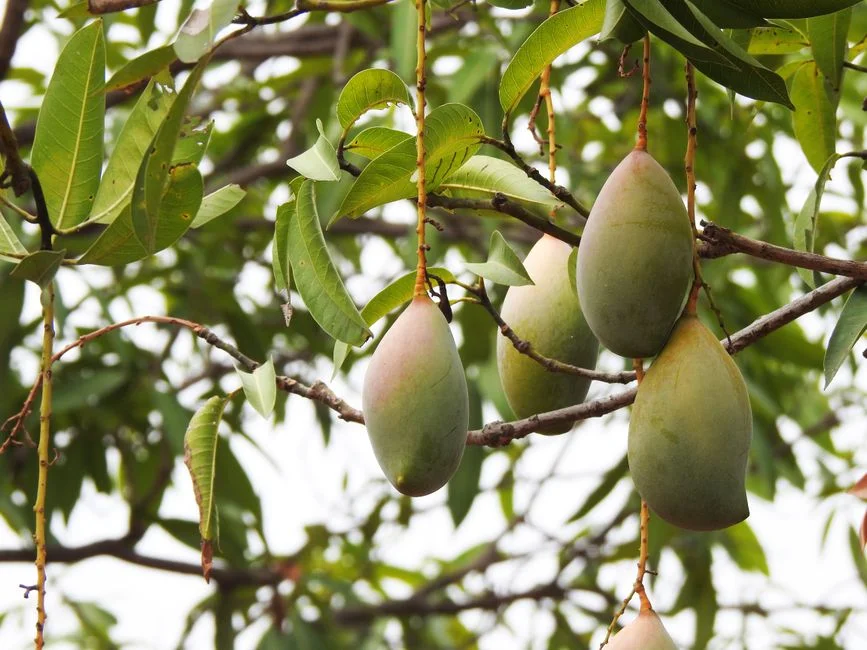
You can nurse a mango crop all the way to full-sized fruit and still lose it in the final weeks — to pests that attack from the inside. The fix is a routine you start before the fruit even colours: keep the orchard floor clean, hang one trap for every 20 trees, and bag or bait the moment flies appear. The two culprits are mango fruit flies (Bactrocera dorsalis and Ceratitis cosyra) and the mango seed weevil (Sternochetus mangiferae). In Southern Africa (SADC) alone, fruit flies cost fruit farmers an estimated US$2 billion a year and lock many growers out of export markets (FAO). The upside is just as concrete: in icipe's trials in Embu County, Kenya, a solid IPM programme cut rejected mango by an average of 54.5% (icipe). In market terms, a Kenyan grower gets about KES 15–25 a kilo for clean mango locally and up to KES 60 a kilo at export grade, while fly-stung fruit is dumped on brokers for as little as KES 2 a fruit (The Standard) — so a full crate (~25–30 kg) of clean fruit is real income you can defend, and a crate of rejects is a near write-off.
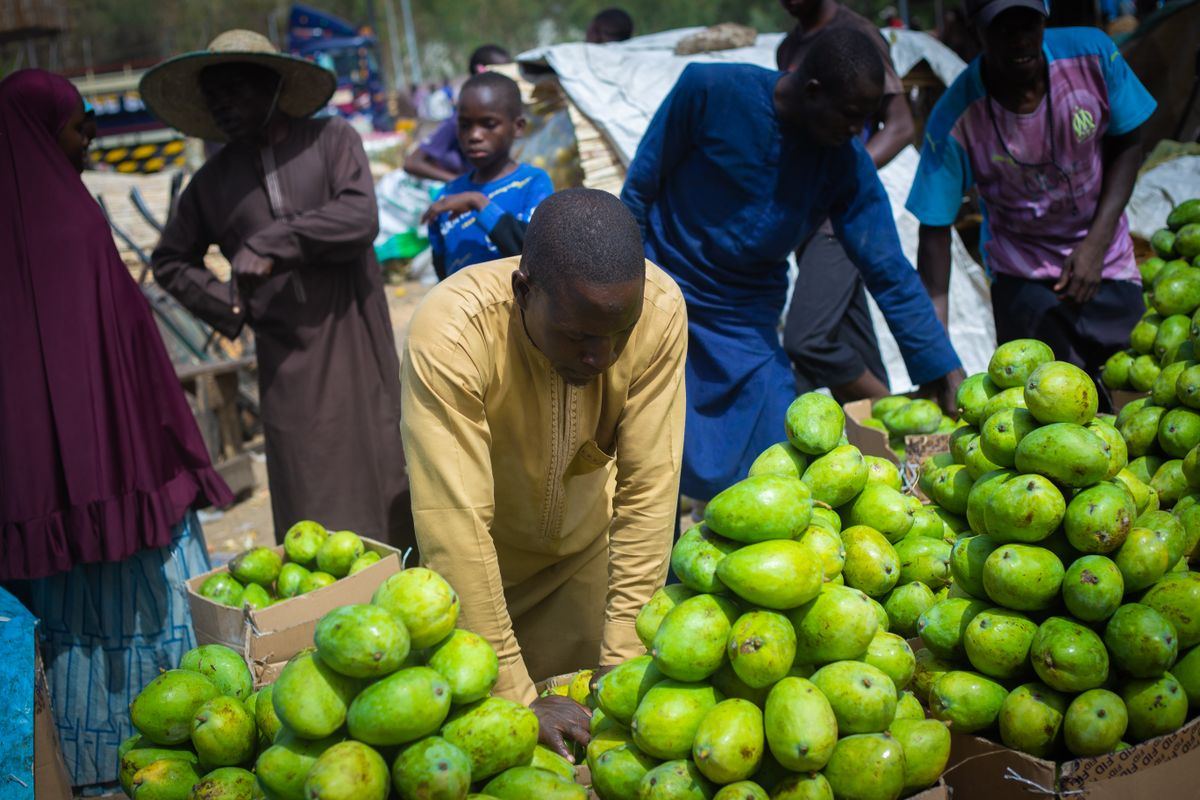
Photo: Muktar Zubairu / Pexels
The two pests cause similar-looking losses but need different responses. Here is the quick contrast:
| Pest | How to spot it | When it strikes | What actually controls it |
|---|---|---|---|
| Mango fruit fly (Bactrocera dorsalis, Ceratitis cosyra) | Sunken punctures that ooze sap; early fruit drop; maggots in cut flesh; rising trap catches | Flowering through ripening — worst as the fruit softens | Twice-weekly sanitation, traps, a spinosad protein-bait spot spray, bagging, and mature-green harvest |
| Mango seed weevil (Sternochetus mangiferae) | Flesh often looks fine; a grub or tunnel shows only when you split the seed (stone); caught at export inspection | Eggs laid on developing fruit; the larva matures sealed inside the stone | Sanitation only — destroy fallen fruit and stones, and bag early; sprays and hot-water dips cannot reach it |
How do I know if fruit flies are attacking my mangoes?
Fruit flies sting the fruit to lay eggs just under the skin; the maggots then tunnel the flesh and the fruit rots and drops. Watch for small sunken punctures that ooze sap, early fruit drop, and maggots inside a cut fruit. The earliest warning of all is a hanging trap that suddenly starts catching flies — that is your signal to act, before the stings show.
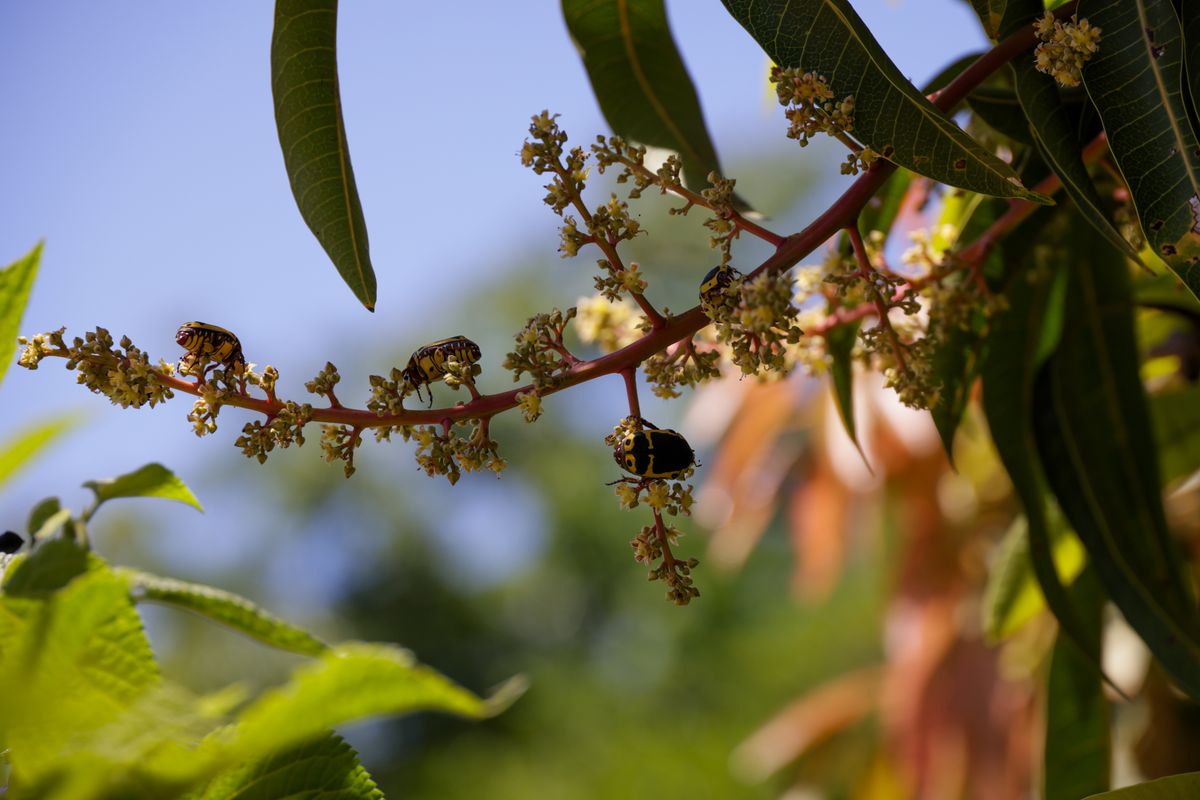
Photo: Magda Ehlers / Pexels
What is the mango seed weevil?
The mango seed weevil lays eggs on developing fruit; the young larva tunnels through the flesh and finishes growing inside the seed (stone), where nothing you spray or dip on the outside can reach it. The good news: the flesh usually heals over and stays edible, so it does little to eating quality — its real cost is at the market, where quarantine rules can block infested fruit from export (Business Queensland).
Because the weevil hides in the stone, sanitation does the heavy lifting:
- Destroy every fallen and cut fruit, stone included — chop it finely or bury it about 50 cm deep to kill the larvae inside (Infonet-Biovision).
- Bag fruit early (see below) to keep egg-laying females off young fruitlets.
- Don't count on hot-water dips or protein baits for this one — neither reaches the larva sealed in the seed.
What is the most important thing to control mango fruit flies?
Sanitation — the single most powerful tool, and it costs nothing but effort. Collect and bury or destroy all fallen and stung fruit at least twice a week during the fruit season (The Organic Farmer) — often enough to clear dropped fruit before the eggs inside it can hatch and pupate. Fallen fruit on the ground is where the next generation breeds, so clearing it relentlessly breaks the cycle at its source — more than any spray on its own (icipe field guide). Add traps for monitoring, and when traps first catch flies or the first stings appear, spot-treat with a protein bait mixed with a small dose of an approved insecticide — spinosad-based baits such as GF-120 are the low-toxicity, pollinator-sparing standard (CDFA). Dab it on about a 1 m² patch of the trunk or canopy, away from the fruit: it draws in and kills egg-laying females while sparing bees, and keeps residue off the fruit (icipe field guide). Wear gloves, follow the label, and respect the pre-harvest interval before picking.
How do I make a simple fruit-fly trap?
You don't need to buy fancy gear to monitor and knock back flies:
- Take a clean plastic bottle and make a few small entry holes near the top.
- Inside, place a lure — a proprietary lure (methyl-eugenol for Bactrocera, a protein/food lure for Ceratitis) where you can get it, or a simple food bait such as a little fruit juice.
- Add a drop of water with a trace of soap so flies that enter can't escape.
- Hang one trap for every ~20 trees in the shaded part of the canopy from flowering onward, and check them twice a week (icipe field guide).
Rising catches are your cue to step up sanitation and protection before damage spreads.
Can I protect individual mango fruits?
Yes. Where pressure is heavy and the crop is valuable, bagging individual fruit on the tree — paper or fabric sleeves fitted once the fruitlets are small — physically shuts the flies out and delivers clean, premium fruit.
Then harvest at mature-green rather than letting fruit over-ripen on the tree, where the flies do their worst. You don't need a colour chart — read the fruit itself:
- Shoulders filled out, rounded up past the stem rather than sloping away.
- Colour breaking at the nose (beak) — the dull green lifting to a lighter or faintly yellow tinge.
- Float test: a mature fruit dropped in water sinks or floats low; an immature one bobs high.
After harvest, a hot-water dip cleans up post-harvest rots like anthracnose: 50°C ± 2°C for 5–10 minutes, no hotter and no longer, or you scald the fruit and it ripens blotchy (UC Davis Postharvest). Use a kitchen thermometer and keep the water moving so the temperature holds steady. Killing fruit-fly larvae for export is a separate, stricter quarantine treatment — the USDA-APHIS hot-water schedule (T102-a) immerses the fruit in 46.1°C water for 65 to 90 minutes depending on fruit weight (USDA-APHIS) — run by licensed exporters, not something you'd do at home.
Your next step this week
This week, walk your orchard end to end, gather and bury every fallen fruit about 50 cm deep, and hang one trap for every ~20 trees. Keep that up twice a week and you break the pest cycle before the flies ever find your crop.